Wexford Wildfowl Reserve
We follow the signs to Wexford Wildfowl Reserve down and round a twisting, turning road for an elastic ‘2 kilometres’. The van squeezes under the arched arms of oak, hawthorn and beech. At the North Slob’s harbour, Wexford town stand across the water, a heron flaps by, an egret’s wings are snow white against the sky. An oyster catcher sifts the sand.
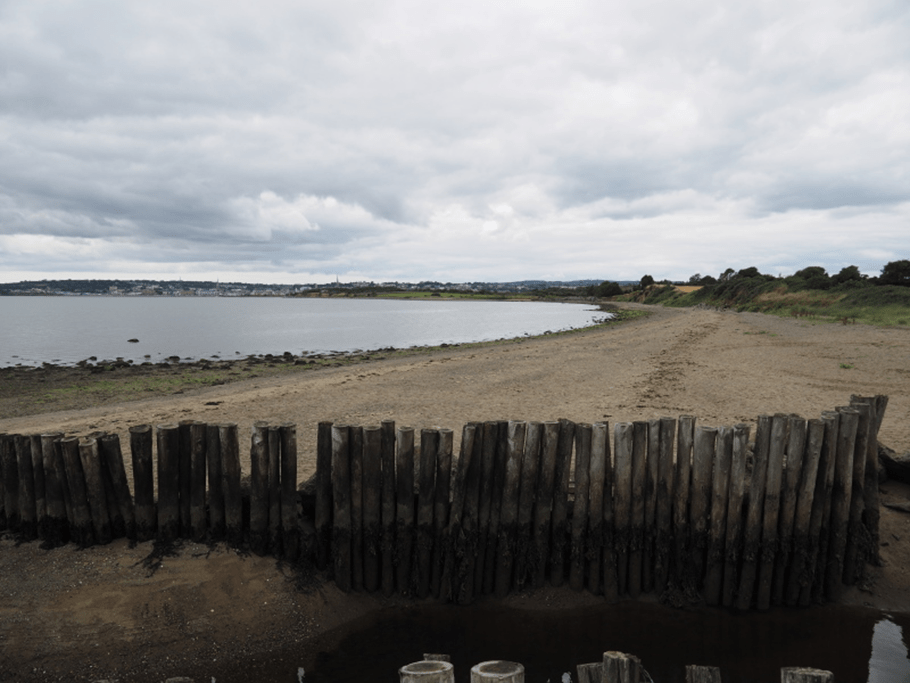
I stand on the ditch built as a famine relief project to reclaim farmland from the sea. History’s long shadow reaches out to me, the ditch’s granite stones beneath my feet, softened now by lichen and marram grass.
Wicklow’s Hills
North of Arklow, Wicklow’s hills rear up like a sleeping Lough monster. Scarlet berries flash from rowan trees, ferns cover ditches, and the Avonmore meets the Beg river in Avoca.
We camp outside Seán’s mother’s house in Laragh, near Glendalough’s 6th Century monastery, perfect U-shaped glacial valley, two lakes, and its mountain and woodland hikes. Though in the past we’ve stayed at Roundwood Camping Park, with its Vartry Reservoir walks, convivial pubs and bus to Glendalough.
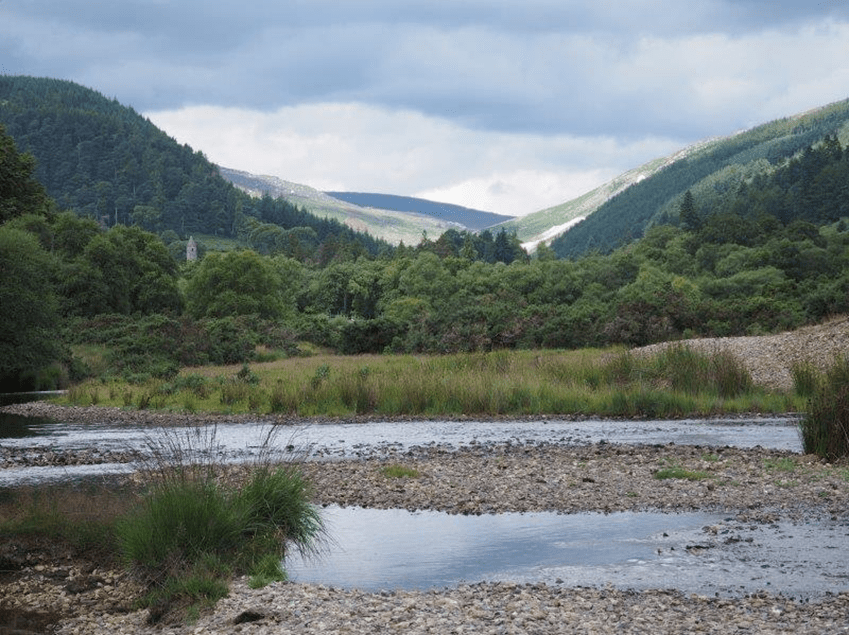
Glenmalure Inn Camping Stop
We’ve also stayed in the Glenmalure Valley, the friendly inn, and free camper stop, serving their own farm-reared Wicklow lamb where we fell asleep to the sound of the Avonbeg river and the brown owl’s haunting cry, under clear skies and bright stars.
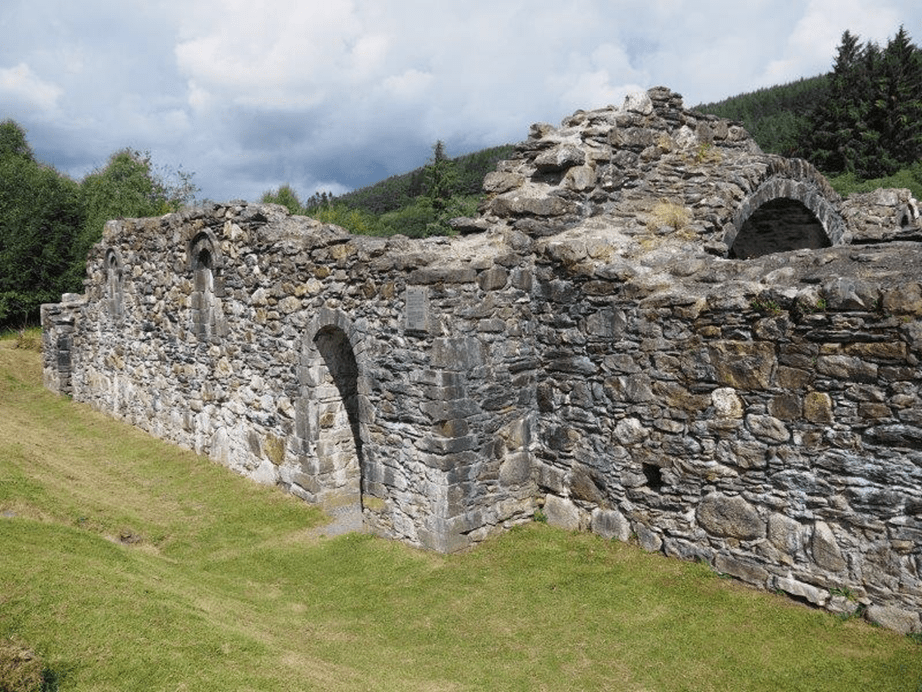
St Saviour’s Church – Glendalough
This ruin, tucked inside the wooded valley, is a place to dream. We’re silent there, the faint scent of citrusy gorse lingers still, most of the cheerful yellow flowers gone now, the cut grass sweet too.
Glendasan River’s secret beach
Unsigned footpath or animal track I’m not sure, but I can’t resist following it through silver birch and hazel to the rambling, peat-bronzed river and a treasure trove of stones: mica silvered granite, schist, pink veined marble. The breeze whispers in the reeds and all is well with the world.
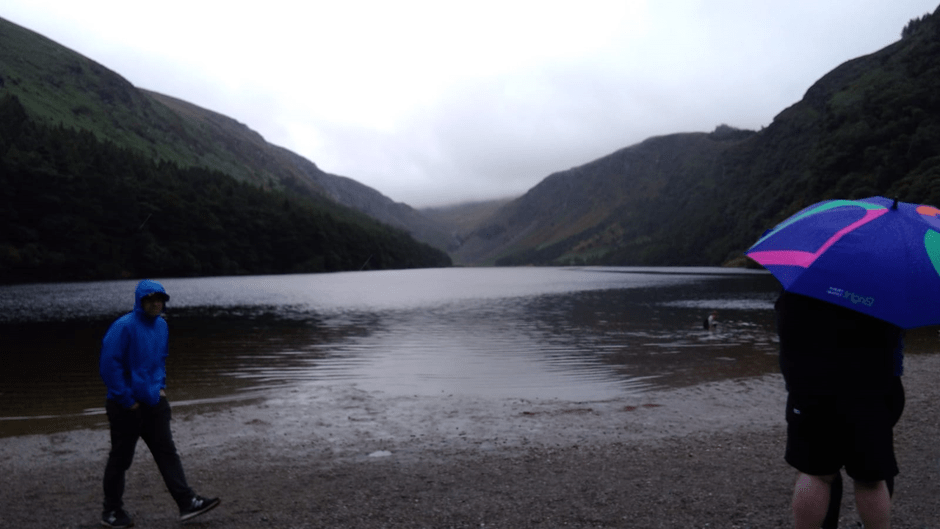
6th Century Monastery
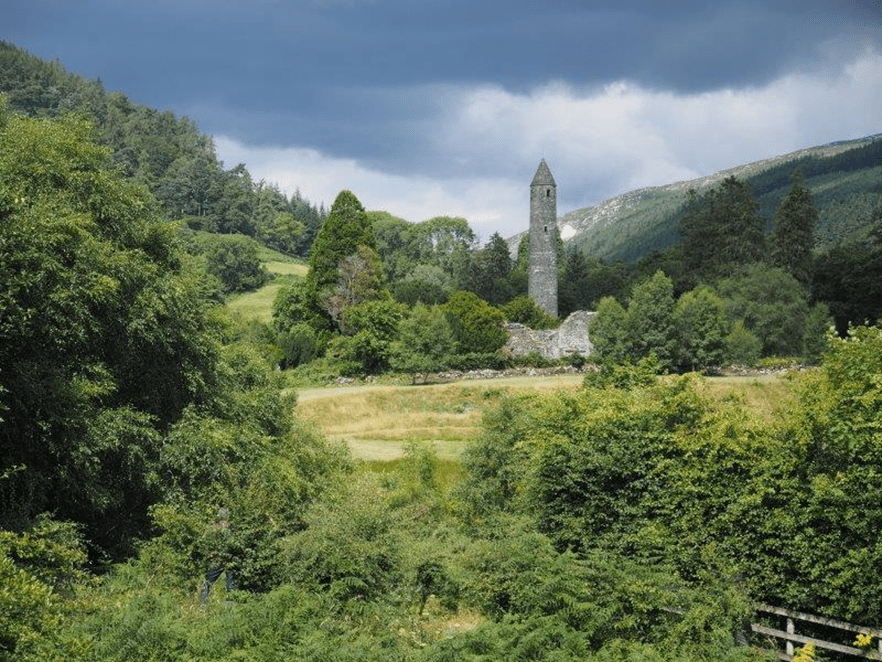
Granite boulders, ferns, mini waterfalls line the Green Road to the ancient monastery. And as for the moss – some in dense, emerald cushions, some acid green stars. Glendalough’s 6th century monastery’s round tower pierces the clouds, its door head height, so the monks could pull up the ladder under attack.
But we’re here to visit Iseult Gonne’s grave (married name, Stuart) – Maude Gonne’s daughter, and W.B. Yeats’s muse. He suffered from unrequited love for both Maude and Iseult, leading to some mournful poetry.

I read To a Child Dancing in The Wind as we stand by the grave and Seán gets that glazed look he does when I get overly poetical.
Dance there upon the shore:
What need have you to care
For wind or water’s roar?
And tumble out your hair
That the salt drops have wet;
Being young you have not known
The fool’s triumph, nor yet
Love lost as soon as won,
Nor the best labourer dead
And all the sheaves to bind.
What need have you to dread
The monstrous crying of wind!
 Campervan Therapy
Leave a comment