Fran the Van has to have a minor operation and health check due to her conversion being rushed during the Pandemic when companies couldn’t keep up with the demand for motorhomes. So we set off to Newark-on-Trent, to camp at Brownhills, the ever-helpful dealers.
Van Magic
The magic of our home-on-wheels starts as soon as we leave home. It’s as if I’m seeing Petworth, with its rolling sandy hills, woodlands and grand limestone country house for the first time. Naked oak and beech trees are etched onto a cold blue sky. The name ‘Egdean Marsh’, signed from the A283, is strangely romantic.
Newark-on-Trent
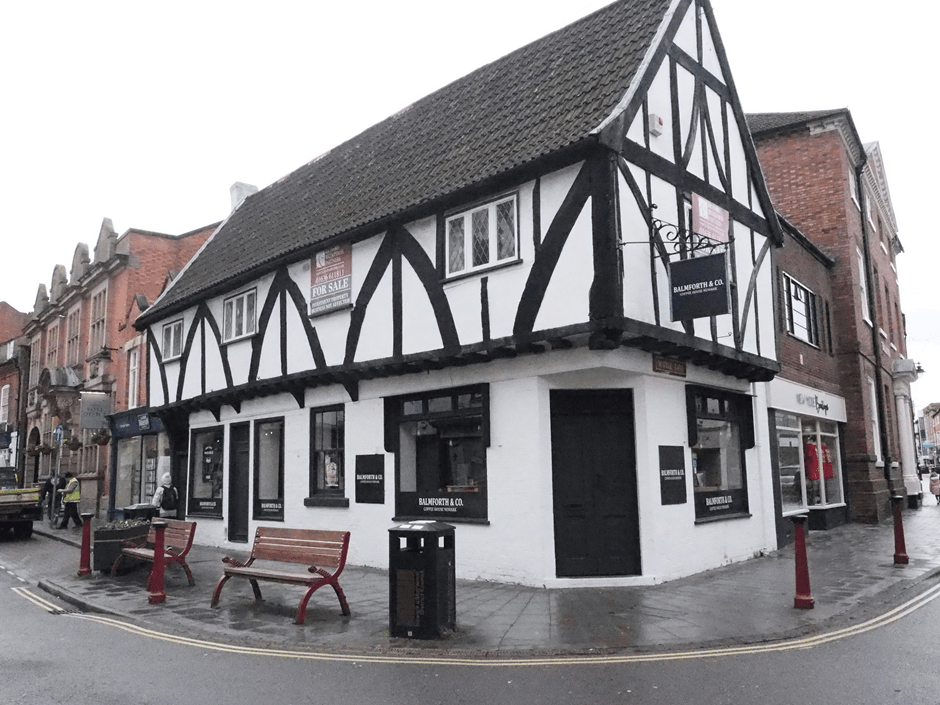
Civil War
Royalist Newark-on-Trent’s castle withstood three sieges in the Civil Wars of Britain and Ireland from 1642 to 1651. Its soaring walls loom over the River Trent.
We pootle around the National Civil War Museum, astounded at the loss of life. Especially poignant for us is the statistic on how the Irish population was reduced by 40% as a result. As if war wasn’t enough for poor old Newark, Prince Rupert’s troops also brought the plague to town.
A big screen film brings the trials of the townsfolk to life. But as I watch, enthralled, I hear a gentle snoring beside me. Seán is fast asleep despite cannon shots, plague, death knells, piercings through the heart, hangings and such like.
Industrial Heritage
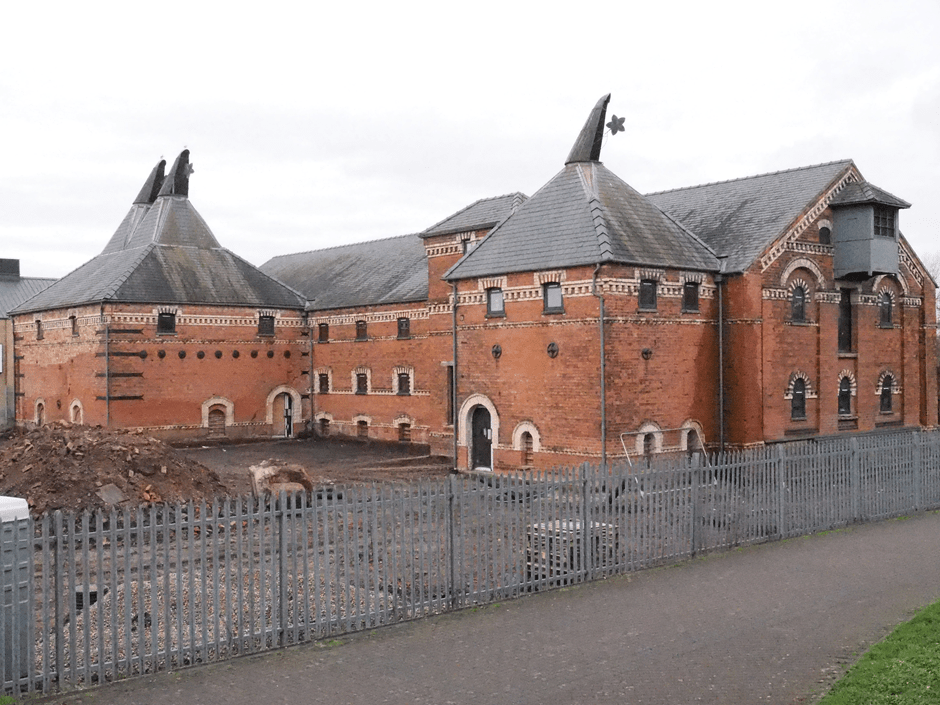
Newark-on-Trent’s industrial heritage is everywhere. Grand red-brick malt and oast-houses are testament to the once thriving brewing industry. North west of the town the sugar refinery still belches smoke into the sky. We walk along the river bank, over modern and Victorian metal swing bridges, by converted warehouses, canal boats bobbing on their moorings.
The once wealthy town sports a Victorian reconstruction of a 16th Century Inn, which stands in grand decline opposite the castle. The patron demanded that it be a Temperance Hotel, which brings my ale connoisseur out in a rash.

St. Mary Magdalene’s church is imposing, speaking of past wealth.

My favourite things about it are the handsome ceiling and the two wooden panels depicting the snappily named Dance of Death. A well-dressed man is on the first, the second sports his skeleton dancing. The cheery Medieval message reminding us that money won’t save us from death.

Eateries
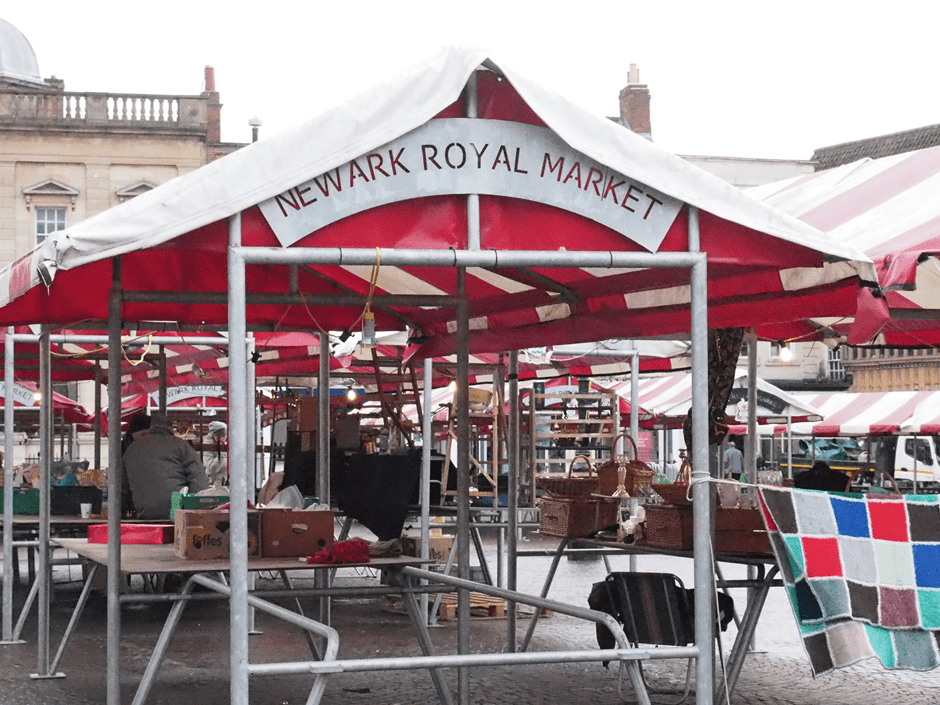
Red and white striped food stalls fill the cobbled market square.
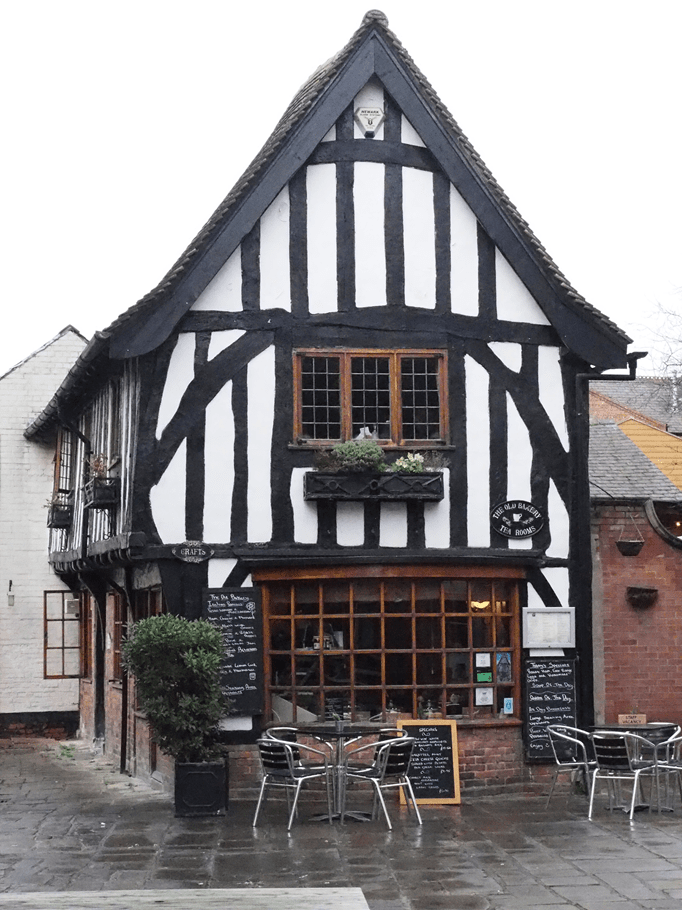
Crooked old houses line the centre’s twisting streets. The 16th Century, half-timbered Old Bakery Tea Rooms doesn’t have one straight wall. I’m a sucker for mismatched vintage china and this tea house is full of it. The food, although typical of an English tea house, benefits from the Italian owner’s take on it.
The evening sees us transported to southern India’s Kerala at Koinonia, where we devour the wonderful food, a blend of Portuguese, French and Indian cuisine, the roast, spicy beef a joy. The silent film on the big screen takes us along the waterways of Kerala on houseboats. I wonder how hard it’d be to convert Fran the Van to be amphibian and get her out there?

 Campervan Therapy
Leave a comment