Driving along the IC27, the mountains are craggy in Portugal’s sunny south. We’re offered up glimpses of the wide and rambling River Guadiana between the mountains. Soon the graceful white suspension bridge into Spain rises up into the sky.
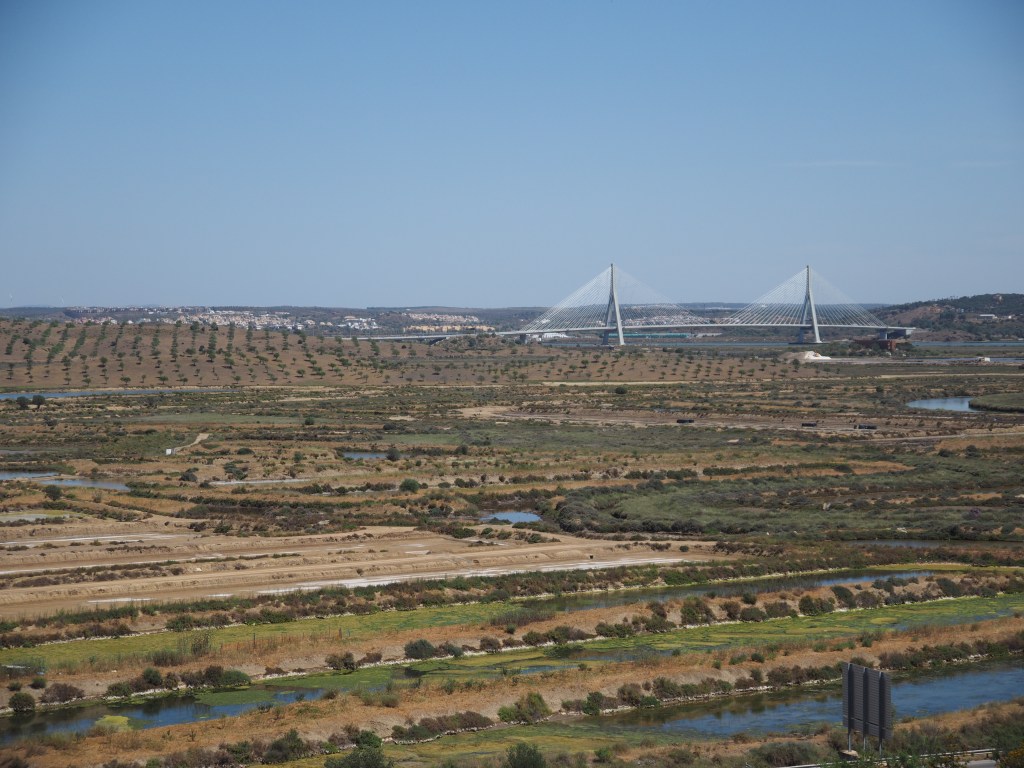
On the opposite bank, Spain’s white town of Ayamonte glows. This border territory explains Portugal’s fortified town, Castro Marim, with its two hilltop fortresses.

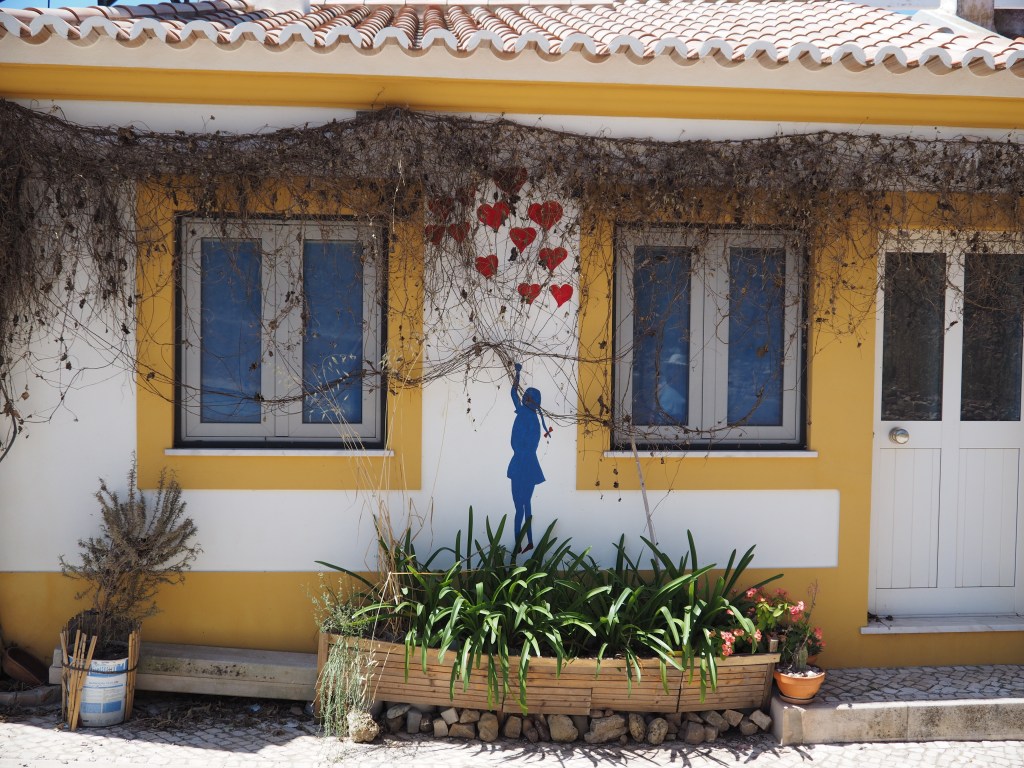
We park in the free camper stop and wander through streets of white houses, bougainvillea scrambling across their facades.
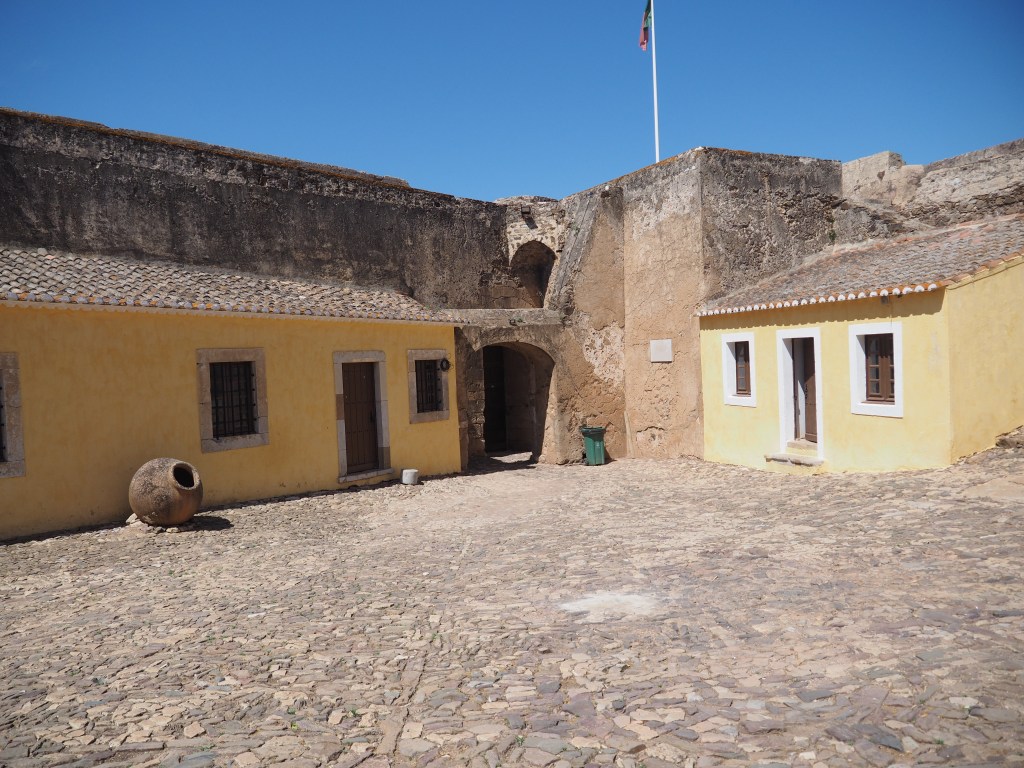
Built by Dom Alfonso III on Roman and Moorish foundations in the 13th Century, the huge castle was designed to spy on Spain across the Guadiana River.
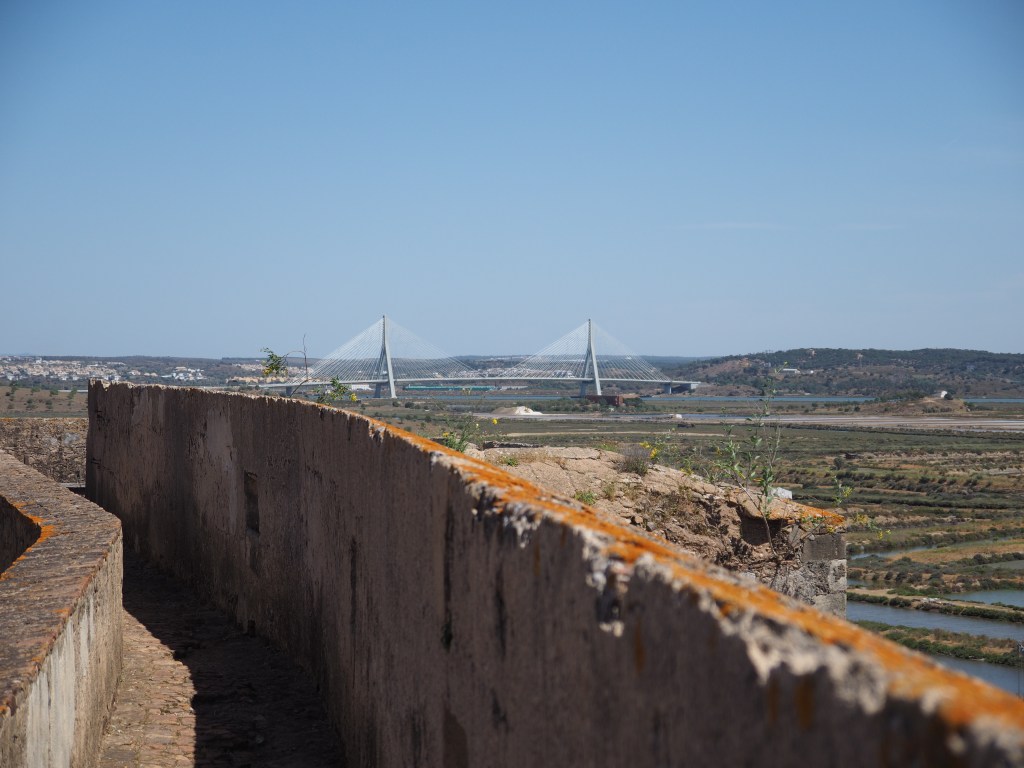
Along with its smaller fort on the neighbouring hill, it also guarded the approach from the Atlantic. The Knights Templar once controlled the castle, and collected the customs from river and ocean trade.
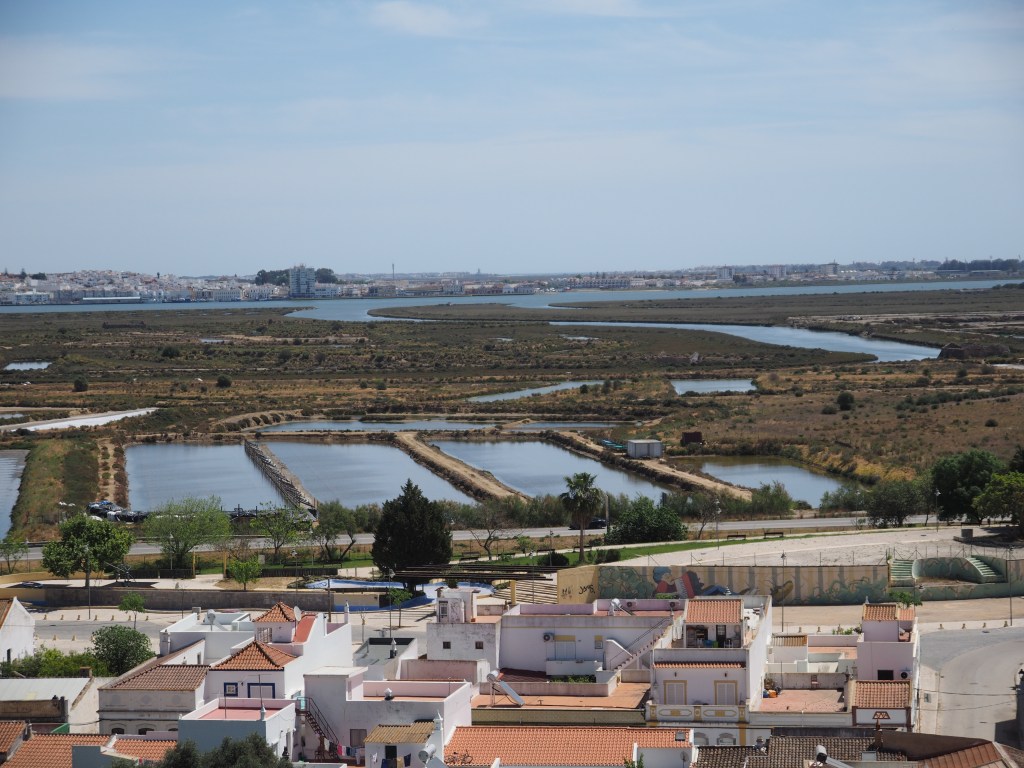
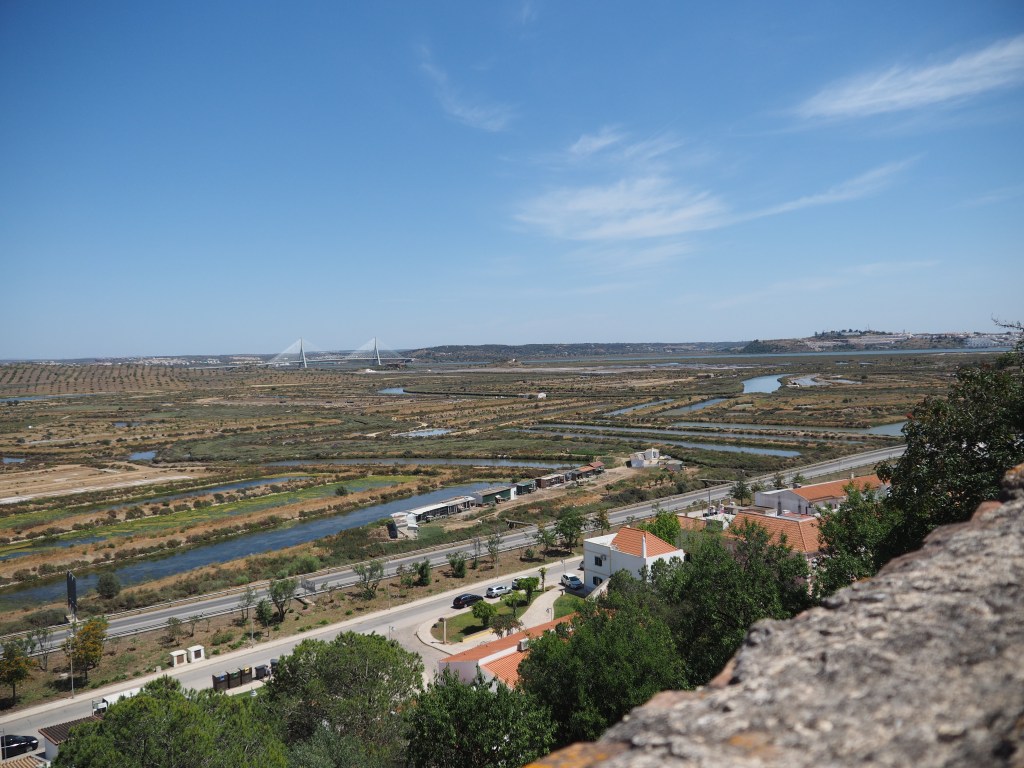
Its ramparts give spectacular views over salt pans, marshes, and the Guadiana that rambles over the floodplain.
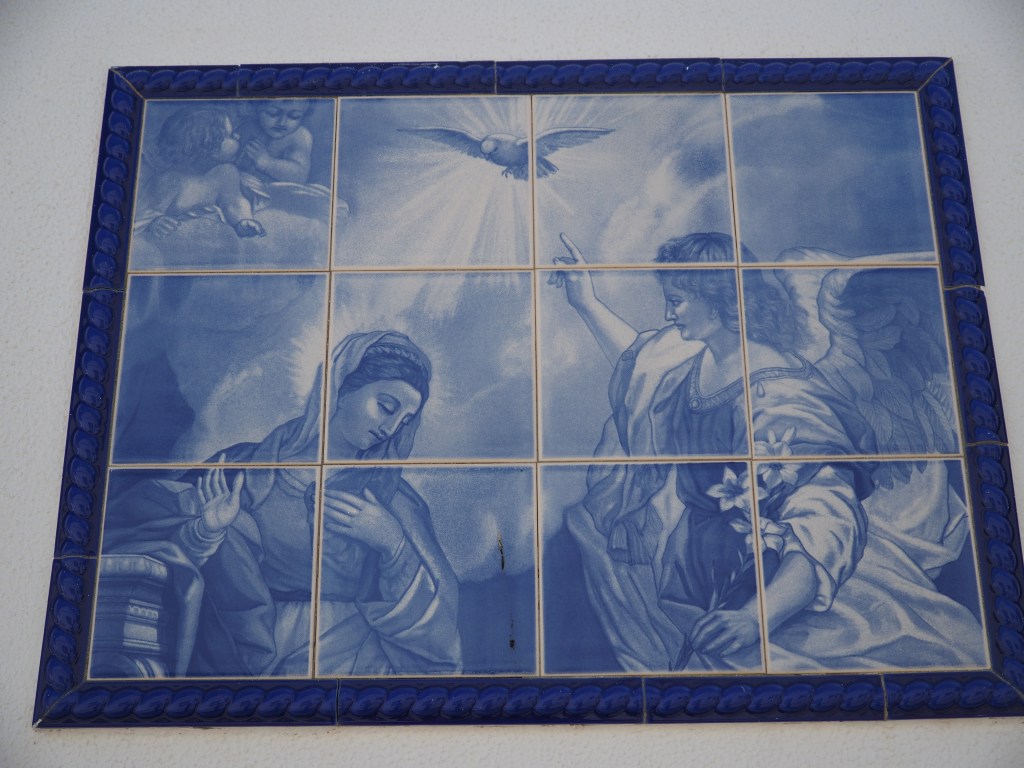
Now, I love a rampart, partly because of the long-ranging views but also because a nosey person like me can see right down into the idyllic patios with their scarlet geraniums and beautifully tiled floors and walls, the pantile roofs all nestling together beneath the fortress.

I’m intrigued by the pigeon cages out on the salt pans. From my spying position, I watch a man tend them and want to know whether they’re for the stew pot or whether they’re racing pigeons. The idea of racing pigeons takes me back to my childhood visits to my parents’ hometown of New Ross in Ireland. My cousin raced pigeons and because I ran fast I was part of the relay team up to the clubhouse to get the homing pigeon’s ring clocked in before anyone else’s.
The 1755 earthquake in Portugal’s Atlantic destroyed most buildings in Castro Marim, but the fort, although damaged, survived. There’s a moment of serendipity for us too. Only two years ago, we stood in Timoleague in West Cork and read about how the tsunami from the same earthquake silted up its harbour.

A dark room in the fortress is a complete horror show, filled with Medieval instruments of torture, used all over the world. From the nail studded chair to scorn masks which stabbed the wearer if they turned their head, they send us stumbling out into the bright sunshine, both of us a little subdued.
A spot of sea air is needed so we drive off to Monte Gordo, the fine, sandy beach stretching for miles out to where the Guadiana River finally empties out into the Atlantic Ocean. Backing the beach is a natural park of pine forests and sand-dunes, home to rare chameleons.
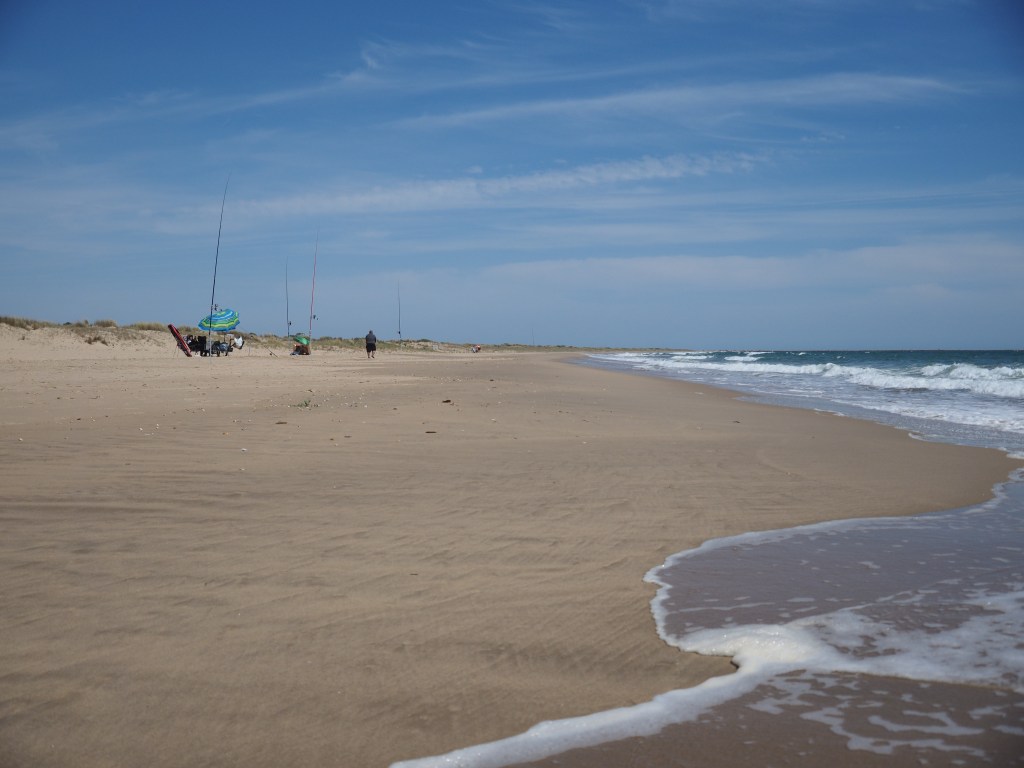
The Atlantic waves spraying me with sea water, I recall our amazing tour along the length of the Guadiana, from Ciudad Real’s mountainous interior , along the Portuguese border to this awe-inspiring Atlantic.

We’ve been transported back in time to the Romans, Moors and Medieval Christians.

We’ve feasted on local specialities. Portugal’s tapestries of wildflowers Mediterranean forests, majestic mountains and verdant valleys will sustain us through many a dark winter day when we’ll remember the close-up encounters with pond turtles, vultures, eagles, not forgetting the ubiquitous storks.
 Campervan Therapy
Leave a comment