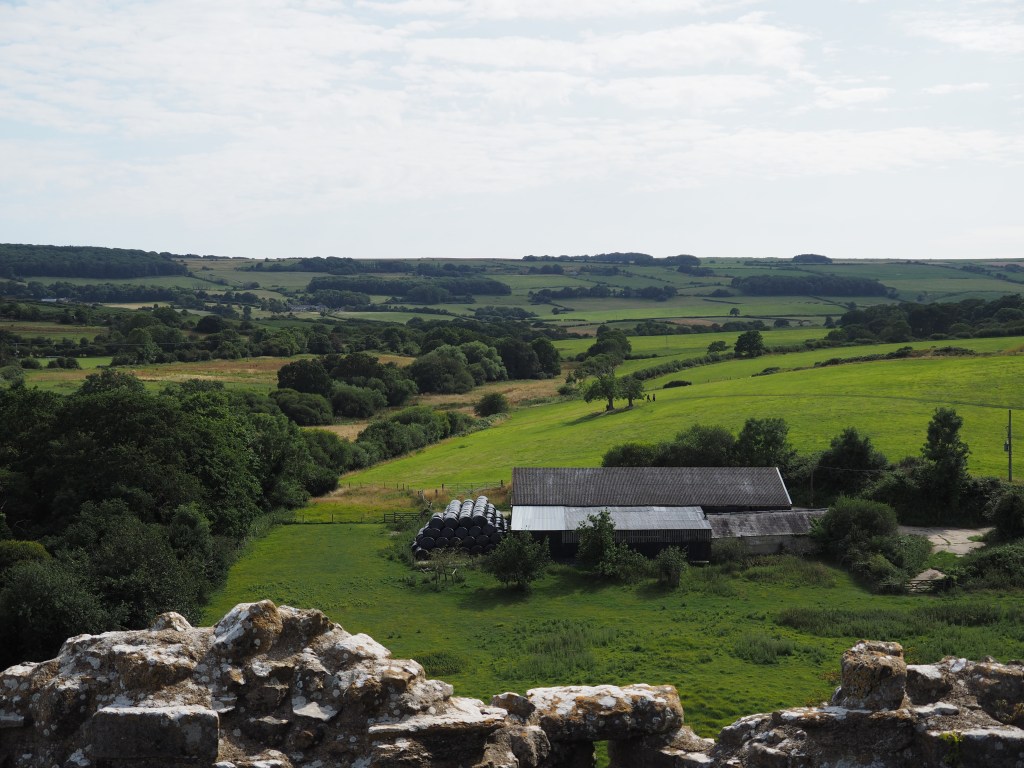
The Isle of Purbeck rolls out around us in green chalk-lands, tree-lined lanes and luscious hedgerows. Corfe Castle sits on its hilltop with 360 degree views, to the sea and across the biodiverse heathland.
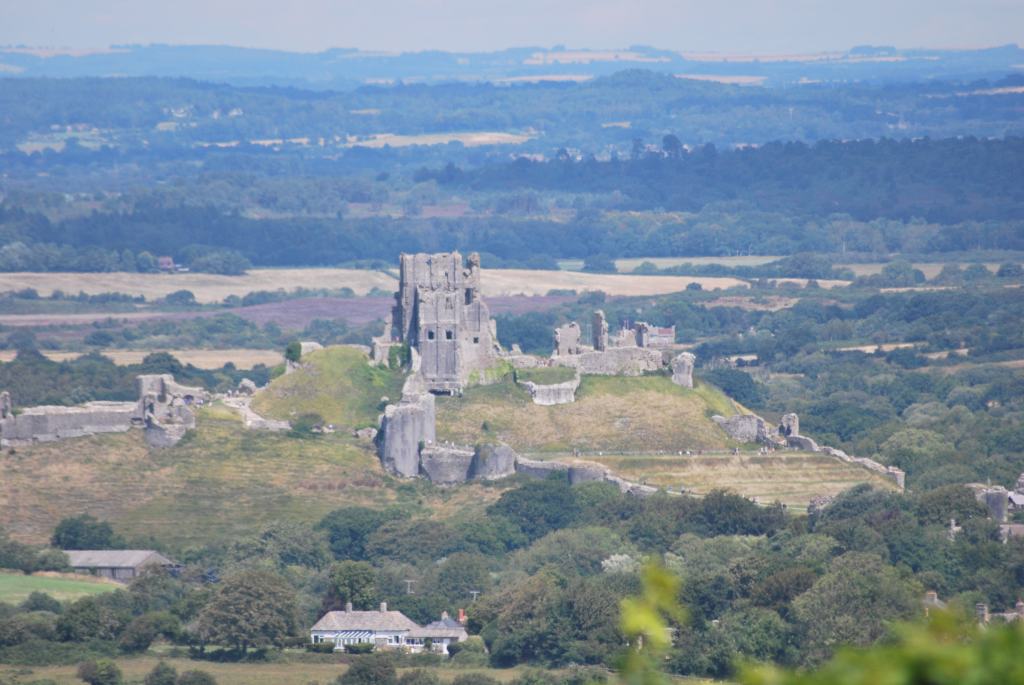
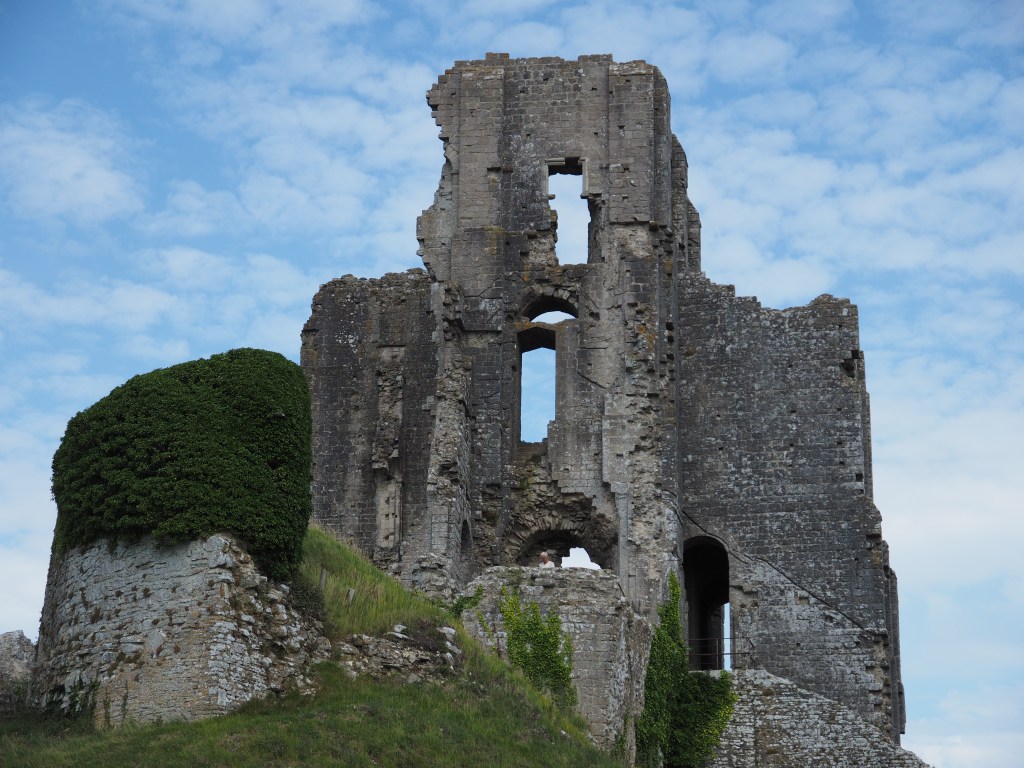
William the Conqueror sited his royal palace at this perfect vantage point to ward off invaders. But my favourite story is of Lady Bankes beating off the parliamentarians in the 17th Century. When they finally won, they paid homage to her bravery. The castle is built of the famous Purbeck marble, known as ‘burr’ locally, an adaptation of the French word ‘beurre,’ due to the ‘broken-shell’ limestone looking as creamy as butter when it’s mined.
We’re transported back in time by the steam train that toots along the single track railway from Swanage. Seán’s disappointment is palpable as he misses the chance to photograph it, informing me glumly that the next train is a mere diesel.

Corfe Village

The village nestles under the castle and grew up to serve its owners. Once mottle and daub cottages, the villagers, quite sensibly reused the stones from the ruined castle to rebuild stout houses. The square towered church and huddle of Purbeck limestone houses are pretty in a chocolate box way. It reminds me of the perfect site for a Midsomer Murder mystery.
Langton Matravers
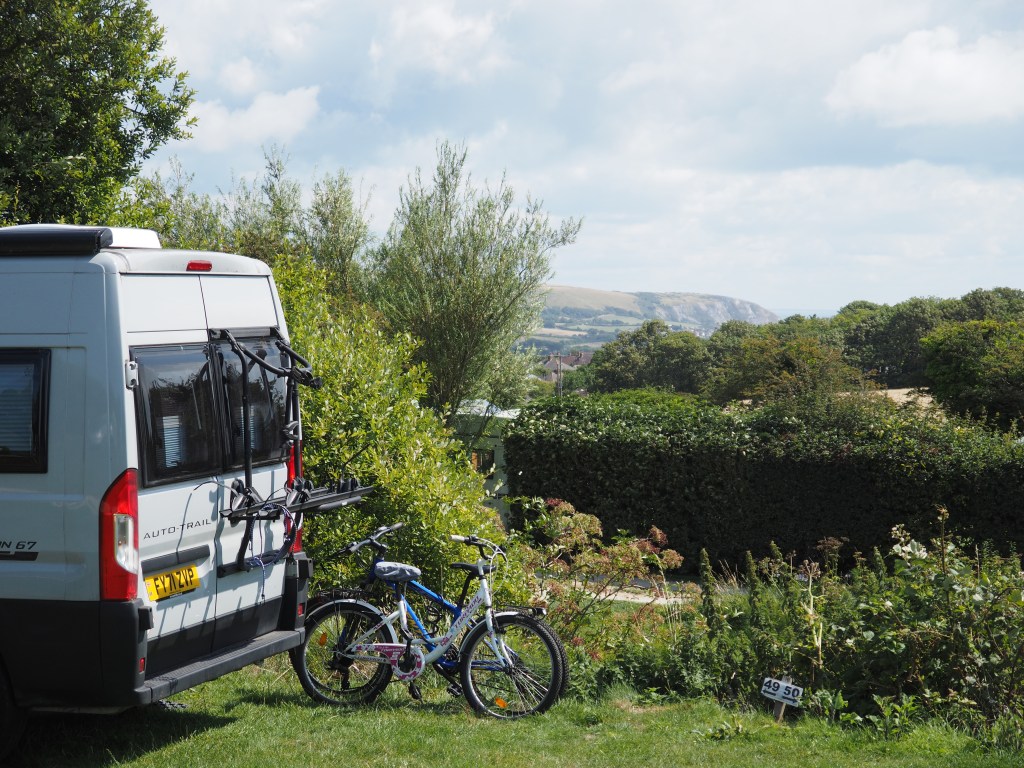
Langton Matravers although also beautiful is a little more real as it’s less homogeneous. Tom’s Field Campsite is a green wonder, with rabbits hopping about between the pitches. Signs tell us of the badgers and foxes that share the site. The shop sells a myriad of walking maps. At my wielding one, Seán suggests a fortifying visit to the King’s Arms just down the road. Night comes with an absence of traffic noise, a real salve for the soul.
Dancing Ledge
We take the walking trail one mile to Dancing Ledge, via the National Trust’s Spyway, passing the amazing dry-limestone walls. Seán, of course is mesmerised by their amazing structure, while I rattle on about how they mimic the waves of the sea.

The track takes us over heathland, past a suckling herd. When Seán’s Panama hat sails off on a vigorous gust of wind and lands in the midst of the herd, my heart hammers as he teeters on the top of the dry stone wall to retrieve the hat from the bemused cows, almost top-ending himself in the process.

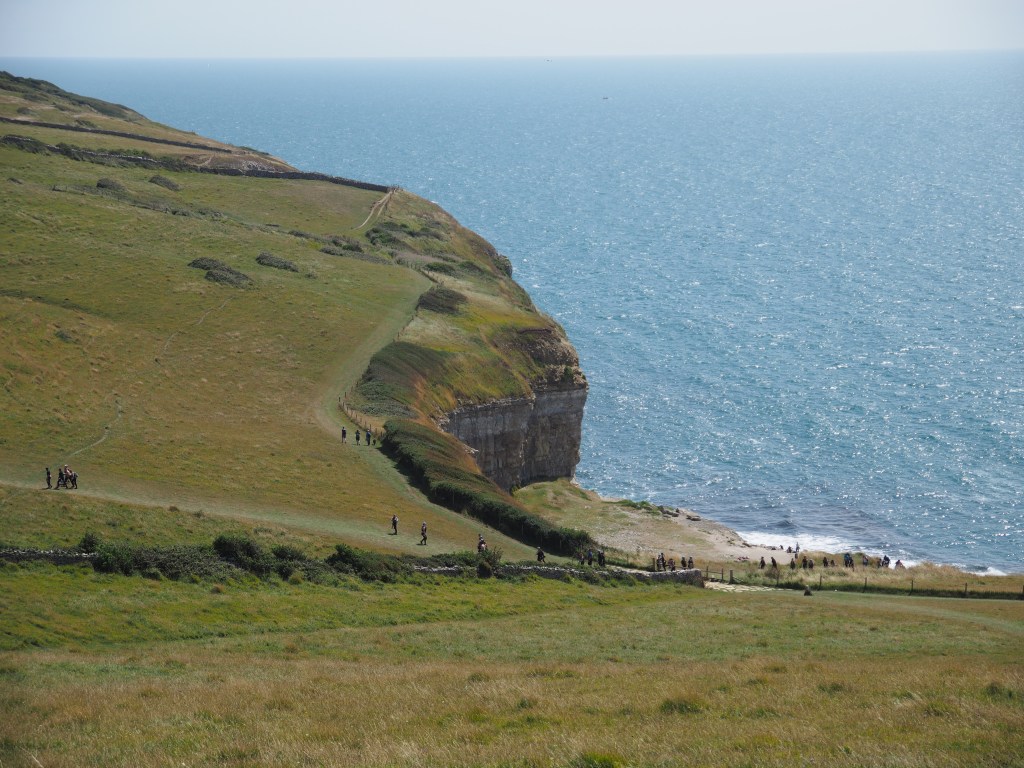
Standing on Dancing Ledge we survey the hidden cove below and the blue sea. I’m intrigued by the name. One story says it’s named after the high tide that seems to dance over the ledge; the other that it’s just the right size for a ball-room. I favour the second option. Imagine dancing a wild hornpipe on a mud-rock dancefloor suspended above the sea.

Scrambling down past a stream of tired, happy teenagers who have just finished coasteering, we amble toward the troglodytic caves cut into the rock.
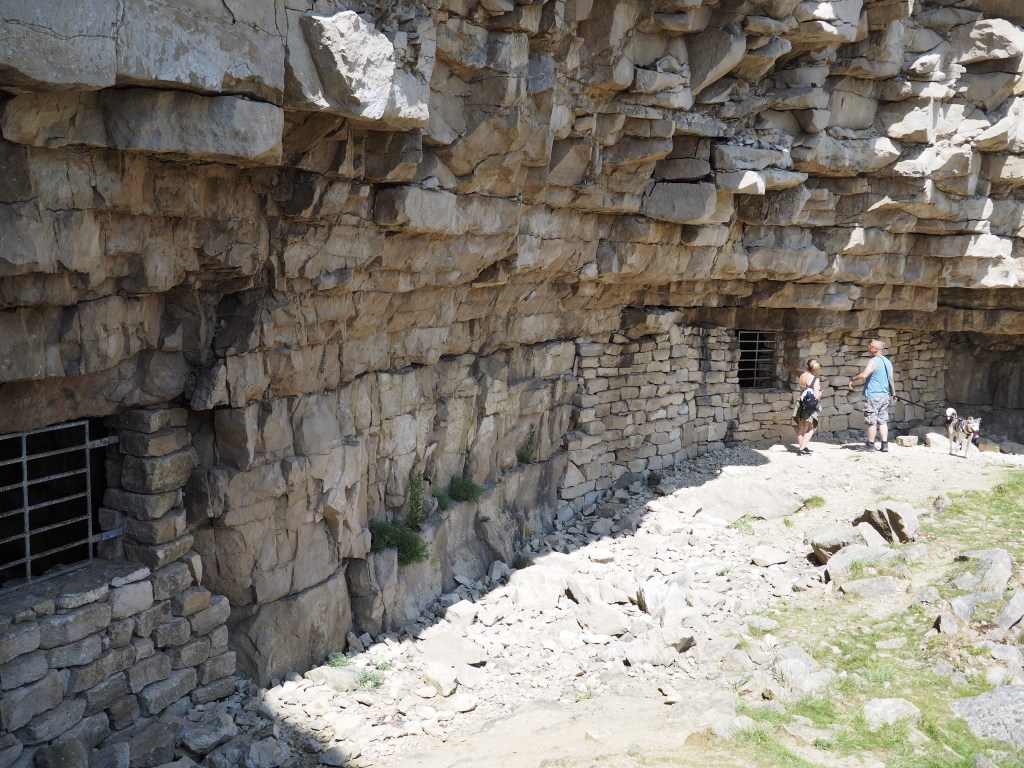
I imagine them as smuggler’s haunts, but my logical one points out that they were caves used by skilled masons to mine and work Purbeck stone.
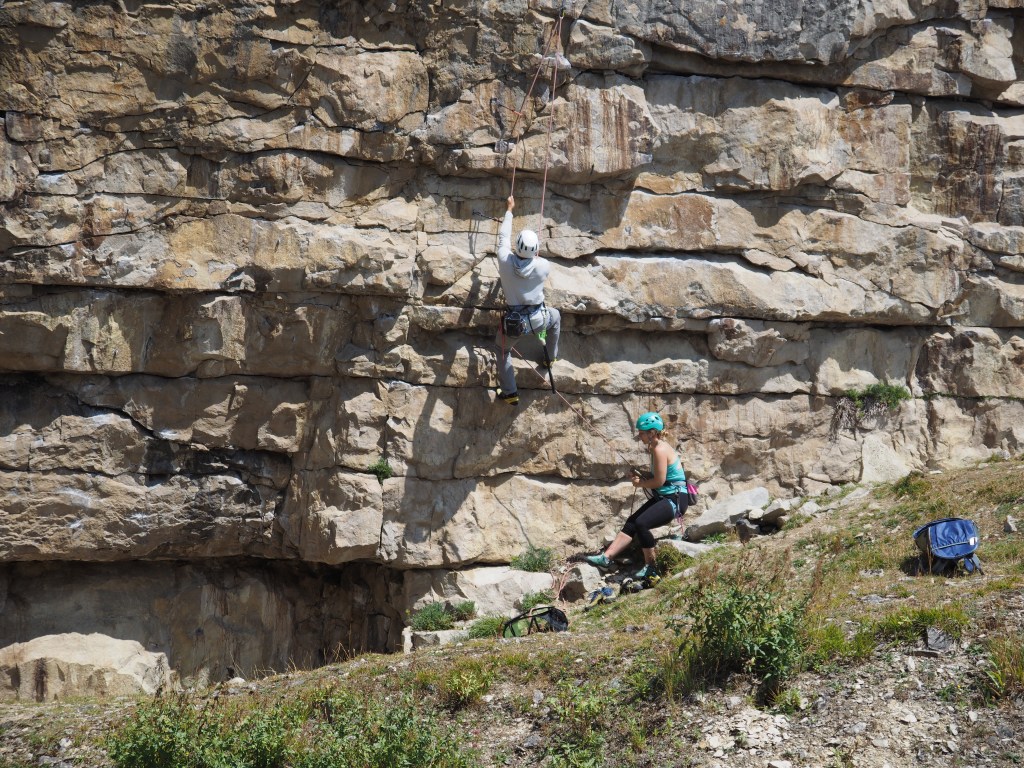
We lie against a rock and watch a young Herculean couple climbing the sea-cliff, Himself muttering that he loves work so much, he can watch it all day.
 Campervan Therapy
Leave a comment