Kimmeridge to Chesil Beach’s section of the South West Coastal Path has it all: from pterodactyl remains to mysterious mansions and smuggling dens.
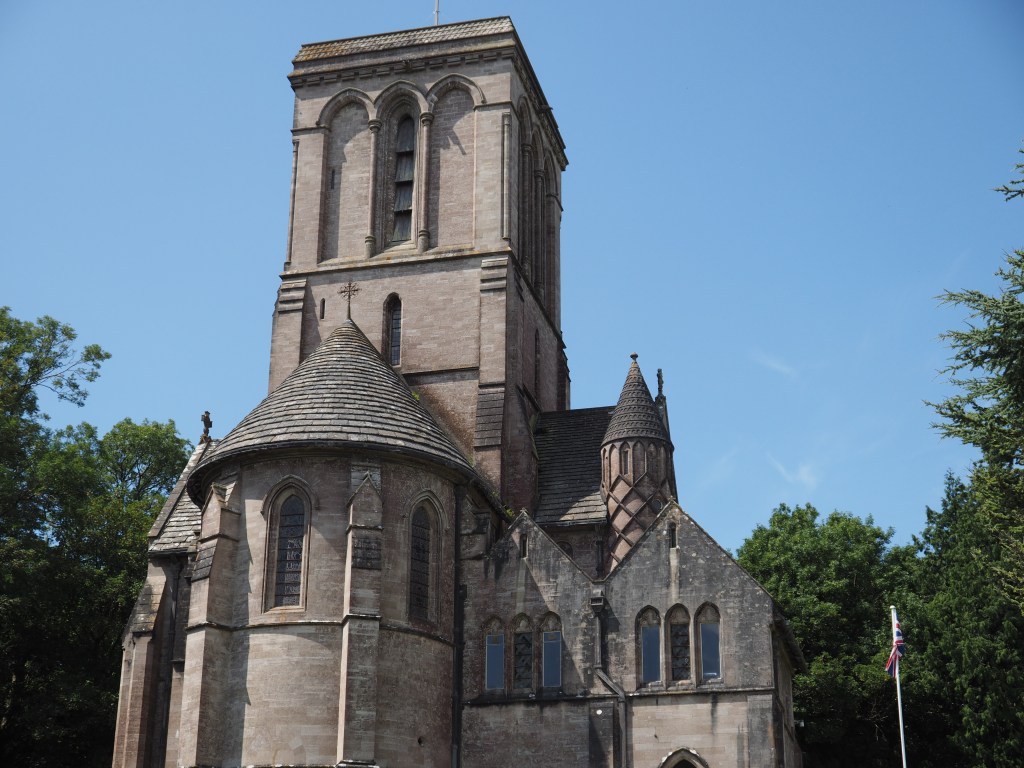
We drive along the undulating B3069 from Tom’s Field Campsite 9 miles to Kimmeridge, the road taking us under cathedrals of trees, through valleys and over hills, past bucolic villages, such as Kingston.

The village’s St. James’s church is vivid with stained-glass windows depicting saints, some familiar and some unusual.


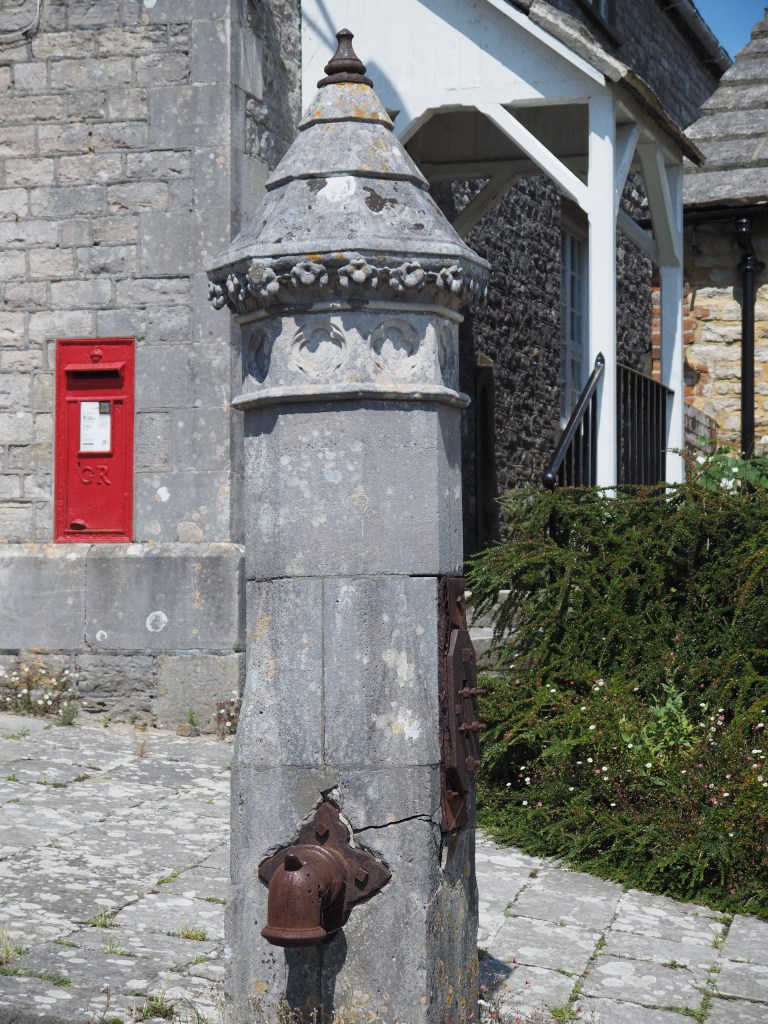
Even the water pumps are attractive in this village, with the drinking water spouting out of a brass lion’s head, or from handsome stone pillars.
In postcard-pretty Kimmeridge, we park in the carpark of the Etches Collection.

This museum offers up a natural history, telling us of the prehistoric creatures who swam in the tropical seas here; the geological formation of sedimentary limestone, Kimmeridge clay and slate; and the fossils discovered by Steve Etches since he was five years old.

Today, the fossil hunter is on the premises working in his laboratory to clean yet more interesting discoveries for this award winning collection.

Of course my scientific-partner-in-crime has to study every single fact and figure whereas I’m itching to get down to the beach to go fossil hunting for real.

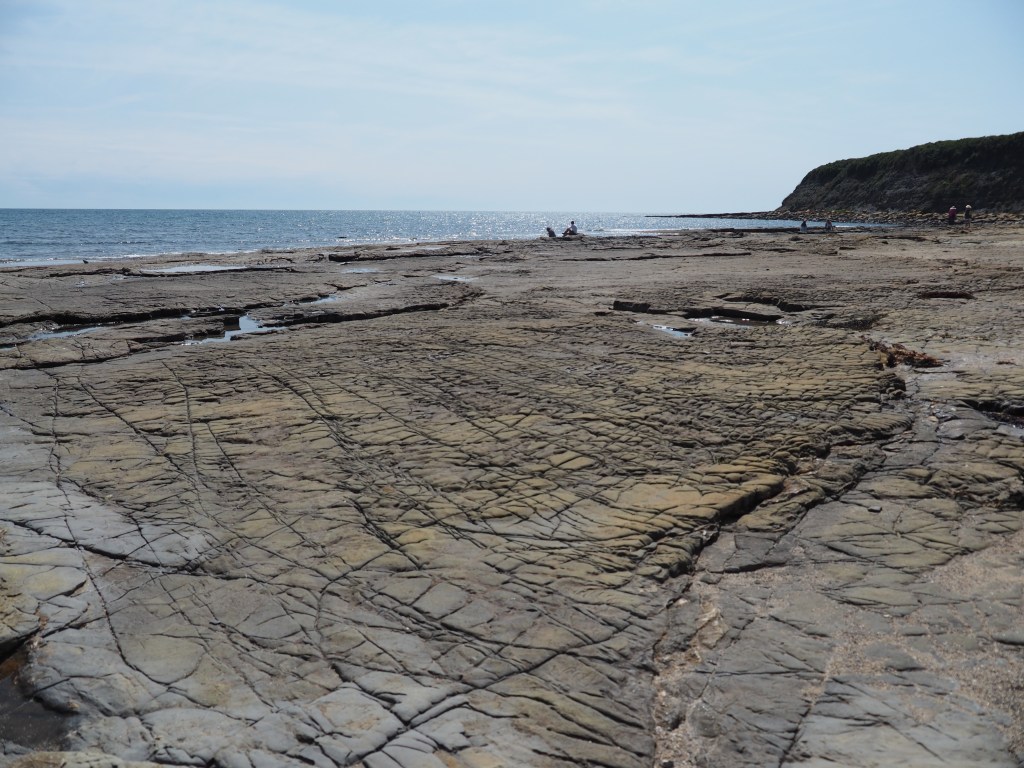
I finally manage to drag him from the building and we follow the South West Coastal path down to Kimmeridge Bay where, despite the warning not to use hammers on the rocks for fossil hunting, the air rings with knocking sounds.

A young boy runs up the beach shouting that he’s just found a perfect ammonite.

I forgo the hammers and just mooch around the black mud-rock platforms that stretch out to sea and the limestone slabs.
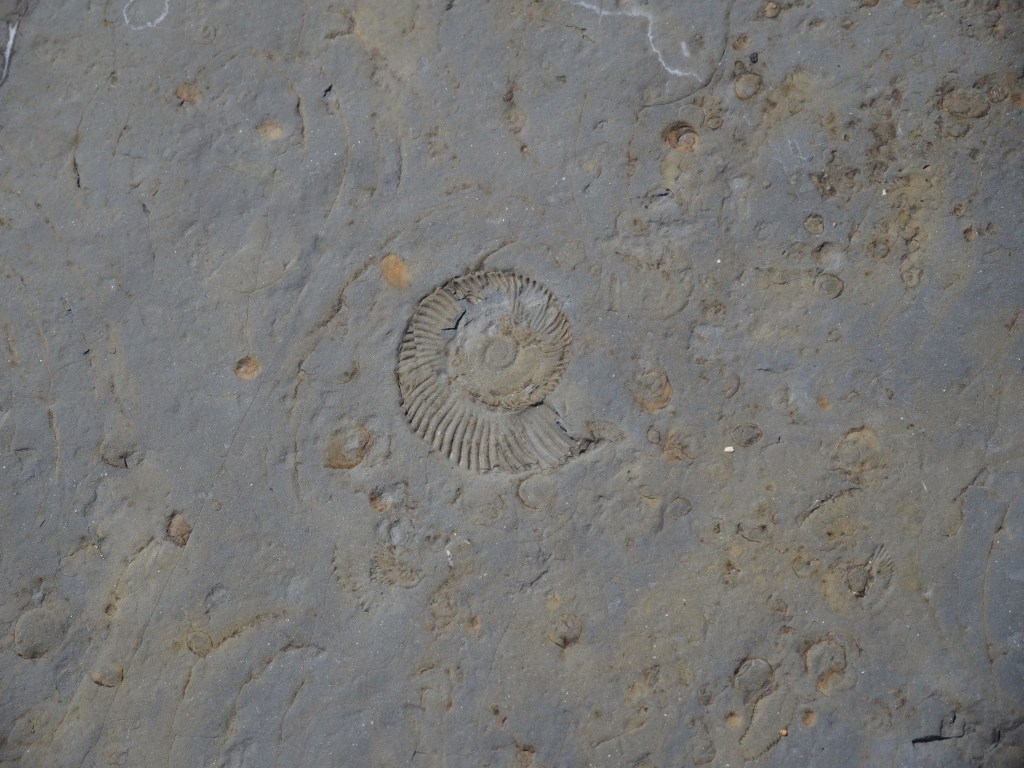
There’s a perfect ammonite in the centre of one slab – Mother Nature practising her artistry.
As I leap from rock to rock I spy a curled mollusc fossil and a small shark’s tooth and I’m as victorious as an ancient hunter gatherer.
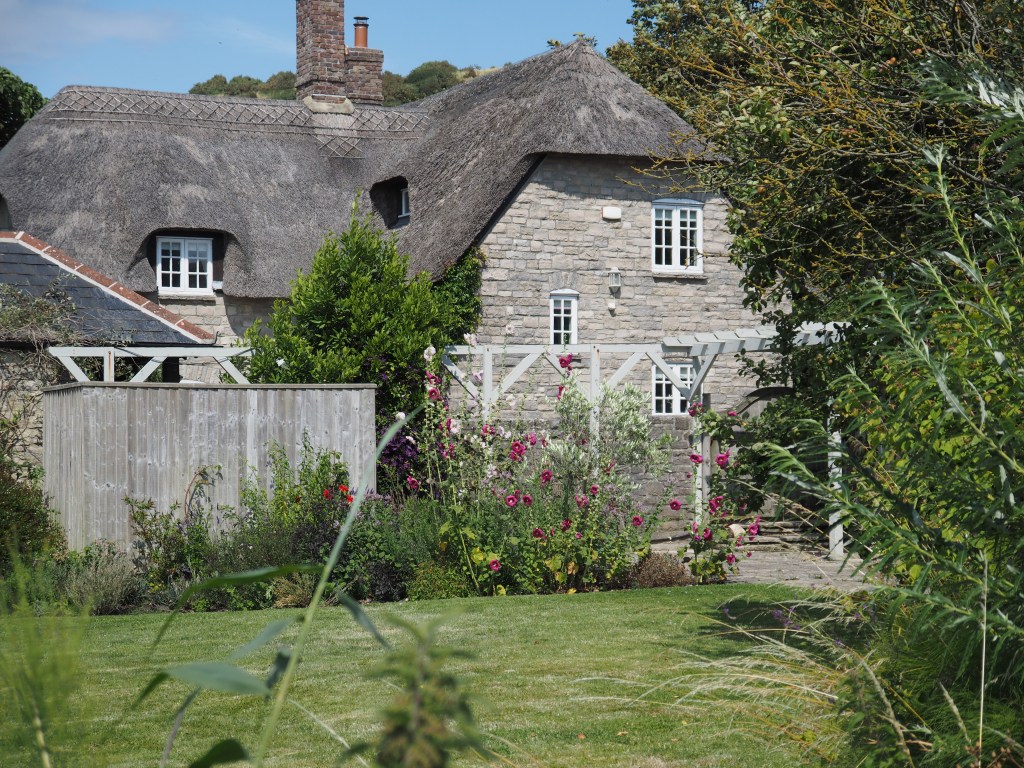
On the way back to the carpark we saunter along Hardy Way, named for Dorset’s famous son, Thomas Hardy, and I’m transported back to my twenties when I devoured all of his classics, losing myself in the Wessex villages, heaths and towns and the tragic lives of his heroes and heroines. Fittingly, we pass a massive bronze sculpture of a woman’s poignant face in the back garden of a thatched cottage.

We drive for an hour along the A352 to our campsite for the final night, Sea Barn Farm, where we pitch up with a view of Chesil Beach. The farm walking trail takes us past the suckling herd of white Charollais cattle, past meadows of swaying grasses and along the lagoon where the oyster catchers fish and stage their fly-bys, their neon white Vs shining on black velvet wings. Cormorants fish out in the lagoon and a grey heron takes flight in front of us.

We come across the mansion which was the setting for JM Faulkner’s 1898 novel, Moonfleet, a tale of smuggling, treasure and shipwreck. The meadows and water are set aflame by the setting sun and the flat bottomed boats sway on the lagoon. I half expect smugglers to come straggling past grappling with their casks of brandy.
 Campervan Therapy
Leave a comment