We drive 21 kilometres along the sinuous N301, from Covas to Caminha, a small seaside border town between northern Portugal and Spain. Finally crossing out of the defensive ring of mountains which surround Covas, we’re assaulted by busier roads than we’ve seen for a week. The bustle of Caminha is also a shock as we’ve had days of only the lonely peacock cry or a cockerel crowing.
Caminha’s main square is full of café crowds soaking up the sun and the brass band, who are playing what sounds like a particularly vigorous soundtrack to a Spaghetti Western from the central bandstand.
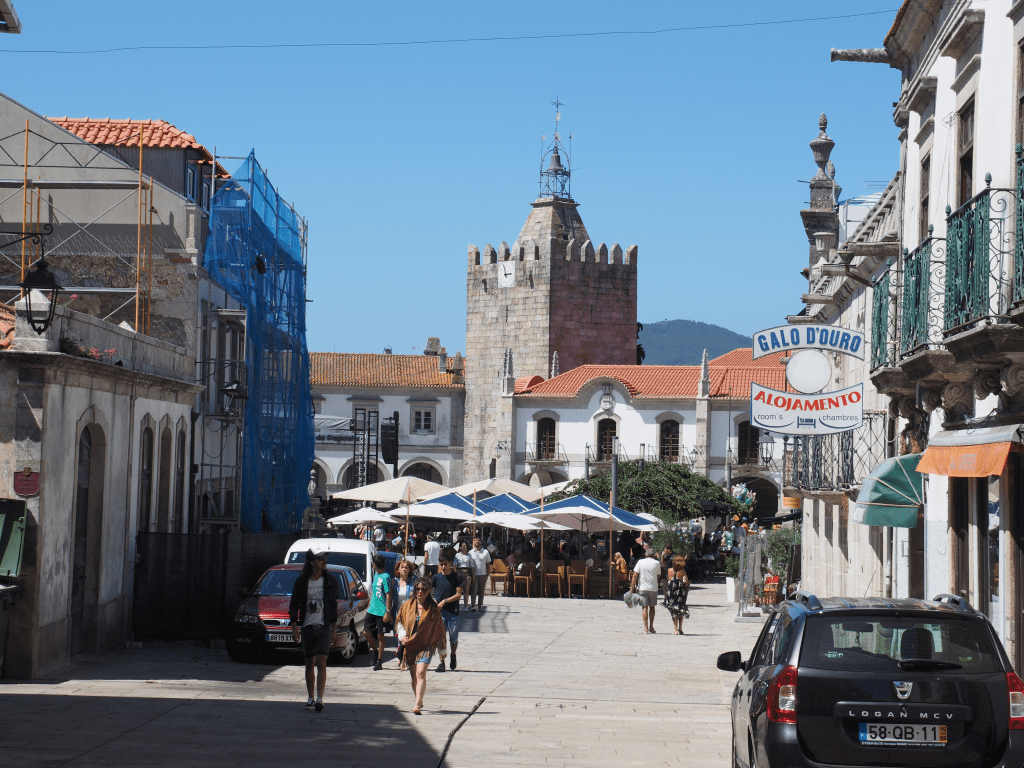
To be fair, the young orchestra are really adept musicians. It’s an appropriate soundtrack to the 13th Century clock tower, once a gateway in the Medieval town walls and the 16th Century castle with its attractive loggia.

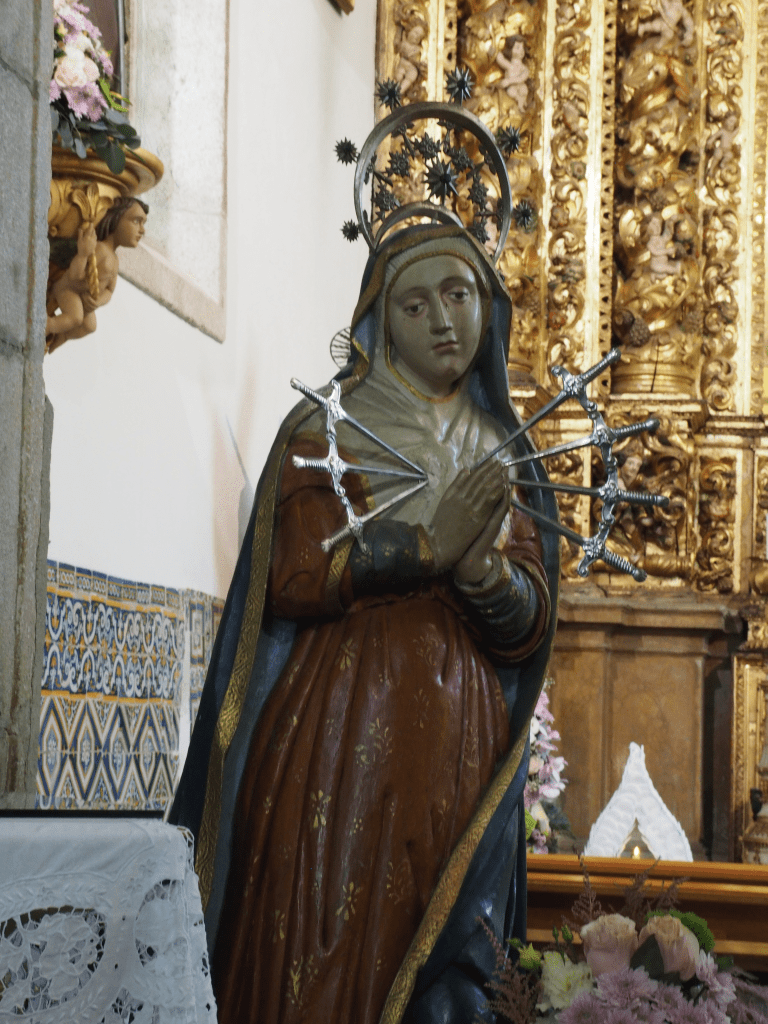
We can’t resist a local church so have to dive into the Igreja da Misericórdia that also sits on the square and is celebrating its 500 year anniversary.

The interior is dramatic with its gilded woodwork carved into scrolls, cherubs and pillars. The wooden ceiling is intricately carved, its paintwork vibrant.
Our next stop is the bay itself, the mouth of the Minho River which marks the border with Spain, which stand opposite us. A stiff wind blows in from the Atlantic.

We walk along the cycle track edging the bay 1.5 kilometres to the distant arc of white sand. It’s treacherous because there’s no railing and the reinforced embankment plummets straight into the bad tempered waters. An American woman cycles after her partner, yelping with fear as her bicycle is blown sideways by the wind.

As we reach the pine clad dunes which arc around the sand like a protective arm, we realise we’re on the Camino de Santiago, yet again. The Camino has marked our journey all through inland Castile, León and Galicia.
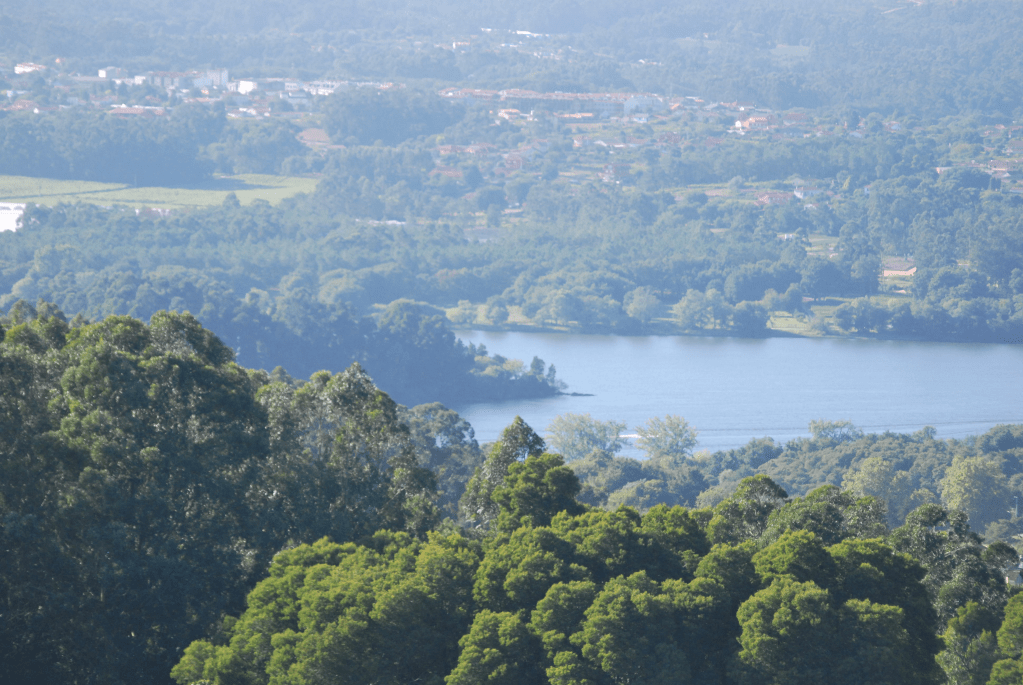
Now here it is again, but this time it is the southern branch which starts in Porto. We gaze at the estuary’s mouth and at the blue-hued mountains that range inland from it on both sides of the border.

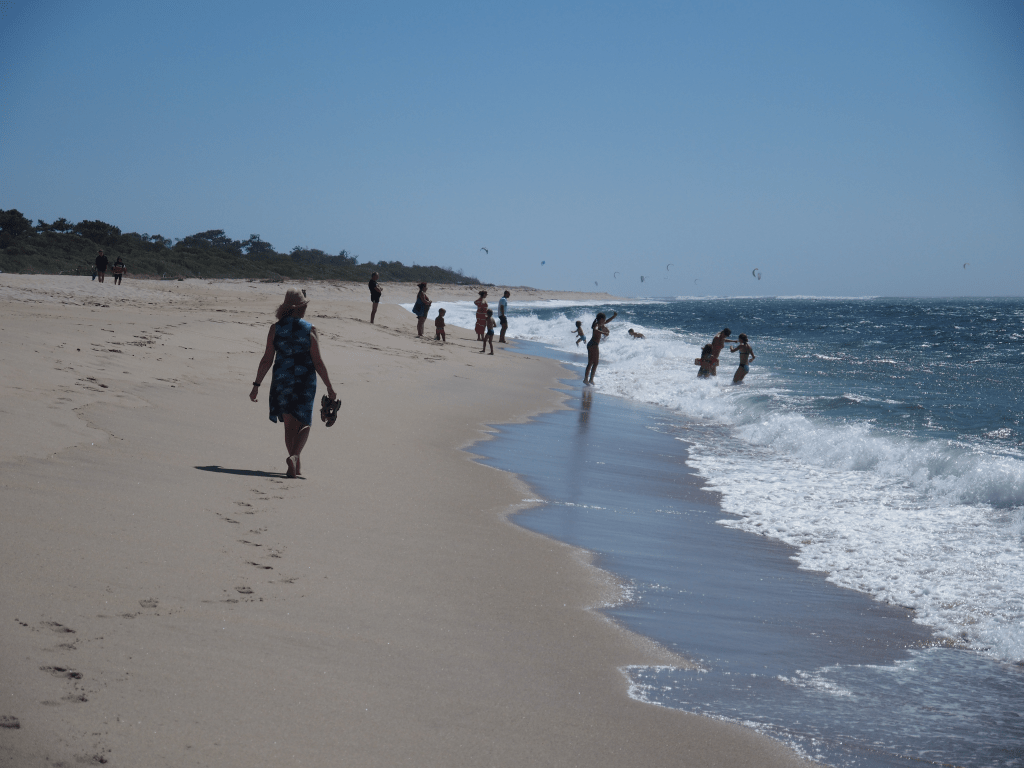
But I need to see the Atlantic Ocean, so we trek through the pine forested dunes and emerge onto the most pristine stretch of sand and ocean waves, which stretches into the distance without sign of a building. There’s a total absence of sun-loungers and beach-side cafés. The windsurfers have the place to themselves.

We gaze out at the ruined island fortress of Forte da Ínsua and what looks like a submerged causeway, the surf thrashing against it creating a rill of white along the ocean. We beat a swift retreat as we’re sandblasted by the onshore wind, which a local tells us later, dies down after mid-day.

We trace the Minho inland on the N13, the bridge taking us across the marshland nature reserve, the cushions of marsh a vivid green against the blue bay. Soon, we’re weaving up through the mountains on the zig-zagging road from Gondarém to Covas.
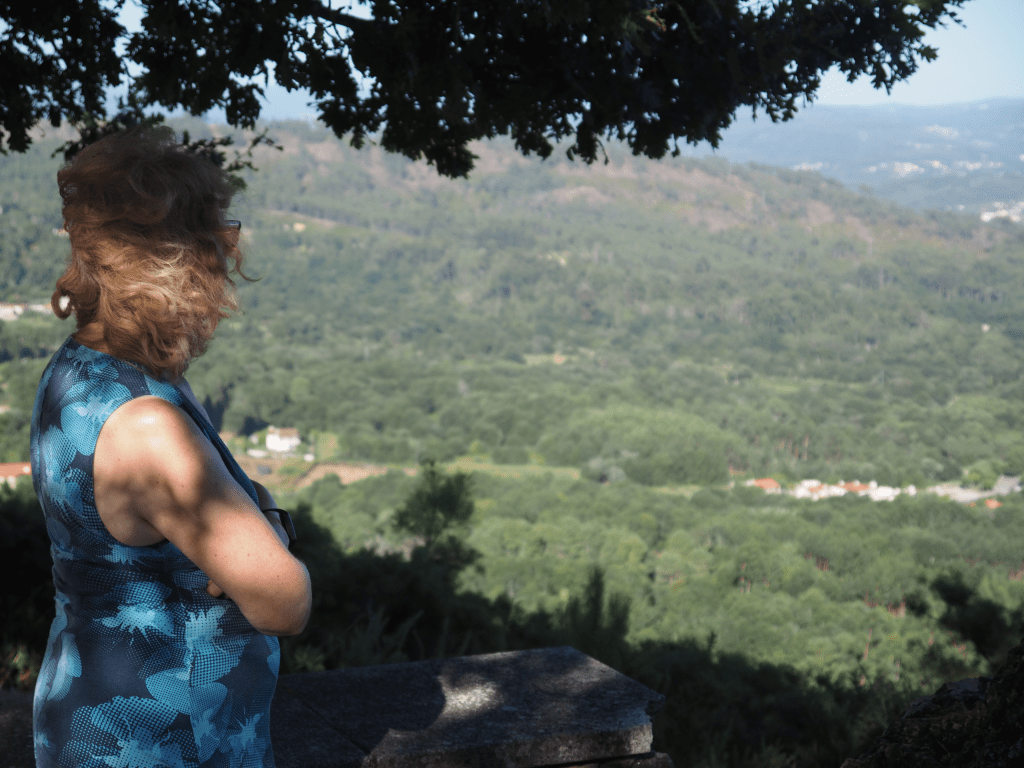
At the mountain pass we look down on the peaceful village of Covas, the mountains ranging in a ring around it and although only temporary, it feels as if we’re returning home.
 Campervan Therapy
Leave a comment