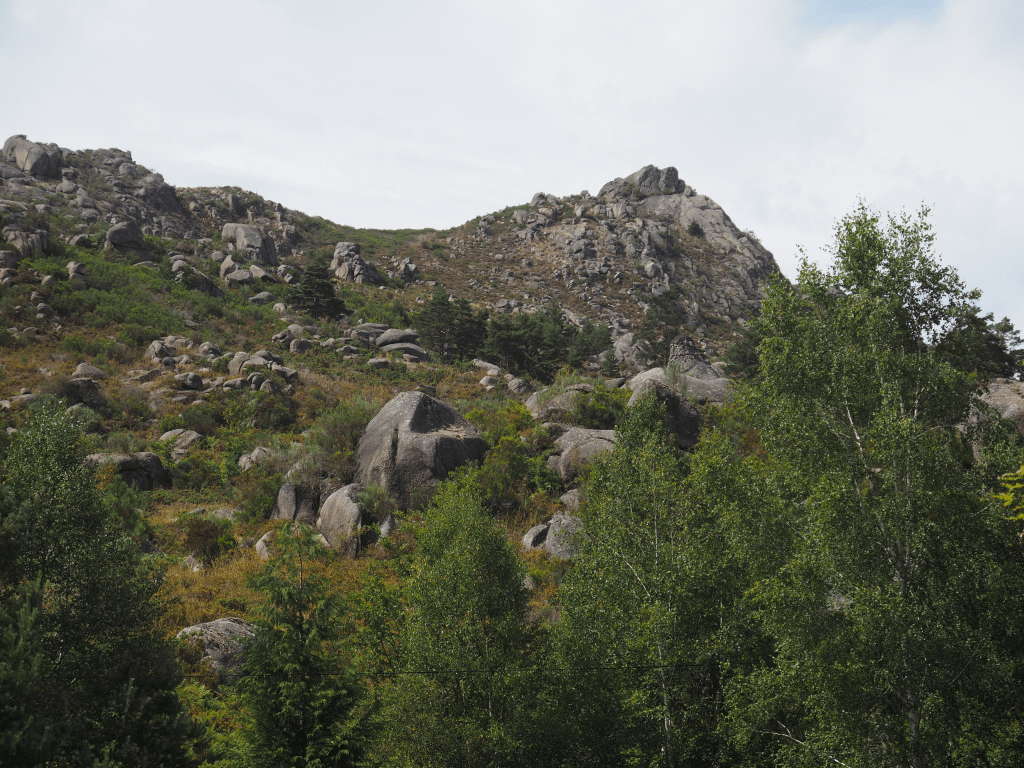
The Mouro being a tributary of the Minho, we think Lamas de Mouro qualifies for our tracing the Minho odyssey. But a wrong turn at a tricky roundabout on the N202 from Paderne sends us up a vertiginous road to Cousso, a mountain hamlet and a dead end, nothing in front of us but the granite peaks and shale. The solid granite houses huddle as if they are clinging to each other to stop them toppling down the cliffs.

My poor chauffeur contemplates having to reverse all the way down the hairpin bends back to Paderne; or squeezing the van between the granite walls which edge the hamlet’s narrow paths. He opts for the squeeze. I instinctively try to shrink myself to the thinnest version of me, as if that would make the slightest difference. With typical deadpan calm Seán gets us through, afterwards declaring that we had no more than 2 centimetres either side.
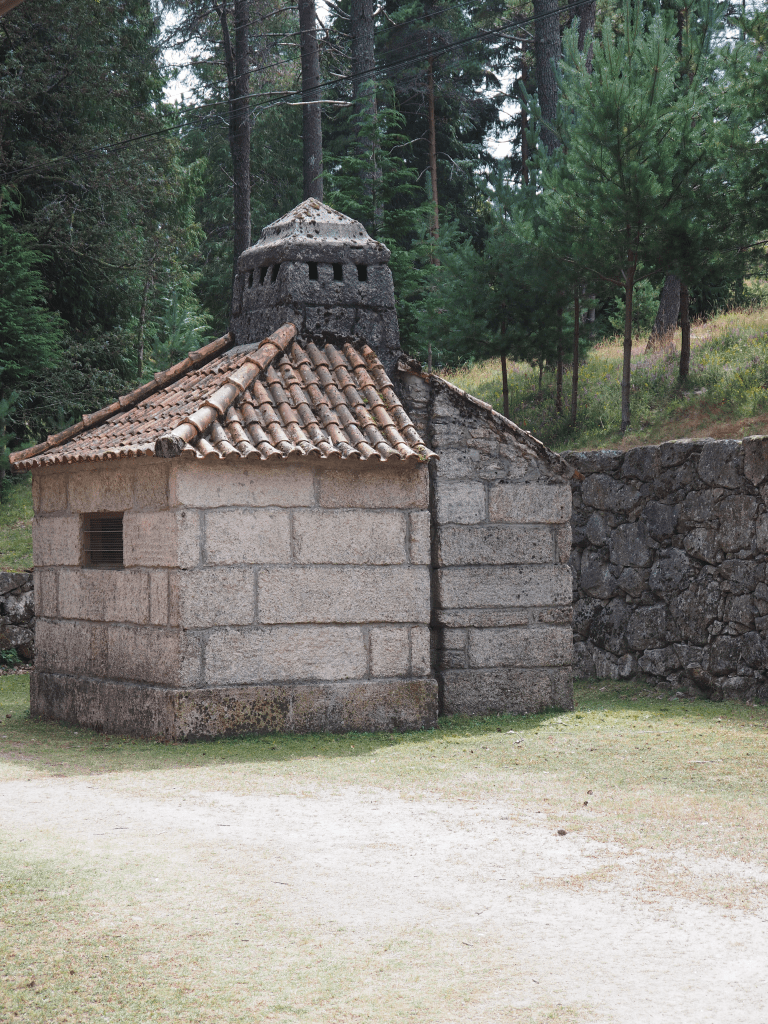
A wood-cut of a stag announces our arrival in the northern section of the Peneda-Gerês National Park. The mountain air is clean and sweet. Sun dapples moss and lush grass.
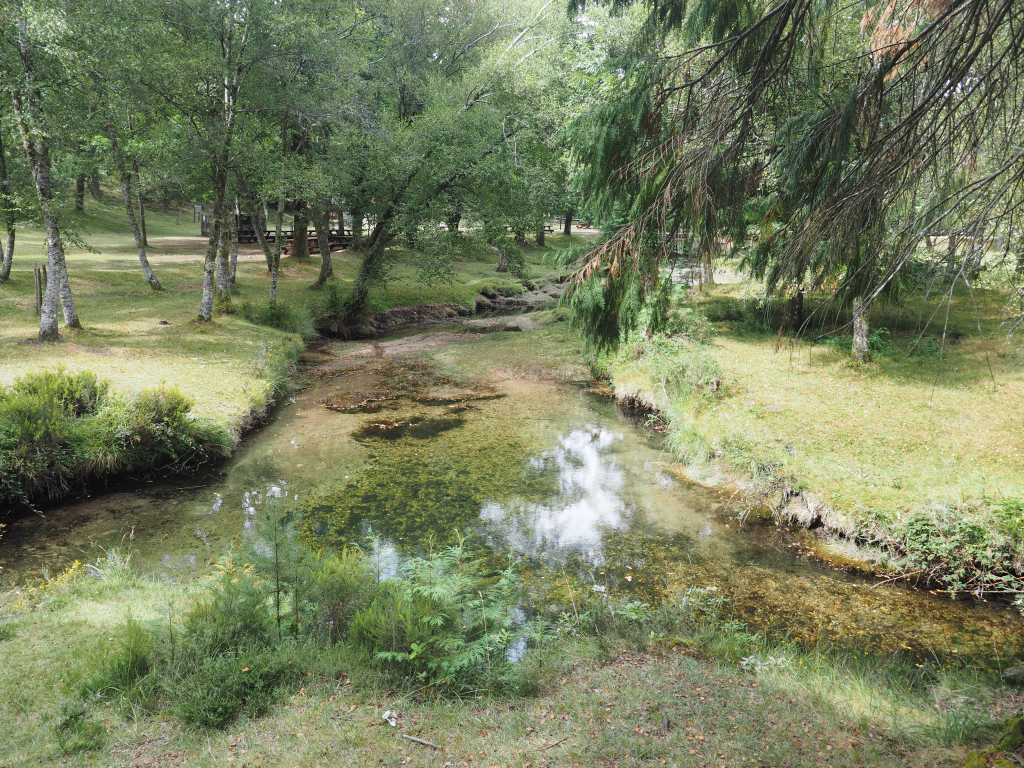
Chestnut, oak, silver birch, cedar, pine, eucalyptus and acacia line the Mouro’s valley floor, granite peaks soaring above us. The Mouro River is clear with the pebbles on its bed shining. Demoiselles and dragon flies, water boatmen and trout co-exist here. Gorse and heather cover the heathland.

Camping de Lamas de Mouro sits in the national park and it’s the first time I’ve seen the muscular mountain dogs herding the horned cattle without a human in sight.
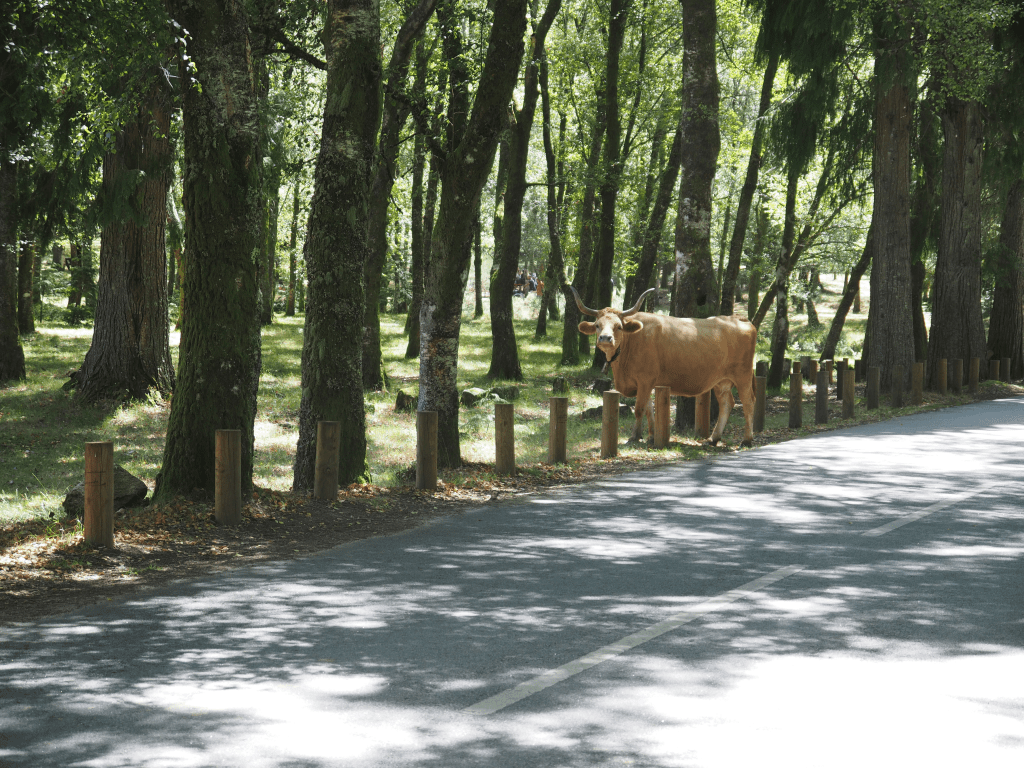
Despite their fierce size, the dogs seem calm enough as long as people do not approach the cattle. In the summer cattle farmers and shepherds leave their solid granite houses and take their animals to the high mountain pastures for grazing.

A sign informs us how to behave when hiking. My favourite piece of advice is a warning not to move the stone cairns as they are way-markers used by shepherds. I’m delighted when we pass some the next day on our hike.
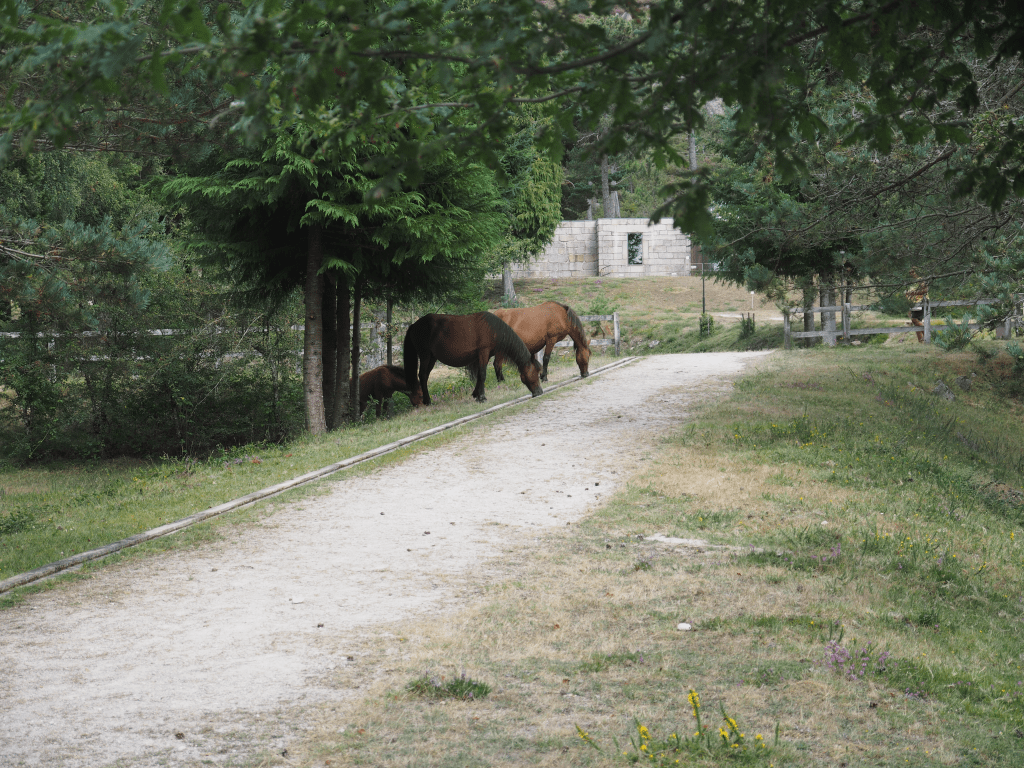
It is truly wild territory though. All we can hear are the owls by night and Seán’s App identifies the Sardinian Warbler by day. The list of creatures who live here is impressive: wolves, bears, wolverines, otters, wild goats, roe dear, salamanders, eagle owls, tawny owls, golden eagles.
I wake in the middle of the night, the huge cedars silent sentinels around us and the sky full of the brightest stars I’ve ever seen.

The helpful receptionist in the National Park office explains that it is safest to hike with a local guide as the mountains can be treacherous, flash storms and mist can descend in minutes. She tells us the best time to come back will be Spring because the wild daffodils, lilies and all other floral treasures will be blooming. She tells us too of the natural hot springs and thermal pools in the south of the park. We’ll be back. There’s no way I can resist a mountain meadow full of wildflowers and natural thermal pools.
 Campervan Therapy
Leave a comment