We arrive at Top Farm Campsite in the dark of an October evening only to be blinded by a huge lamp shining ominously into the van from across the field. However, far from fierce, it’s only the kindly warden making sure we follow the tyre tracks of the previous van so we don’t get mired in muck.
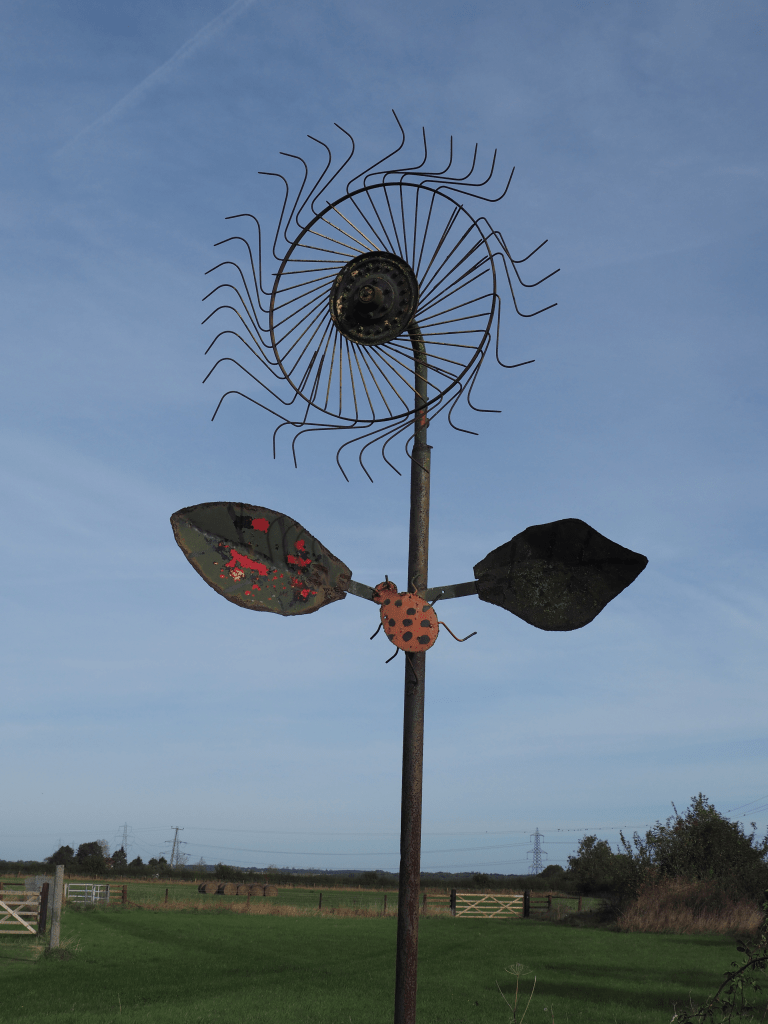
The next day we’re off to walk the half mile to the centre of Ryhall Village on the outskirts of Stamford for the 201 bus to Helpston and the iconic nature poet, John Clare’s, cottage. We wait by the Gwash River and watch it bubbling over boulders beside the sheep and horses in the field.
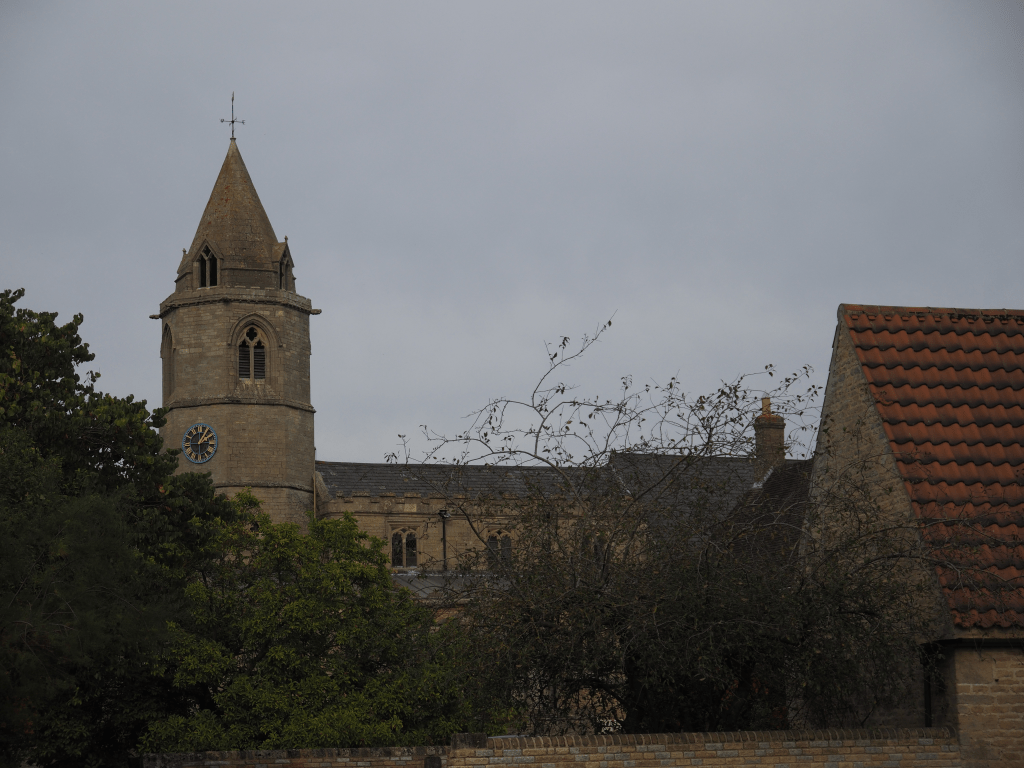
Helpston is all honey coloured Lincolnshire limestone, with roses over the door and abundant cottage gardens, seeded no doubt by the seed-swap stop in the telephone box, where the seeds nestle beside the books – two magical entities, whole worlds growing from a seed or a page in a book.
The bus drops us outside Helpston’s church. Soon, we stand before John Clare’s lichen-encrusted grave in St. Botolph’s churchyard. John Clare, a modest labourer for most of his life, wanted to be buried simply under a milestone, with the words ‘Here rest the Hopes and Ashes of John Clare’.
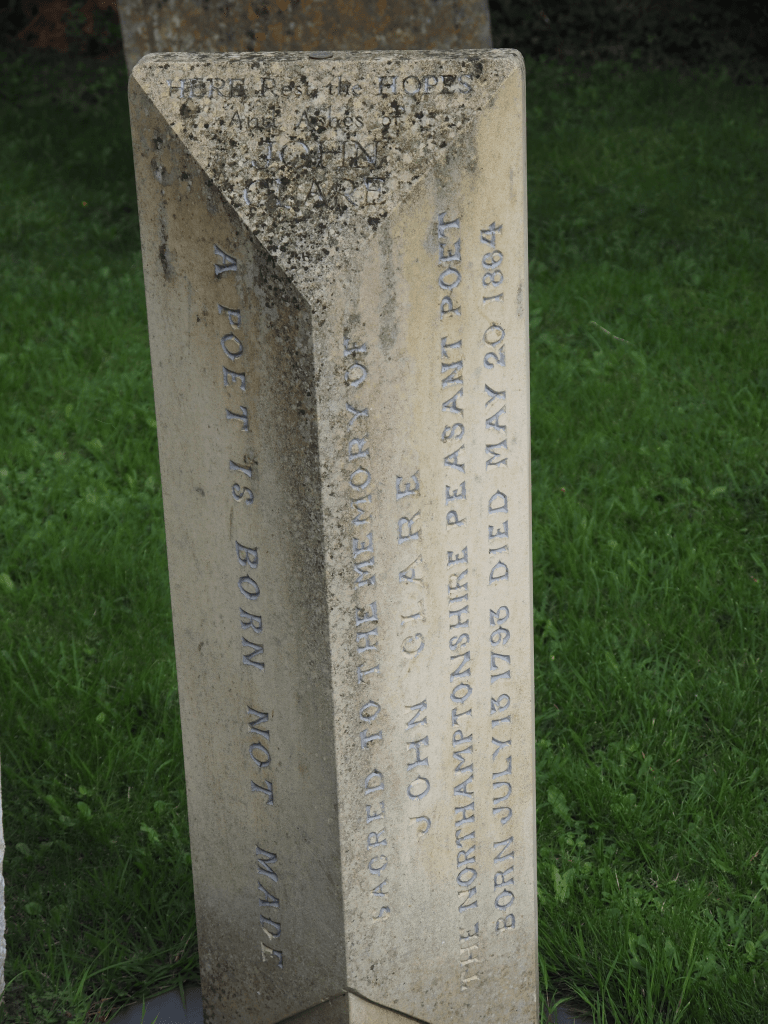
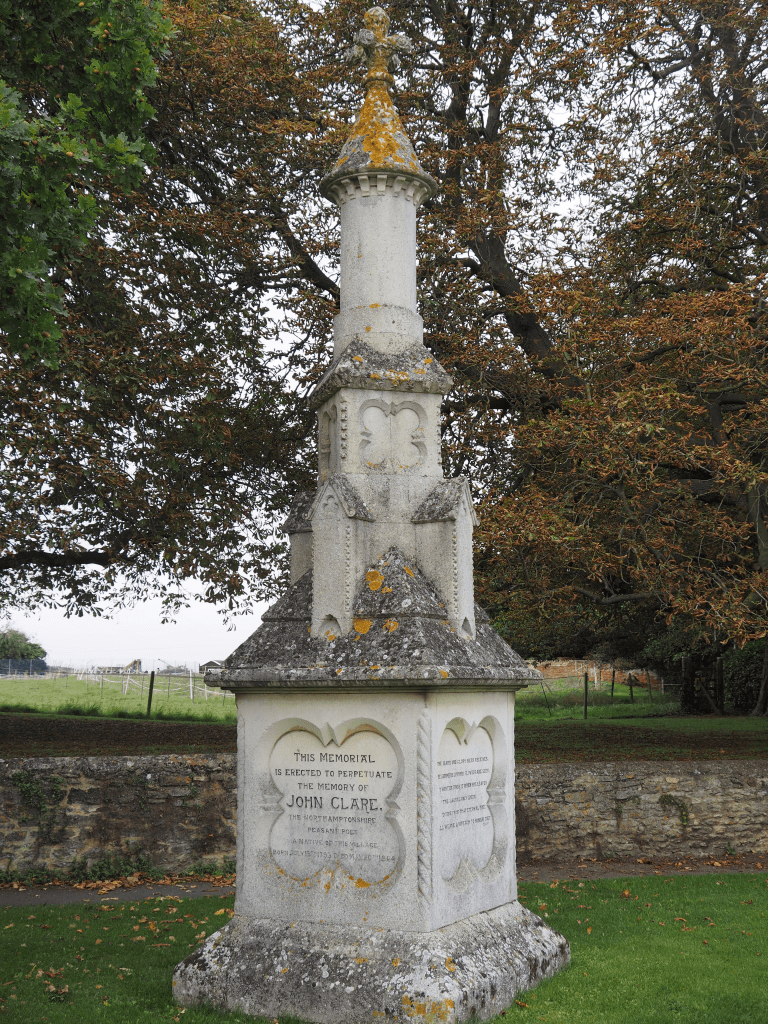
A sobering memorial contains the words which are now rather obscured on the grave. My usually pragmatic companion, Seán, is rather ruffled.
“Bit bleak isn’t it?” he mutters disappearing out of the churchyard.
“But so true. We’ll all come to it in the end,” I call to his retreating back.
“I could do with lunch,” my ever-practical one replies.

We stroll, quarter of a mile from the church, by The Bluebell Inn, where Clare worked as a pot boy and odd-job man, to Clare’s cottage and stand in the Inn’s dovecote, which is now in the poet’s garden. It must have been punishing for Clare to tend the pigeons while his family had to make do with only Barley Bread in the winter .
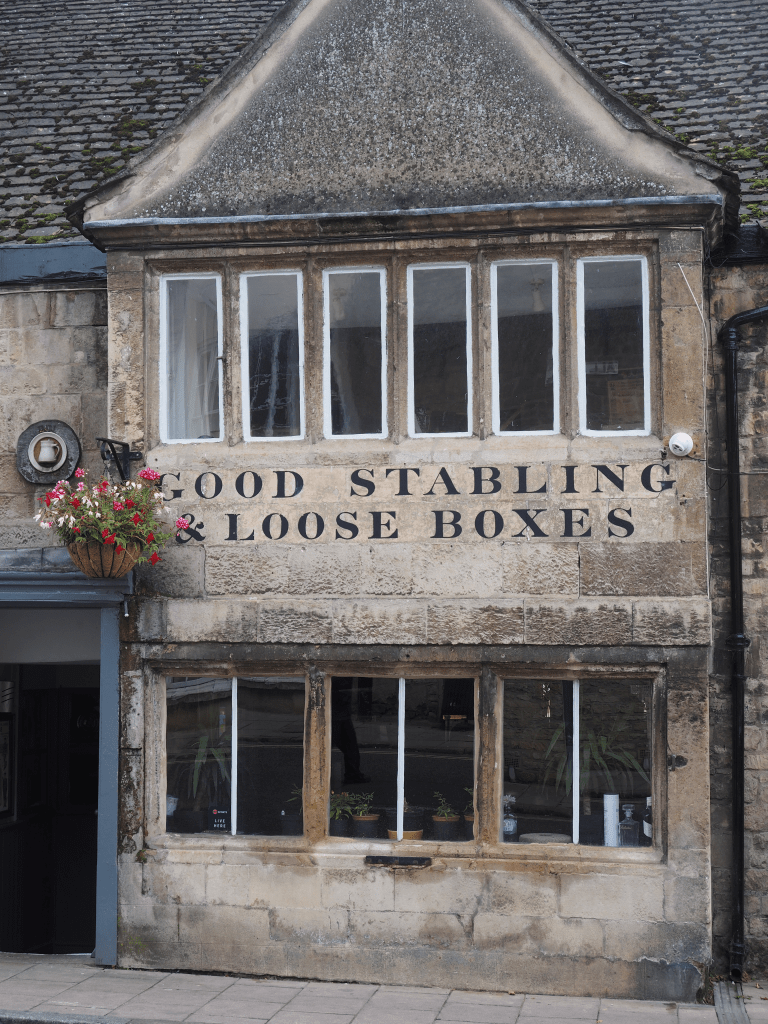
The humble white-washed, thatched cottage is packed with information about the peasant poet’s life. Born to almost illiterate parents, he shone at the school he could only attend for a few months a year due to his labouring commitments.
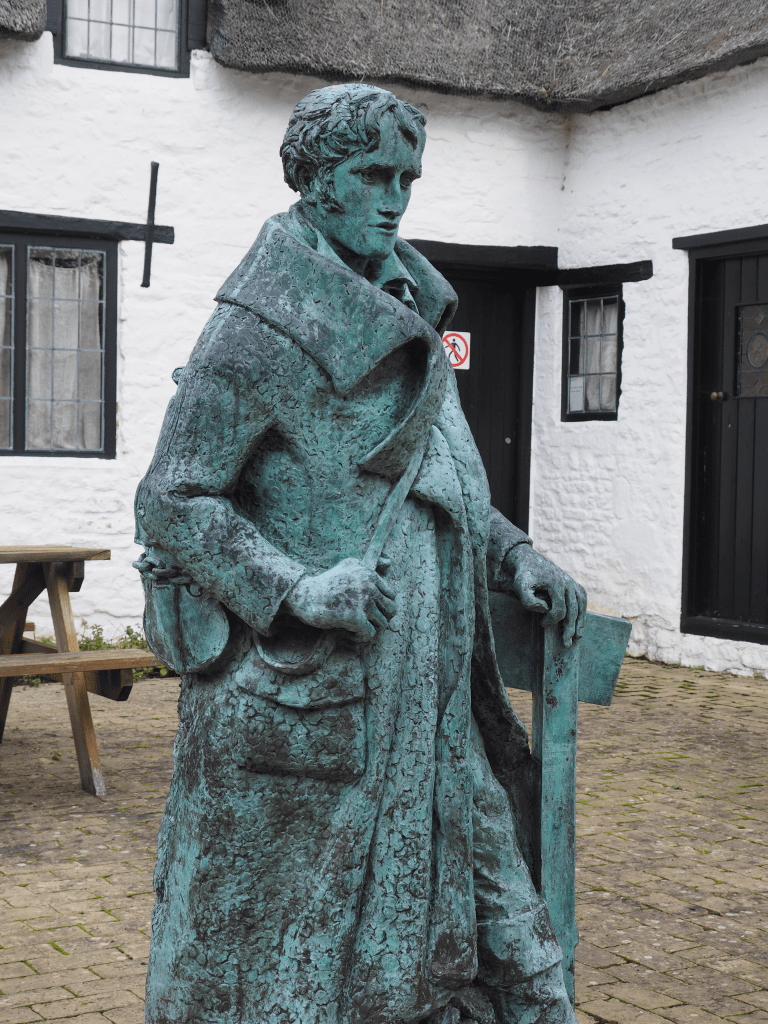
We see the two rooms where Patty, his wife, and himself raised seven children. Clare’s cottage garden contains the few rows owned by his family. I can’t resist a sit and think in the orchard. The statue of Clare emphasises the hardships of the poor at the time of the enclosures and the agrarian revolution as he is diminutive, only five feet tall. When there was potatoes, Clare considered himself lucky.
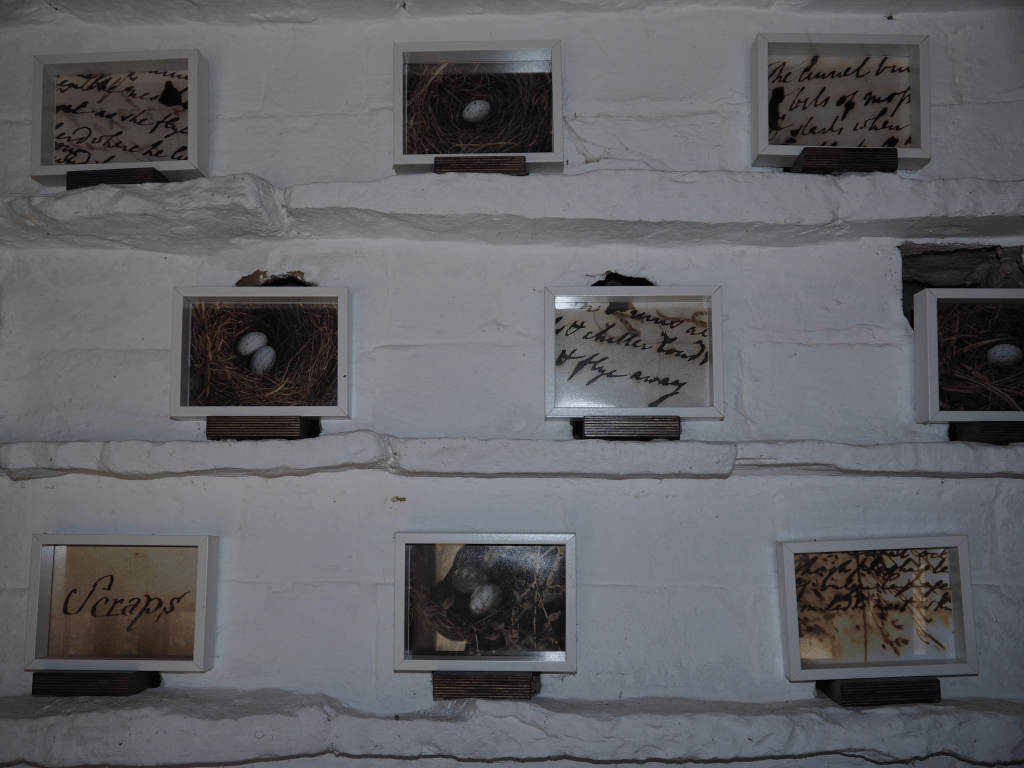
The poems spread around the walls emphasise his place as one of the greatest nature poets of all times. My particular favourites being Skylark, Autumn, and I Am.
A toasty for lunch in the convivial café, with its sensitive restoration and oak beams, gives ample room for us to realise just how lucky we are to have food enough to eat and volunteers such as these to enrich our lives.
Click here to read some of Clare’s poems: https://www.poetryfoundation.org/poems/43950/the-skylark
https://www.poetryfoundation.org/poems/43946/autumn-56d222d7e0f7c
https://www.poetryfoundation.org/poems/43948/i-am
Click here to read my poem, The Poet’s Premonition, influenced by the visit to Clare’s cottage.
 Campervan Therapy
Leave a comment