The Danelaw walking trail across the fields from Lincolnshire’s Ryhall to Stamford conjures up the image of Vikings in bear skins and horned helmets. But this pair of ramshackle ramblers soon lose the trail only to find ourselves stumbling around amidst a field of celeriac as big as footballs. Eventually we manage to circumnavigate the celeriac to rejoin the path that pops us out in Stamford.
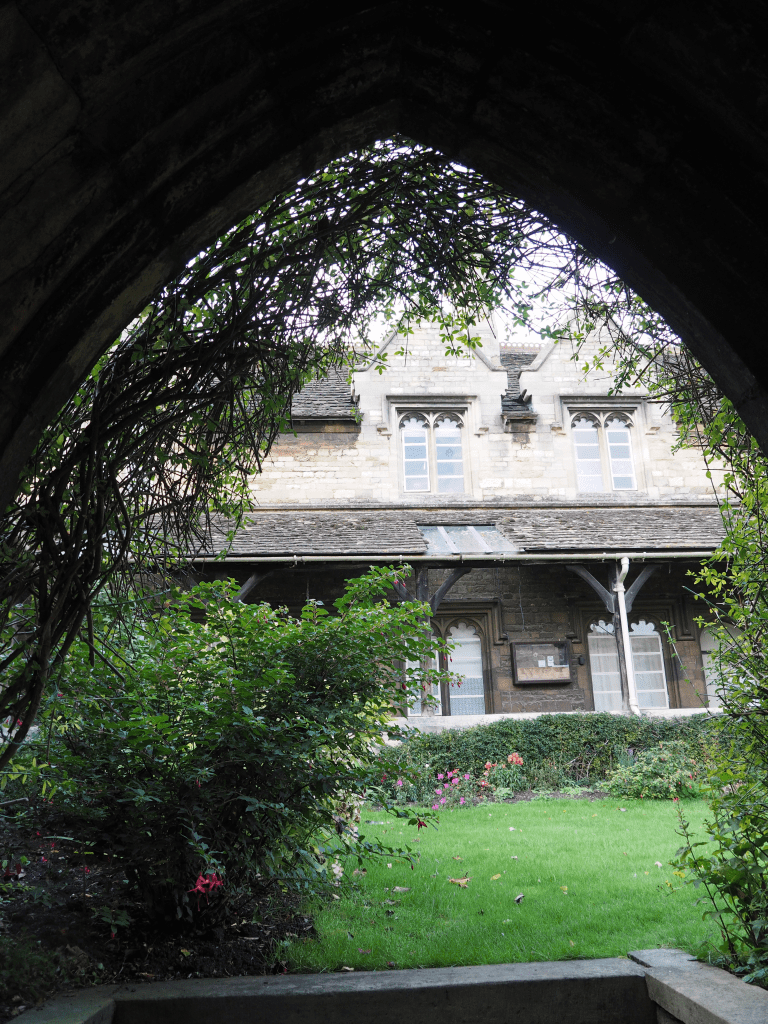
Our first stop-off in the honey-stone town, is Browne’s Hospital, founded in 1475 by a rich wool merchant. The Medieval Alms houses are all Gothic arches, cloistered courtyard and cottage garden flowers – and I can’t resist a cloister.
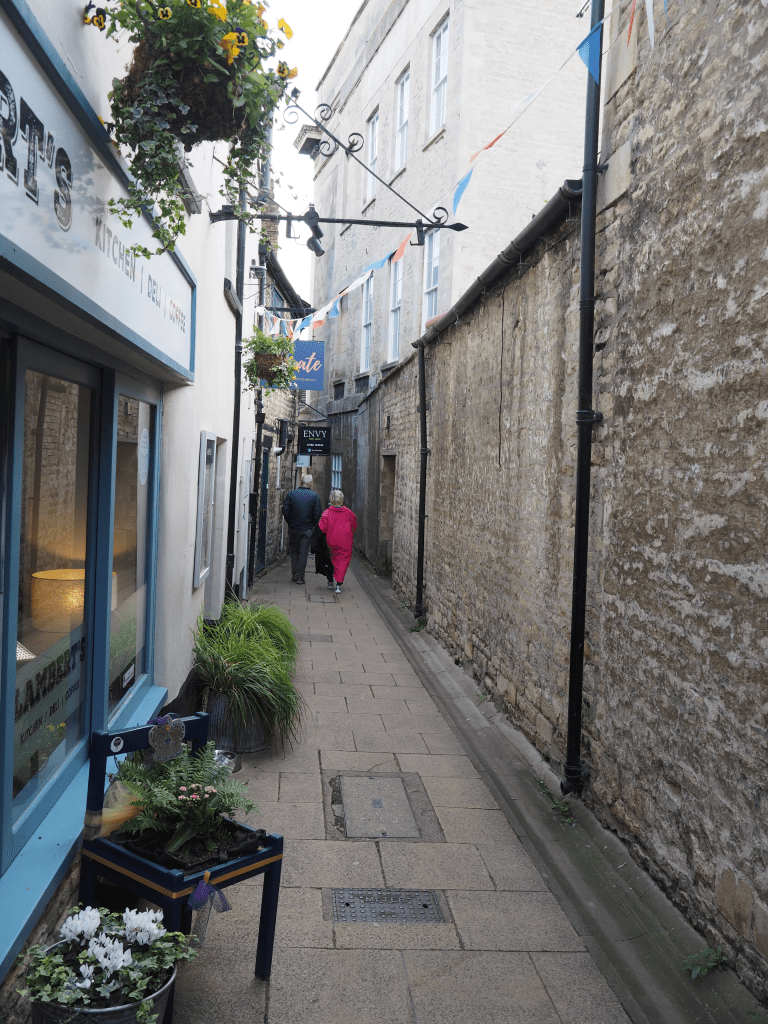
Stamford winds down through narrow covered alleyways and limestone streets, full of independent shops and cafés, to the River Welland. The skyline is punctuated with church spire after spire.

Himself makes a bee-line for the Adnams beer shop, the Southwold brewery’s beer being one of the first real-ales his father stocked in their London Pub, The Ship. I make a bee-line for the half-timbered Antiquarian Book Shop – a win-win situation. Coffee and walnut cake in the cosy, cinnamon-fug of the Scandi Café on the High Street sets us up for more exploring.
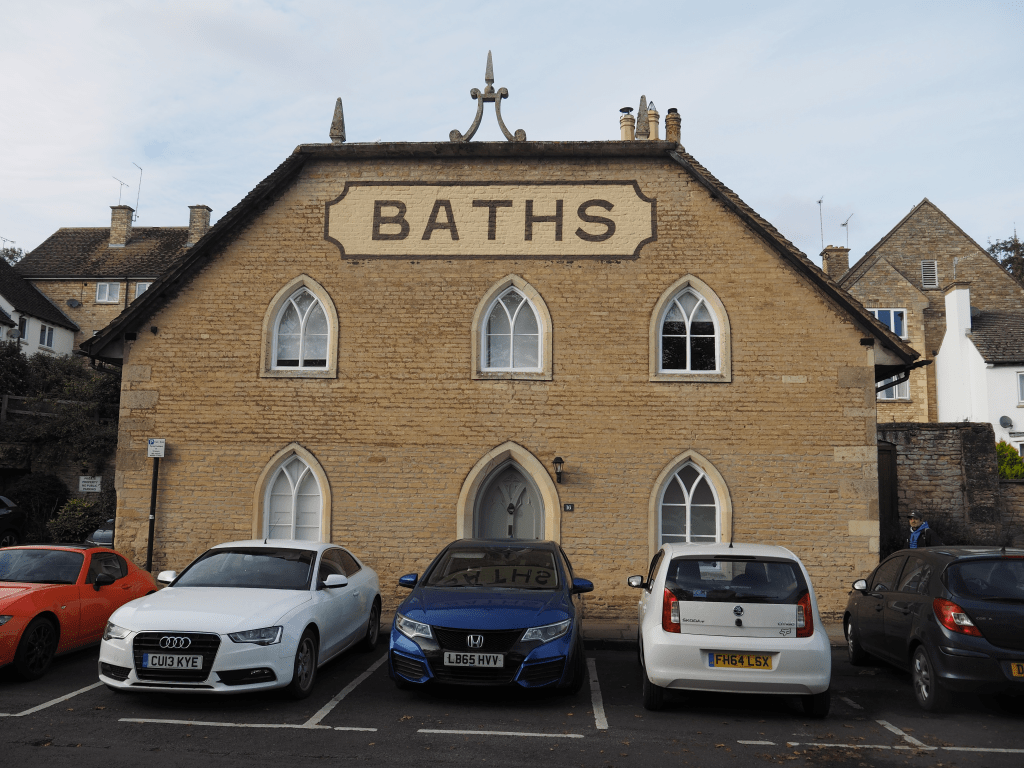
I’m struck by the information board by the millstream. It explains how the area was once a disease infested slum, so four local surgeons built the public baths here, believed to be near the site of a Roman bathing house. The current bath-house, now a private residence, dates from 1772, though the cost of a bath was still a substantial percentage of weekly earnings for the average resident. The genteel refinement of the area by the river hides a pretty pungent past.
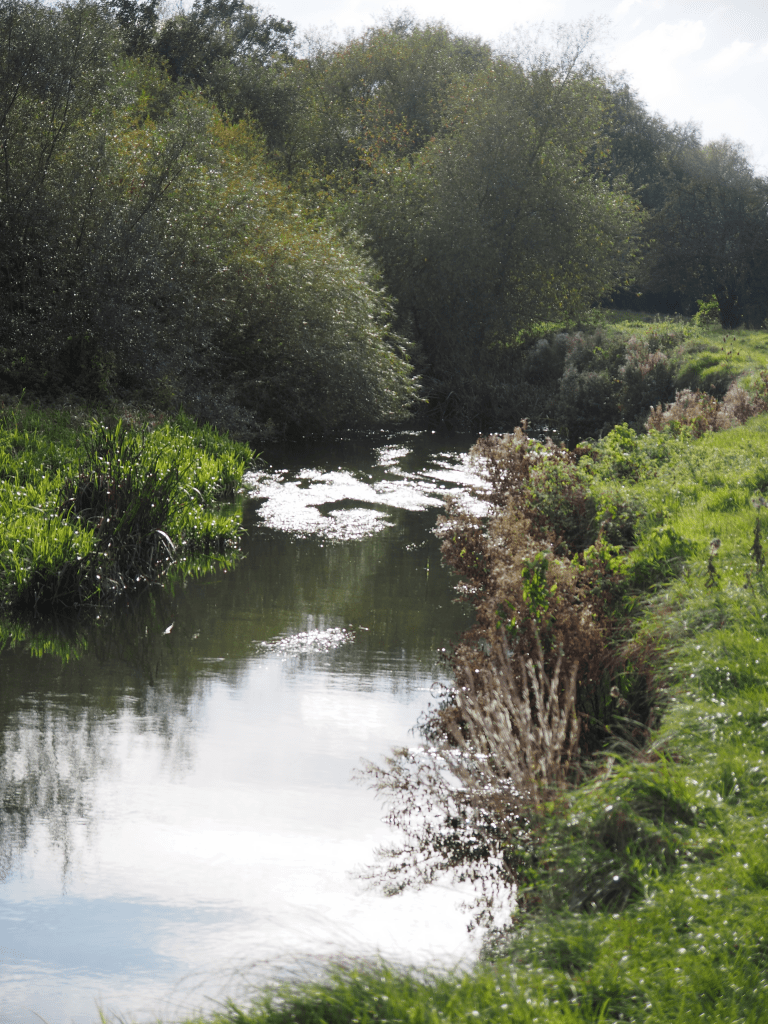
We tramp across the water meadows which are bordered by the millstream and the Welland River to find the Roman ford among the willows and tranquil waters. Today, the air is lit up by the iridescent dash of a kingfisher. Ducks and moorhens complete the bucolic scene but once this ford was far from peaceful.
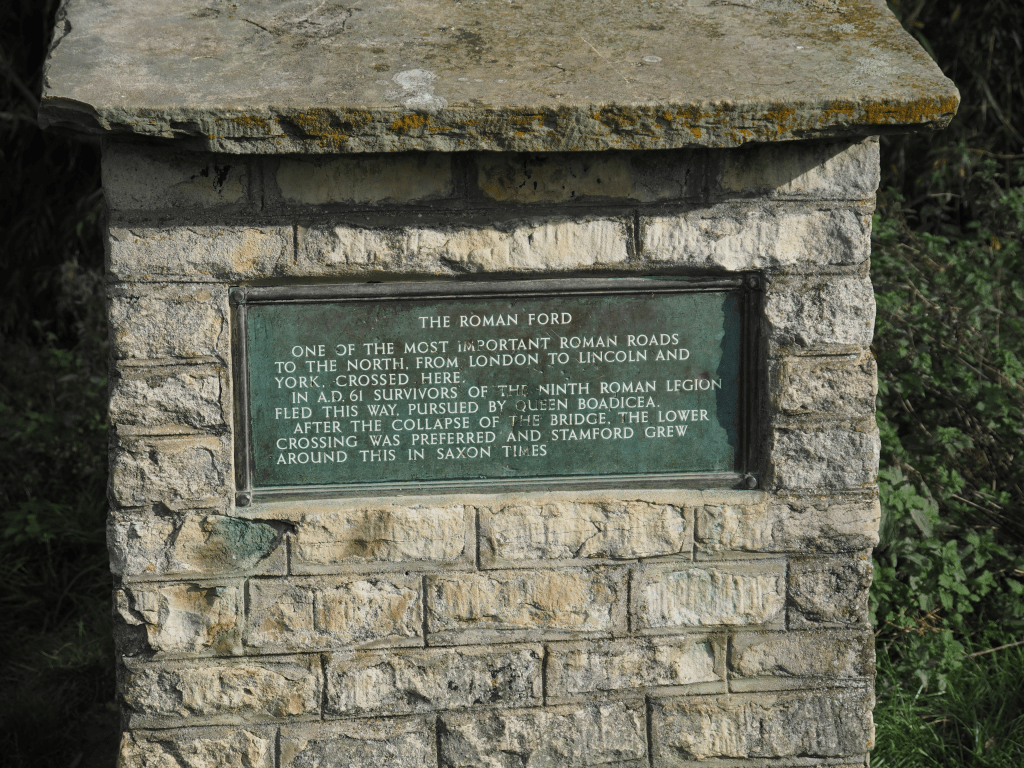
In 61AD the Celtic Briton and queen, Boudicca (the name linked to the Celtic word for ‘Victory’) chased the survivors of a Roman Legion across this very ford. I google what she was meant to look like – just so I can picture the scene and Warwick University offers me up this insight from Cassius Dio (LXII 2.2)
In stature she was very tall, in appearance most terrifying,
in the glance of her eye most fierce, and her voice was
harsh: a great mass of the tawniest hair fell to her hips;
around her neck was a large golden necklace; and she wore
a tunic of divers colours over which a thick mantle was
fastened with a brooch.
I can see her now, hair flying in the wind, urging her horses faster and faster, her chariot careering over this ford, the ducks and moorhens scattering, the Roman survivors doomed.
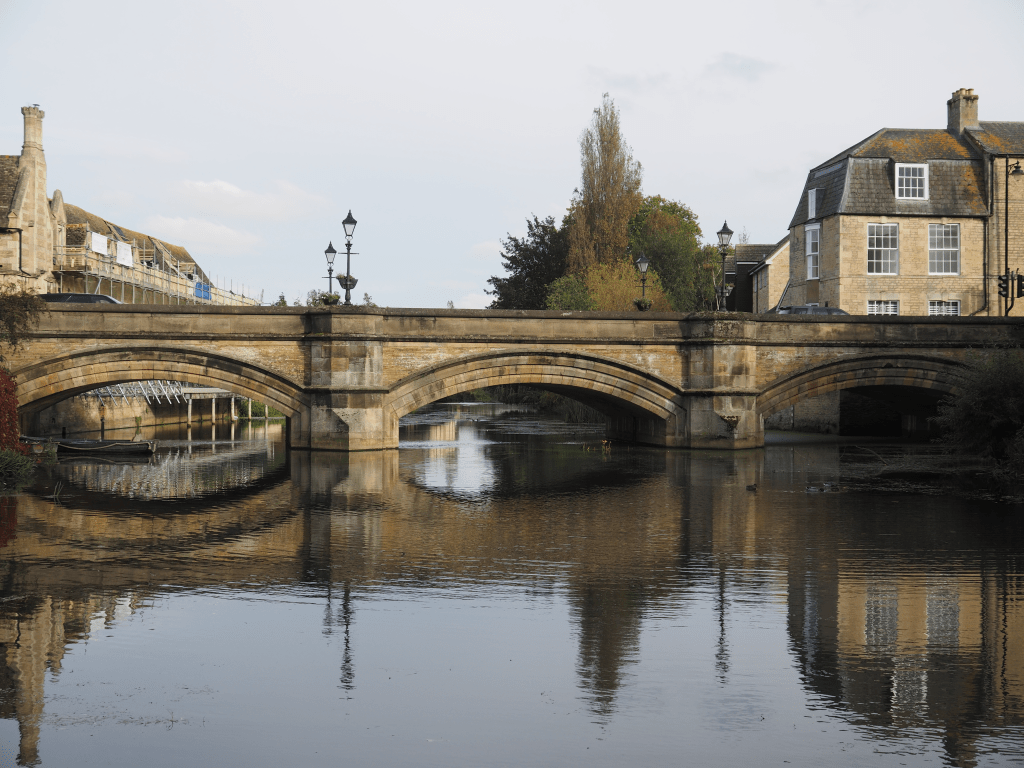
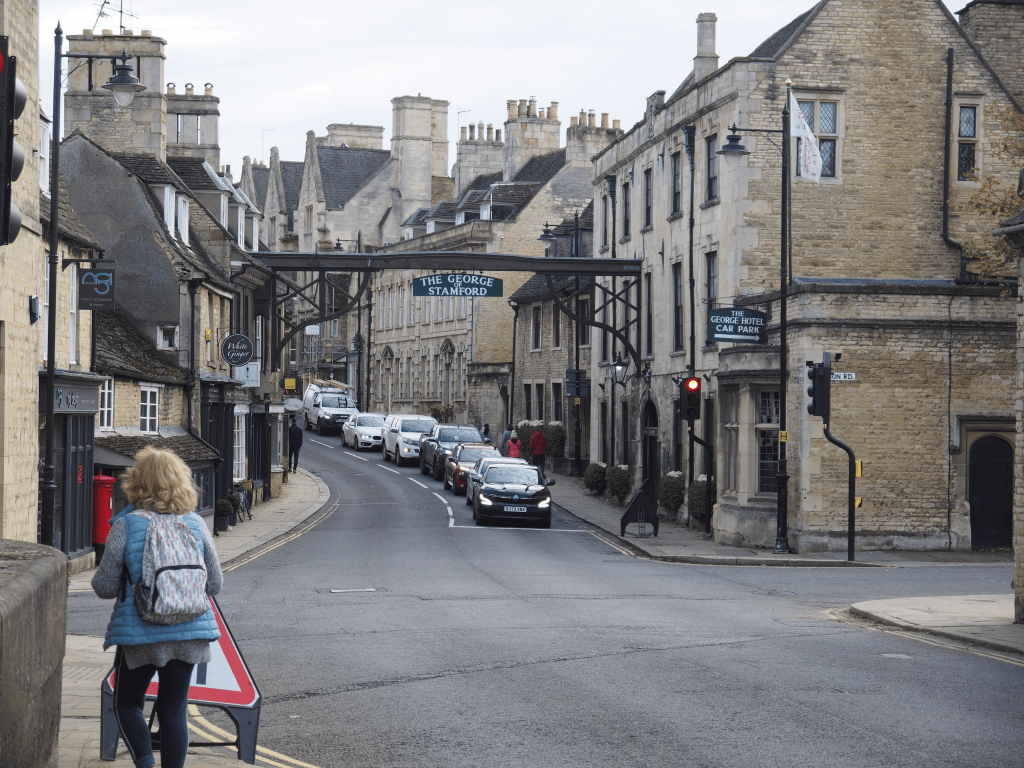
Back in town, we mooch around for a little longer, walking over the bridges, with the handsome houses tumbling down to the riverside, and under the George Inn’s sign, which arcs over the road.
Even the old station house, built when the railway first reached Stamford, is grand, suggestive more of a substantial manor house than a ticket office.
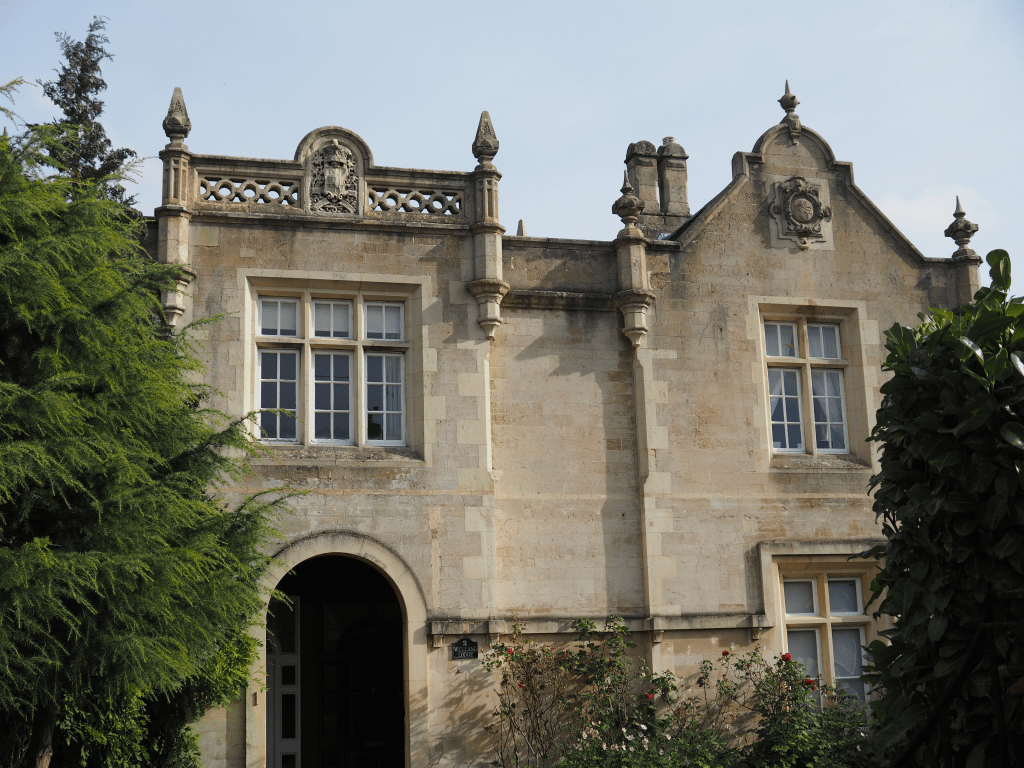
Around every corner in Stamford is another architectural treasure.
 Campervan Therapy
Leave a comment