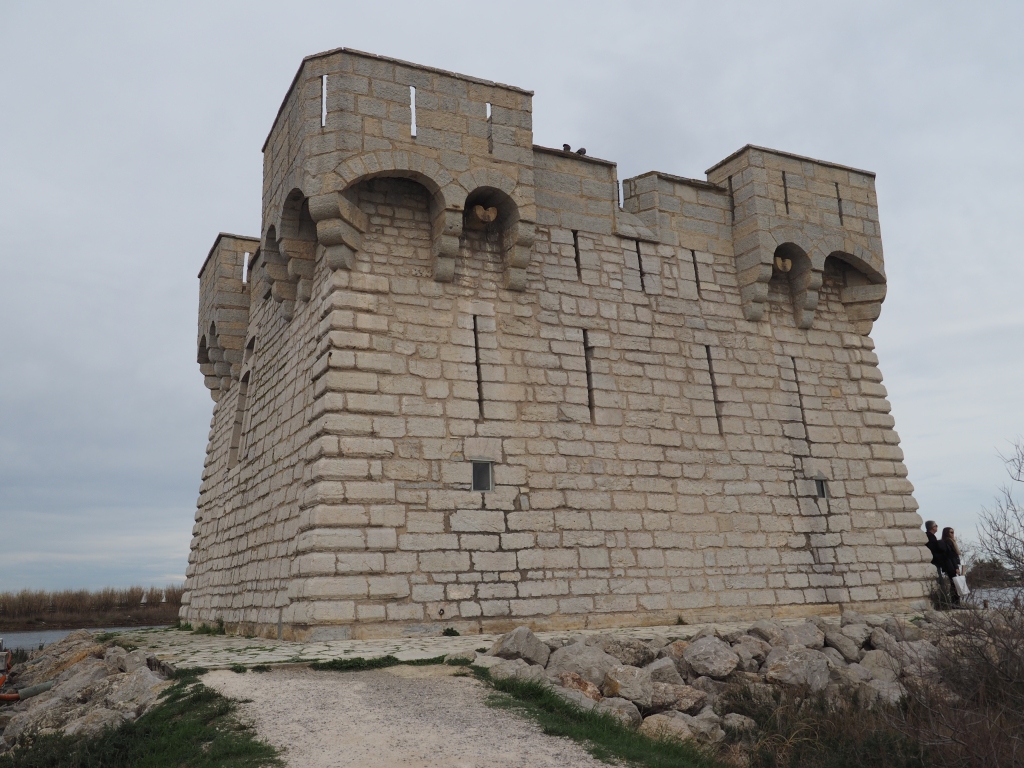
There’s only one thing left to do before we leave Palavas-les-Flots, we need to visit the small 18th Century fort, La Redoute de Ballestras, on the Lac du Levant. Once protecting the town from pirates, it now houses a strange museum with the works of Albert Dubout, an artist who specialised in cartoons of the tourist season in the town, reminiscent of the seaside postcard in Britain.
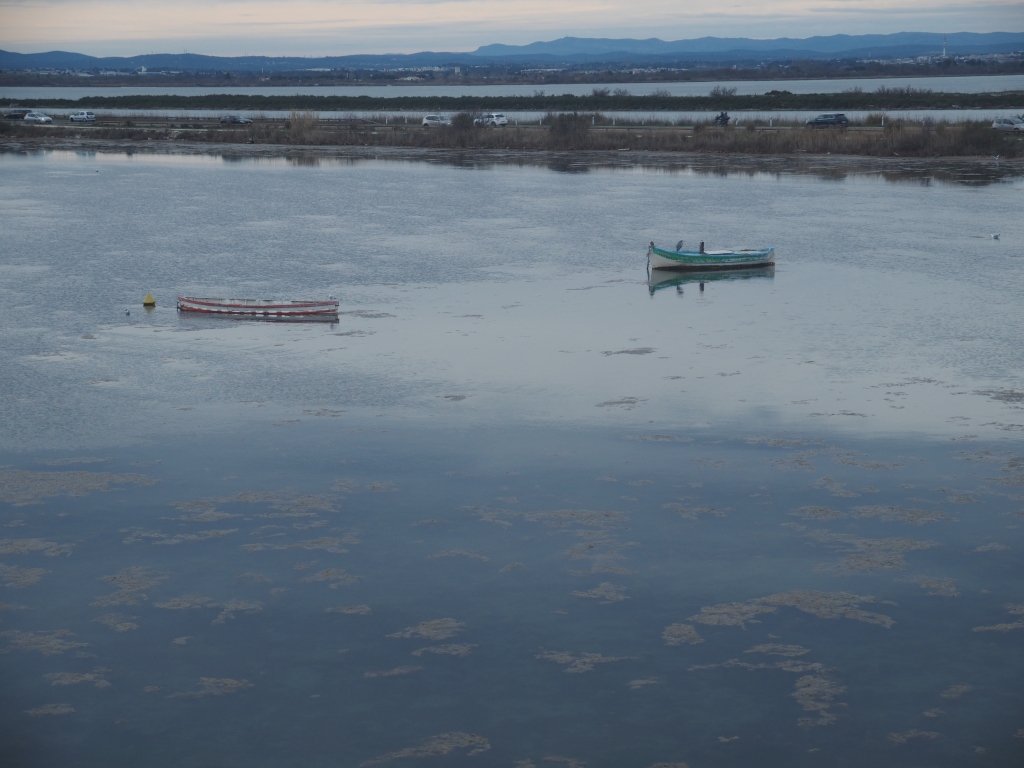
I can’t say I like them much, most of them of shrunken men, red nosed and dishevelled and massive, bosomy, fierce women. Someone could write a dissertation on the underlying cultural assumptions, but I’m more struck by the blue and white striped boat on the lagoon, artistically lying on its side and the water stretching towards blue-hued mountains in the distance.
We drive along the thin spit of land on the D62, to the fortified town of Aigues-Mortes. Mirage-like, the limestone walls, towers and turrets of the ramparts rise up from the marsh. Louis IX left from here, when it was the premier port, on his crusades to Cyprus and Tunisia in the 13th Century. But, the Rhone silted up the estuary, leaving the town stranded, as the name suggests by ‘dead’ waters, namely the lagoons and saltpans.

To my mind, Aigues-Mortes is far more impressive than the more disneyfied Carcassonne, its setting in a weird and wonderful watery world is mysterious and haunting.
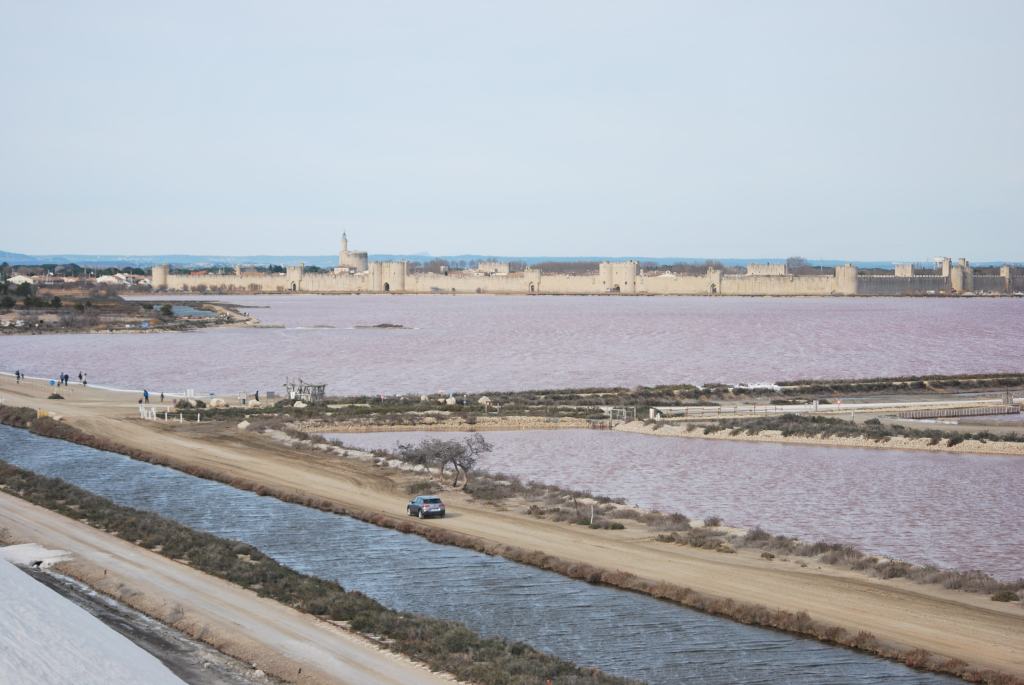
Much as I love a rampart, as we’ve clambered around these before, we head for the Salins du Midi. The water in the salt pans is pink and there are white mountains of table salt standing beside grey mountains of salt for the roads. From this angle the fortified town floats in waters that are a purplish-pink, edged with white salt crystals.

There’s a choice of train ride, cycle or walking tracks, but the train is already booked, so we set off on foot. We even get to climb a grey salt mountain, with an observation point on the top and my technical-one is delighted photographing the huge piece of equipment which operates on the same principles as rice harvesting machines.

Then he’s bowled over by the massive chute on wheels which builds the mountains of salt. This is magic for both of us: for Him industrial heaven; for Her a dream of fortified castles and pink lagoons.

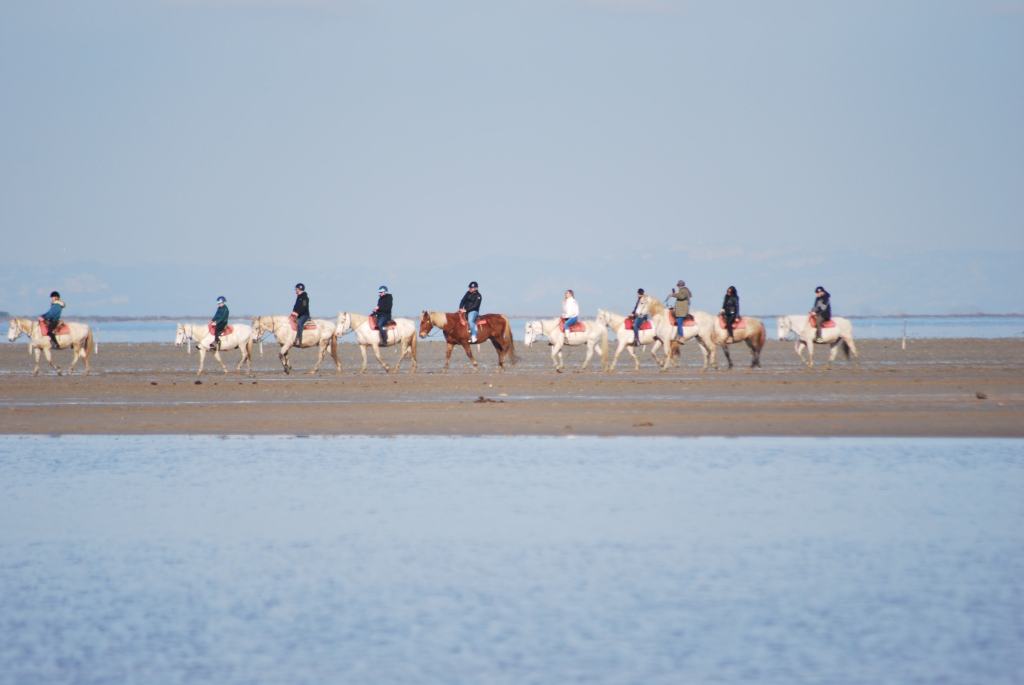
Driving through the Camargue to Saintes Maries de la Mer, which is just into Provence, is another dreamlike experience of white horses, marshes, lagoons, weeping willows, tamarisk, black bulls, ranches, vineyards, and western rock rocket flowering in carpets of white blooms beneath the vines, including one vineyard where the sheep keep the grass in check.
We park up in Camping La Brise de Camargue, by the sea, before walking into town. The floodlit sanctuary of Notre-Dame-de-la-Mer, is a beacon through the night, guiding us to the centre. It floats above us a magical presence.

The wood-panelled bar, Lou Gabian, with sepia photographs of the Camargue cow-boys on the walls, is packed. There’s even a real cow-boy chatting nonchalantly in his Stetson. It’s what we love about travelling, how the unfamiliar takes us out of ourselves and our daily lives.

 Campervan Therapy
Leave a comment