As we’ve said before, sticking to an itinerary is not our style, so it is that our art tour of Languedoc Roussillon takes us into Spain, where the temperature is five degrees higher than its French Pyrenean neighbour. From here we plan to border-hop back into the artists’ haven of Céret.
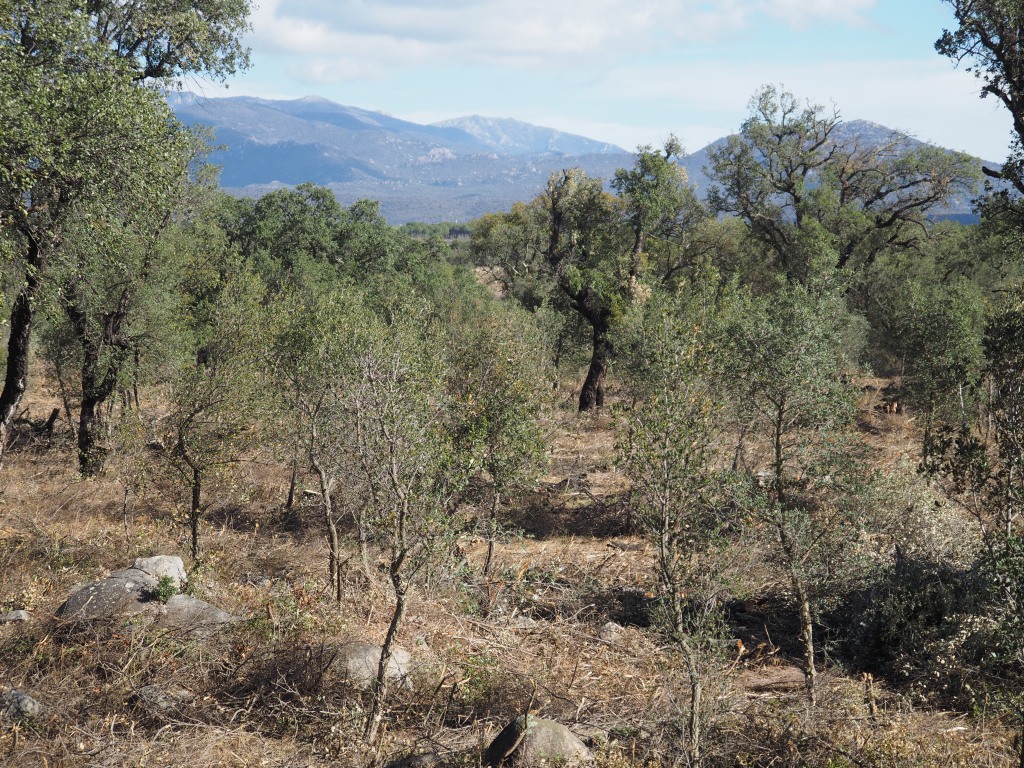
Soon we’re winding up to the Catalonian village of Capmany and what a treat Camping Albera is, situated in a gently shelving cork forest and a mere 500 metres from the fortified village. We pass all the vans huddled together and camp in glorious isolation with nothing but the cork oaks, silver-leaved olive groves and mountains for company.

A nightcap in the local bar with a very smooth Vino Rosado, this is wine-territory after all, and a peaceful night sets us up for our jaunt back across the border to Céret.

30 minutes after setting off, we park up in Céret’s picnic spot on the D115. The town is famous for Picasso and his gang hanging out here but also is the cherry capital of southern France. You can see why artists fell in love with the town, with its sinuous river, cliffs and mountain peaks.

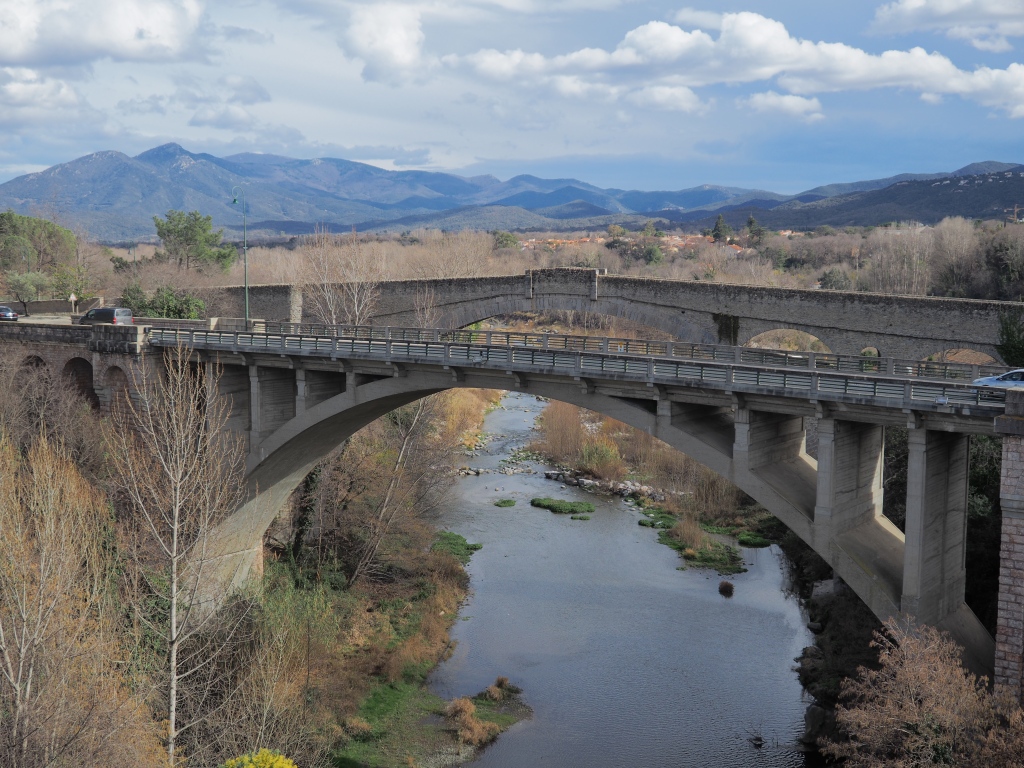
Birch and beech trees are still naked among the pines. Some brave cherry trees wear a faint gauze of pink and the promise of spring is on the air. We gaze down from the off-road cycle route into town at the gorge plummeting below us and over at the Pont du Diable, said to have been built by the Devil in 1321 in exchange for the soul of the first Cérétan to cross it.

Even on the outskirts, there’s art to catch the eye. We pass a massive fountain, with stone reliefs of workers, in remembrance of the building of the canal. The fortifications are romantic ruins now, with their round towers and arched entrances. Monumental plane trees shade the squares and fountains.
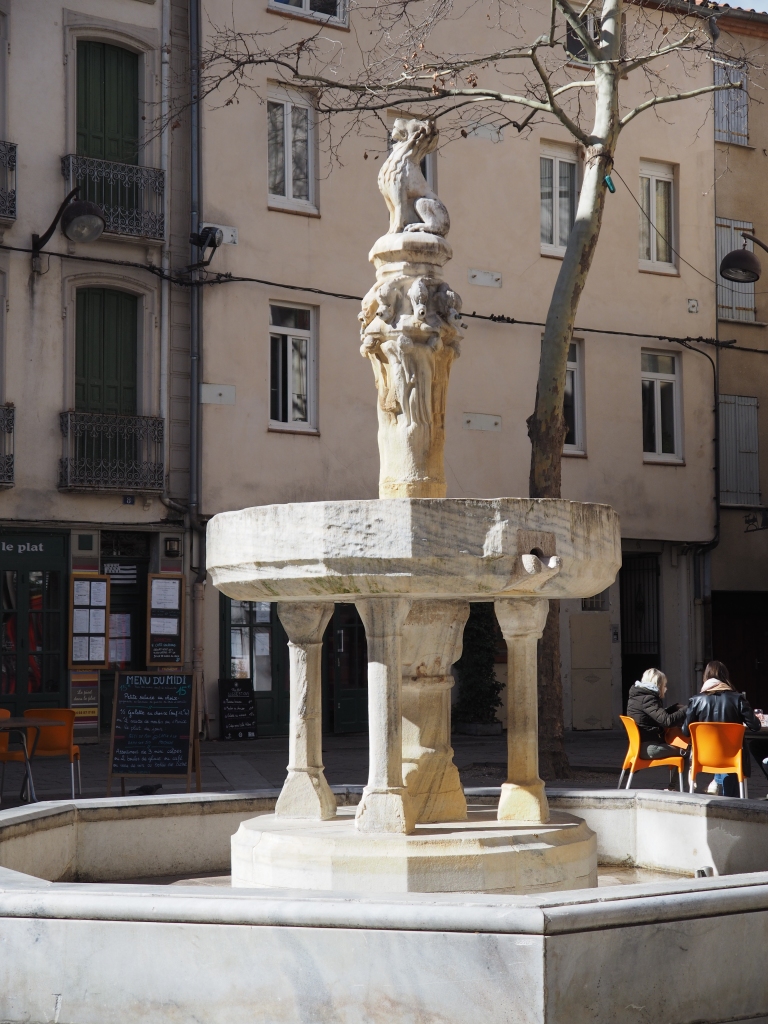
We track down the iconic Fontaine des Neuf Jets built in 1313. Interestingly, throughout the centuries the top of the fountain has changed from a lion, indicating loyalty to Spanish Catalonia, to a cockerel symbolising loyalty to France. These days the lion has replaced the cockerel again and faces Catalonia. The Saturday diners enjoying their tapas on café terraces certainly seem to owe more to Catalonia than France.

Standing before the Fontaine Picasso in Place Pablo Picasso, we soak up the atmosphere of the ancient ramparts and the blue and green ceramics on the circular snake fountain glistening like scales. After attending a bullfight in Céret Picasso was welcomed by the local communists in the Grand Café where the artist drew the circular Sardana dance. In 2013, Juliette and Jacques Damville designed a ceramic fountain based on Picasso’s drawing.

The town is full of monuments in remembrance of the major fauvists, cubists and surrealists who based themselves here, from Georges Braque to Marc Chagall; Raoul Dufy to Henri Matisse. The modern art galleries offer up a broad spectrum: from bold bulls to delicate pen-and ink flowers. The Musée d’Art Moderne de Céret celebrates the town’s illustrious visitors.

Let’s not forget the food, not only the capital of Cubism but Céret is also passionate about its cherries. The butcher shops announce cherries in everything: in sausages, hams, veal and chicken.
 Campervan Therapy
Leave a comment