From the minute we hit the D81, the sinuous coastal road to Collioure, memories assail us. We had many happy holidays here with our teenage children and a collection of various friends. But there’s more to celebrate here than memories, the Pyrenees undulate down to the postcard blue sea, the vines cling to the hillsides. We park on the edge of Collioure, the ancient fort above us and the cliff walks heading off over the russet coloured rocks , but we wander down among the lemon and terracotta houses that nestle in a cleft of cliffs.
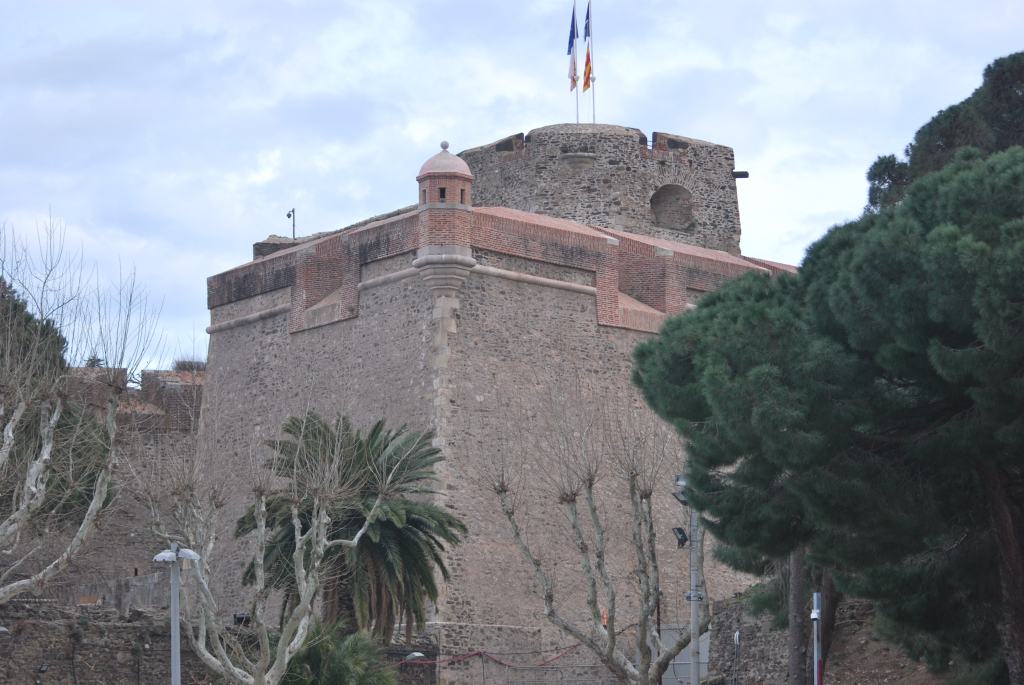
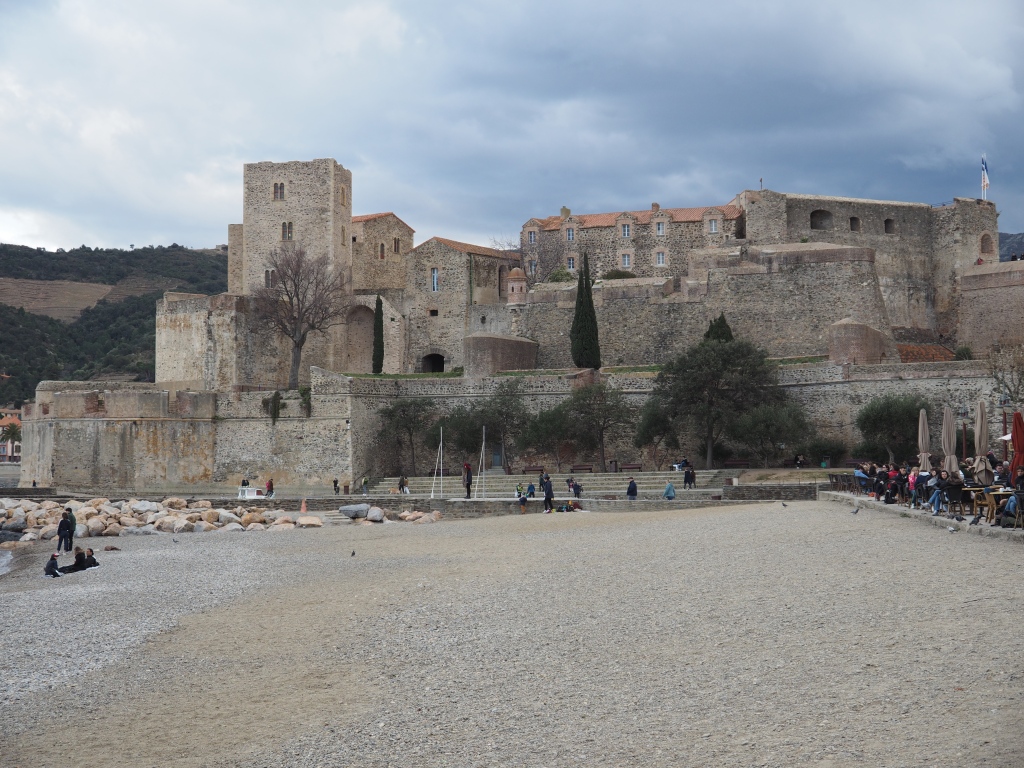
A dried river bed empties out between the Château Royale and the fortified promontory, one beach is a sickle shape of white sand, the other lined with palm trees.

The weekend crowd enjoys ice-creams and drinks on the restaurant terraces that line the river. We’re on the hunt for Hôtel des Templiers and the huge vivid mosaic on its front lets us know we’ve found it.

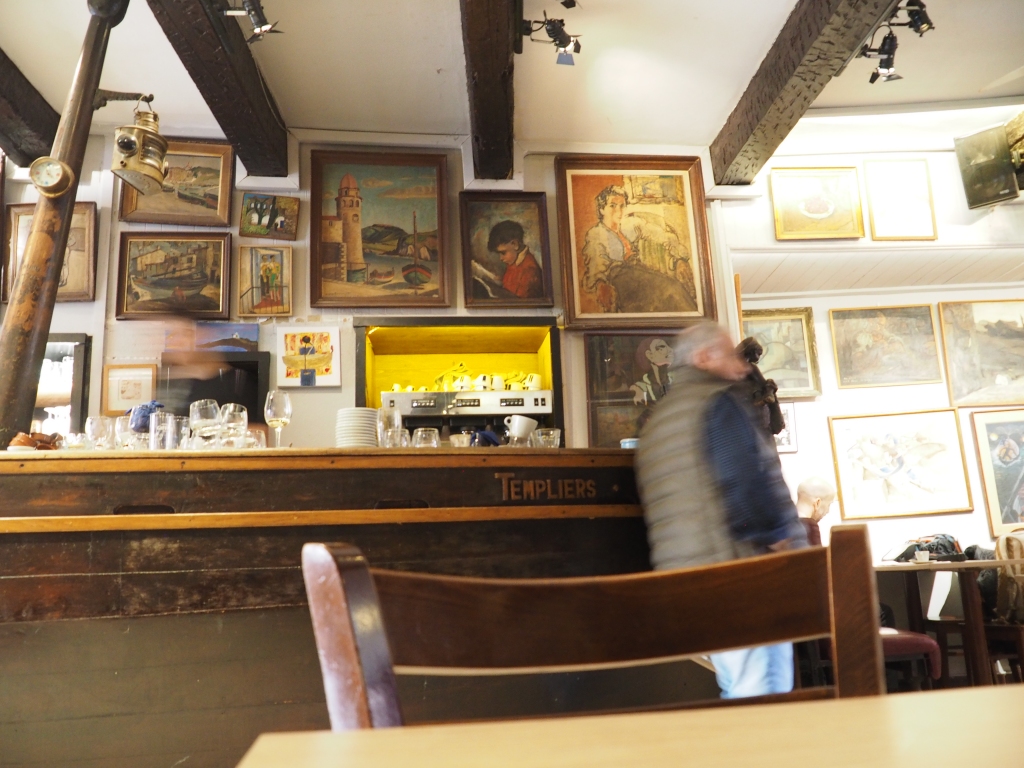
Inside, the walls are covered with original oil paintings, watercolours and ink drawings, their subject matter linked to Collioure with its fantastic light. The current owner’s grandfather entertained Matisse, Picasso and Dufy here, the artists settling their bill with works of art, which are now housed in various galleries, including the Tate.
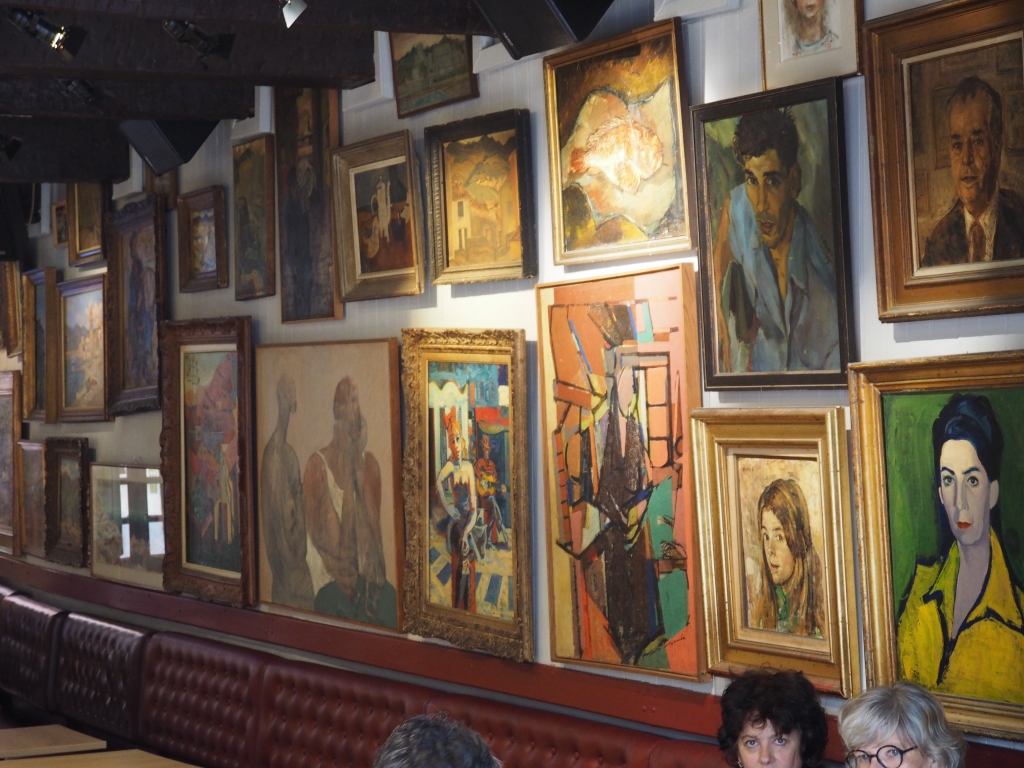
The bar with its mahogany ship prow is striking too, as well as the Blues music playing in the background. The Hôtel des Templiers is worth a detour to Collioure alone. We vicariously soak up the creative spirit of the great revolutionary artists.

Art has long been a passion of mine, perhaps because I was so bad at it at my convent secondary school, so a few years ago I decided to take lessons. With the forgiving use of pastels I can produce landscapes that are passable in a dim light . So, there is a slight wistful longing as I look at the vivid portraits and landscapes of the largely unknown, but skilled, artists whose work decorates these walls.
We finally tear ourselves away to follow the Le Chemin de Fauvisme, where you can stare through the empty metal frames at the views painted by Matisse and André Derain who were considered ‘wild’ by Parisian salons for their ‘unrealistic’ use of vivid colours.

We linger outside the lemon façade and green shutters of the house where they stayed and where the signs claim Fauvism was born. Today there’s a plethora of contemporary galleries with a variety of bold works.

But the town is a work of art in itself. Weekend visitors clamber over the rocks to the little chapel on the islet above the harbour. Sturdy forts on the top of the hills are a reminder that this artists’ enclave was once hotly contested border country.
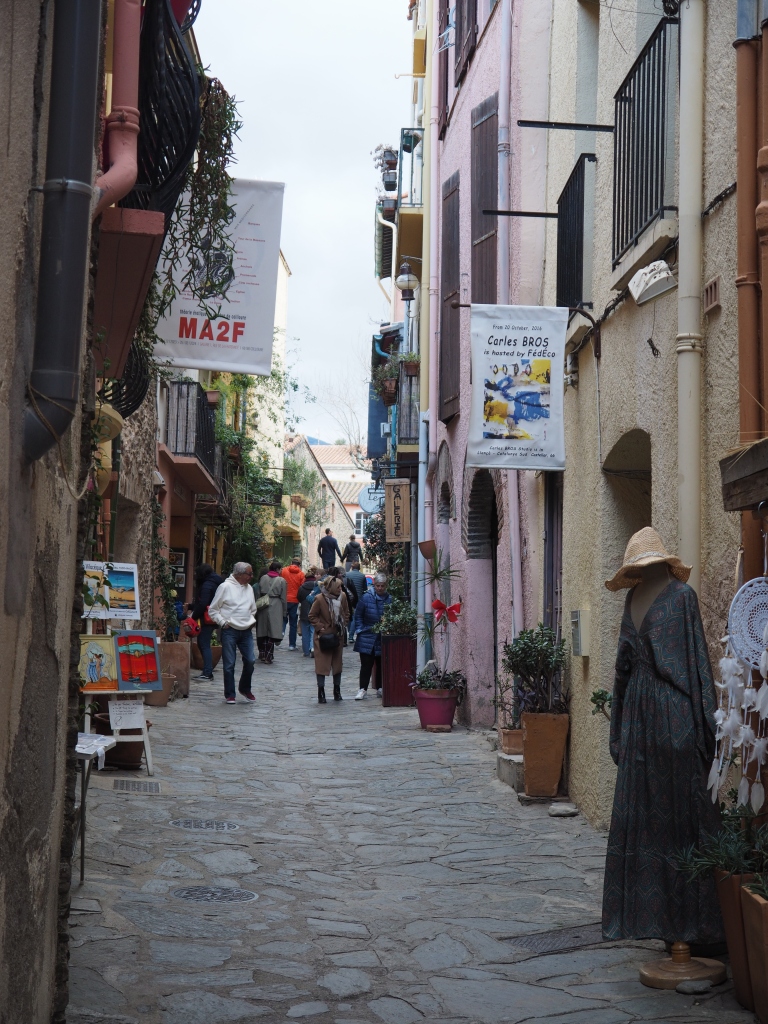
I’m bowled away by the narrow street, Carrer de les Estables, lined with pastel houses, galleries, succulent plants over-spilling terracotta pots, intricate wrought iron balconies.

If only I could set up my easel and produce a bold reckoning of it all, but that is as yet wishful thinking, so I settle for detailing the thousands of artistic details I’d like Seán to capture on film for me.
 Campervan Therapy
Leave a comment