Camping Alberes in Capmany boasts of being the first campsite over the border with France in Spanish Catalonia. After parking up in the cork forest, with the russet toothed mountains on the horizon, we walk the 500 metres into the fortified village.

Old stone houses, arched doors big enough to fit your horse and carriage through, a bell-tower, an old lookout, an ancient church squatting in the middle of the road – this is pure Catalan territory.

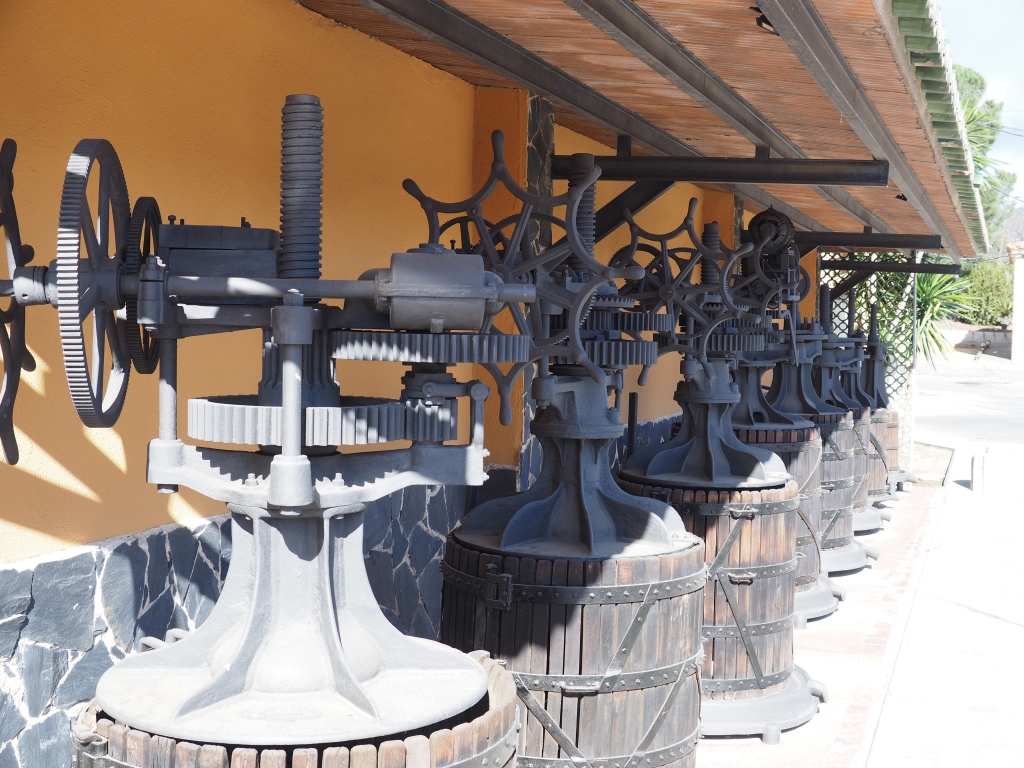
A map tells us there’s a walking trail around ancient Neolithic stones. We walk round in circles for some time, passing the olive oil museum, which is lined with every kind of olive press imaginable, and down laneways lined with cherry blossom trees just beginning to bloom.
Finally, we’re back where we started at the campsite where we guess and follow a walking sign up into the dry-earth mountains, the scent of rosemary and hot sand on the air.

We ponder over the sacrificial altar first, a basin worn by the elements sits on the top rock. I can imagine our ancestors: the knife, the animal, the blood, the squealing – the creature’s life to appease the mighty gods. Though it is a modest slaying compared to our post-industrial age’s mass extinction of species; and we don’t have the excuse of believing we’re appeasing the gods.

Megalithic look-out monoliths look down at the AP7 motorway that cuts through the valley now. You can see what a vantage point beleaguered megalithic tribes had up here. The best of the megalithic ruins though is the Dolmen, obviously the burial place of a person of power. A huge slab rests on a series of vertical slabs either side of it, its dank mouth yawning into the sunlight. As we walk back through the cork forest, the breeze rustling in the olive trees below, the Dolmen stays with us.

Heading to L’Estartit, the small seaside town on the coast, is almost a homecoming for us. We’ve been coming to the same family run campsite, Les Medes, for ten years now. Three natural parks converge on the resort of L’Estartit and it doesn’t take long to find wild places in any direction, but with the advantages of a small, white town of restaurants and bars. Walking and cycling trails radiate out from the campsite. We pitch up with a view of the bare mountain and stout castle at Toroella about 5 miles away inland.

We cycle to the furthest reach of the town’s promenade, to gaze out at the waves crashing against the Les Medes islands, their jagged rocks poke out of the sea, with a solitary lighthouse on one.

Wonderful Poseidon fields, rare species of fish and coral live in its pristine waters. Once the home of pirates, the islands are now a scuba diving mecca, but boats are not allowed to dock at this nature reserve, to preserve this rare habitat.

Antonio, who left his home in Granada to work for Les Medes Campsite in late 1970s, welcomes us back. In between serving meals and pouring wine, he provides a free floorshow, juggling with glass bottles and, believe it or not, yodelling. Along with the book swap shelves and the pool table, it’s a fine end to the day.

 Campervan Therapy
Leave a comment