Just over the Piccolo San Bernardo Pass, we camp up at Arc en Ciel one kilometre walk from the town of Morgex. The terraced campsite is shaded with views of the glacier on the sharp toothed Mont Blanc or Monte Bianco. We fall asleep to the Dora Baltea River rushing by the campsite.

The young couple below us put us to shame as we loll around under the rowan trees as they contort their bodies into impossible yoga moves first thing in the morning. We set off following walking trails through Lavancher to explore Morgex, the trail through vineyards is bucolic.
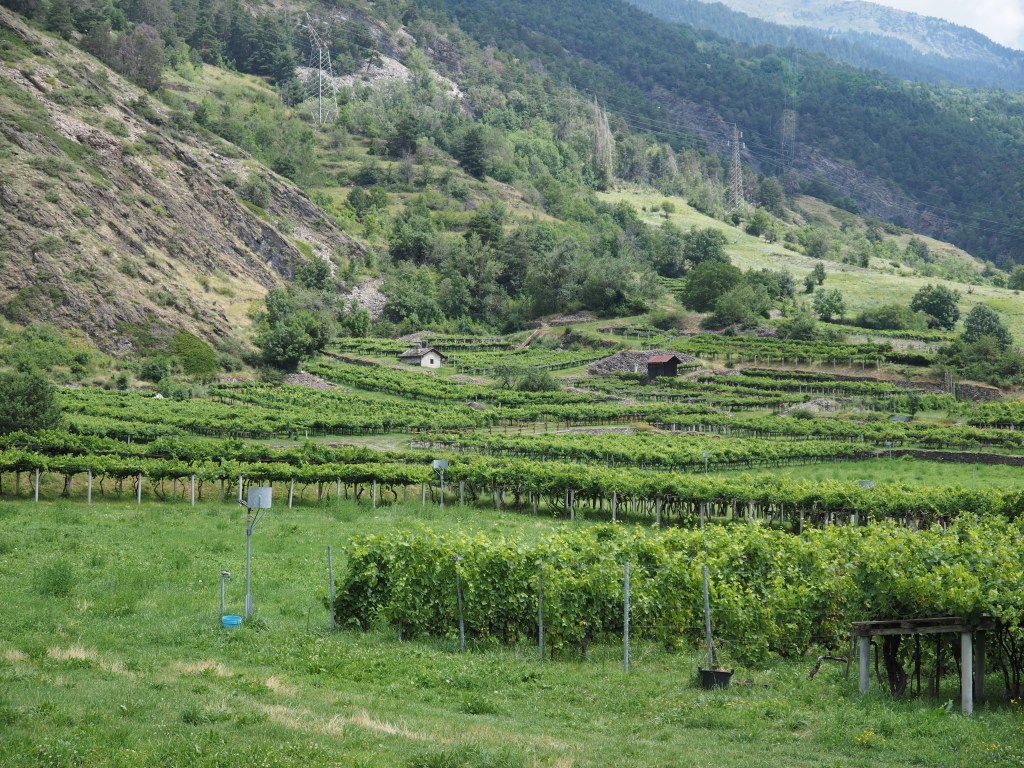
An elderly woman is clearing a stream running across her meadow and warns us about walking in the heat; beekeepers, dressed in full protective gear, are tending their colourful hives on the outskirts of Levancher.

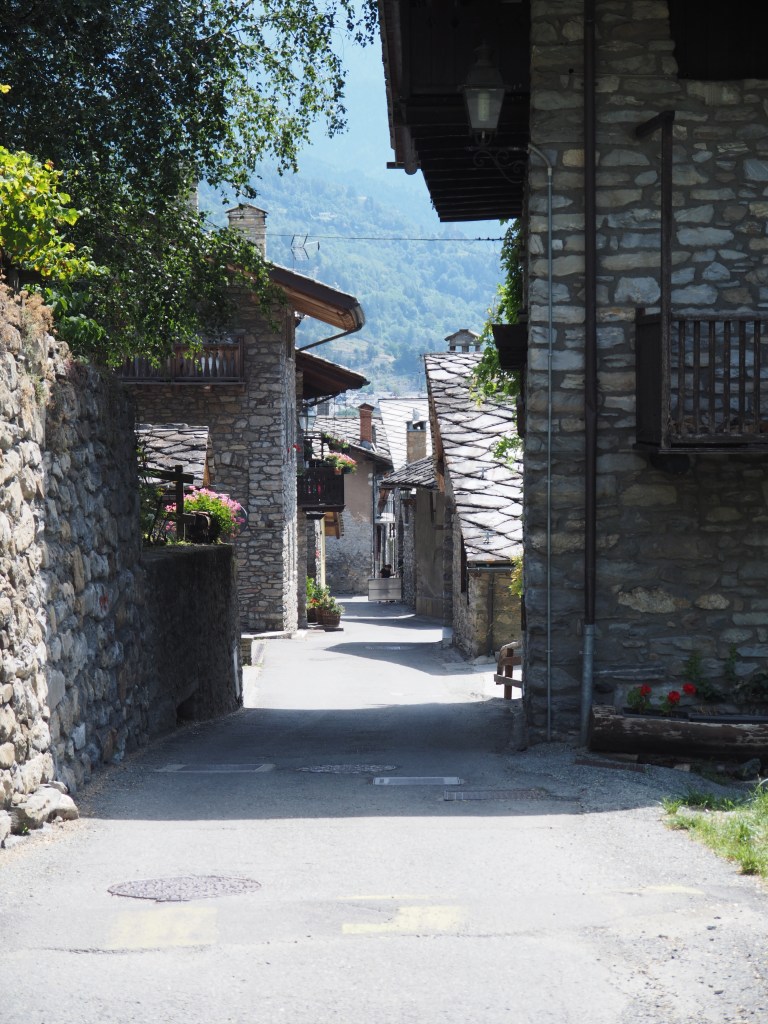
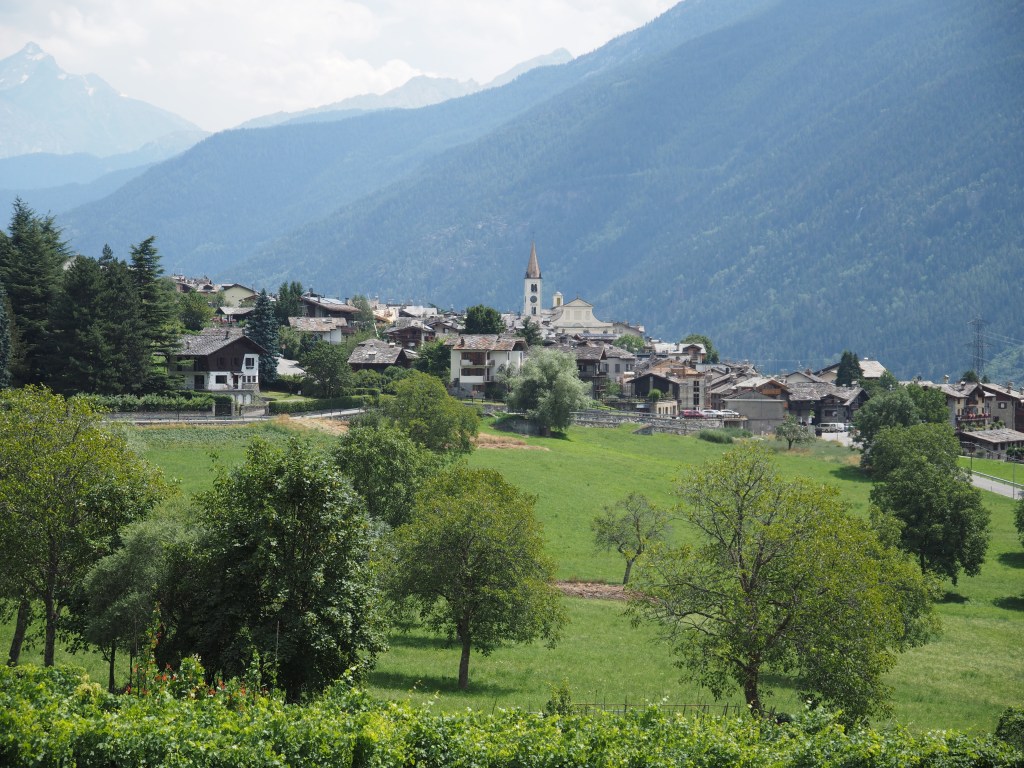
Morgex town is magical, with its narrow alleys, thick granite slate roofs, and sturdy houses, with wooden balconies festooned with geraniums.

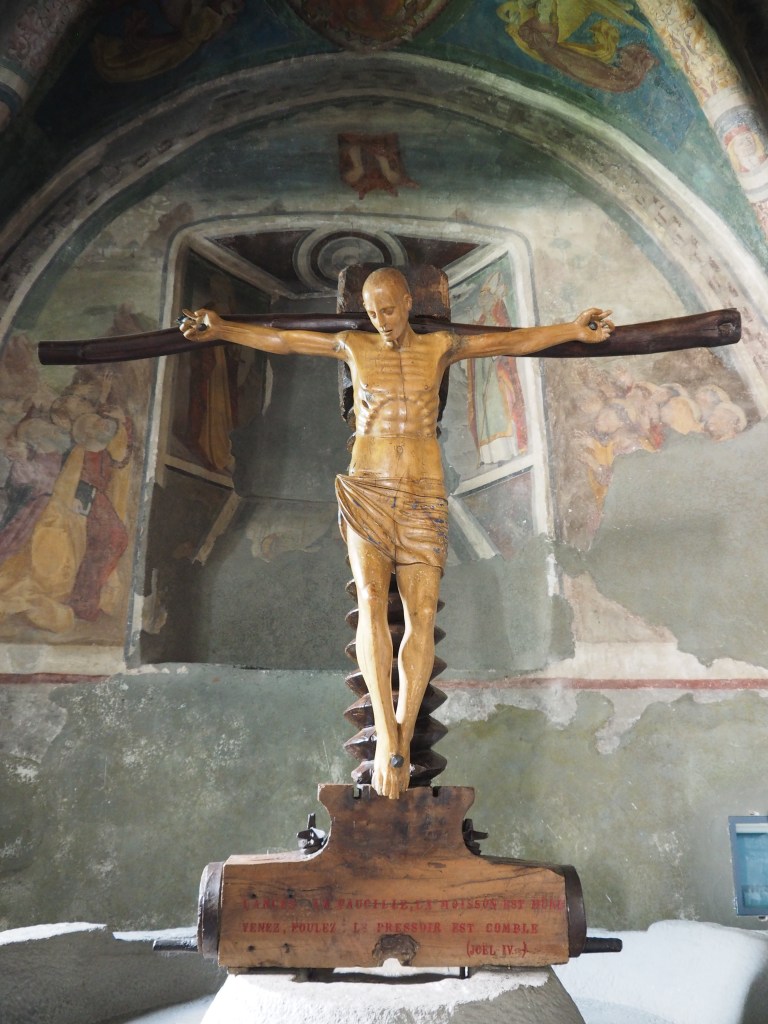
The Santa Maria Assunta church is full of history being one of the oldest in the Aosta Valley. Its tower sports a sundial.

We picnic across the square from it on local hams and cheeses by the town hall and the Café Quinson’s vine festooned fresco, with its depiction of the local hoopoe centre stage.

The purchasing of the hams and cheese is a story in itself. I bowl into a local deli and proceed to cheerfully mangle the Italian language as usual. I believe that I’m asking for walnut bread, a speciality of the region, but instead I bemuse the poor woman by announcing that I’d like some peanut bread please. It’s the kind of mistake I often make, after all ‘noci’, or walnuts, isn’t so very different to ‘noccioline’, or peanuts – and Beginner Italian by Tony Buzan can only get you so far! But the woman was delighted I tried and fought her way through my befuddling language to bestow me with hams, cheeses and most importantly, walnut bread.
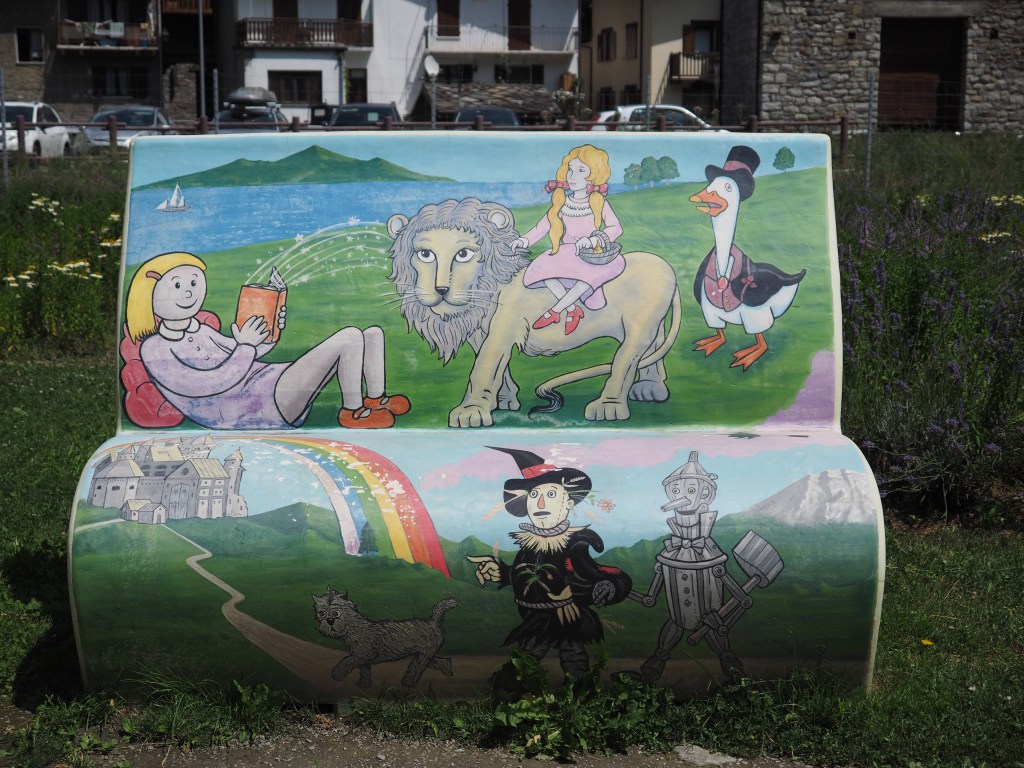
Down by the old station we mooch around the literary park for children, an innovative idea of a park on the theme of reading, complete with open book benches of Dorothy on the yellow brick road and Jules Verne’s voyage under the sea as well as a book maze.
The next day’s ramble takes us along the valley to La Salle, through pine woods studded with larch, birch and wild cherry too. The valley is called Valdigne, which means ‘forest of pines’. The rocks beneath the trees are moss covered and the trees dapple the sunlight.

The Chatelard turret towers up above the trees, guarding entrance to the valley as it has always done. Lone chapels mark the wayside. We sit by a carved face of the Madonna in a tree stump before descending to La Salle itself.

The path opens out onto sweet smelling meadows of wildflowers and hillsides covered in the vines that are kept tall in the Aosta Valley. We end our meander eating ice-cream gazing up at the snow topped mountains at the head of the valley.
 Campervan Therapy
Leave a comment