In the Valle di Gran San Bernardo, we’re spoilt for choice as to which walking trail to follow. But we have a mission, our good friend Pina, who lives in Aosta, is taking us up to see her husband, Salva’s, paintings which are showing in the Castello di Bosses and who can resist art and a Medieval castle? Parking up in St. Oyen’s Rue de Flassin, we follow the trail to St. Remy-en-Bosses, through wildflower meadows, forested slopes, sweet-hay-scented air, by the ancient Ru water system that Pina says has brought water to the crops for centuries. The snow-covered mountain peak at the pass towers over all.
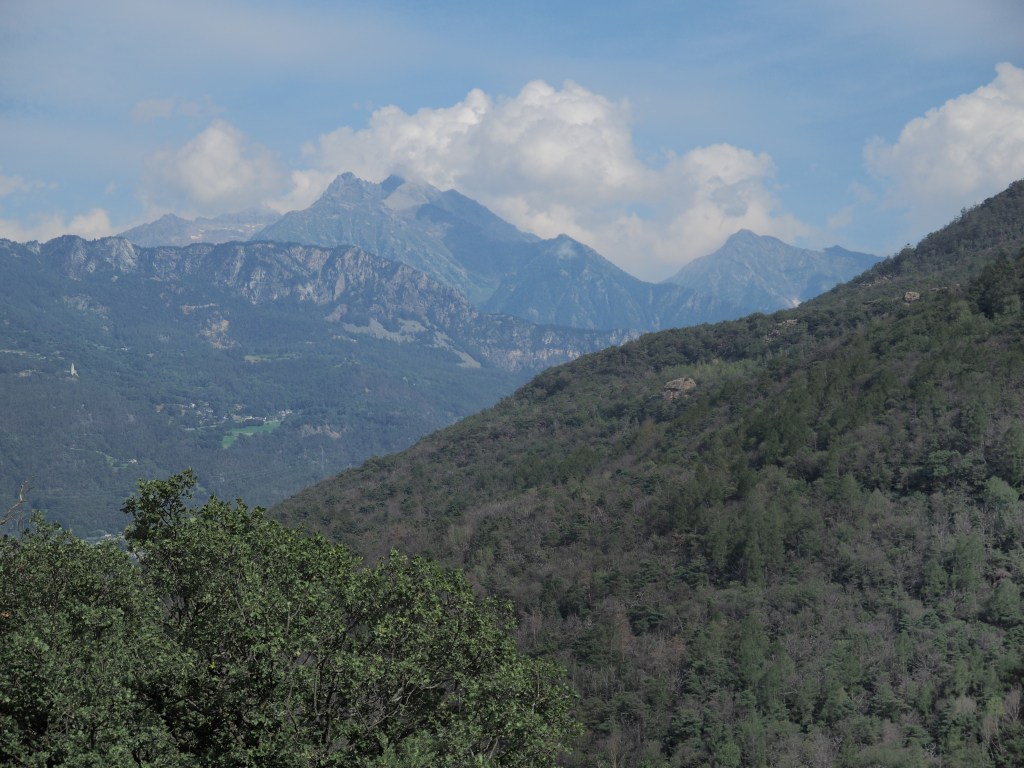
Seán and myself had planned to walk sections of the Via Francegina’s pilgrim path from here through Tuscany but high temperatures further south have deterred us, so we’re delighted to discover we’re on the Via Francegina’s ancient pilgrim route, which runs from Canterbury through France to Puglia via Rome.
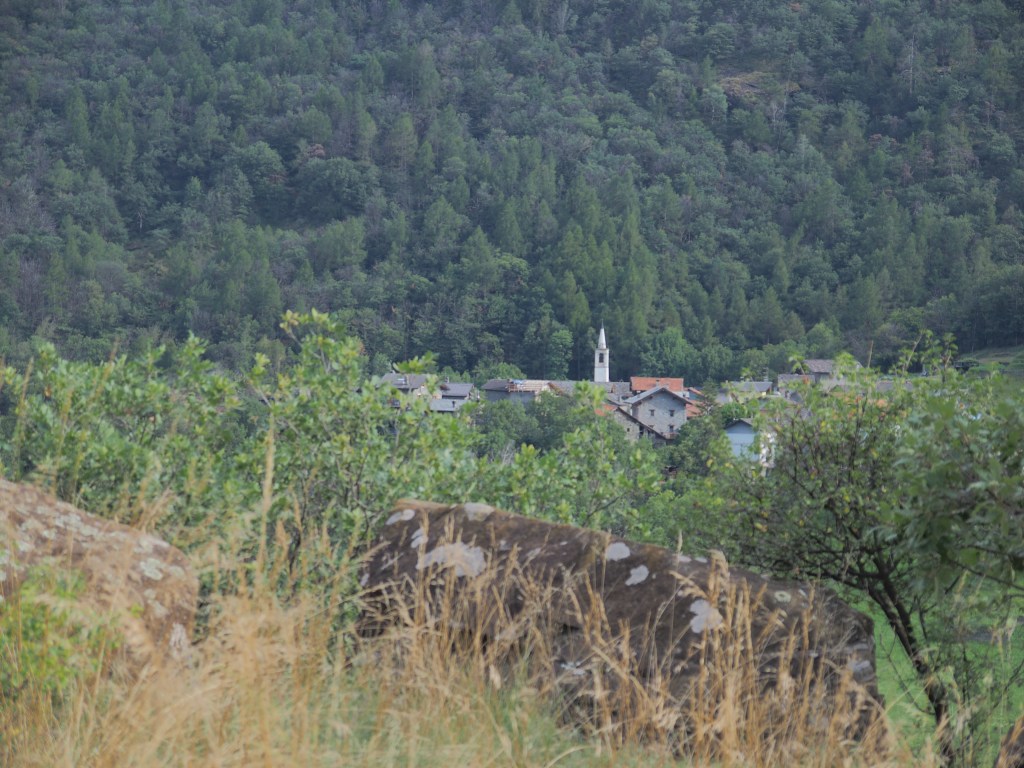
St. Remy-en-Bosses is a cluster of stone houses, with wooden balconies and fulsome geraniums, which cling to the church and the ancient castle as if for protection.

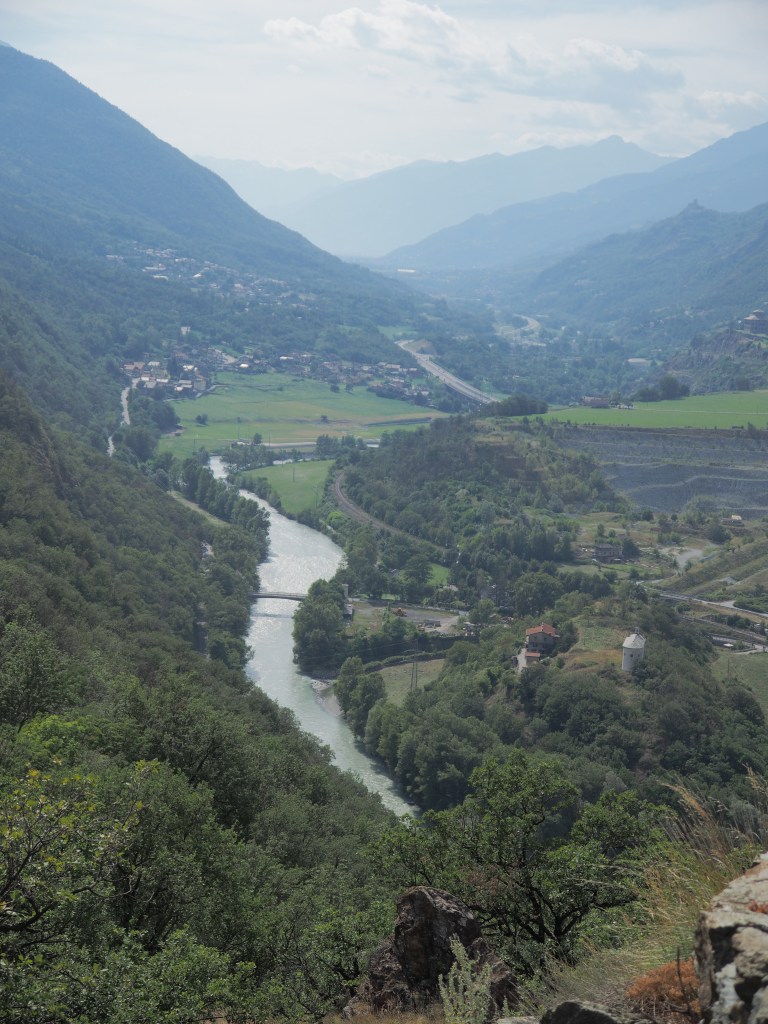
The next day sees us parking up at Castello di Ussel, the worn paving slabs of the path elegiac when I think of all the footsteps that have travelled this way. The meadow at the top offers panoramic views of mountains peaks, with the jade Dora Baltea River rushing through the dramatic cliffs and along the verdant valley below.
Even if we hadn’t Pina to translate, the guided tour would have been worth it as the castle itself is literally built on the mountain top and inside you can see the peak sticking up into the main hall. Once bought by the man who patented and improved the biro, the ubiquitous Bic used world-wide today, the castle was then donated to the state.

There’s 100 fortress lookouts in Aosta and its side valleys. Though the Savoy dynasty fought for power among themselves, they would use mirrors to flash warnings from castle to castle when strangers were seen progressing through the valley.
The top floor currently houses an exhibition of Pasqualino Fracasso’s watercolours of mountain climbers, snow covered peaks, forests, sunsets over Alpine lakes – a beautiful testament to this romantic area.
I manage to stumble into a television crew who interview me. Standing there in a battered straw hat, I mumble something about majestic mountains looking decidedly shifty, only to find out I’m going to be on Italian news the following day.
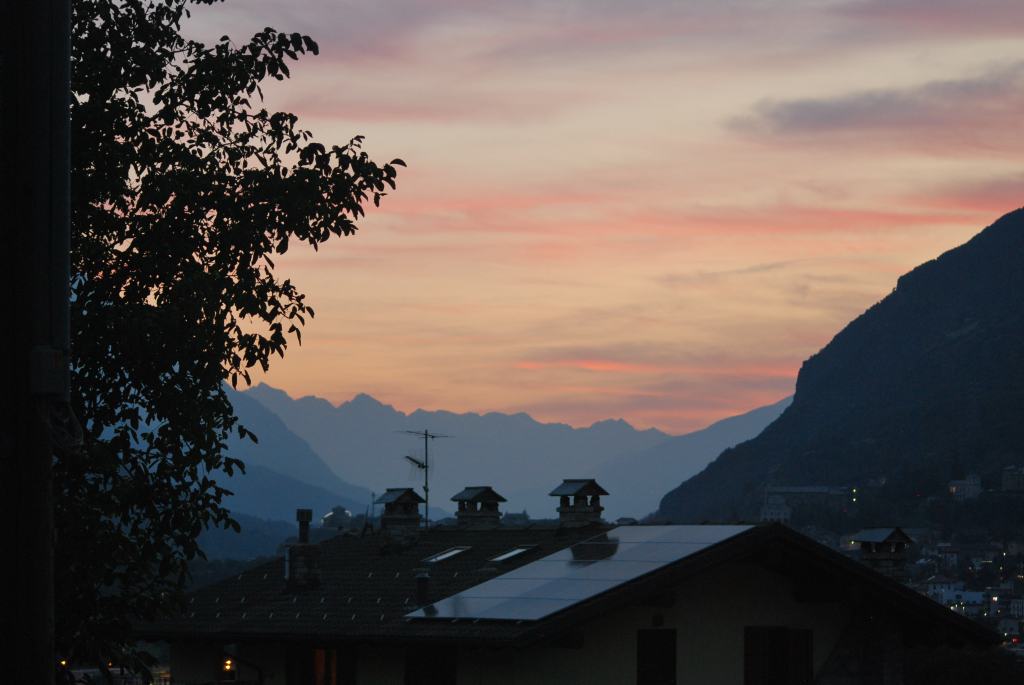
We camp up about 2 kilometres down the hill in Primaluce Village Camping, just 500 metres from St. Vincent’s Casino, one of only four in Italy. Primaluce’s restaurant specialises in local food, so we tuck into vitello tonnara, a dish of rare roast beef dressed in a cold anchovy sauce, washed down with a smooth Gamay.
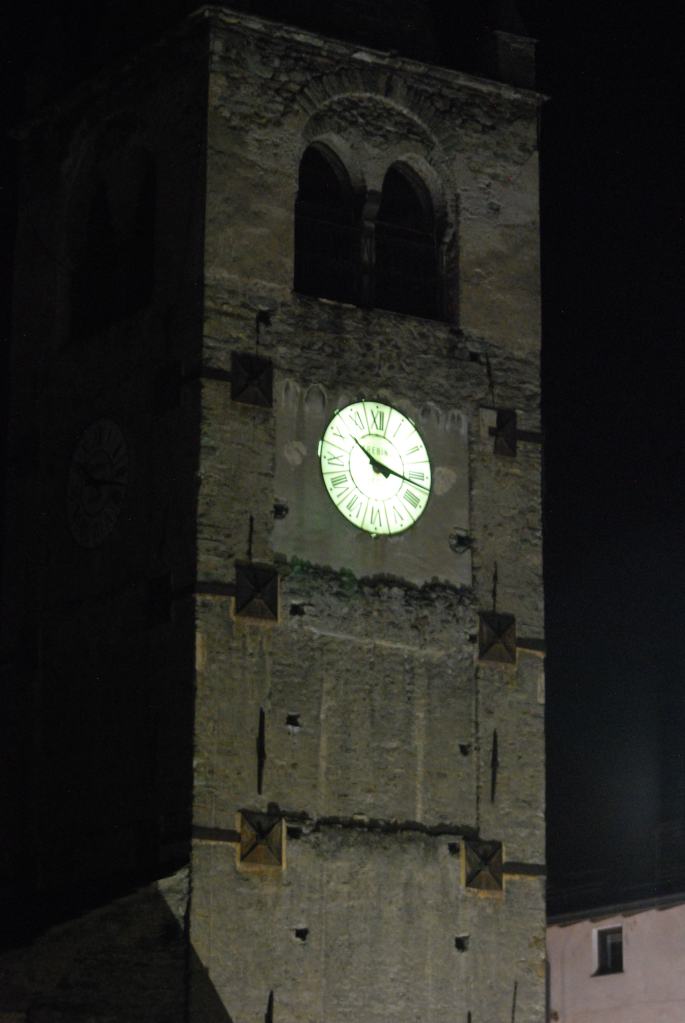
After seeing Pina to the bus-stop, we walk back to the campsite the long way through the cobbled centre of St. Vincent, past an open-air game show, to the illuminated St. Vincent church, the foundations being the remains of a Roman villa and the Medieval frescoes still showing on the external walls in parts.

Yet again, this pair of random ramblers manage to end the evening on the Via Francegina.
 Campervan Therapy
Leave a comment