We drive from Ossana up the winding road to the mountain pass which takes us out of Trentino’s Val di Sole and into Lombardy’s Val di Camonica – once border country between the emergent Italian state and the Austro-Hungarian Empire.

As we stop outside the first WWI museum in Vermiglio, we gaze up with awe at the sheer cliff faces, the glistening glaciers, the wooded lower slopes of these vertiginous mountains and it’s sad to think of the lives lost, buried for ever under the icy ground, despite the pretty town with its handsome, brightly painted houses perching on the cliffside.
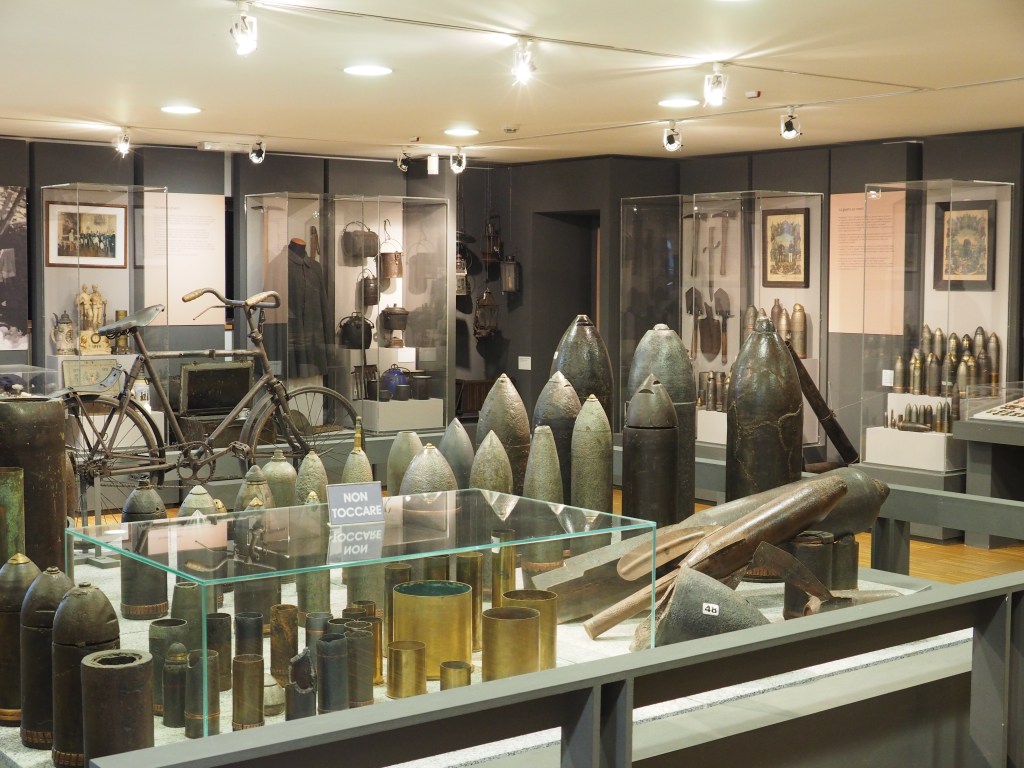
Inside the small museum, we’re shocked at the shells, bombs, cache of artillery, soldiers’ uniforms, and read of how the people of Vermiglio were allowed to collect them after the war as compensation – compensation which couldn’t nearly cover the cost of war to them all. The village’s men were commissioned to fight in WWI by Austro-Hungarian Empire; women, children and the elderly were forcibly evacuated miles away to a barracks near Vienna.

A third of the evacuees died of disease and poor nutrition and those that returned after the war found their village decimated. It’s a sobering moment to think about these poor people. The Austro-Hungarian authorities were worried that Vermiglio may have Italian sympathies as the border ran just west of the town. In fact many in the Val di Sole favoured autonomy from both Austro-Hungary and Italy.
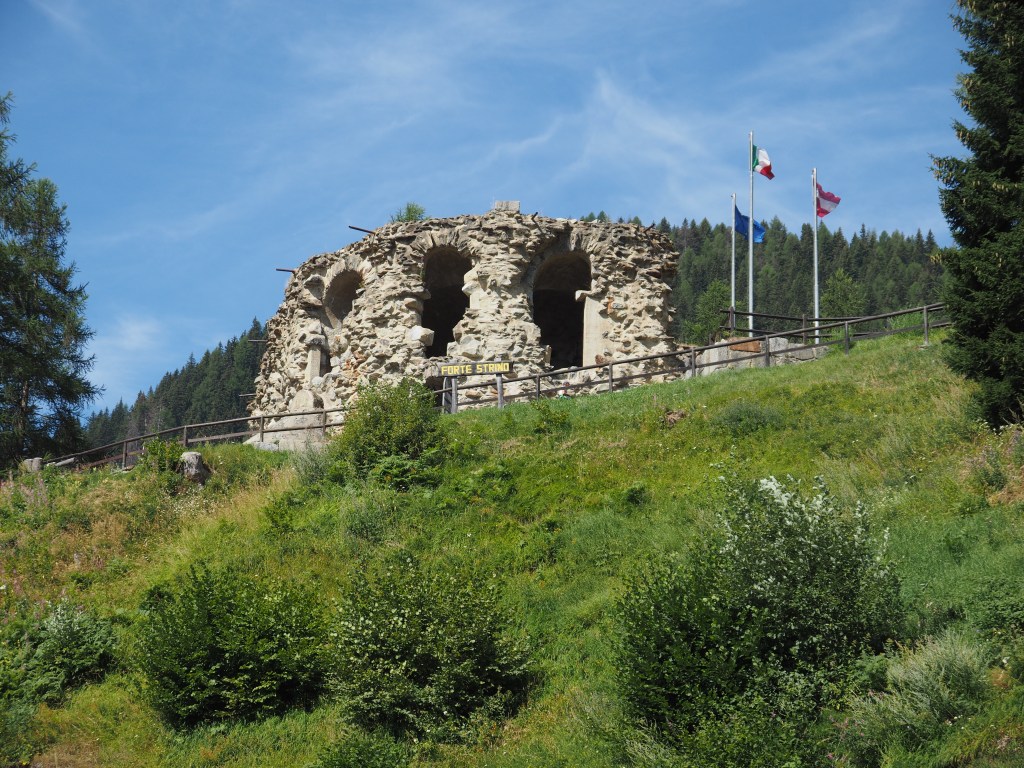
The bright sunshine outside is a contrast with the weapons of destruction inside. Further up the valley, closer to Passo del Tonale, we stop beneath Strino fortress.
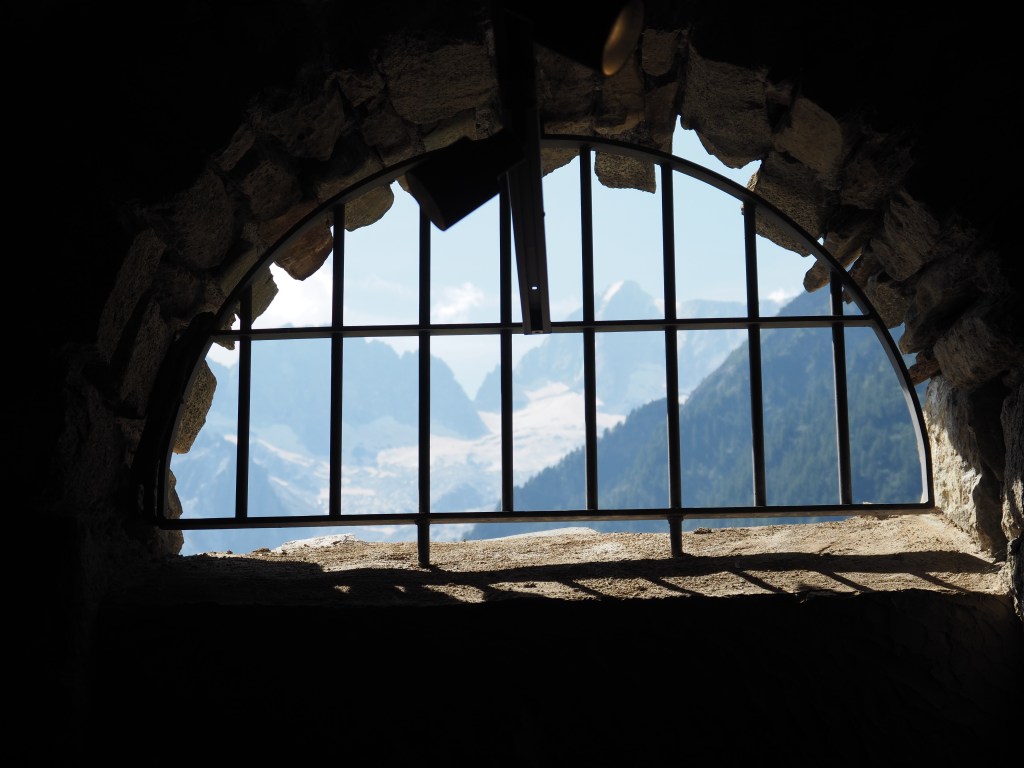
Its hulk squats on a rocky outcrop, it’s one of a line of forts built by the Austro-Hungarian Empire in preparation for war from the 1860s as Italy moved towards unification and Lombardy joined the house of Savoy. Hollowed out of the rock itself, Strino is a haunted place.
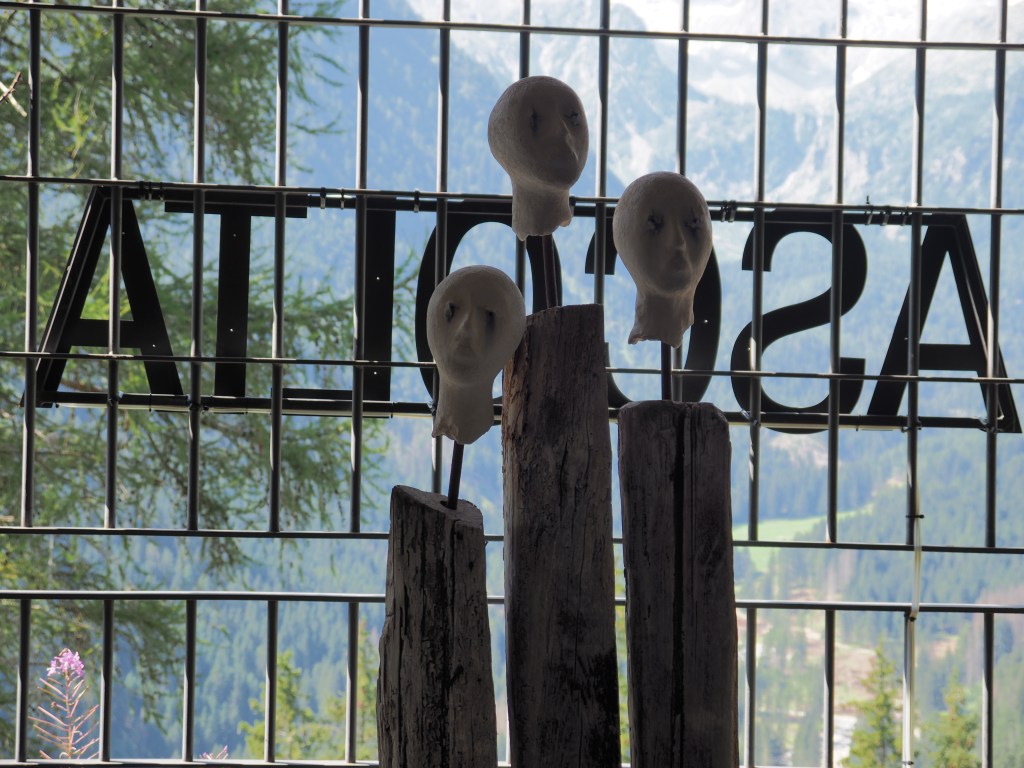
We climb up and up, step after step, through the bowels of the mountain, to the fort’s galleries, housing displays which tell of how the Italian and Austro-Hungarian sides took the war into the high mountains, the men sheltering in tents and caves with temperatures sometimes as low as -40 Celsius.
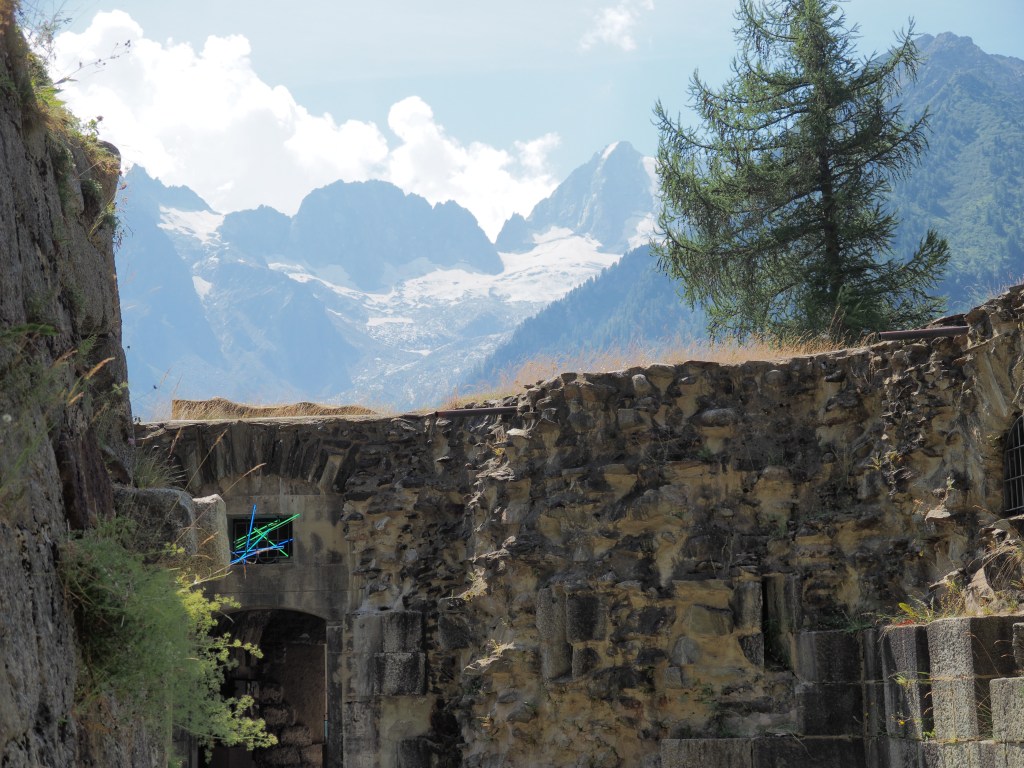
It was the first time that climbers and skiers took part in warfare. The signs by the roadside call it Guerra Bianca – The White War and I shiver in the bright sunlight when I think of the soldiers with frostbite, their sheepskin jerkins not enough protection from the cruel elements.
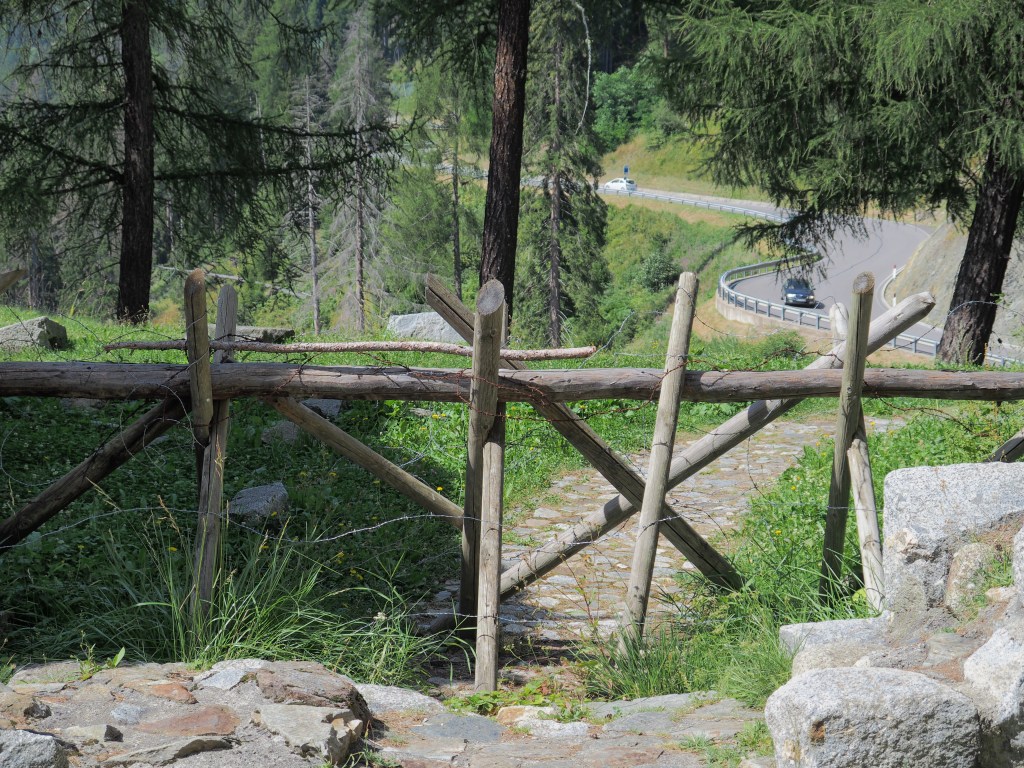
Passo di Tonale is one of those ski resorts with not a whole lot to recommend it, except ‘disco’ bars cheap sunglass stalls and supermarkets, but there’s a whole host of walking trails radiating out from it across lush mountain backed meadows. The cold wind of war’s memory still blows here though with the monument built in Mussolini’s time to the soldiers who died.
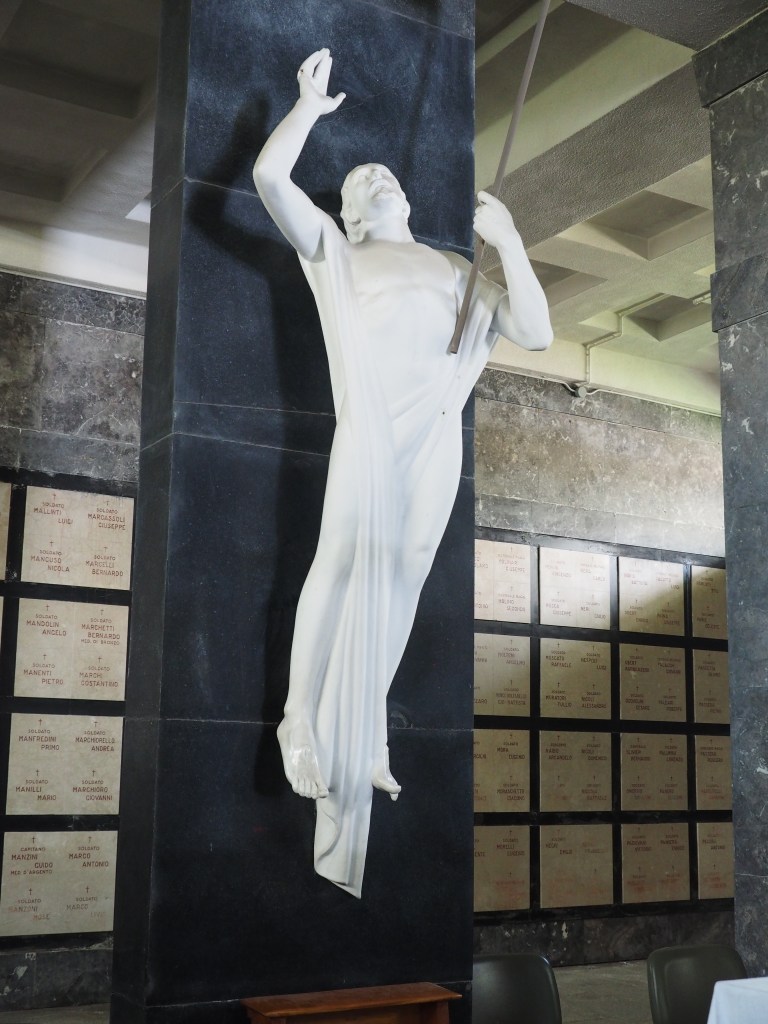
A solid ossuary, with a Verdigris Winged Victory holding her harp crowning it, inside contains the bones of the many soldiers who lost their lives, some named, but the unnamed soldiers’ graves are the saddest of all. We’re left with no doubt about the random nature of borders and the awful human toll they exhort.

 Campervan Therapy
Leave a comment