One ticket to Veliko Tarnovo’s historical sites lasts for two days. We spend a good portion of that time wandering round in circles searching for them.

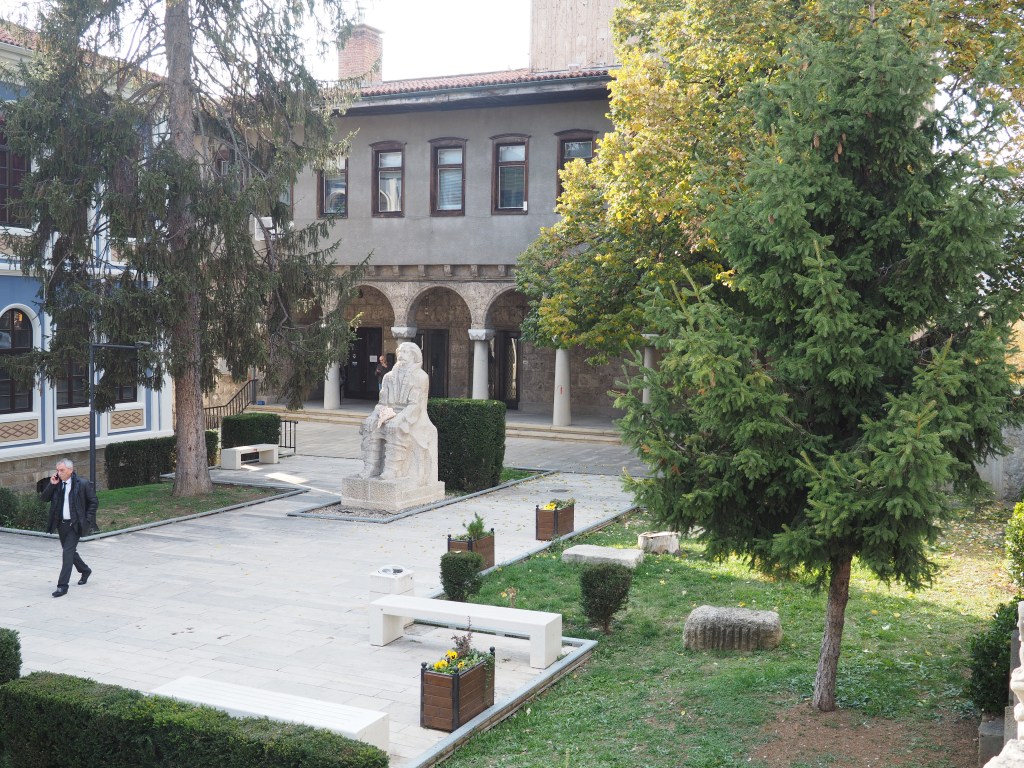
The Museum of the Bulgarian Revival is a gloriously colourful blue and white building. It is where the Bulgarian Constitution was negotiated by a multitude of representatives at the end of the 19th Century. The wooden staircase is worth seeing for itself. Upstairs the vast red velvet seated congress room brings the collapse of Ottoman rule alive.
I finally spot the portrait of a woman lost amidst the male representatives, Hurrah. What a woman she must have been – to be a lone female voice in this intrinsically male room.
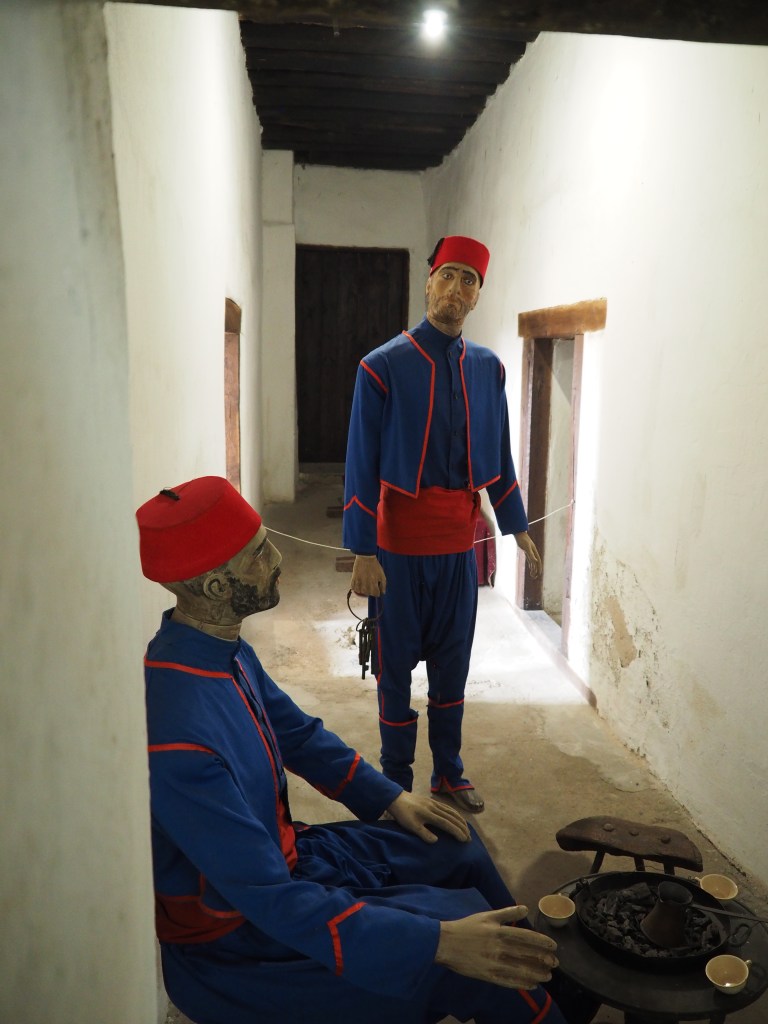
From there it’s a hop to the old prison, last used in 1954. There is a brooding coldness about the place. My resident cynic, Seán, disagrees that it’s haunted, but I’m convinced. The sleeping room is lined with hard benches instead of beds. The ‘Torture Room’ is eerie with its gruesome looking chains and metal pokers. The isolation cells are cupboard size. I’m sure in reality the rocks in the wall are stained from rain bleeding down from metal hoops, but I can’t help imagining blood.

On the theme of hauntings, what better name for the next stop-off in Trapetzitsa, The Church of the Forty Holy Martyrs.

The colonnaded portico and the honey stone church is nestled by the Yantra River. Inside the renovated church there are columns celebrating the Medieval tsars who first won the Bulgarians an independent state.

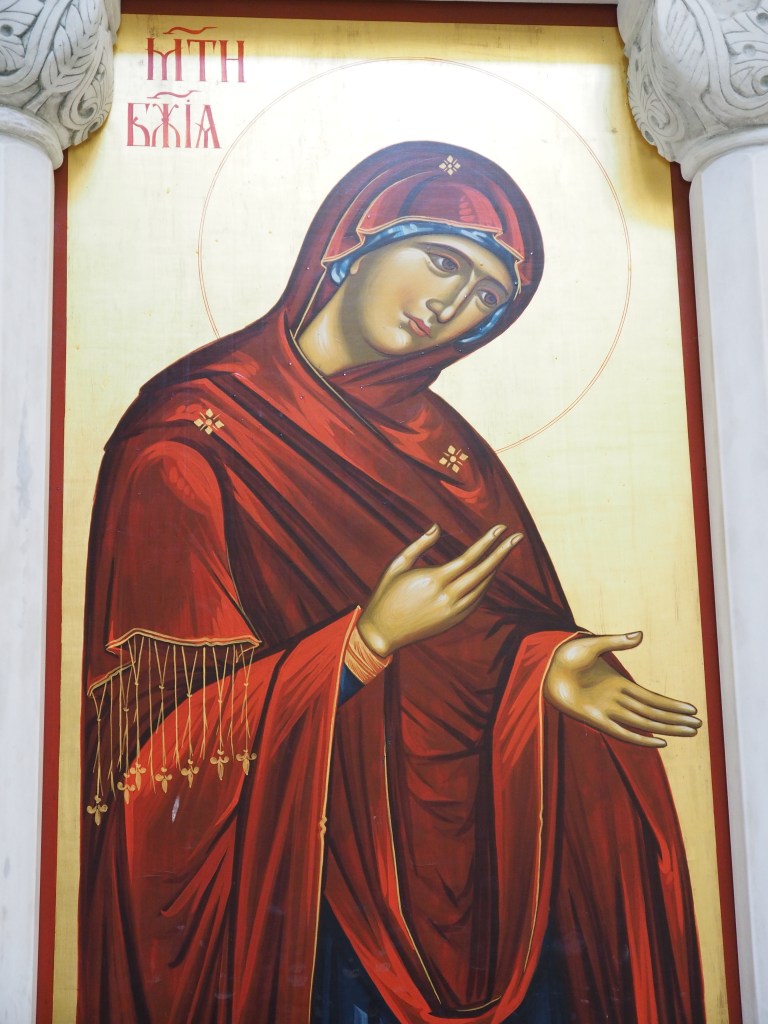
I’m most taken, though, with the Madonnas – no blonde, blue eyed, white skinned representations here. These portraits are much more realistic, with the Madonna’s brown eyes, olive skin and dark hair. Even better she’s not dressed in insipid blue, but in scarlet – a colour often associated with malignant connotations in western culture.

Our next stop is a rich merchant’s traditional house. Sarafkina’s house is an ode to wood, the upstairs balcony surrrounding a huge hall, with small rooms leading off the main quadrangle. It’s dedicated to the traditional crafts: patterned breads, embroidery, woven carpets, traditional dress, gold belts, head-dresses and buckles. I’m in awe at the crafting skills of these people from history.

We stroll along Stambolov Road, named after the Russian General who helped reinstate Bulgarian independence in 19th Century. The road has wonderful wooden balconied stone houses that seem to grow out of the very rocks, and which look down on the Yantra River winding through its gorge.

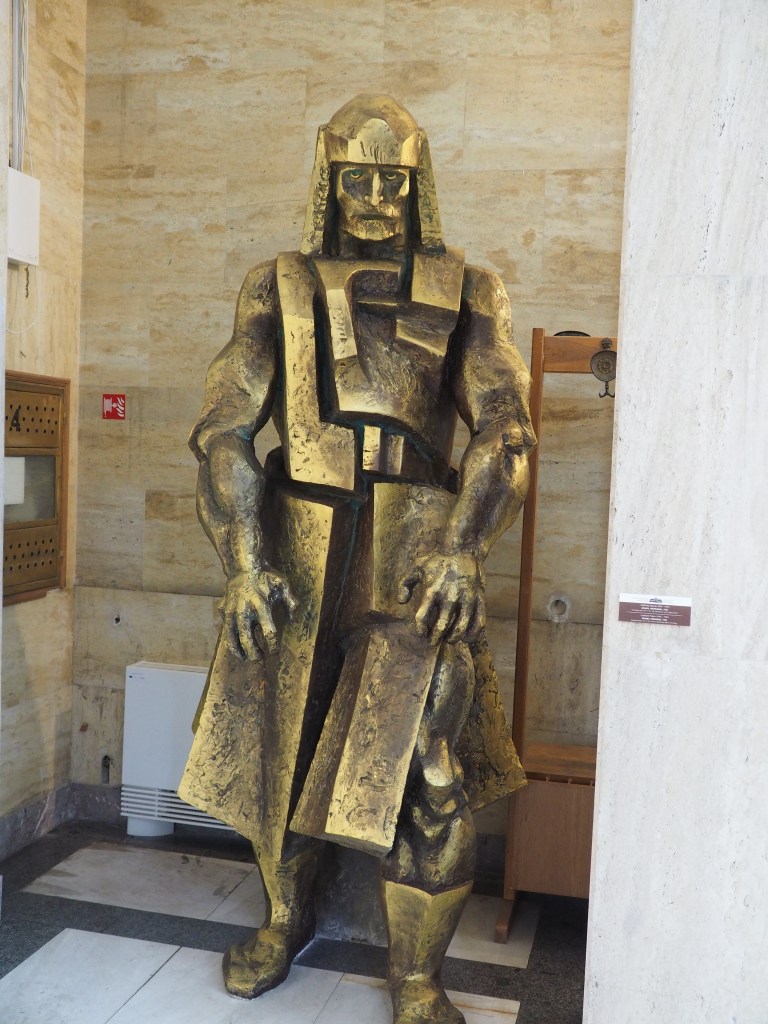
In a curve of the river four massive bronze horse-riders rear up towards an obelisk, the monument celebrating the Assen dynasty who established the first state.

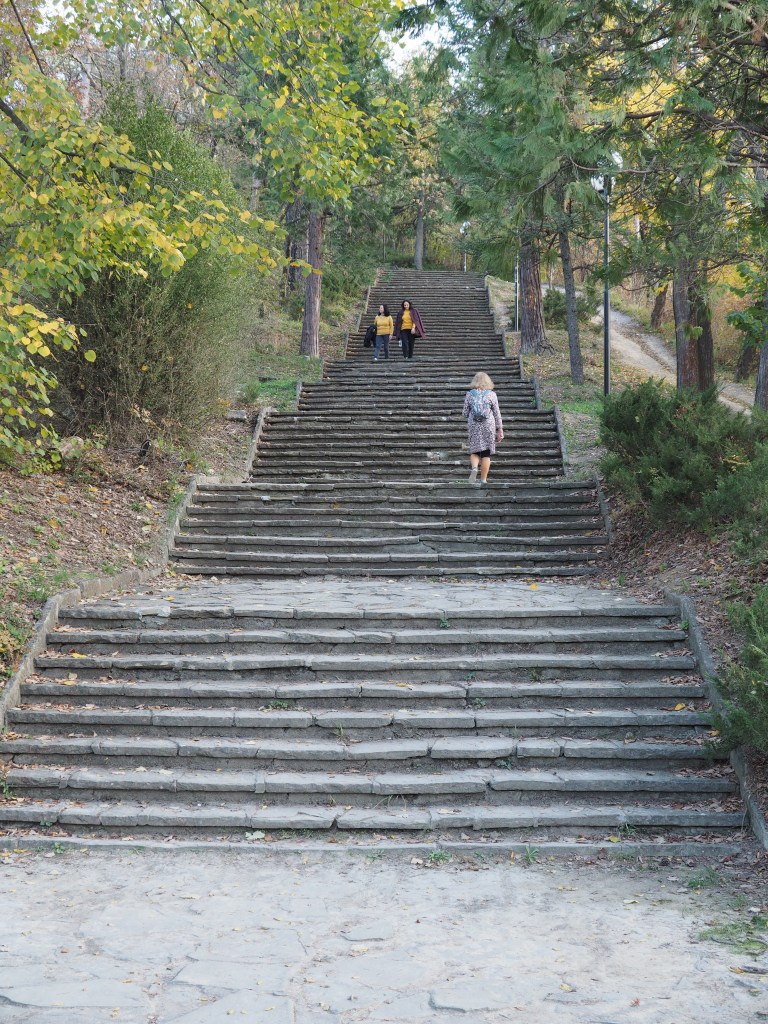
After a mooch around the Art Gallery, we climb hundreds of stone steps through parkland and forest to the top of the gorge and find ourselves at a dizzy height staring down at the town.
Dimcha couldn’t be more different from cosmopolitan Veliko. It’s small village set among hills, but as we stand by Seán’s sister Jackie’s grave, those hillsides are a tapestry of red, umber, copper and gold leaves from walnut, ash, beech, oak, birch and smoke trees. It’s a peaceful place for us to remember Jackie and her Bulgarian dream.

 Campervan Therapy
Leave a comment