The roller-coaster, coastal B3157 takes us from Dorset’s Bridport to Portesham, above the golden spit of shingle that is Chesil Beach. We drive through buttered stone Abbotsbury and on to our campsite at equally buttery Portesham Village, both gifted by Danish King Canute to his steward, Orc, in the 11th Century, evidence of how porous borders have always been.

After Seán spends an age studying the information board on Portesham’s daffodil splattered village green (the man does love an information board) we set off along the old railway track to Abbotsbury.

It’s a blustery March day, the sky swollen with bruised clouds, pine trees bent inland by south westerlies. Primroses and celandines carpet the ground. The only remnants of a ghostly railway are a siding shed and haunting signal box, complete with fireplace.

Abbotsbury’s 11th Century Benedictine monastery’s giant tithe barn stands beside the stew ponds. You can almost hear the call to compline as we pass the flower growing gardens. Much to Seán’s dismay, I have to mooch around the old stables, which now house artists and craft shops, including the aptly named clothes shop called From My Mother’s Garden. The lovely Penny tells me that her mother’s garden inspired all the clothes she chooses.
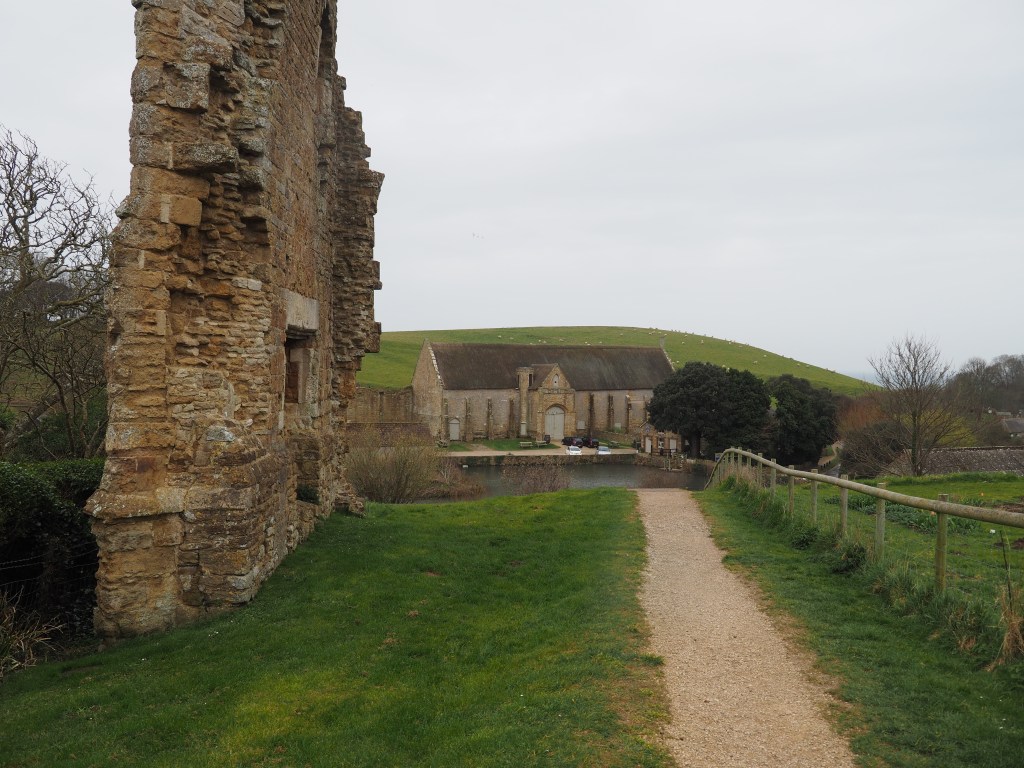
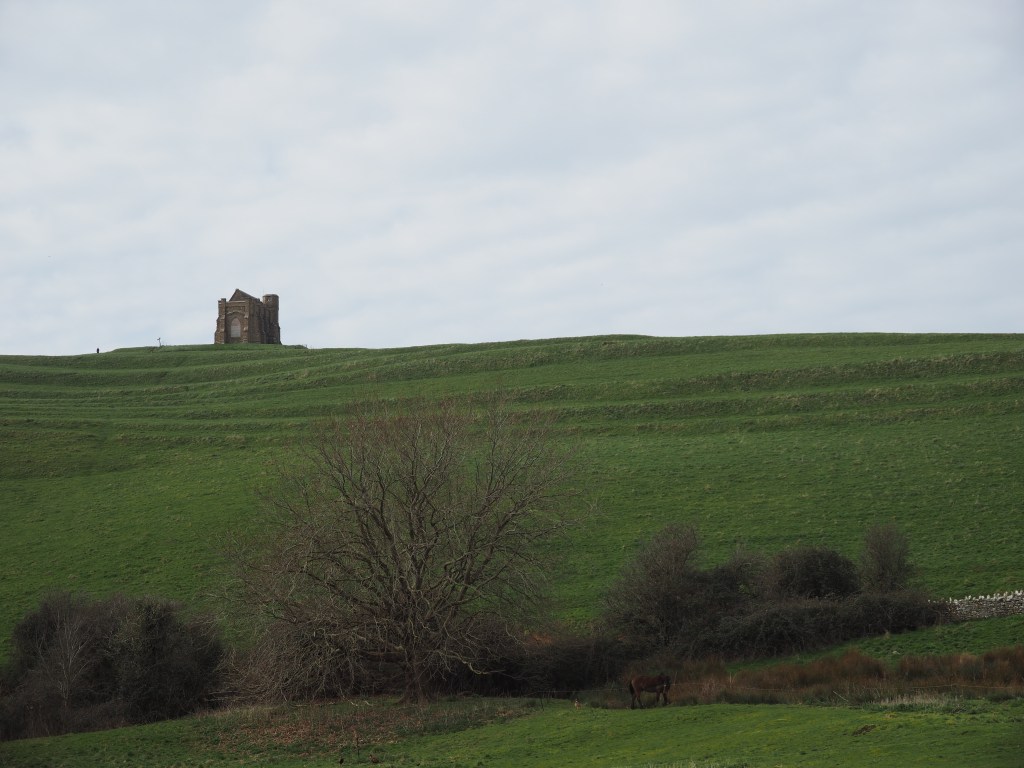
The old tithe barn was once double its current size, but the reformation saw half it destroyed, many of the old stones now prop up the village houses. We follow the footpath up the hill to barrel vaulted St. Catherine’s Chapel, whipped by winds and stung by rain.

Despite this, the view of the Fleet Lagoon and Chesil beach’s ice-age formed shingle spit is stupendous. Inland, Abbotsbury sits in a punchbowl, the hills rising all around it.

The chapel is dedicated to Medieval favourite, St. Catherine of Alexandria, the patron saint of spinsters, despite the poor woman’s martyrdom on a huge wheel, giving rise to the Catherine Wheel firework. Apparently, young women used to place knees and hands in the door’s hollows to ask the saint to send them a husband. I rather like the little note to St. Catherine in the church’s alcove from Kelly who asks the saint to send her a lovely forever wife – I hope the saint has worked the magic for her.

The 14th Century church was saved from King Henry’s ire by the fact that it operated as a beacon for ships out at sea. So many ships ran aground in the treacherous shallow waters along the spit. Many lives were saved by locals using ropes across the lagoon. Afterwards the cargo would be swiftly looted. 18th Century Smugglers thrived here when taxes were ramped up on imported silks, brandy, wine, tea, coffee and tobacco. The London Journal of 1752 declared, “all the people of Abbotsbury, including the vicar, are thieves, smugglers and plunderers of wrecks.”
At the viewpoint in the tropical gardens (more about that in the next post) we learn of how the now peaceful Fleet lagoon’s shallow waters were used as a WWII testing ground for bouncing bombs as they could be easily retrieved.

As the rain clears and sun shines, it’s hard to imagine the blue lagoon and golden shingle echoing to the blasts from bouncing bombs.
 Campervan Therapy
Leave a comment