We arrive at Camping Les Berges du Canal, and it does just what its name says, the canal with its green waters, barges and rampant wildflowers runs right outside it. The banks are lined with plane trees.

Béziers lies 5 kilometres along the cycle track, and its cathedral comes highly recommended so why do I speed off in the opposite direction towards Portiragnes? The Med’s postcard-blue sea calls me, that’s why.

The canal is lined with white field campion, pink annual honesty, as well as sunny rapeseed, barley and wheat which have escaped from the surrounding fields. Some vineyards are mere strips, others vast fields of just-sprouting vines.

We read about the bee-eaters and kingfishers that live along the banks of the canal and, sadly, about the canker which is threatening the plane trees. Every year there seems to be a new disease eating away at our trees. The sign tells us that the planned solution is to plant multi-species and in the meantime put up bird and bat boxes to compensate for the loss of nesting holes in the trees.
Just before the holiday town of Portiragnes, we read of Pierre-Paul Riquet and how he engineered the canal from Toulouse, where it meets the Garonne, to the Med, in the 17th Century. We read of the tunnels he designed and the three-way lock at Portiragnes, where cargo could turn towards north, south and inland.
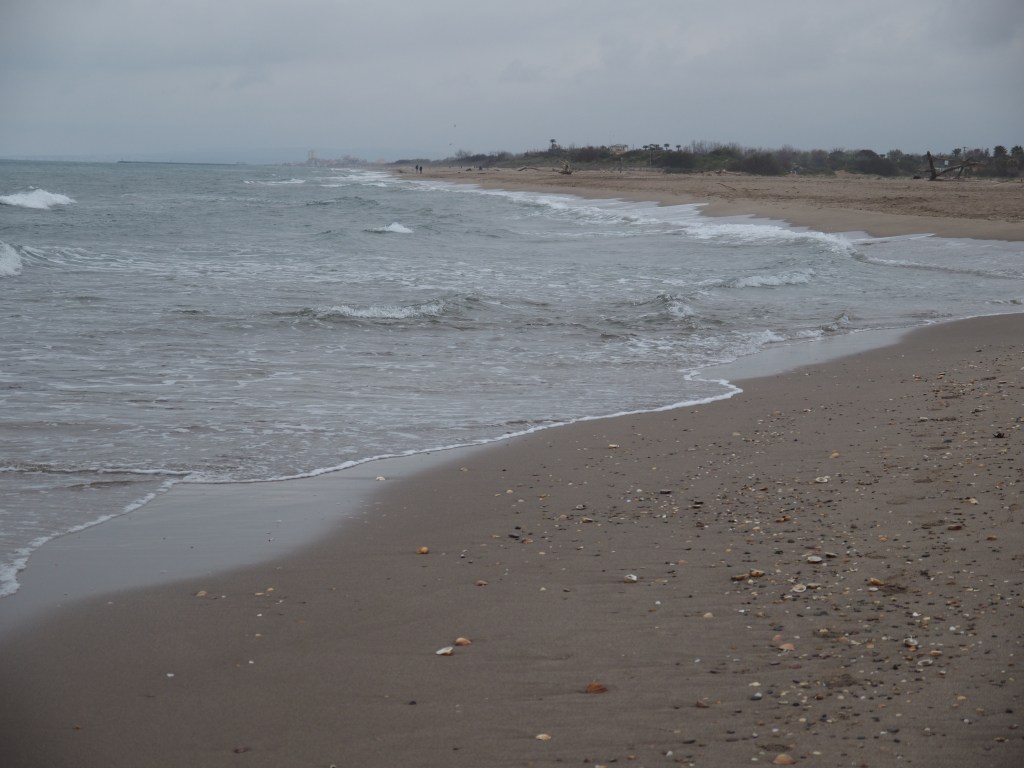
We follow cycle paths to the Plage du Bosquet and watch a woman beachcombing, the sand full of multicoloured shells, and huge tree trunks, scoured by wind, salt, sand. One looks like a dragon’s head, complete with nostrils, staring eye and wide grin.
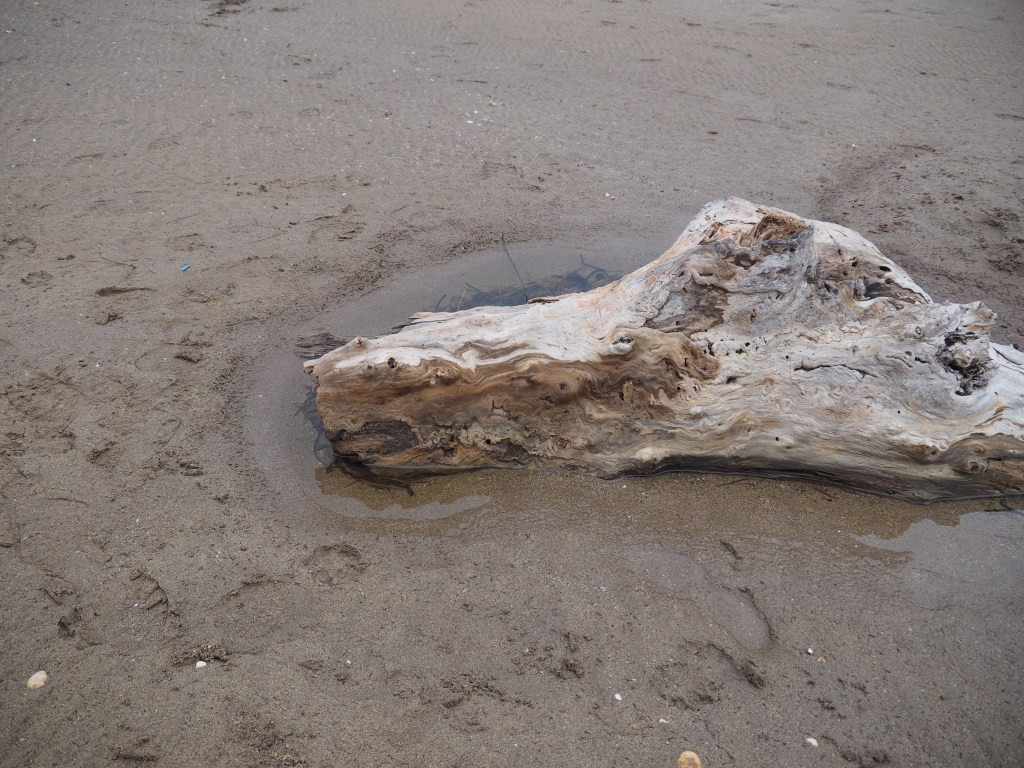
A sign tells us of how important the tree trunks are to help stabilise the sand. In among the dunes there’s lagoons complete with Kentish plovers, and (I love this name) the short-toed skylark. Slender terns swoop in elegant circles above.

Branched asphodels line the path through the dunes, with their star-like flowers.

Back in Villeneuve, we meander through alley ways of honey stone houses and weather scarred pantiles, past the huge trompe-l’oeil, where the mural tricks us into thinking a young boy is climbing down a grand staircase from a palace, the walls festooned with wisteria.

When our friends, Mary, Martin and sheep-like Luna appear, we enjoy a cheeky kir cassis by the canal, followed by duck kebabs and ratatouille, washed down by a carafe of smooth local merlot at the campsite restaurant.

In the camping field bordering a vineyard we hear the scops owl call. I’d like to say I sleep soundly, but I don’t. Martin’s Merlin App identifies the nightingale the next morning – and that explains my intermittent sleep, the birds sang all night. But it was worth it to hear such a special song, despite my bleary-eyed self. Next, Mary identifies the Serin singing, the little canary-yellow bird a treat for the soul. Even better was the sight of storks following a tractor ploughing a field. Mary suggests that they might be on their way back to Sussex’s rewilded Knepp Estate from wintering on Morocco’s rubbish tips. Villeneuve truly has been an ornithologist’s dream.

 Campervan Therapy
Leave a comment