I’ve written so much about Torroella de Montgrì that I think there’s nothing else to say, but I’m proved wrong. Local families trek to the castle which squats at the top of Montgrì, the mountain in Torroella. Being Easter, everyone and their granny has taken to the rocky track.

One elderly woman, complete with walking stick, is helped down the track as it descends into a limestone slide, polished by thousands of footsteps over the centuries.

The track zigzags up from the olive grove at its base, through rosemary, rock rose, fennel, juniper. Bees are busy and butterflies flitter. The Pyrenees in the distance are capped with snow. We dodge around boulders, rockfalls, children, octogenarians, dogs, up past the ancient, stone sentry huts.
We pass where the stone was quarried for the castle, but when we come to the iron crucifix tattooed on the sky, we decide to take the track into the next valley to the hermitage of Santa Caterina.
Somehow, a fortress which was built for battles between local dukes and kings for ownership of all around is depressing, especially when we think about Ukraine, Gaza, Sudan- it’s as if as a species we haven’t moved on at all.

What finally decides us to take the track to the hermitage are the herd of Roe deer who leap down the mountain side, away from the fortress, disturbed by the army of stomping walking boots.
We climb down to the hermitage, started by three monks from Montserrat monastery, who wanted to live in peace. The air is scented with pine and vanilla from the cheerful shrubby vetch. The hermitage nestles in a basin surrounded by a meadow and the rich green of the mountain slopes, topped off by serrated rust-streaked cliffs.
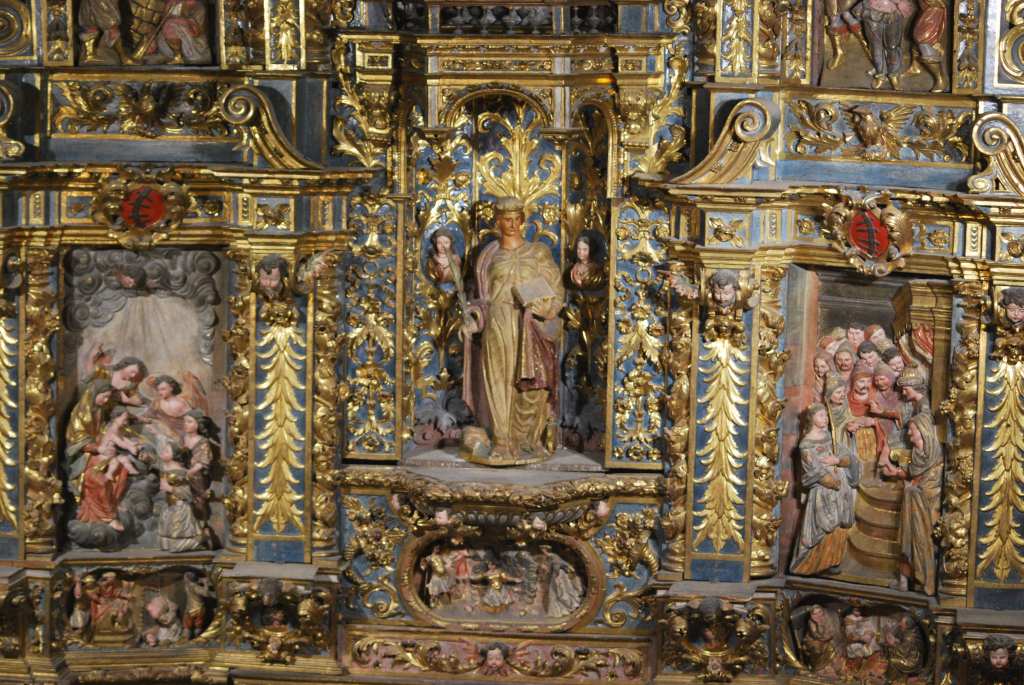
It’s only possible to visit the interior on Sundays, so we’re in luck. The chapel is a vividly frescoed grotto with a most theatrical, gilded altar.
The next day we’re off on the Nautilus Seaview around the natural park of the Medes islands, once home to pirates, now home to nesting gulls, a wide selection of fish and the ever-important Poseidon underground meadows.

We circle the islands, looking at the caves and tunnels through the limestone before going down to the underwater viewing platform, watching the waving grasses, shoals of fry, and blue and yellow striped flat fish.

Les Medes Campsite is surrounded by wheat fields, cycle tracks, orchards, all edged by so many poppies it’s an impressionist painting.
We cycle round the El Ter Nature Reserve. Lagoon, marsh, sea-fennel, sea-lavender colour the landscape. A stilt flies by, his red legs out straight like a rudder.

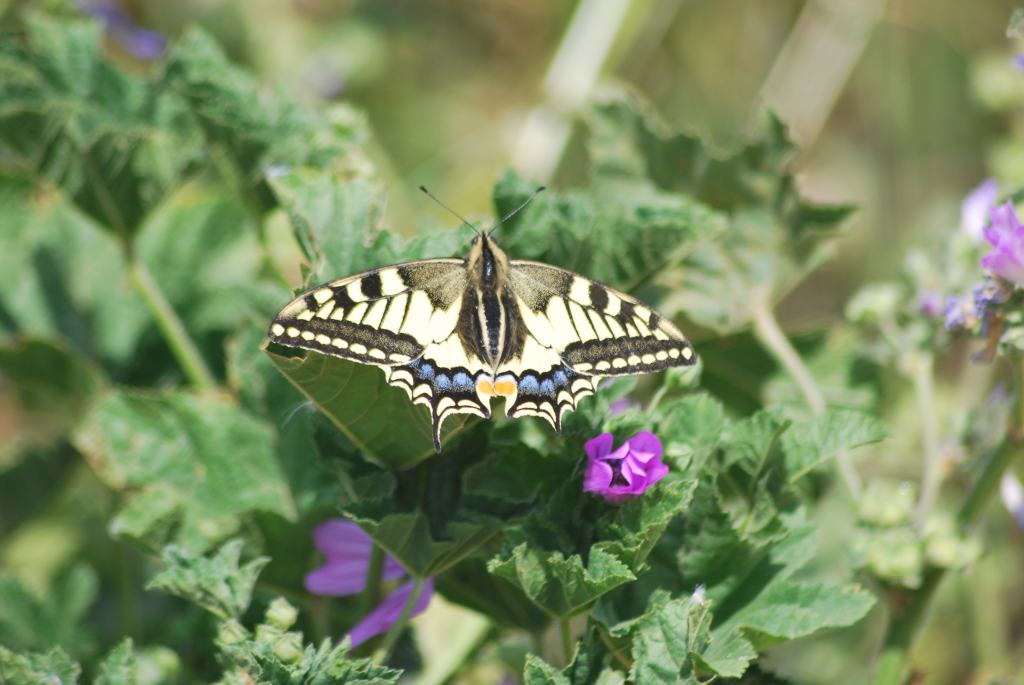
A crested skylark lands on the path in front of me, a lizard scampers into hiding beneath a wooden stool. Seán gets a great shot of a swallow tail butterfly landing on mallow by the mouth of the River Ter.

His App identifies the calls of greenfinches and swallows.
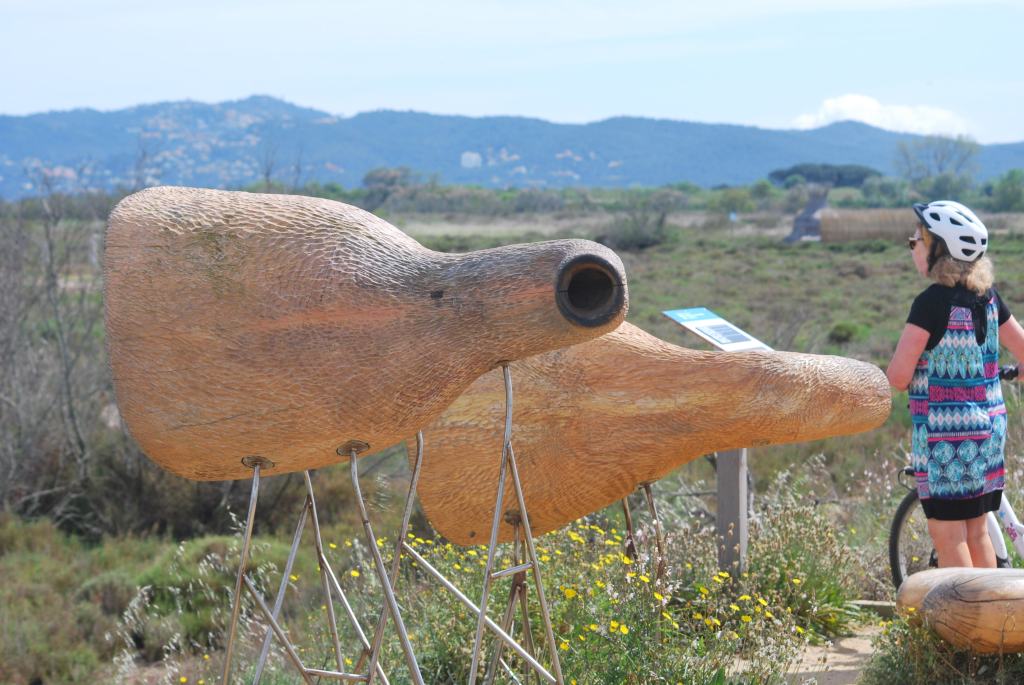
Even the hides are environmentally artistic here, one is a teepee made of dried reeds, two curved wooden conches symbolise the beach that borders the nature reserve. As usual L’Estartit offers up its natural gifts.
 Campervan Therapy
Leave a comment