The first view of the morning is the stone arched bridge at Glenmalure and the house martins swooping through the air; the first sound the rushing Avonbeg river. The plan today is to walk 7 miles from Glenmalure to Glendalough, along the Wicklow Way and Miners’ Way.

Soon, we gaze down at the ruins of the old barracks, built to police these mountains which provided hiding places for the rebels of 1798.

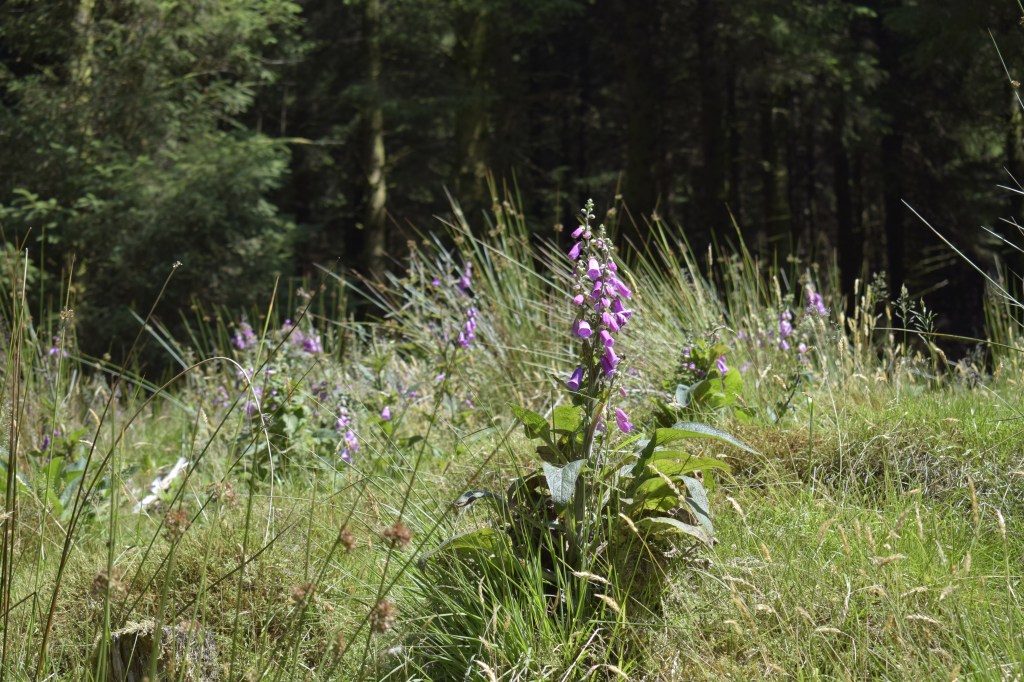
Its forbidding stone walls seem a long way from today’s sun-splashed mountain side, the citrus scented gorse, purple foxgloves and the tiny goldcrest feeding on the young Norway Spruce.
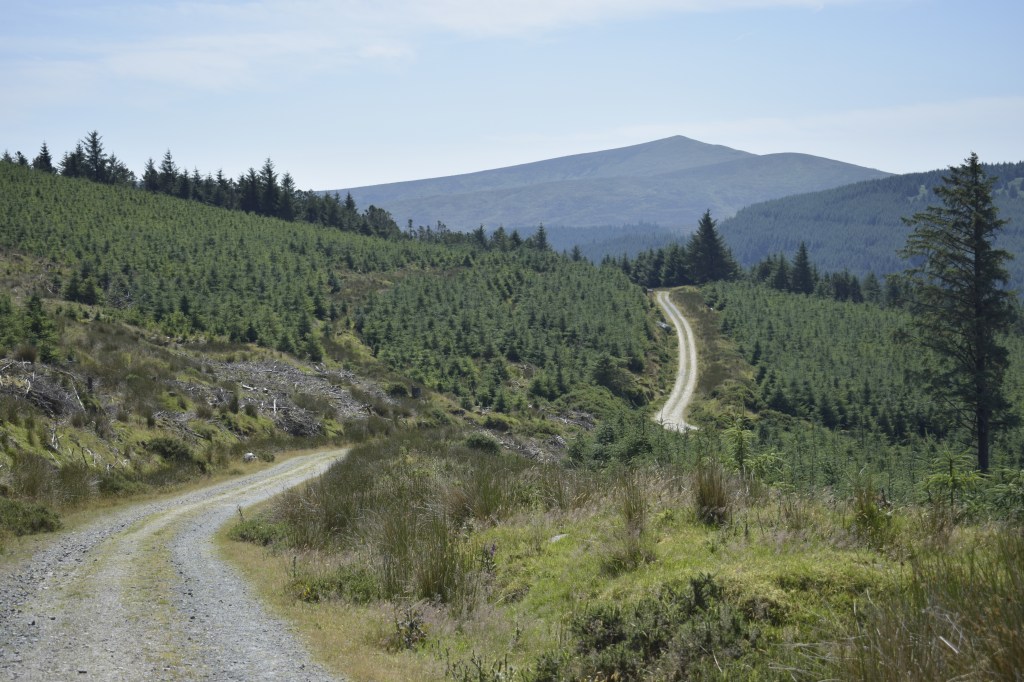
The mountains are purple-brown in the distance, the heather just starting to bloom, but the forested slopes are patchworked with wild-felled sections, which look like trench warfare has come to Wicklow.

Though, the national park are doing their bit to regenerate nature by planting native species. It’s good to see mountain rowan’s feathery fronds, and red shining berries. Oak, birch and alder have also been reintroduced.
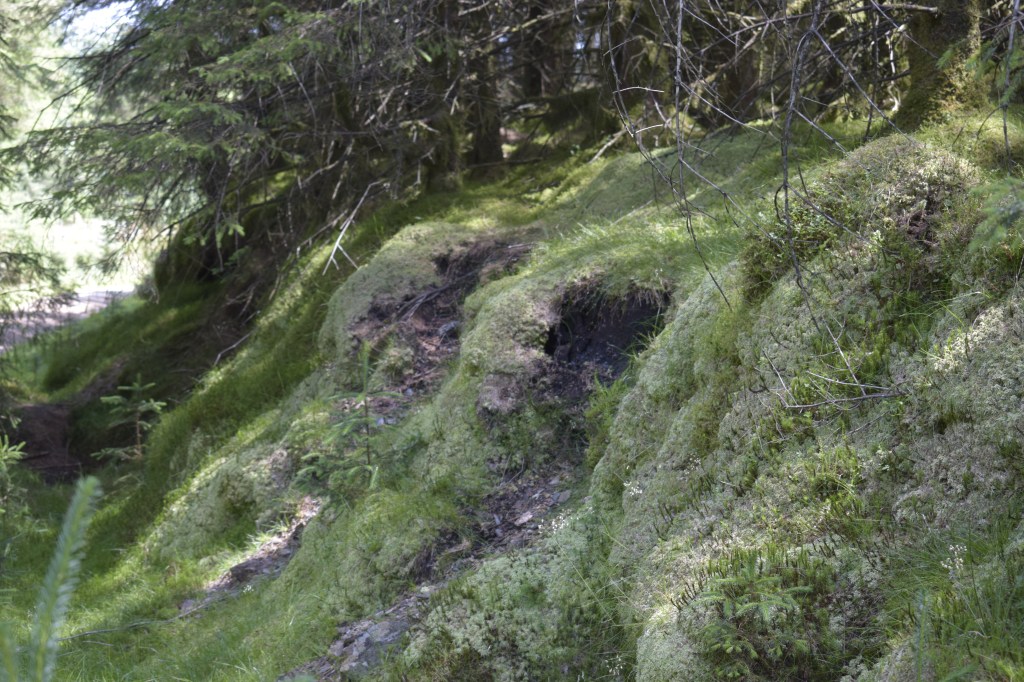
I love the variety of mosses we pass on the bogs and woods: colours from jade to emerald; textures from miniature trees, to stars, to velvet cushions.
Up above us a kite calls, one flies straight across our path before disappearing into the trees.

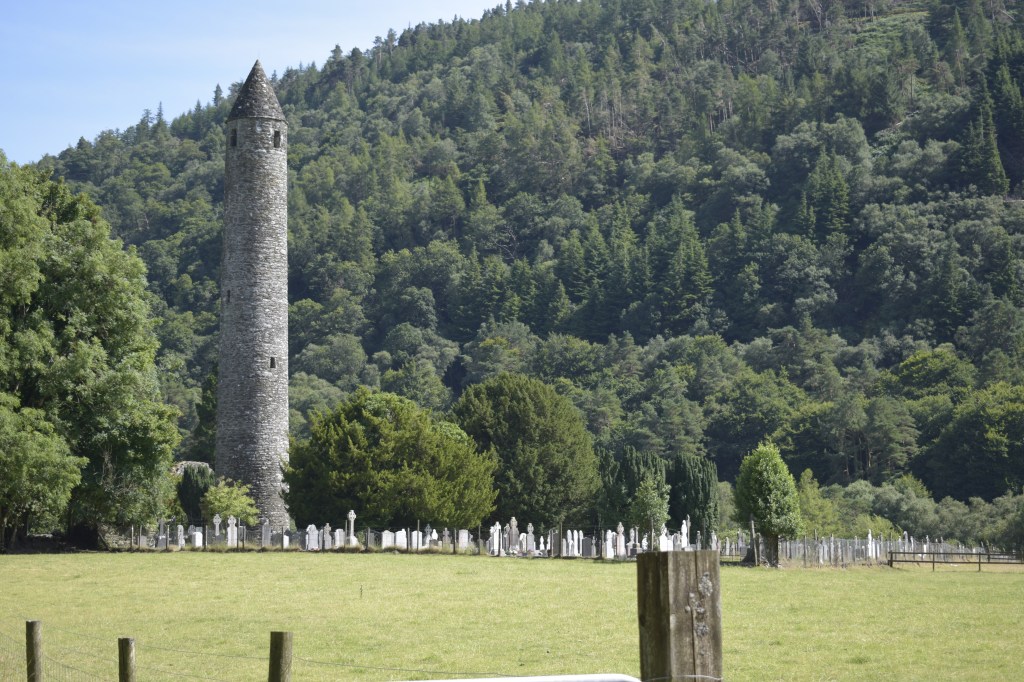
When we reach Glendalough, the austere beauty of the monastic city and glacial lakes is transformed with sun-filled picnickers; teenagers dressed in sports shorts and bikinis playing volley ball; children paddling at the edge of the lake. For a second, I think we’re in the midst of France or Spain, not Ireland.

Of course, I mix up the walking paths, so I stride off towards the Miners’ Way, which I believe will take us up to the cemetery to visit Seán’s parents’ grave. Himself knows I’m wrong but strolls along, guessing that we’ll get there eventually.

Thus, we scramble up the mountain with a view of St. Kevin’s bed across the lake, before winding down into Glendasan Valley. Both valleys had lead mines which joined together under Camaderry Mountain, the poisonous lead slag heaps still leaving barren scars on the valley heads.
Glendasan’s feral goats date from when the miners lived in this isolated place and now feed away, unconcerned, on precarious mountain edges.
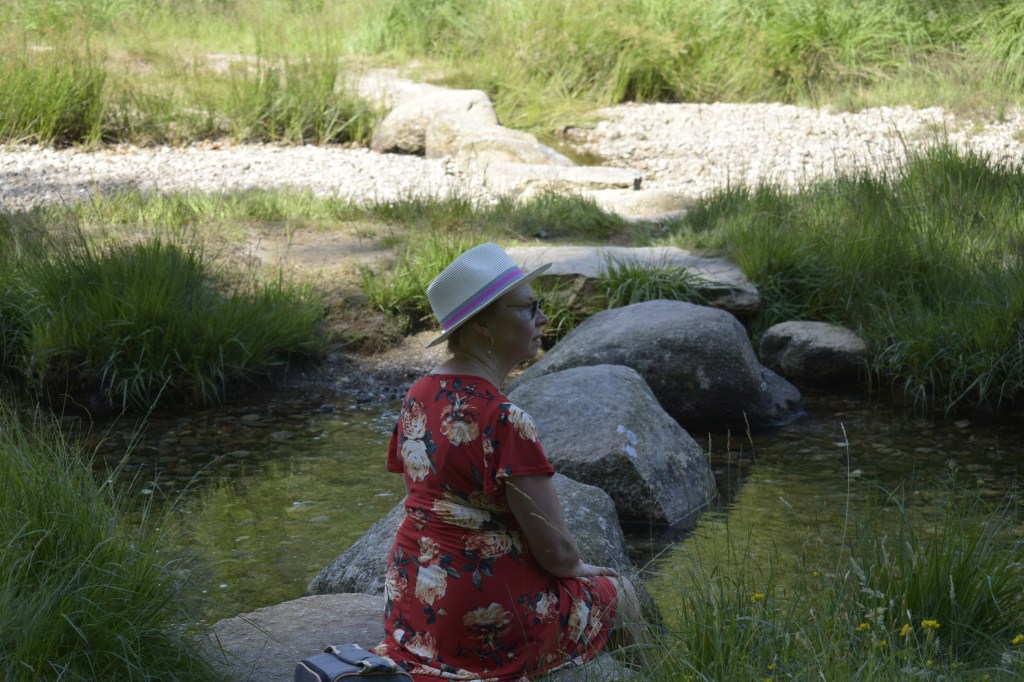
It’s rare that I feel tempted to paddle in the Glendasan River, but today I sit on a granite stepping stone, the delicious coolness of the water reviving me as I watch water boatmen skate across the surface.

Crossing the valley that leads up to the Wicklow Gap, our third valley today, we finally head towards Glenmacnass on the Wicklow Way and 30,000 steps from Glenmalure, eventually reach the graveyard.
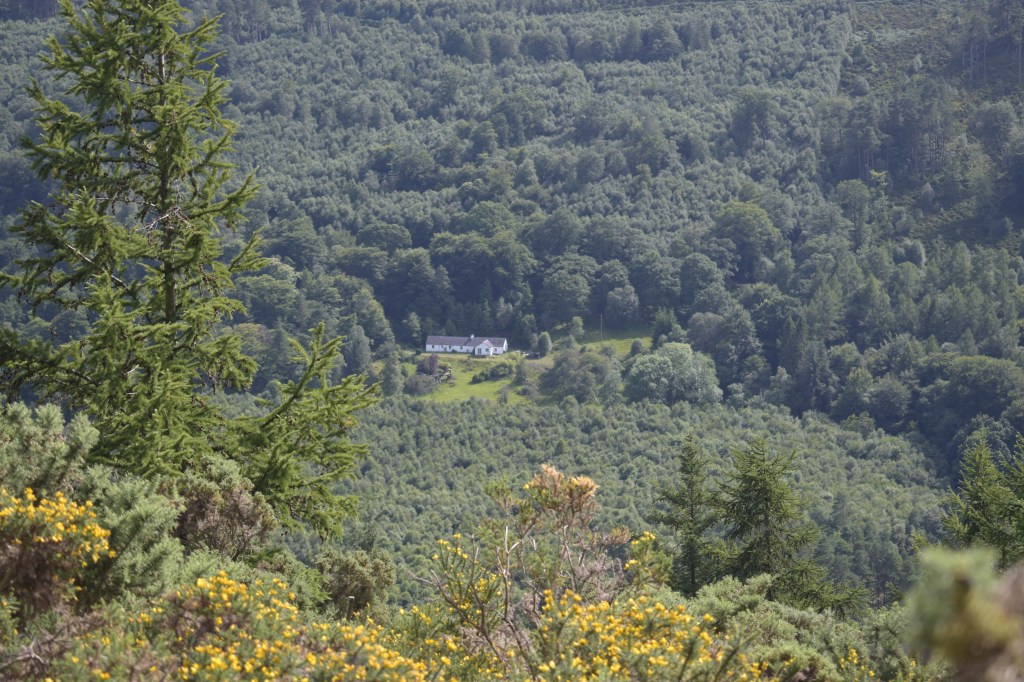
The long trek back up over Derrybawn Mountain takes us on what locals refer to as the Military Road, built to service the barracks up on Glenmalure. Every time we think we’ve reached the pass at the top, there’s yet another twist in the road and steep incline.
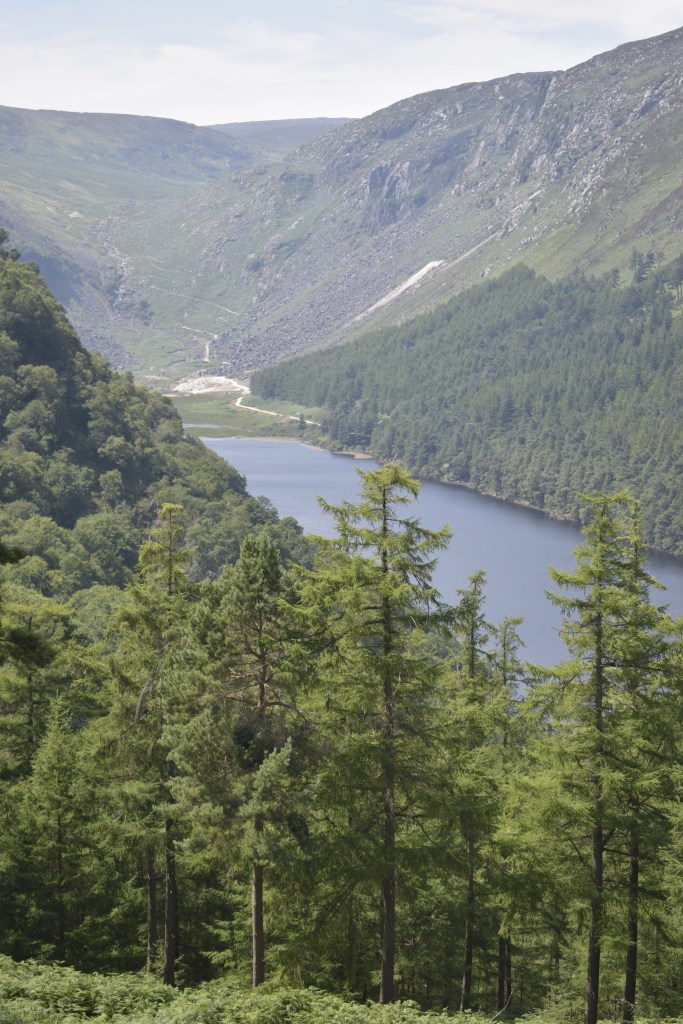
We stumble rather than ramble into the Glenmalure Lodge for our salmon supper, 44,000 steps down, but we’ve enjoyed stepping back into history, walking where miners’ and drovers’ feet have stepped before.
 Campervan Therapy
Leave a comment