Ardmore on the Waterford coast proves to be a treat. Ardmore Campsite sits beside the sea. Grey wagtails dip and dive for insects around the van and goldcrests feast on the hedgerow. We walk along the beach for the 5 minutes to the village.

We start the evening in Keevers Pub, a quintessential Irish pub, built to be a refuge from the rain.
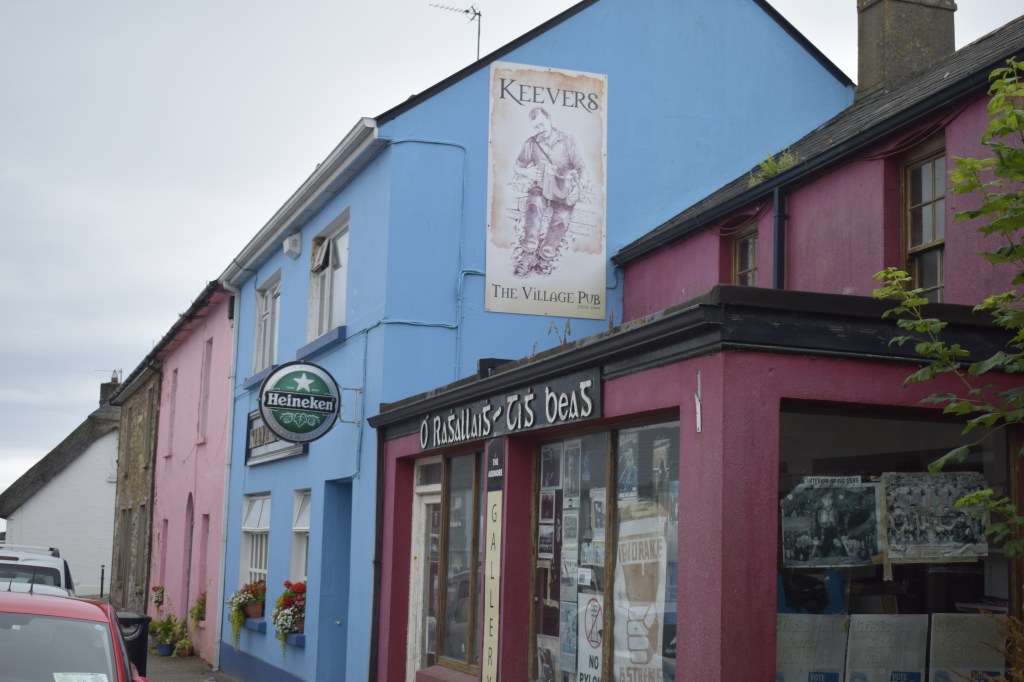
We dodge the rain to cross to Whitehorses Restaurant, being shown at first into the room in the garden, with its roaring log fire – remember this is July – for our predinner drinks.
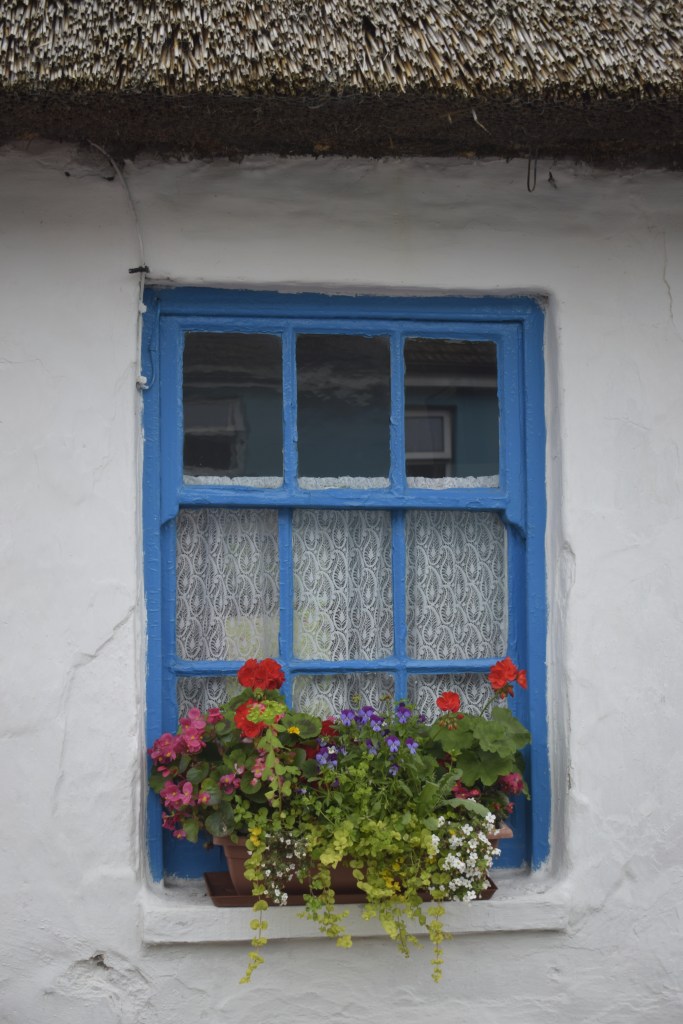
The fresh salmon roulade is zingy and moreish, the fillet steak tender (all that rain certainly does its job with pastures). We finish with a selection of Irish cheeses.
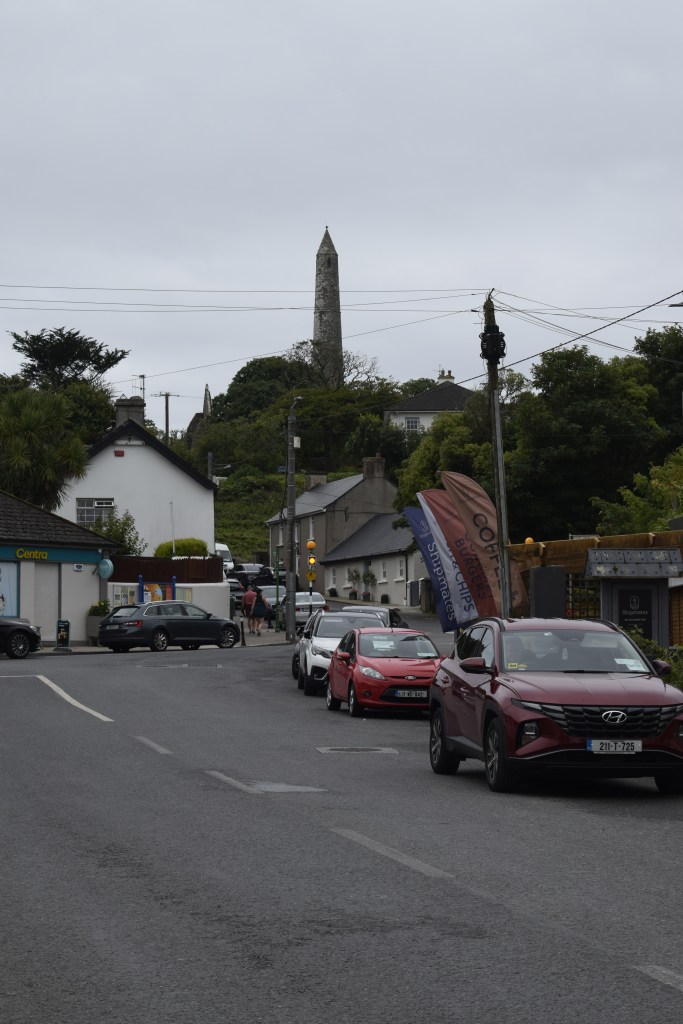
The rain has stopped, a gentle breeze comes from the sea. We’re walking home along the beach under a sickle moon, when music is carried on the air. Of course, we turn right back to town, to finish the night in Urchin Bar and Adventures, which doubles as a kayaking and paddle boarding school by day.
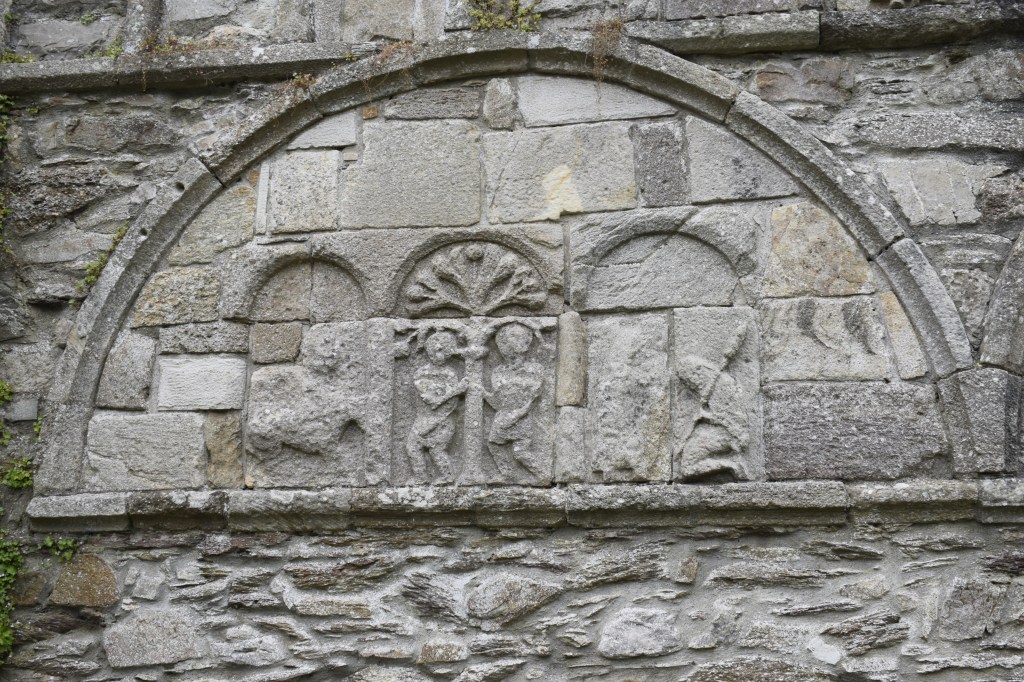
The next morning, after a run along the length of the beach, (me running, Seán avoiding it) we follow the signs up to the round tower of 5th Century St. Declan’s Monastery. The saint preceded Saint Patrick bringing Christianity to Ireland. The ruins are empty, so the granite stones radiate a haunting power.

I’m most amused, though, at St. Declan’s stone. Now folks, forget about osteopaths, if you’ve back pain, all you need to do is crawl through the hole in the stone and your back will be fixed.

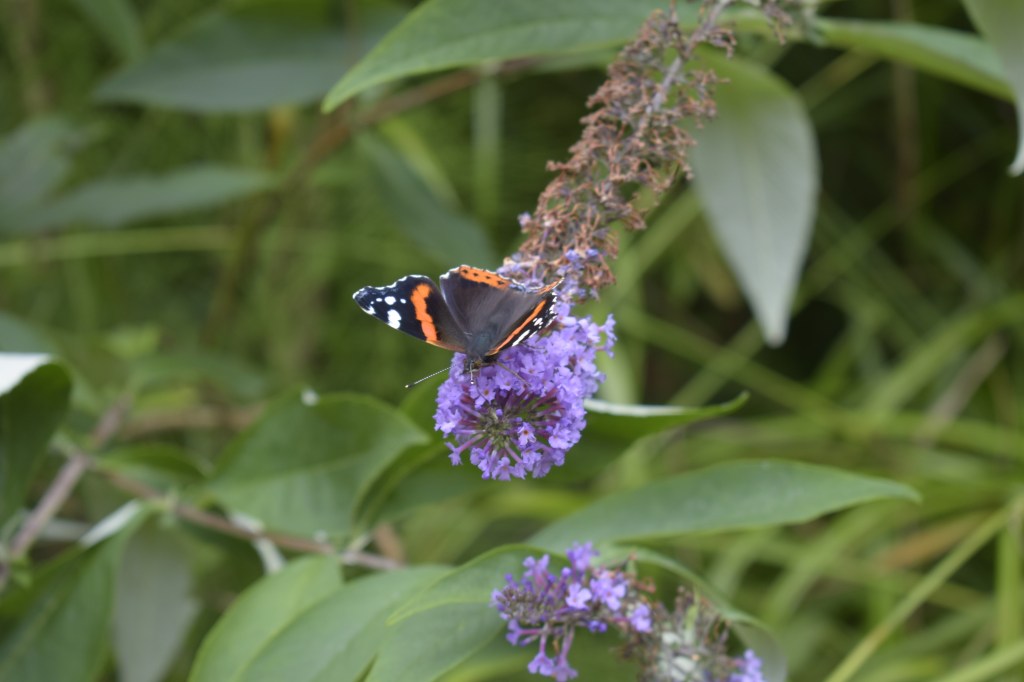
We wander through the sensory garden, which celebrates biodiversity at one end, and neurodiversity at the other. I watch an elderly woman forage for the nasturtium flowers for her salad. A plethora of butterflies swarm through the wildflowers.

A series of straw-stuffed gardeners’ behinds stick out from bushes – amusing, though I’m not entirely sure of their message.

New Ross, my parents’ hometown, comes next. It sits by the River Barrow. The town has had some lean years as the docks closed down and industry declined, but I’m delighted to see its rejuvenation: from the Dunbrody, a replica of a ship taking emigrants to America, to the bust of JF Kennedy on the quay (his family were locals). But now there’s also the Ros Tapestry, woven by local women, which tells the history of the town’s Norman past. I’m astounded at the vulnerability of the Dunbrody and the artistry of the unsung women weavers.
New parks have sprung up around vacant patches of land, again with a view to increasing biodiversity and access to nature, including, of course, a few fairy mounds. There’s even more murals on the walls celebrating both nature and history than there was a few years ago.

On a walk “around the Well” (perhaps a sacred well), which I often did with my mother, I cut up into the grounds of the Brandon Hotel and come across a wooden sculpture of a Viking leading his ship into town. The very air of the town is suffused with its multiple histories, Celtic, Norman, Viking, a reminder that peoples have always intermingled and long may they do so.
 Campervan Therapy
Leave a comment