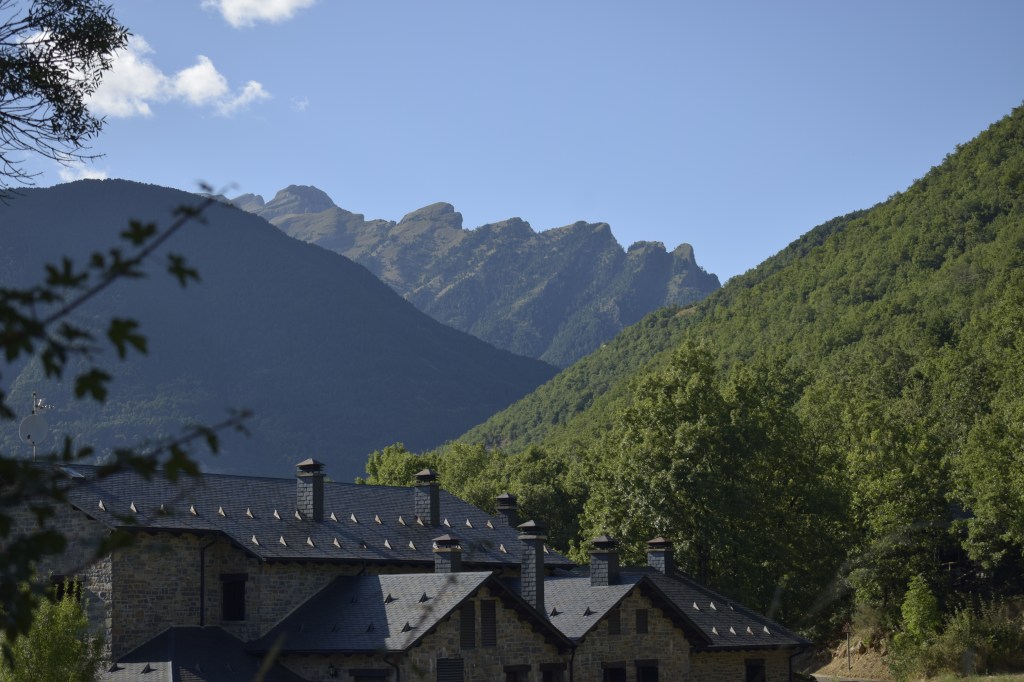
974 metres up in Aragón’s Tena Valley, Camping Gavínis terraced, surrounded by holm oaks and pines, the russet, jagged mountain teeth sticking up through the tree canopy. It takes us back to when our children were small and we came upon a gem of a terraced campsite, scented with hot pine, behind the busy Côte d’Azur.

We follow trails up to the village of Gavín, a handsome mountain village, all geraniums and stout oak balconies. But if it wasn’t for some cheery cries from the swimming pool, the place could be a deserted village, the keypads on the doors speaking of the Airbnb houses, pretty, but mostly empty outside of the ski season.
The night brings bird calls that I cannot identify, but I don’t think Himself would be amused if I dug him in the ribs to demand he use his Merlin App to identify them.

In the morning we follow what were once drovers’ and pilgrims’ trails down the mountain to ‘upmarket’ Biescas. I have that shivery feeling as I step on the cobbled stones, worn smooth from the ghosts from the past.

In the valley, the meadows are a tapestry of white and blue, of wild carrot and chicory. Horses graze in peace and I promise myself we’ll come back in Spring to see the wildflowers at their young best.

Flooded fields have us puzzled, there’s been no rain and it’s 28 degrees. But due to underground springs and clever irrigation, they’re growing rice, an essential for paella, but I would never have thought to see such a thing in the mountains, always associating it with plains.

Biesca’s alleys are lined with stout mountain houses, with steps taking us up to the churches which look down on the roofs and people below.
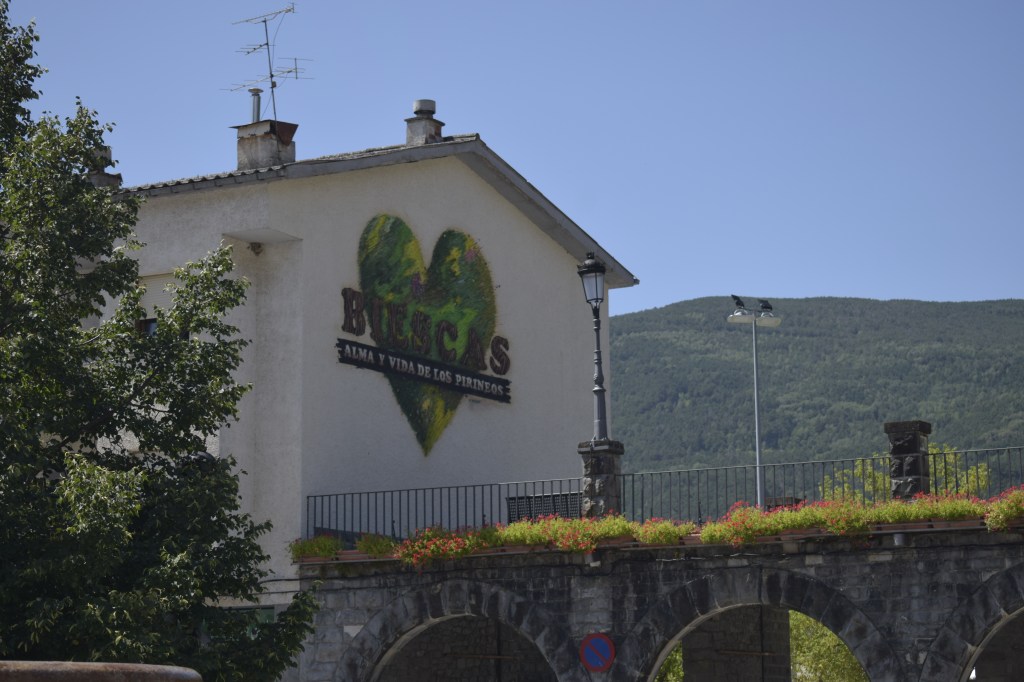
The green waters of the River Gállego run through it. We follow the Camino for the 5 kilometres to Oros Bajo, as we can never resist an old pilgrim route. I wonder whether we’ll ever manage to walk the whole of the Camino.

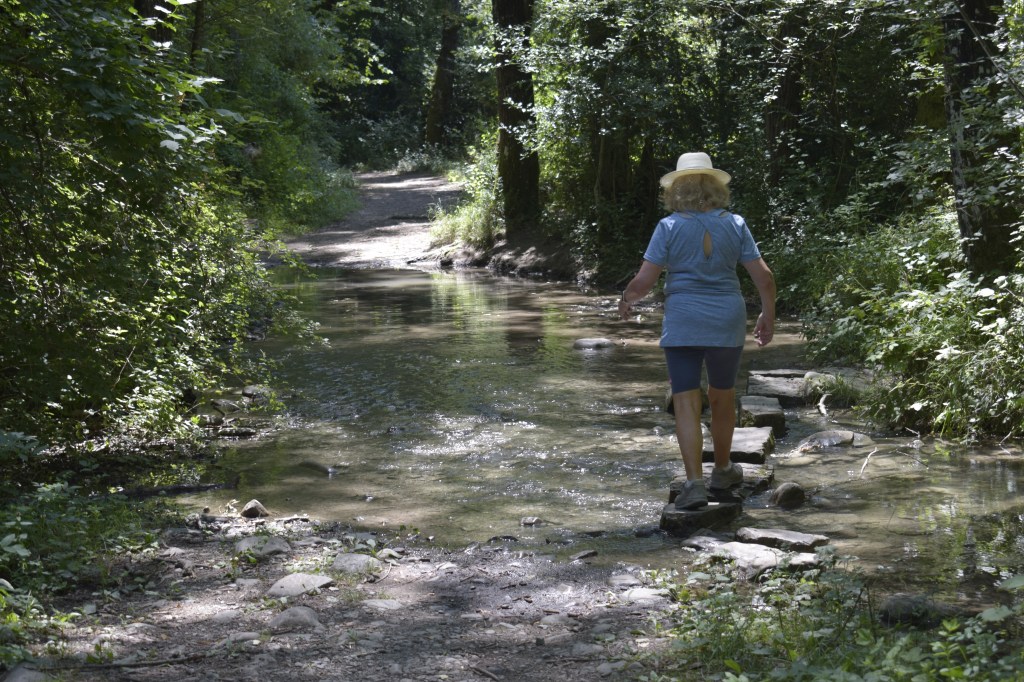
We walk along the banks of the river, through oak and pine forests, wild thyme throwing up its scent under our feet. The ancient track is crossed by clear streams, with stepping stones over them and I can’t resist bathing my feet in the cool water.
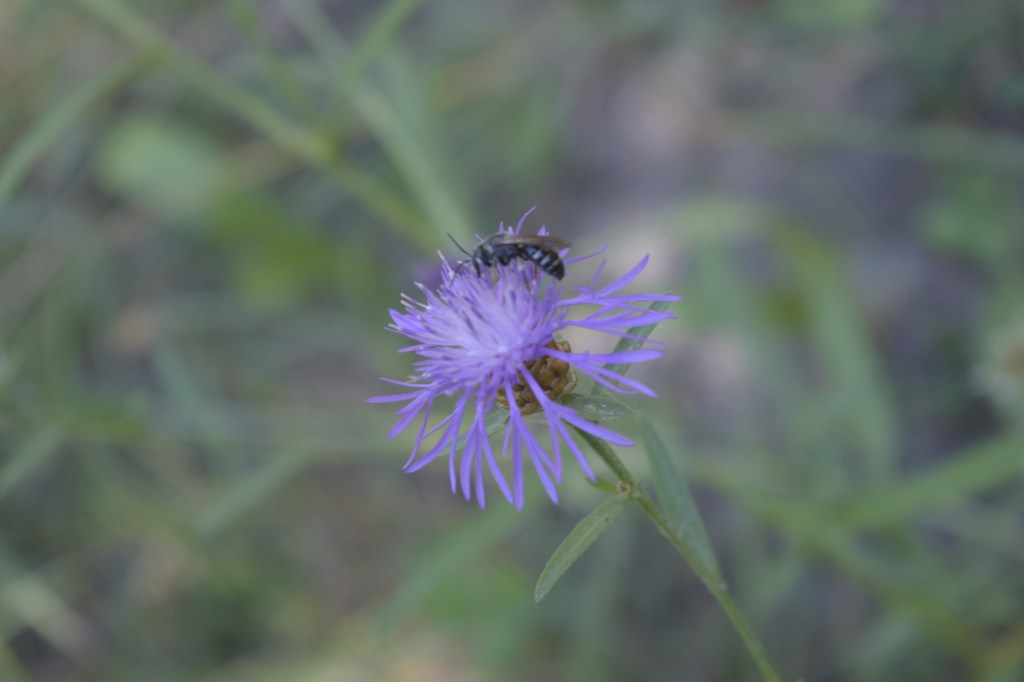
Butterflies flit everywhere, little blue ones, yellow ones, painted ladies, and clouds of cabbage whites. The cicadas interest me the most though as they sling themselves with wild abandon at my legs.
These ones are grey-white, camouflaged against the limestone tracks, but when they fly their wings flash with iridescent blue. But in Lumbier, the cicadas were ochre to match the tracks, and their wings were scarlet when they flew. The wonders of Mother Nature has me silenced – but it’s me, so not for long.
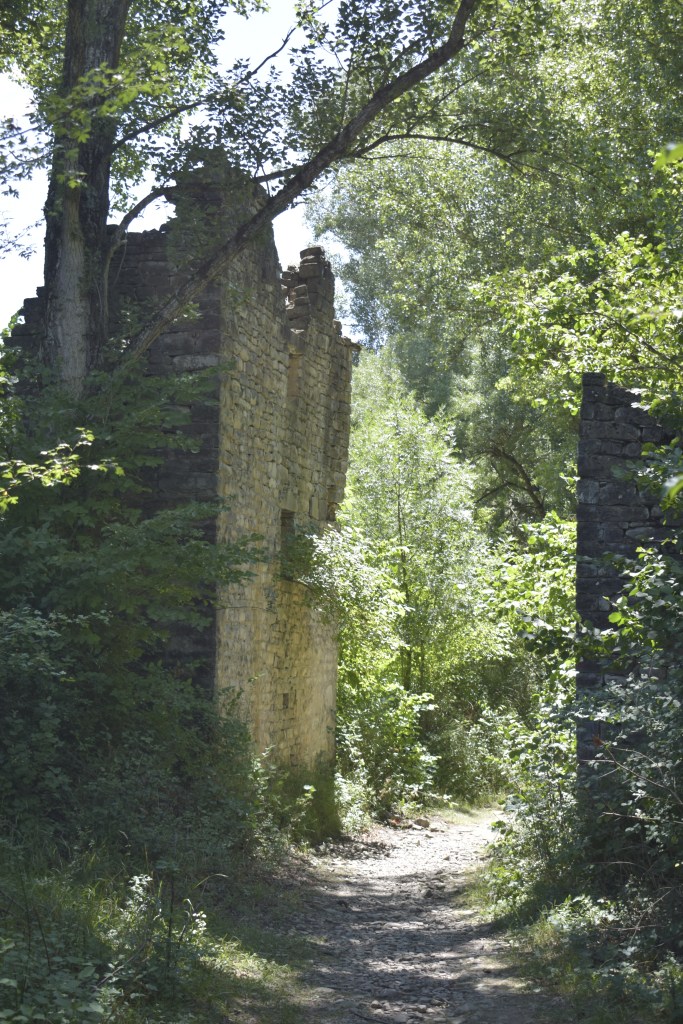
Oros Bajo is a quiet hamlet, with an ancient pilgrim church. We follow signs for the cascade, the water tumbling from the ruins of an ancient dam into wild swimming pools.

There’s even a little wooden changing shelter. Kayakers emerge downstream, enjoying the intermittent white water adrenaline rush of the river.
Back at the campsite bar at night, we’re astounded by the number of moths, another reminder of how much nature flourishes in these forested mountains.

 Campervan Therapy
Leave a comment