Brittany extends a relaxed welcome to us as we appear in Damgan, positioned in the Gulf of Morbihan natural park. Camping Célimène squeezes us in for three days, even though we have to move pitch each day, one bijoux pitch next to the recycling and one on top of the children’s playground. But so many beachside campsites in peak season would have just turned us away.
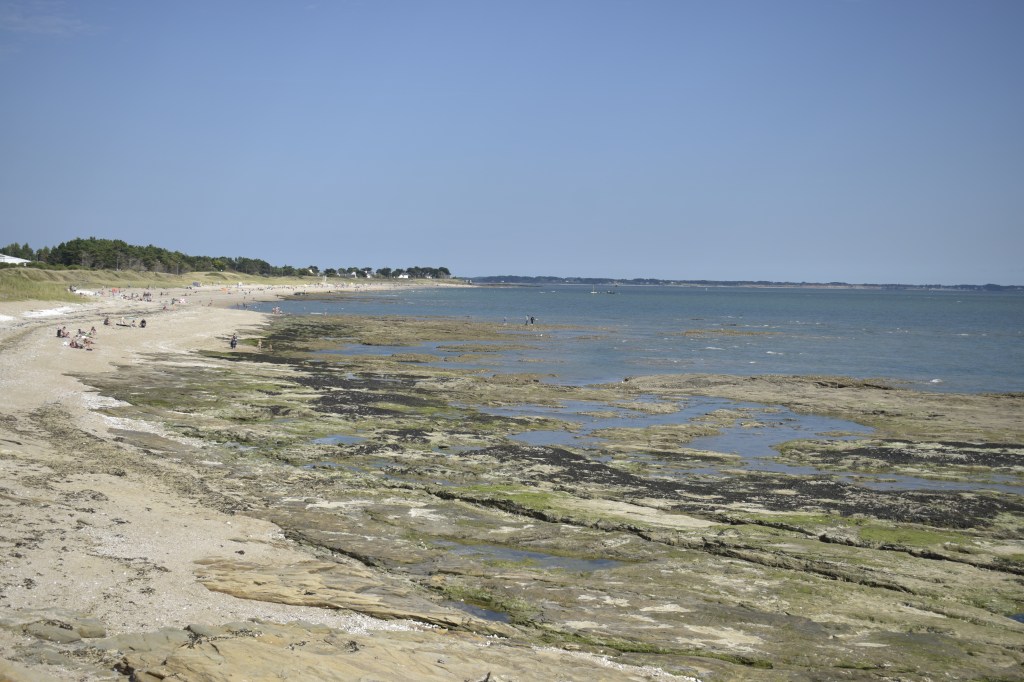
It’s delightful to beachcomb on the vast swathe of golden sand, as it’s as if the whole world’s shells have ended up on it; build sandcastles with our grandsons, who are holidaying here, then merrily wave good bye when the cranky evening hours kick in.
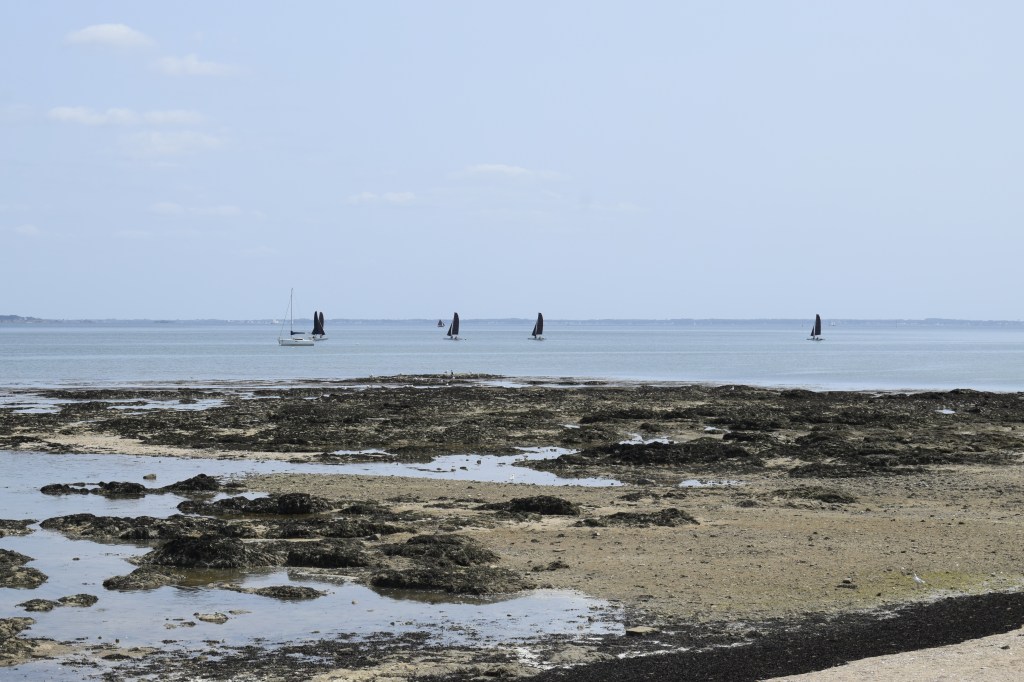
We take advantage of cycle tracks, which take us from crescent beaches, to bays full of sailing boats. The coast line is gentle and not for the first time I wish I could paint – so I do the second-best thing and buy a pastel of sun setting over the beach at Guy Corbineau’s exhibition.
Evenings find us in the fairy lit-up central bar where my fizz comes in what’s labelled a Celtic flute, with winding coloured glass round it, balanced on slate.
We drive across the rolling hinterland to St. Malo by rich pastures, forests, cattle and sheep, and yet more wonderful cycle tracks.

St. Malo proves a challenge. The municipal camping in the centre beside an old fort is packed and we’re turned away. We can’t go far as we’ve got a ferry to catch in the morning.
The SatNav misbehaves, not considering narrow alleyways, and a funeral outside a church. We end up circling round through the funeral crowd on repeat, me mouthing apologies through the window as our Camper nestles up against the hearse.

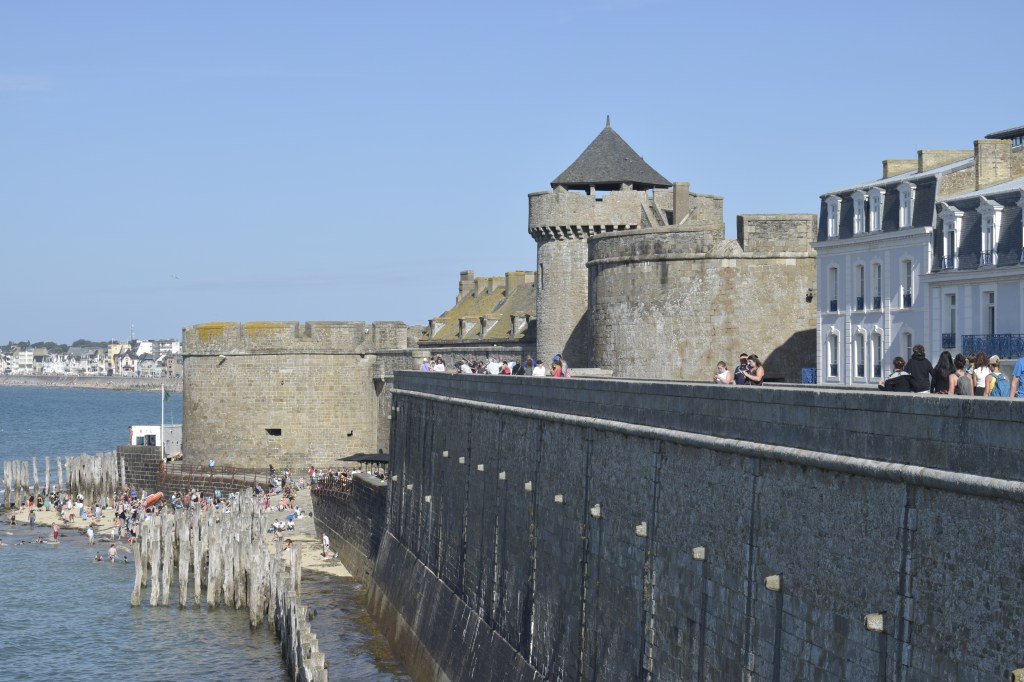
The ramparts of the old town are stunning, turning it into a fortified island, the sea splashing up against the tall walls. The gracious stone houses gaze out at the sea. Statues of sea-faring captains appear at intervals as if still guarding the ramparts.
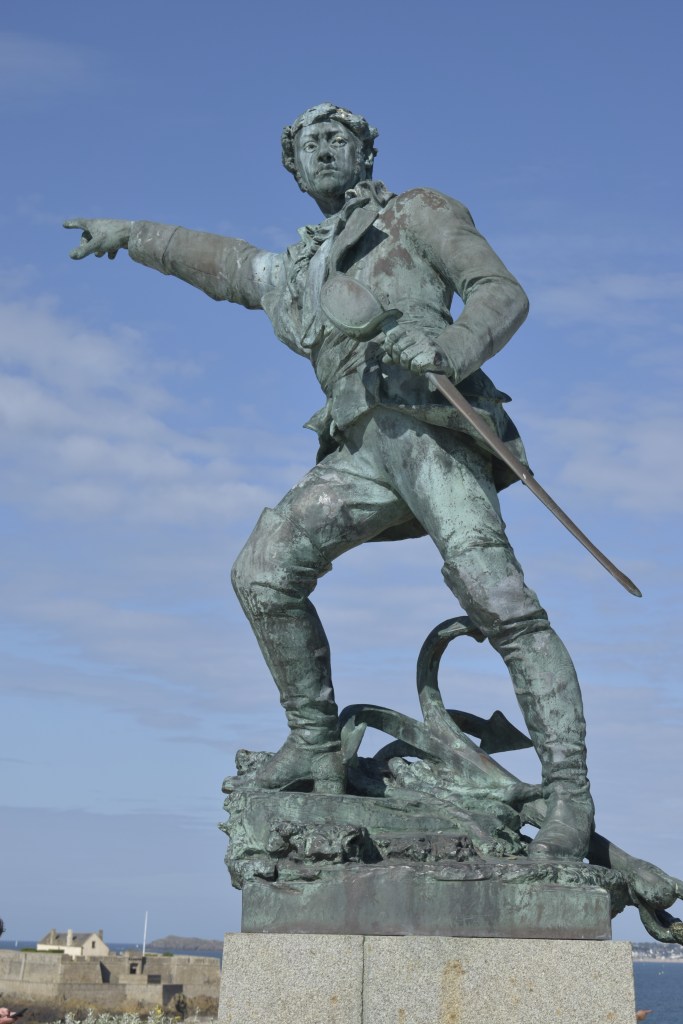
The bronze of Robert Surcouf points out to sea with intention, a privateer, who enjoyed raiding British, Portuguese and American ships in the Indian Ocean. Unfortunately, as with many buccaneers from 18th and 19th Century he also had a murky history involving the slave trade.
We leave the ramparted island of St. Malo for supper as it’s so crowded, find a gem of a place, a traditional restaurant, with the landlady holding sway. The menu is reassuringly small, two choices for each course and our fresh salmon salad and paprika pork are delicious. We love the landlady too, who almost refuses to sell a brandy to a tourist to accompany his meal, as she insists it’s a digestif and not at all appropriate.
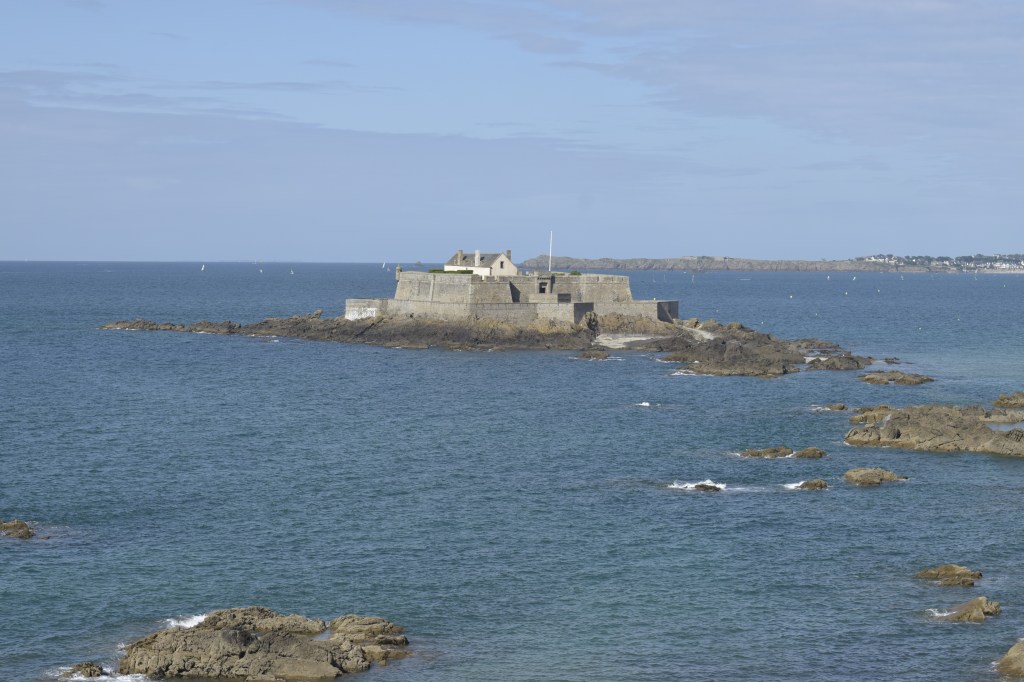
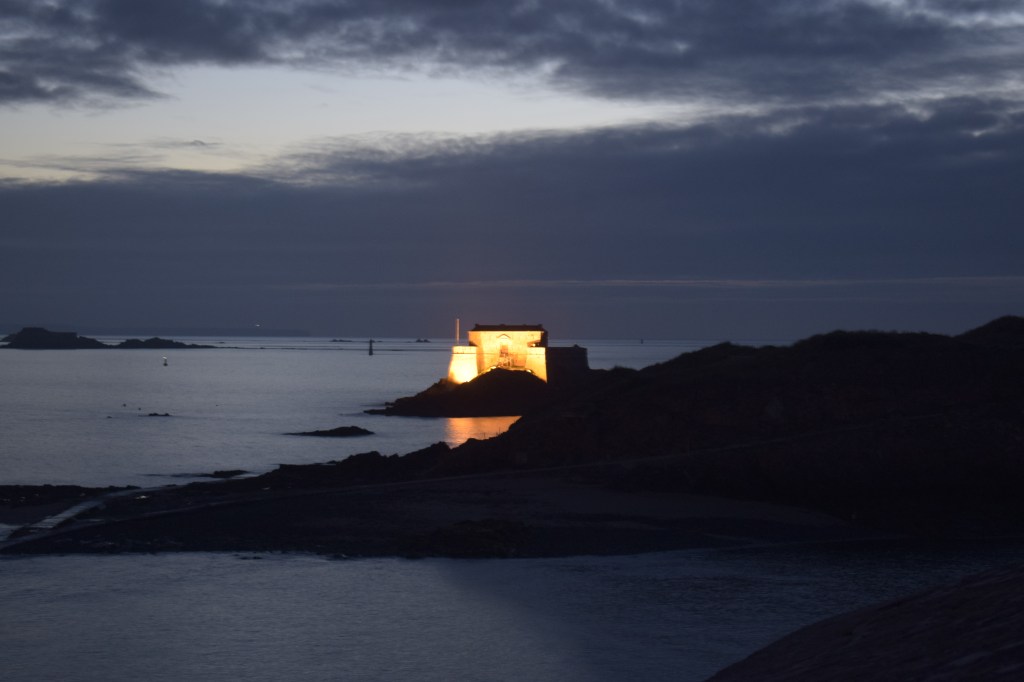
The tiny coves and islands slumber in the sea beneath the ramparts, a lone house on the nearest. When the tide goes out, we can clamber up to the old weathered door.
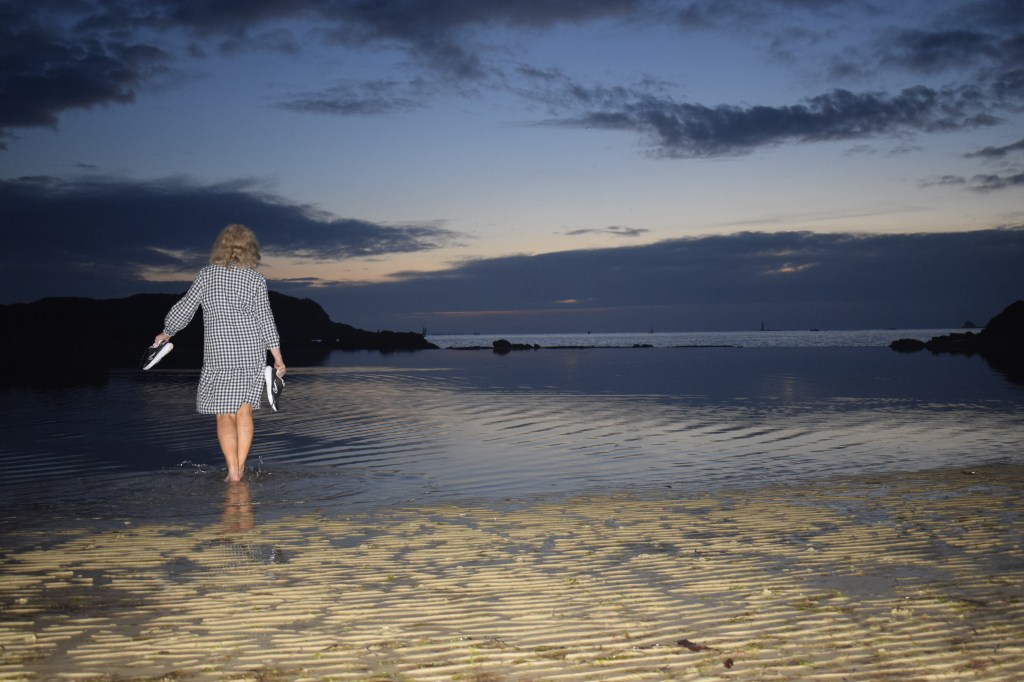
Paddling in the moon-silvered sea to the sound of Bob Marley is a memory I’ll take out and savour on dark winter nights.
The next day’s ferry trip takes us past blue-hued Jersey, Guernsey, Sark, and Alderney. The Brittany exhibition on the ferry sees us planning a return visit to circumnavigate the rugged coastline.
 Campervan Therapy
Leave a comment