Slaloming round Genoa’s spaghetti looped motorways always brings out the startle reflex in me. But Seán, insouciant as ever, just rolls with it. When we leave the motorway at Pegli, a suburb just north of Genoa’s centre, I hold my breath as he squeezes the van between mopeds, motorbikes, cars, pedestrians out for their evening shopping or strolling.
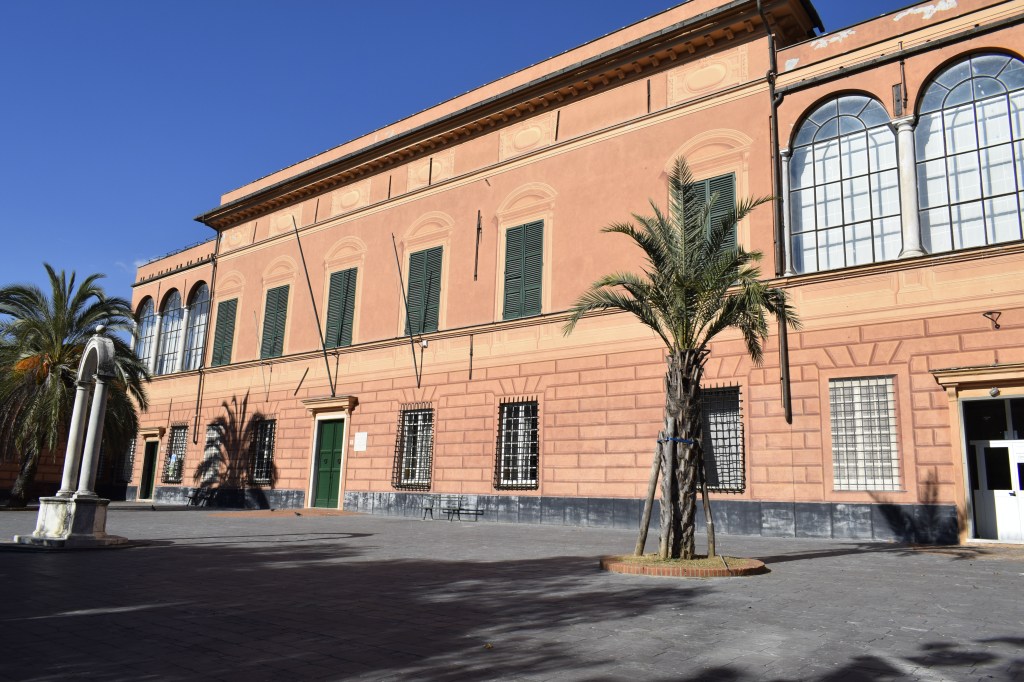
We twist up the narrow mountain road to Camping Villa Doria, and I pray that we don’t come face to face with a camper on its way down.

The campsite is in a tree-lined ravine. The receptionist is so friendly and marks out on the map of Genoa all the things she thinks we’d like.
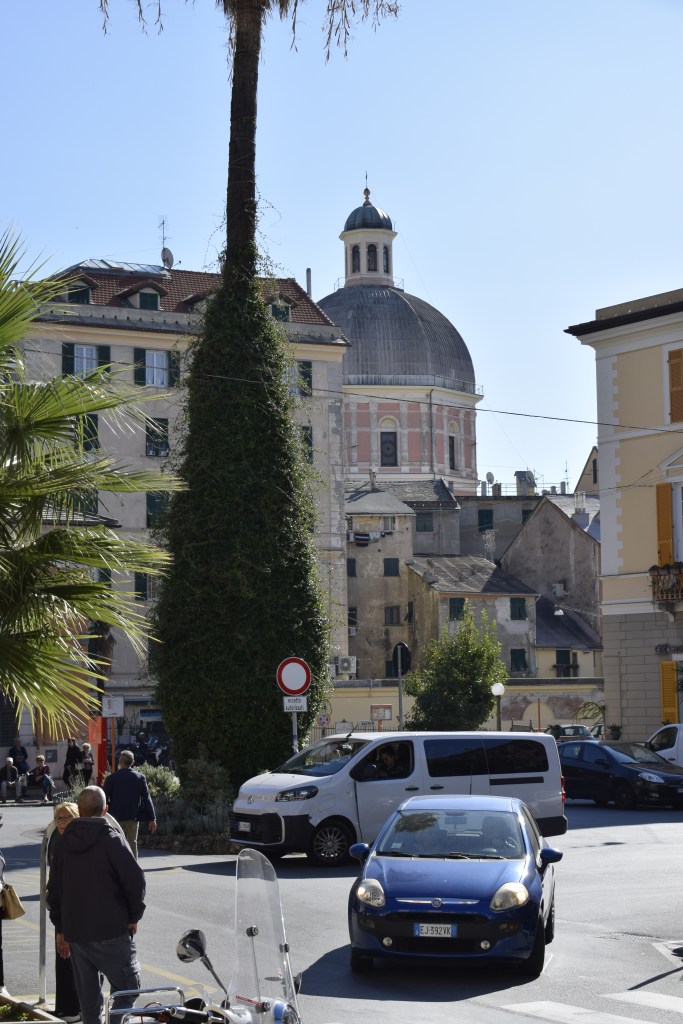
The local train, from Voltri stops at Pegli to take us to its final stop at Nervi’s walking track that hugs the cliffs over the sparkling Mediterranean Sea. Cacti and fan-tail ferns grow out of the rocks.

The sedimentary layered cliffs and islets below us are bent and twisted as if the tectonic plates have just collided. On the other side of the railway line are Nervi’s cool, pine shaded parks, with people resting, reading, chatting.

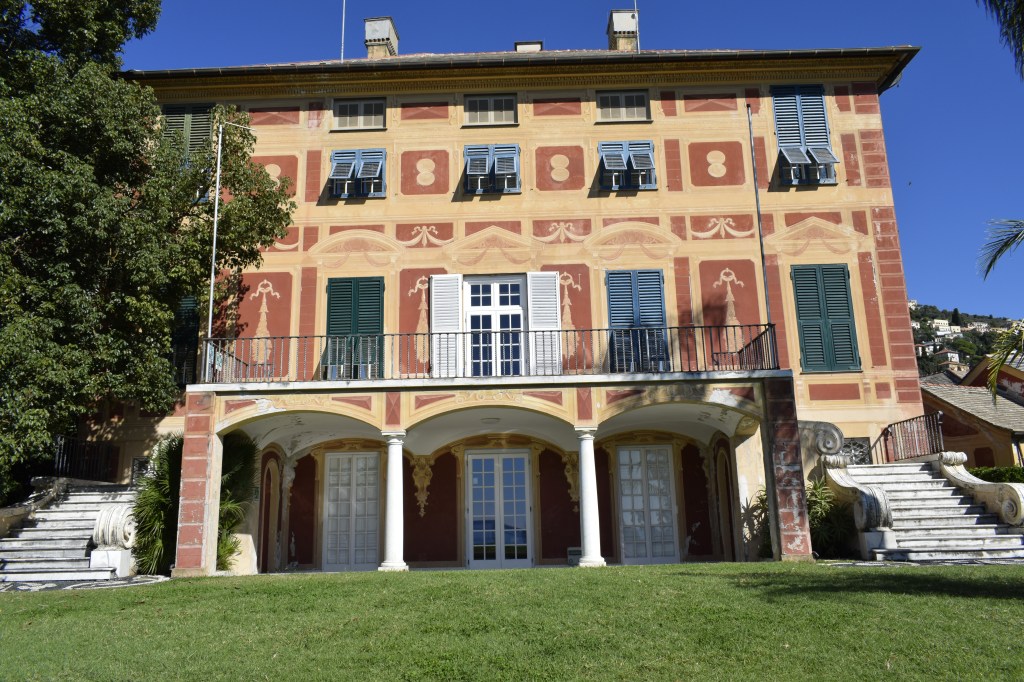
Our first stop is Villa Grimaldi Fassio, which houses a great collection of mid-19th Century to early 20th Century paintings and bronzes. The building itself is stuccoed and graceful but the paintings are really interesting, with Italian painters I didn’t know.
I love the Lorenzo Delleani’s ‘La Raccolta Delle Patate’, 1887, with the peasant potato pickers the stars of the show. Mind you, I do wonder what they thought of this artist painting them while they did this back-breaking work.

There are so many little cafés overlooking the sea to choose from so a panini with a view is on the cards before we walk from Nervi to Quarto Station and the dramatic bronze memorial to the struggle for unification, with its giant female angel and men pulling on ropes, knives at her feet.

At Brignole station we stop at the giant memorial arch, the Arco dei Caduti, with its climbing stairs and the vividly patterned flower beds.

As we walk to the Medieval district, which the campsite receptionist told us is one of the largest in Europe and one of the most populated, I’m blown away by the colonnaded pavements with their colourful mosaic floors.
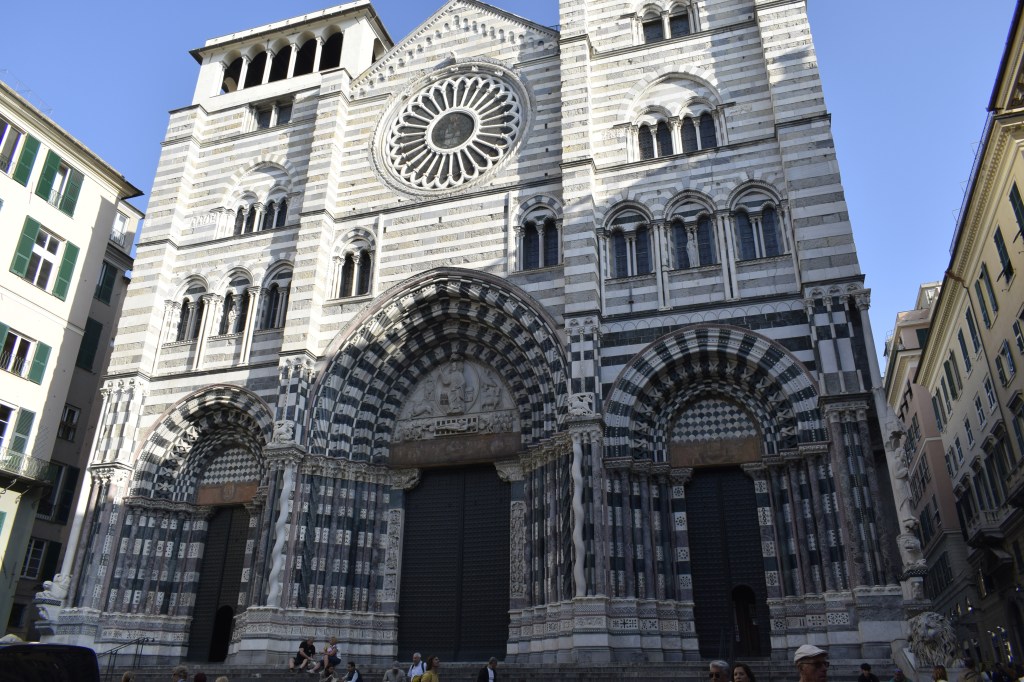
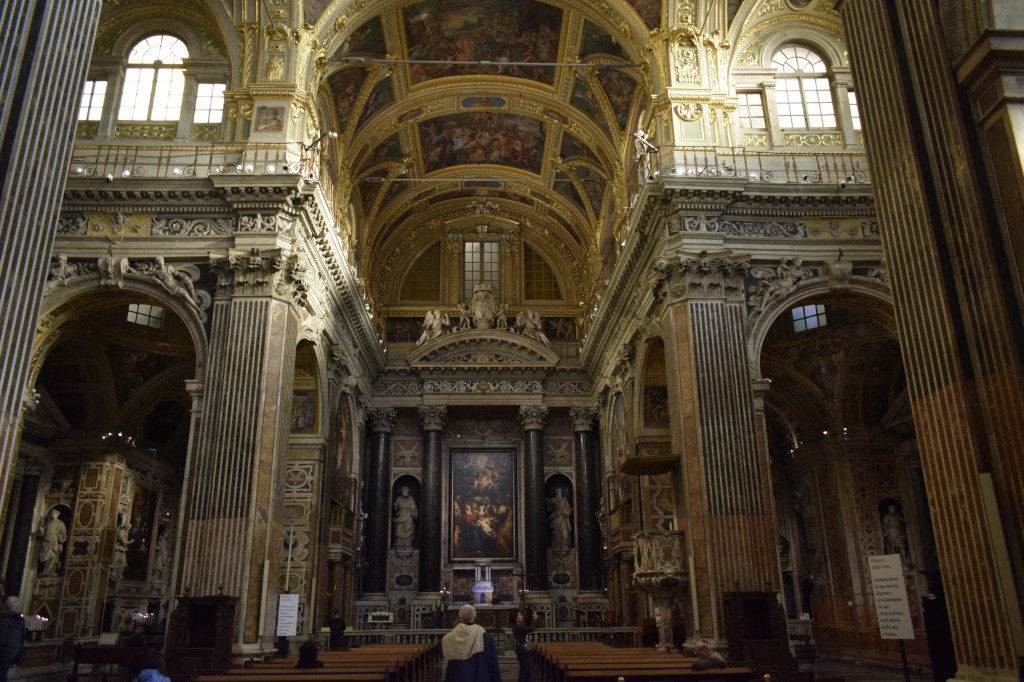
The cathedral’s black and white travertine stripes are reminiscent of Florence’s cathedral, but the church I love is the Chiesa del Gesu. There’s so much gilt here the whole interior shines.

The stars of the show are the two Ruben paintings. Especially strange and moving is the giant painting of baby Jesus being circumcised and Mary looking away. Her anxiety is so relatable.
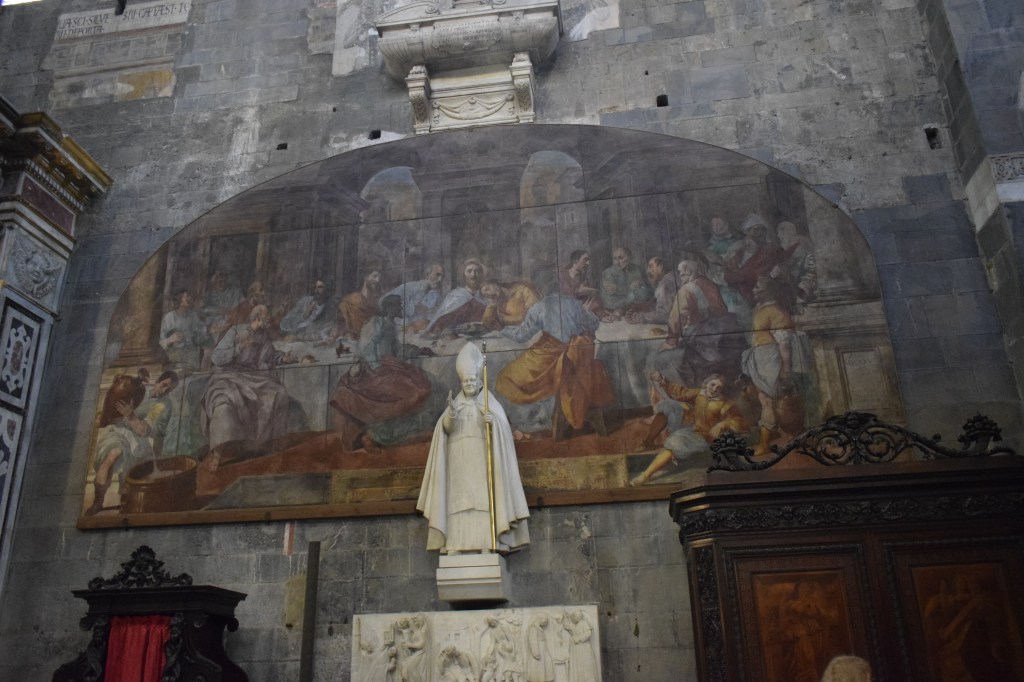
We stroll through the Palazzo Ducale, first started in the 14th Century, now a vast cultural hub for the community, with films, art exhibitions and cafés.
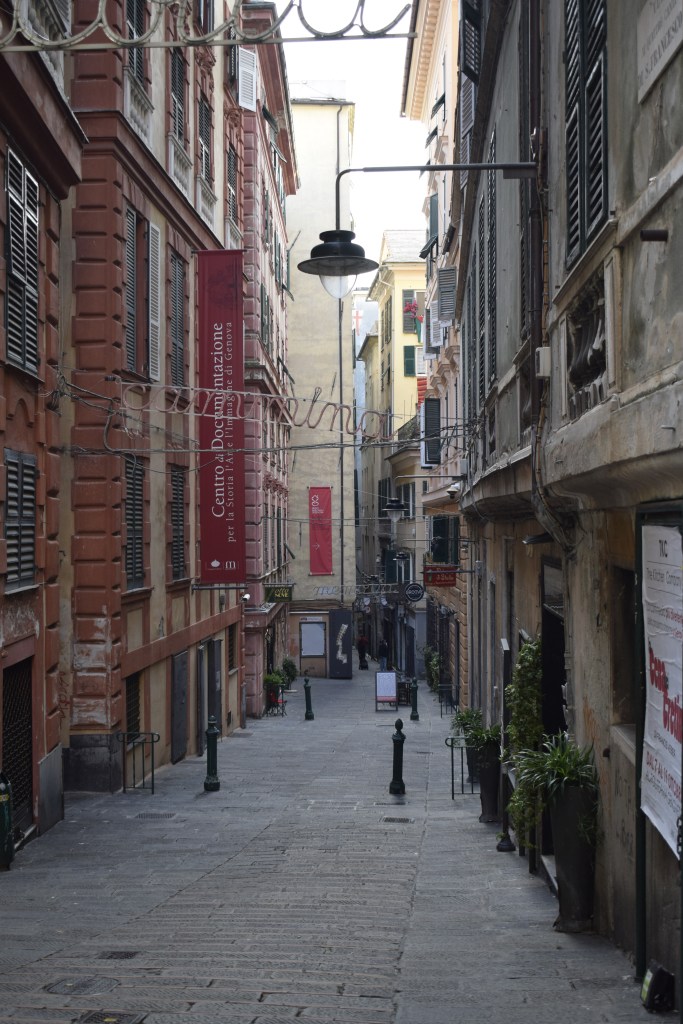
Walking to Principe Station takes you by the grand 16th Century palazzos. There’s so many of them, with telamons, stuccoed lions spewing out pineapples, the sign of wealth and plenty for the rich, among other fruits.

The massive wooden, iron-studded doors are big enough to drive a horse and carriage into the vast marble hallways and secret courtyards.
 Campervan Therapy
Leave a comment