We pull up in Camping Le Cigales as it’s one of the only campsites in Mandelieu-La Napoule, open in mid-October. Parked under the towering palm tree, the parakeets singing overhead, we don’t feel too short changed.
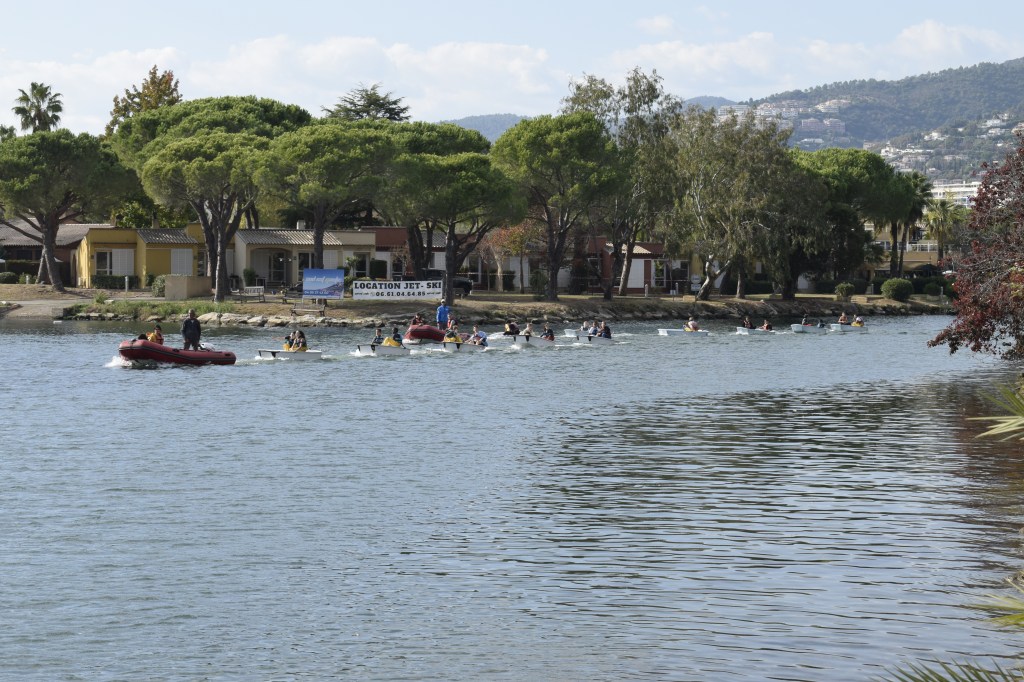
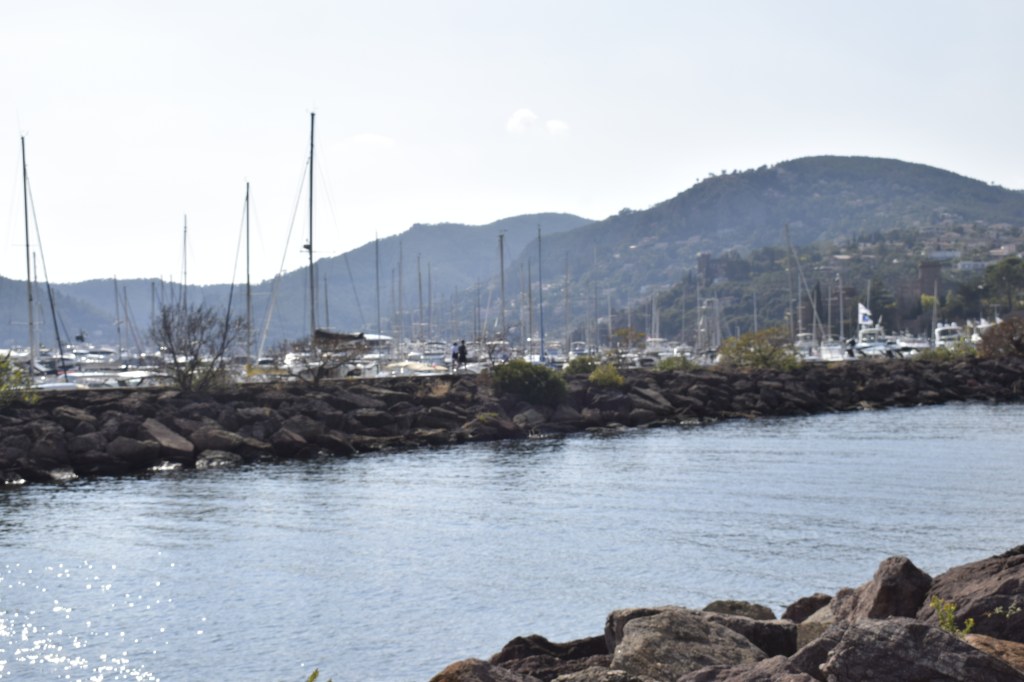
We stroll along the Parc des Oliviers which lines the River de L’Argentiere, watching the kayakers and children in little boats being towed to sea by a speedboat as if they’re a string of little ducklings.
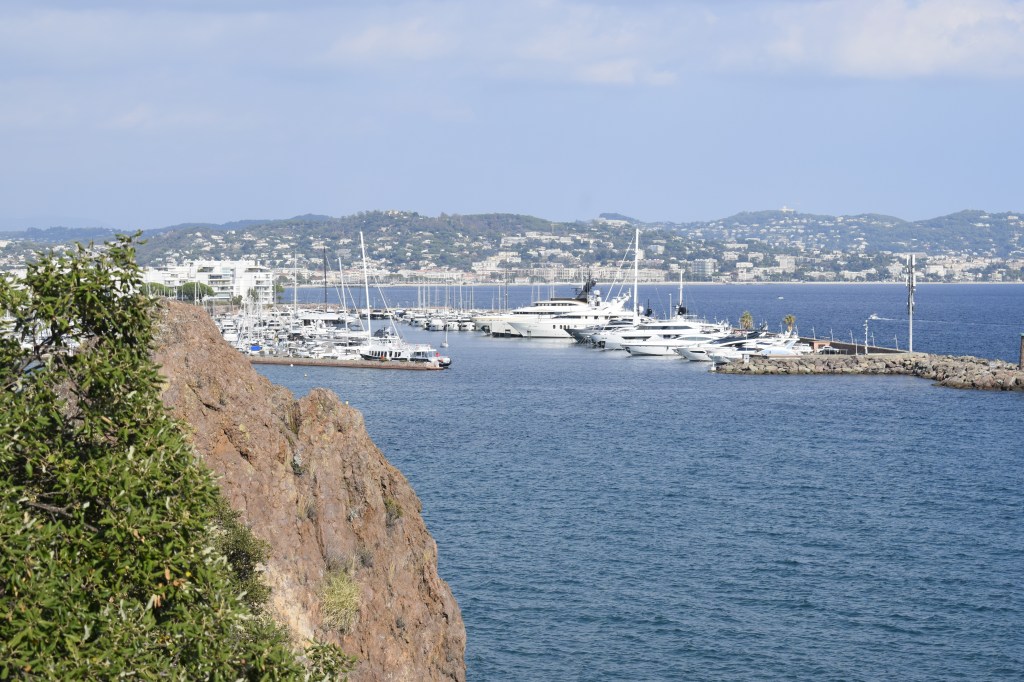
Bars by the river are full of early evening imbibers. When we hit the Mediterranean, we spot Cannes in the distance, and the Iles des Lérins.
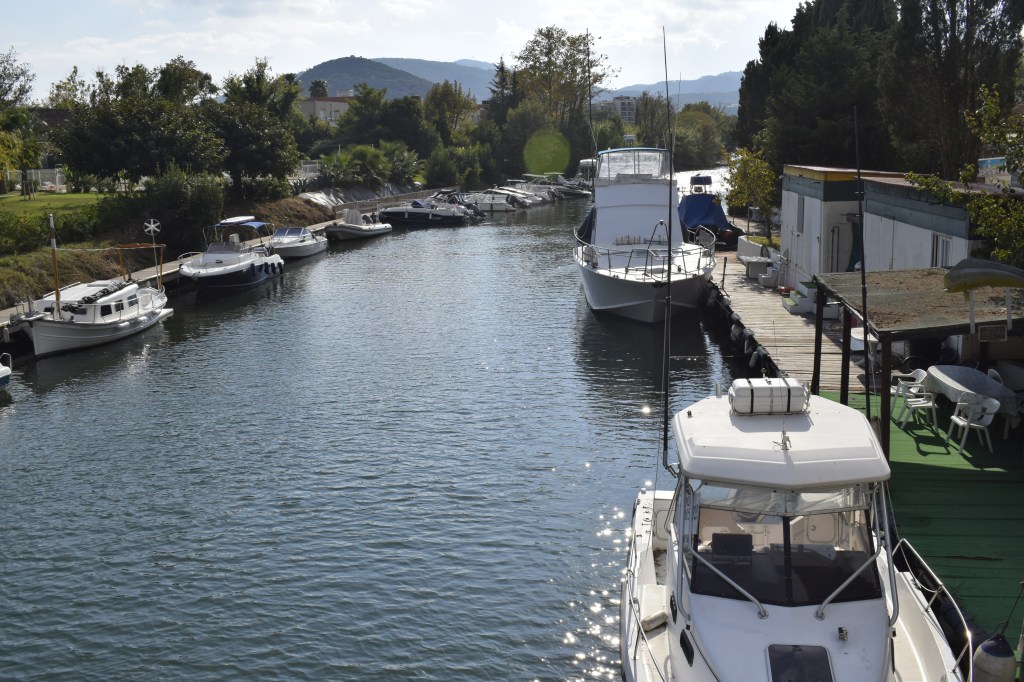
The walk from La Napoule into the centre of Cannes doesn’t appeal much as cars are tearing up and down the road and the beaches are bijoux arcs, with storm-breaking boulders and little bars on each one – lovely for a drink or a swim, but not great for a stretch of the legs. As we come to the aerospace building. I’m staring up at the photo of an instrument floating near the moon.
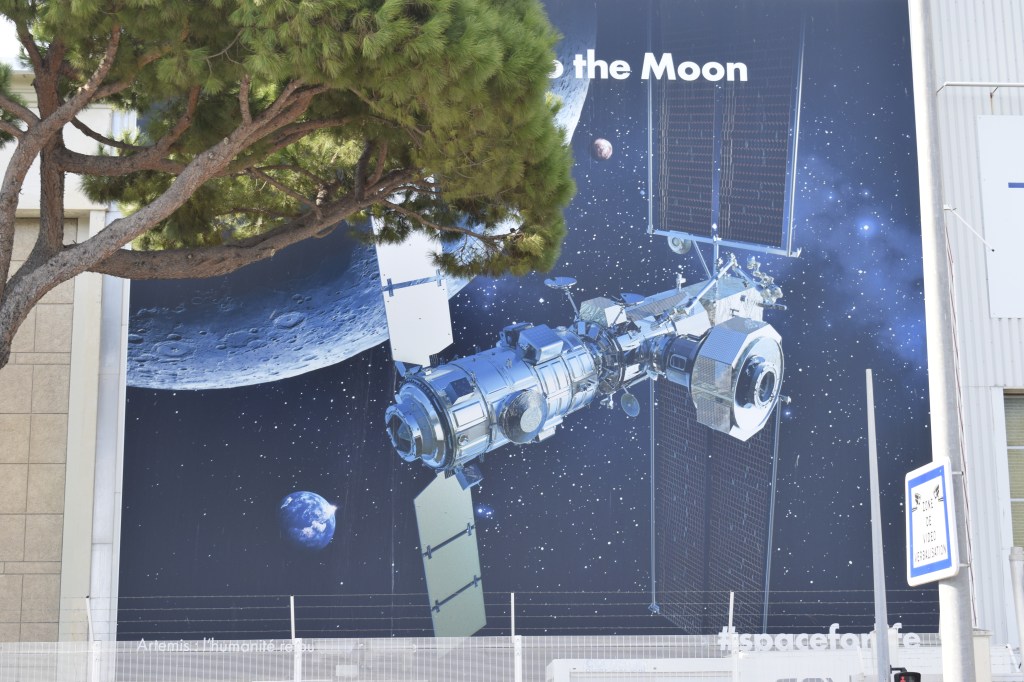
“Here, what’s that moon machine?” I say.
At which point my technical one guffaws. “You mean the lunar module?”
But I think moon machine says it all.
The next day we follow the path along the beach to the Esterel Corniche, finding ourselves on the Camino de Santiago. I begin to wonder whether there’s anywhere in Europe not on the Camino. We follow it around rocky coves and by La Napoule’s Chateau, which houses the Clews Art Foundation.
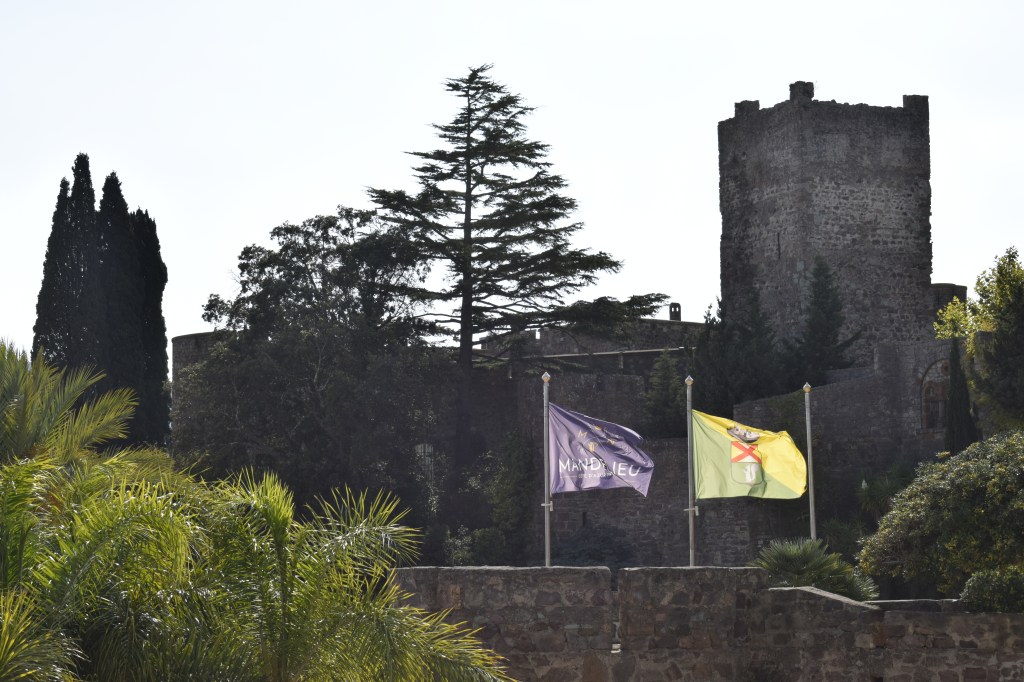
We take time out of our hike to explore the gardens, which prove to be a treasure.

The building itself is more like a fortress than a castle, and seems to grow up out of the rocks, with the sea lapping its walls. When Henry and Marie Clews, an American couple with art in their souls, bought the castle it had two half ruined Saracen towers and was crumbling.
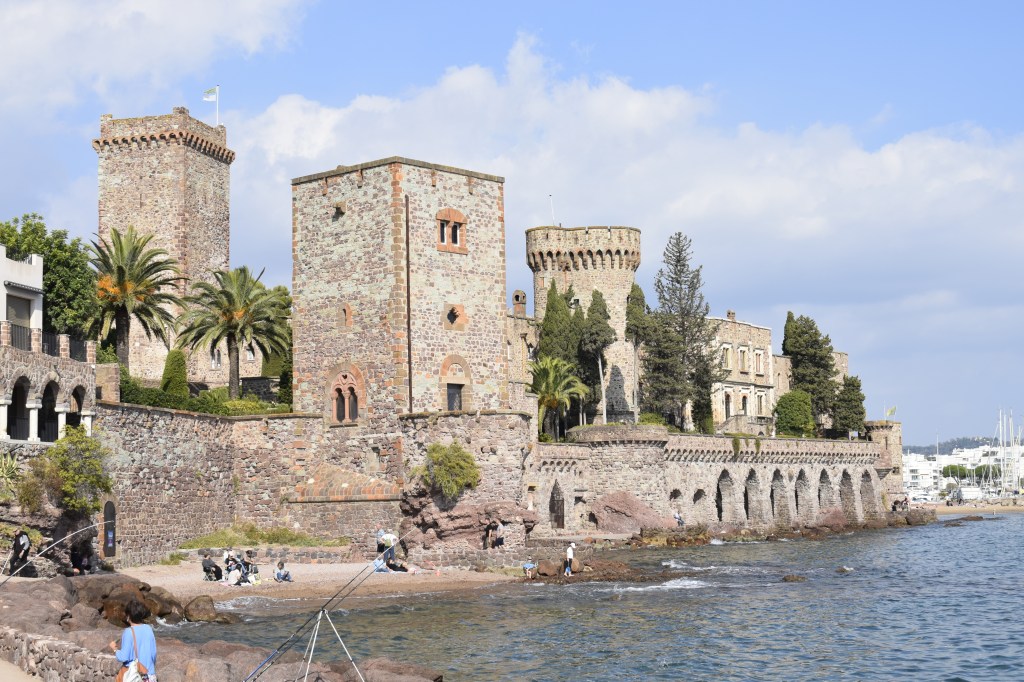
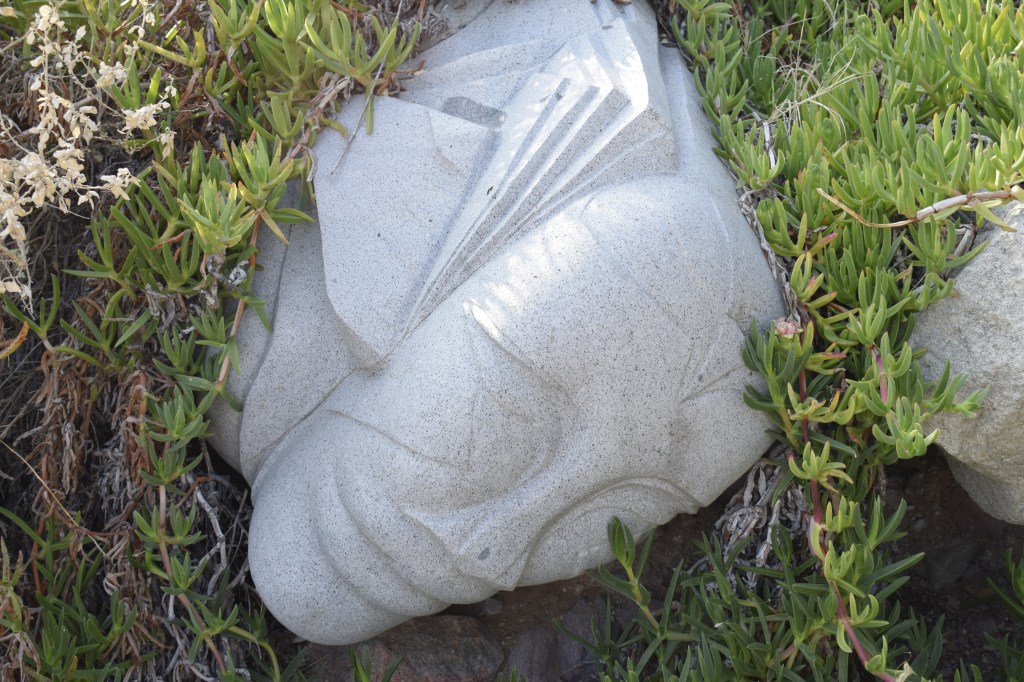
They spent their lives rebuilding it, filling it with art treasures as well as Henry sculpting hundreds of fantastical figures on finials and throughout the gardens. The sculptures in his studio were also of friends who agreed to sit for him.
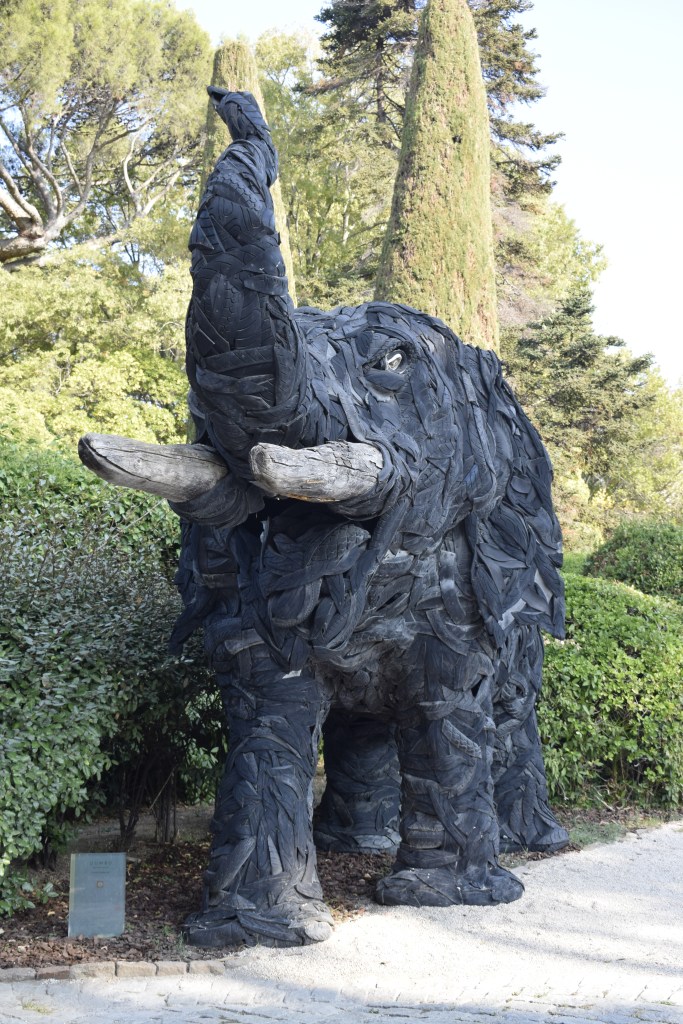
I love the mythical beasts, with sticking out tongues, whiskers, pointed ears, claws and wings, designed to replicate Medieval gargoyles.

Over the front door Marie named the castle, Once Upon a Time. Over the window she had carved: Myth, Mystery, Myth.
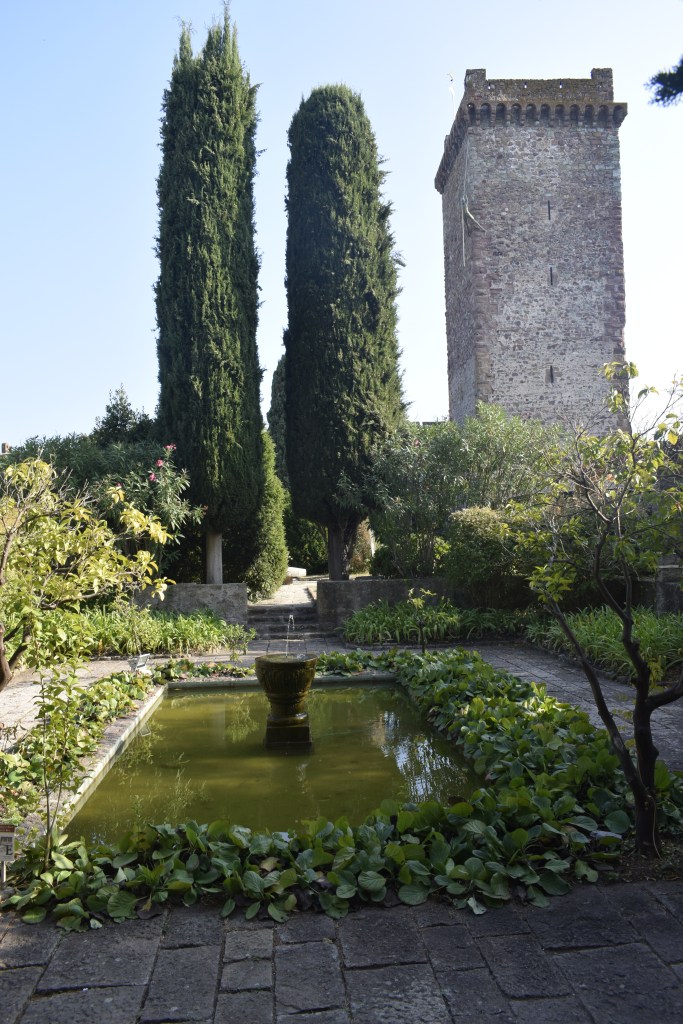
I was really moved by the third tower they had built to house their tombs so that they could lie side by side throughout eternity.

Henry died before it was completed. Marie wrote in her memoirs: “Silence will envelop us…except for the lapping of the waves…the hoot of the little owls and the trill of the larks and nightingales…”

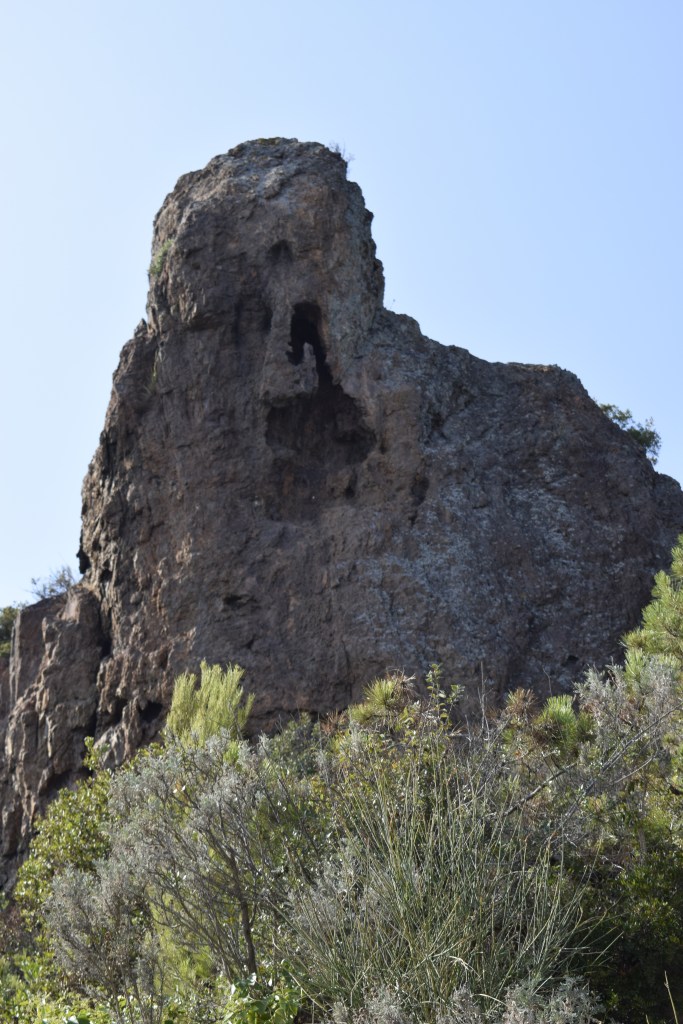
We follow the track climbing up onto the Esterel Corniche, and we breathe in the scent of hot pine and rosemary, marvelling at the russet rocks carved by wind, sun, and rain into mythic beasts. We clamber up and down into little rocky coves.
The coast here is littered with ancient russet stone castles, guarding the coast from pirates in the past, complete with towers and battlements.

We end the evening at the fairy-lit bar, La Canisse, at the campsite entrance under a giant umbrella pine.
 Campervan Therapy
Leave a comment