We cycle along a circular route from the promenade in L’Ampolla through the hinterland, following the olive grove route. The road is a rollercoaster. Sun shines on mountains terraced with dry-stone walls.
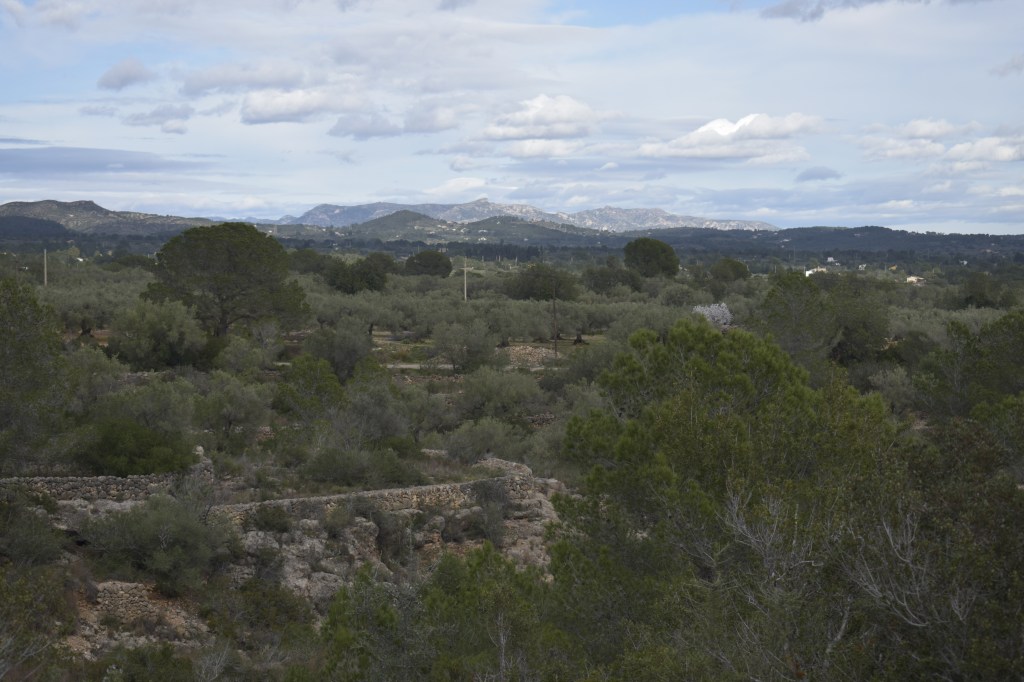
I’m amazed at the skill and strength it must take to balance them, so that they nestle together and hold tight. The walls’ cream and russet limestone contrasts with the silver leafed olive and the waxy green carob trees.
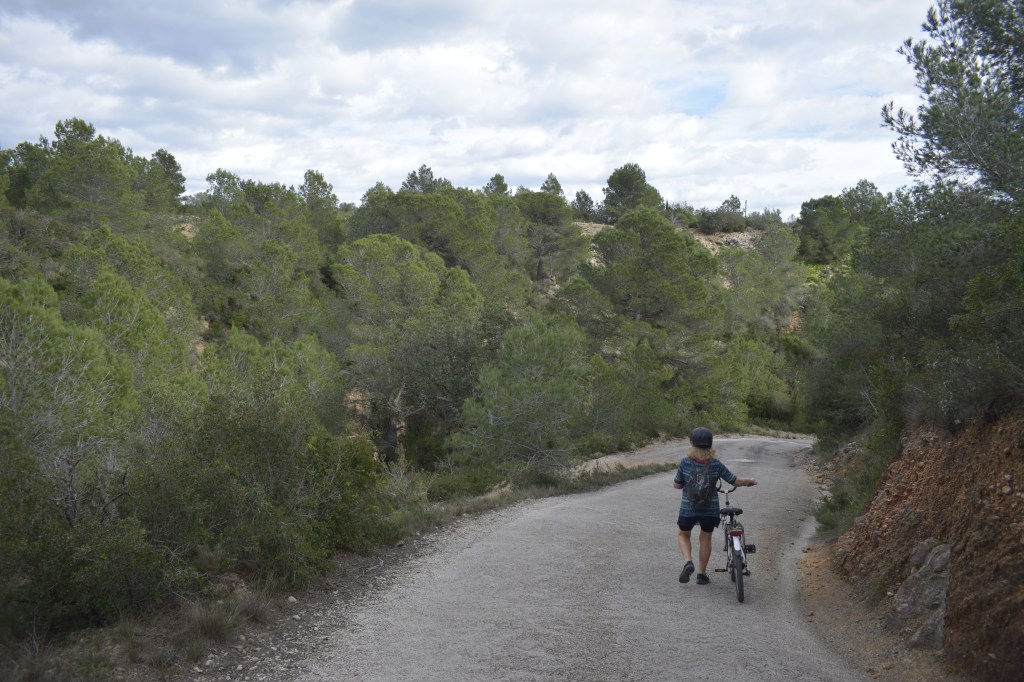
The cycle is a workout for us as we straggle up some steep inclines though Seán thinks that’s worth it because the downhill is a wild fling. I’m not so sure about that.
Deep gullies cut through the mountains, and a sign tells us how the farmers have tamed the water, so that explains why they are now dry.
I’m desperate to visit Denía and Javea in Alicante but sad to say there’s no room at the inn. The rain which has been battering Portugal and the southwest coast of Spain means every campervanner and their granny headed to the Alicante’s Mediterranean.
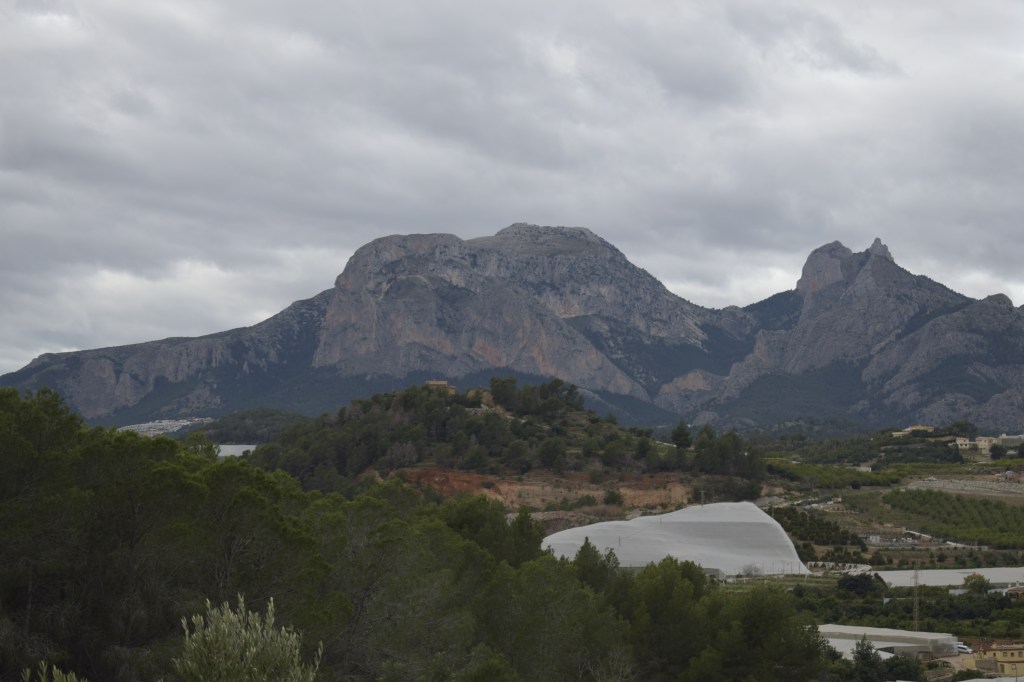
We find the last pitch available in Camping Fonts De L’Algar up in the Alicante Mountains. We wind up hairpin bends to sharp toothed mountains.
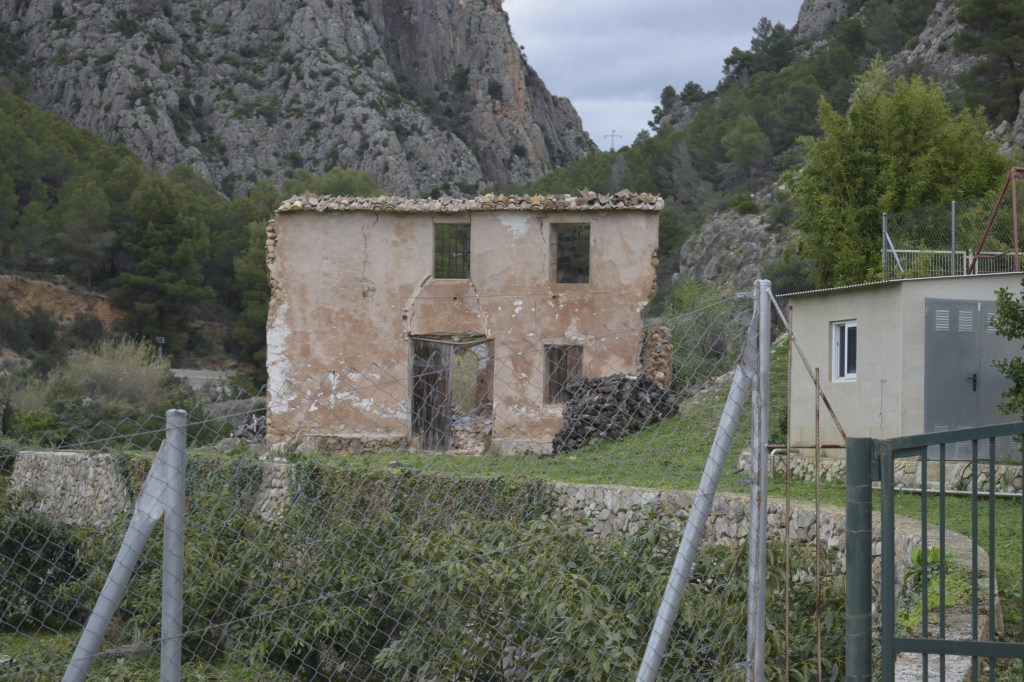
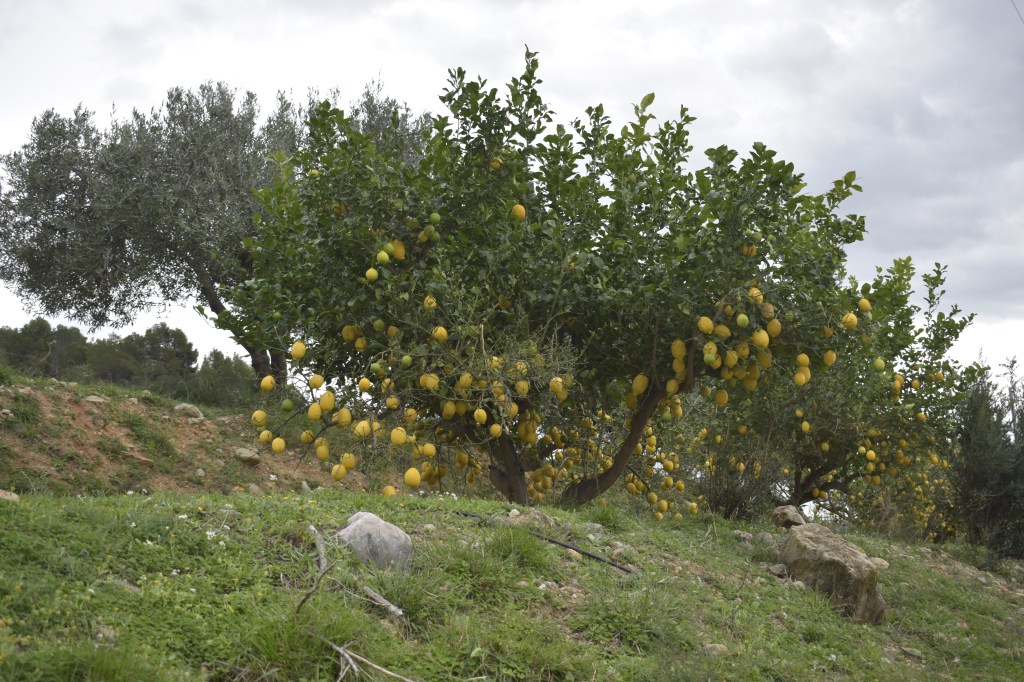
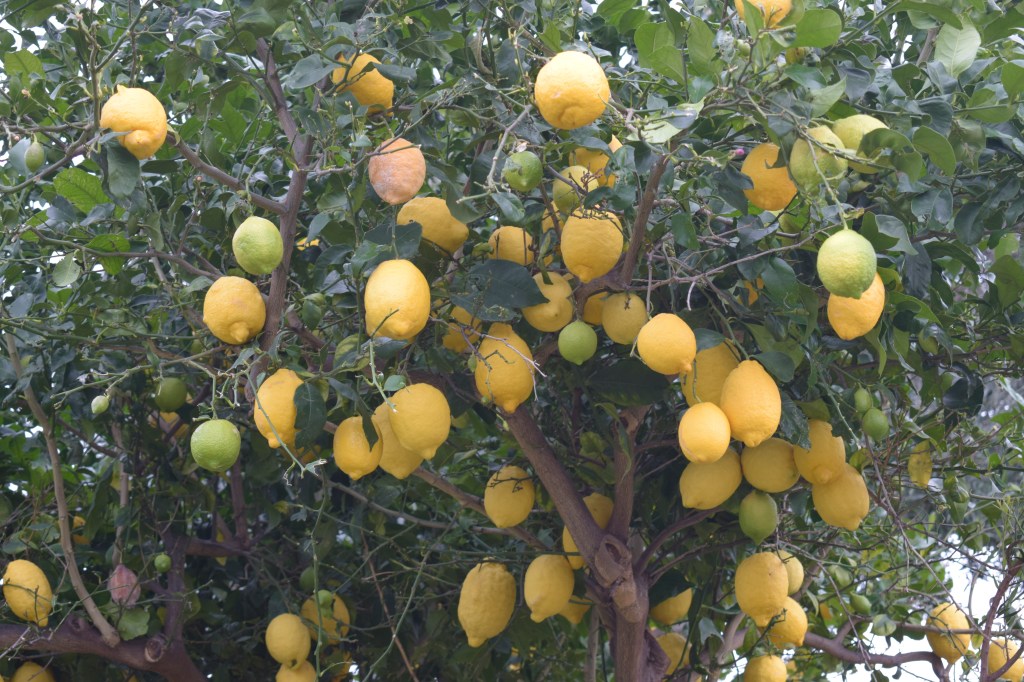
The next day, we walk through trees weighed down with fat lemons and oranges shining like baubles.
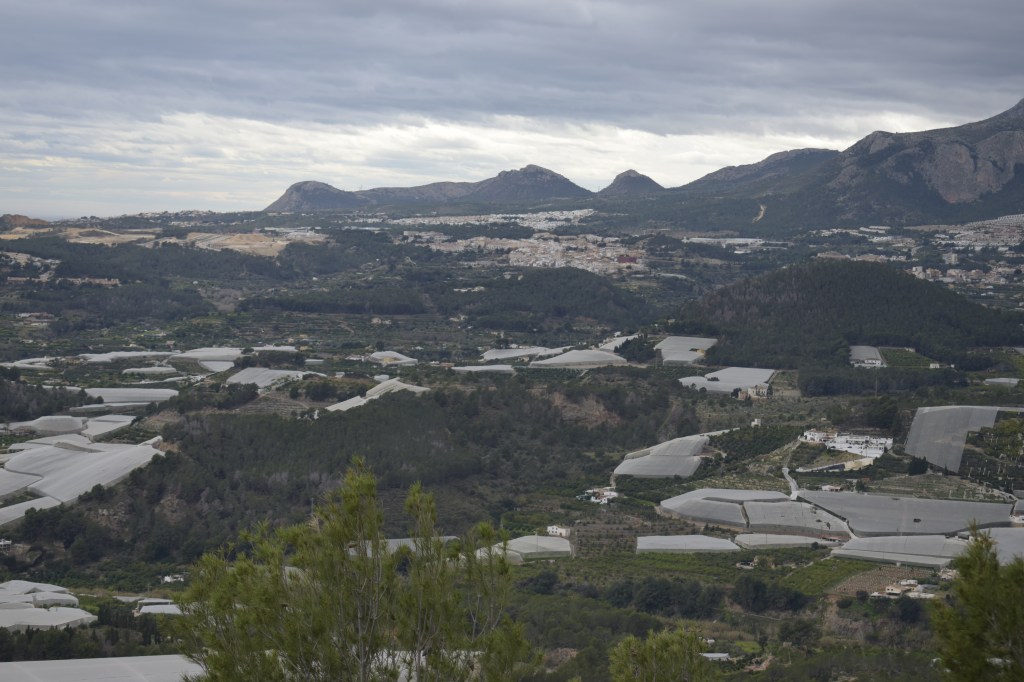
But the gauze canopies encasing rows of what we later find out to be loquats, originally from China, make the mountains look like ragged patchwork quilts.
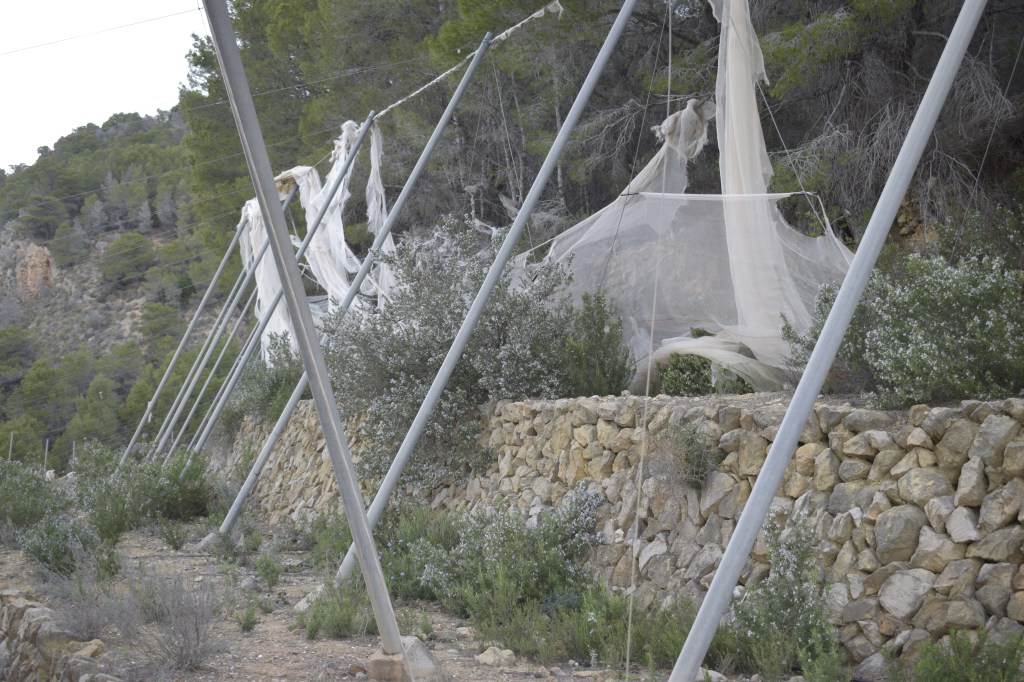
Some, which are no longer tended, are so melancholy they look like Miss Havisham has been hanging her torn wedding veils from the steel frames.
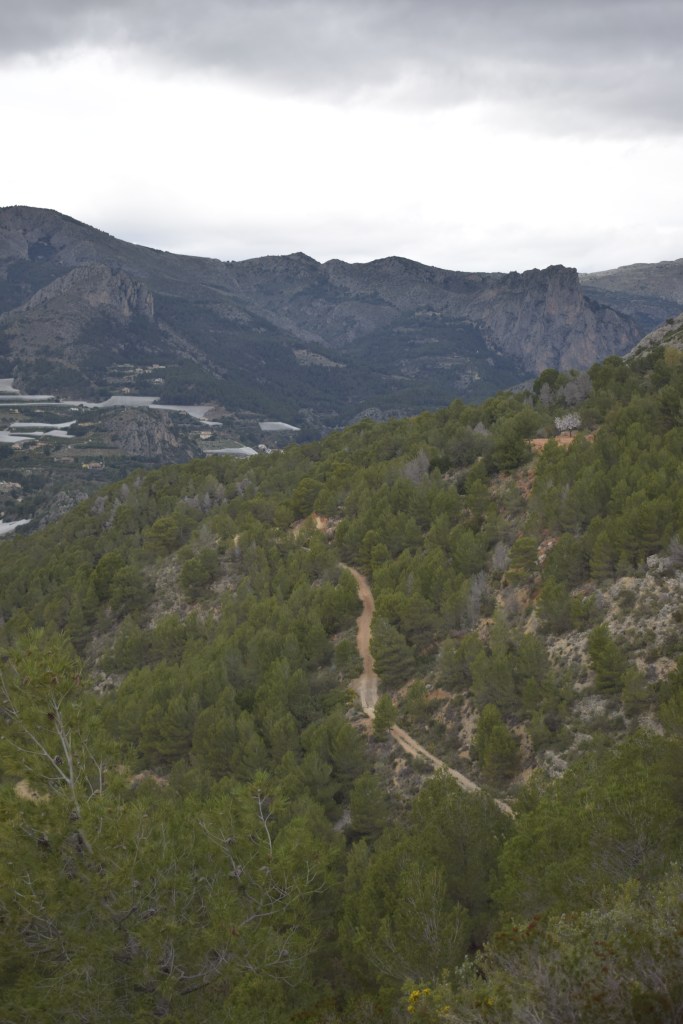
We follow a walking trail up a mountain, hoping to cross the pass to Medieval Fort de Bèrnia, which for centuries protected the area from pirates. The pass was also walked by villagers setting out to other villages’ fiestas; by farmers taking their livestock to summer mountain pastures; and it was a market route for this raisin growing area.
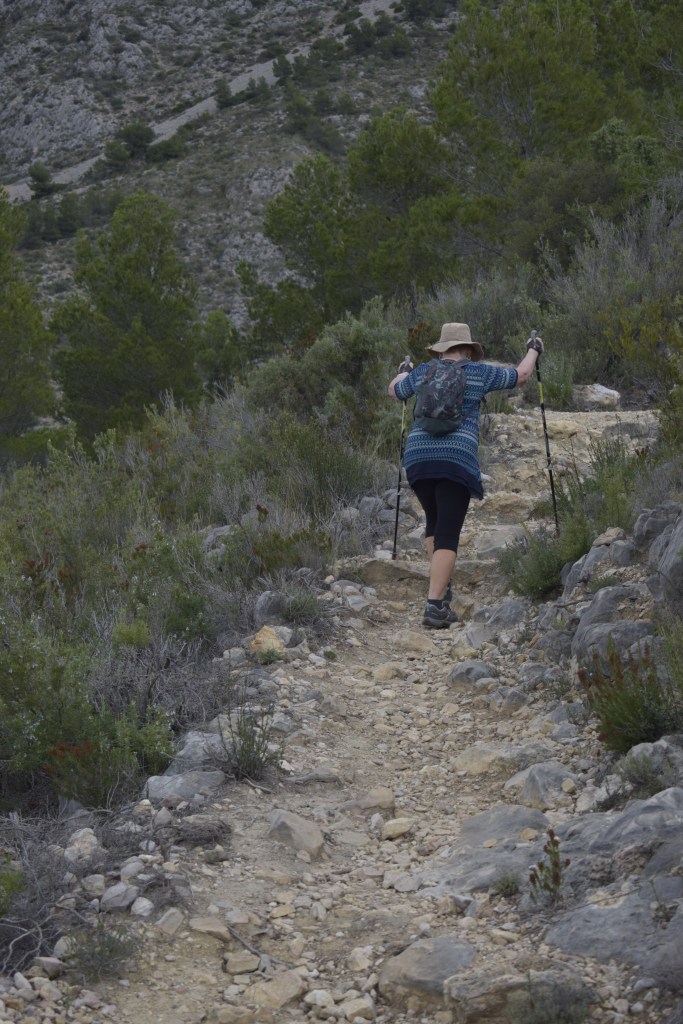
The rocky path takes us through rosemary, lavender, cistus, the wonderfully named scorpion broom, mullein, mastic, juniper. We picnic looking down towards Benidorm and out towards where a sign promised us a glimpse of Ibiza.
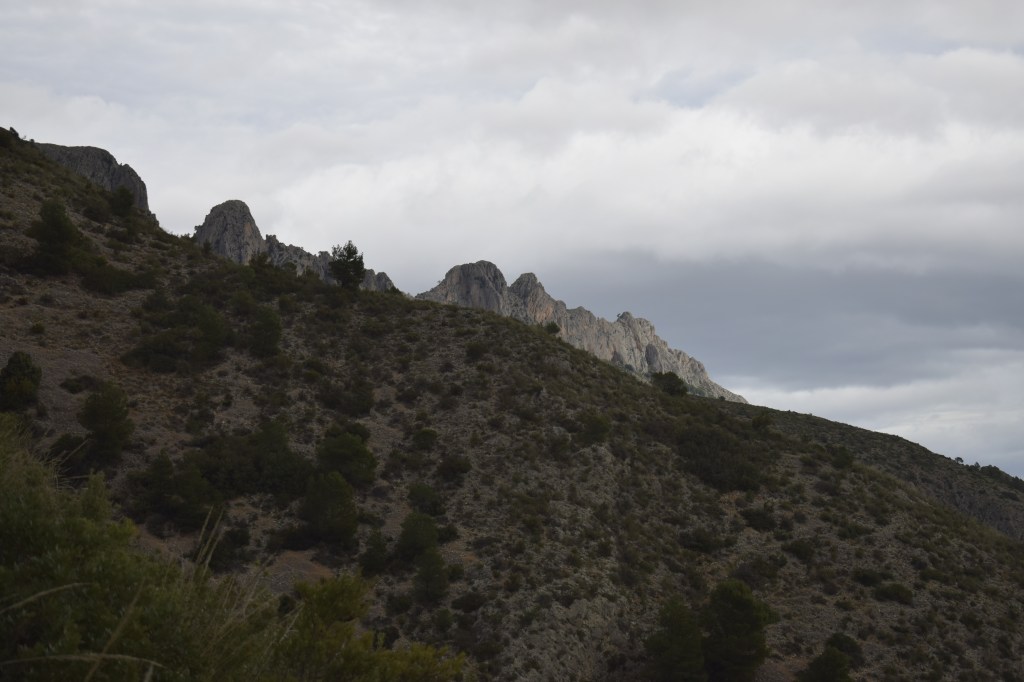
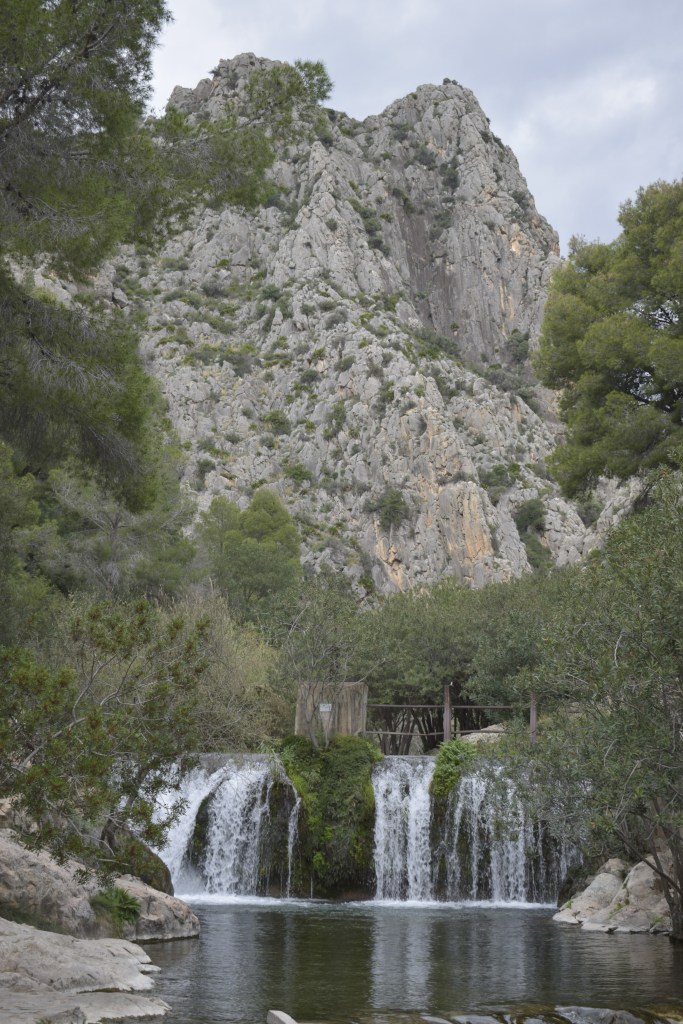
Sheer drops send us back down the track to Les Fonts d’Algar, a series of waterfalls which emerge from the limestone karst and from underground aquifers, resulting in unusual vegetation for these sun-parched mountains, such as the maidenhair fern, and blue throatwort (another wonderful name). Demoiselles and dragonflies, kingfishers and water snakes love the clear racing water.
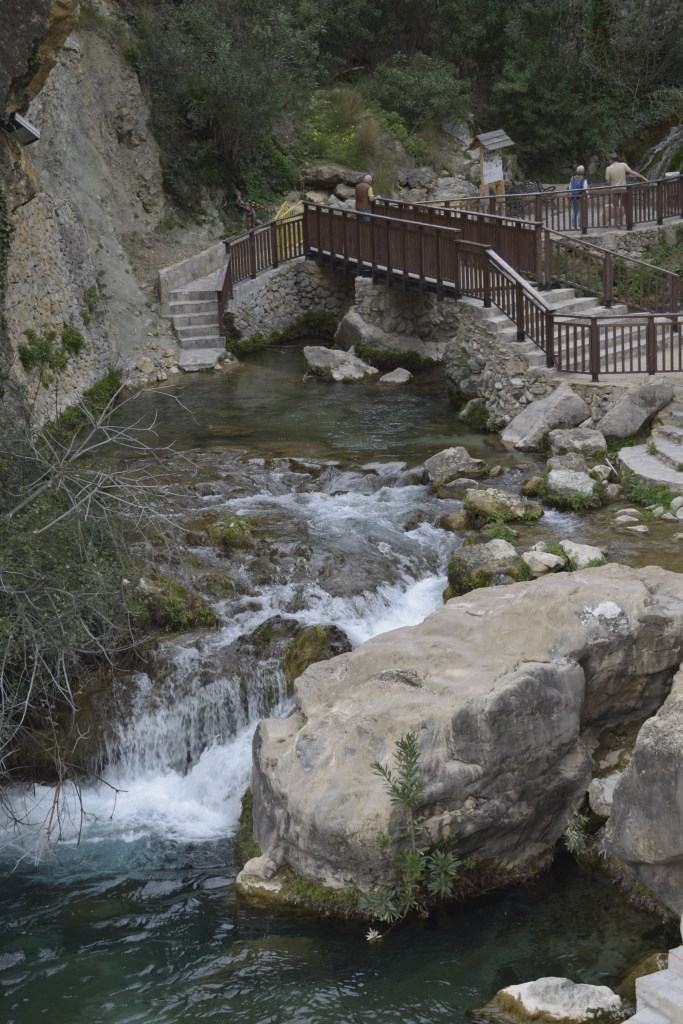
I’m carried away though by the engineering skill of the past, where ancient channels and sluices were designed to direct the water to where it was needed most to grow crops.
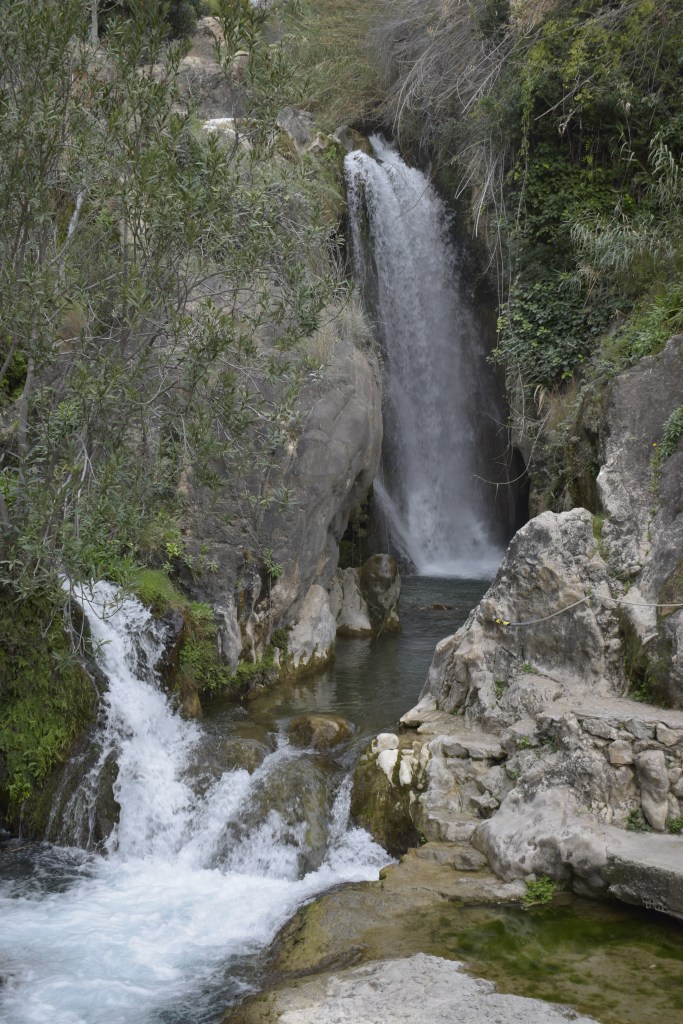
From frogs to the spectacularly dotted genet, these waterfalls provide a rich habitat for wildlife.
I’m shocked though at the forest of oleanders, some over 8 metres tall. I’ve only ever encountered them as pink and white blooming shrubs dotting motorways or edging parks. I love the sherbet scent of their blossoms, so it’s even more shocking to find out that they’re so poisonous that smoke from burning trees is enough to poleaxe you.
Sitting outside our van, we watch the sunset turning the sky peach and the mountains a moody blue – not bad for a February evening.
 Campervan Therapy
Leave a comment