When the van is rocked by a banshee of a wind in Fonts de l’Algar, we decide to hotfoot it out of the Alicante mountains. But, with southern Spain having been hit by seven storms in six weeks, the whole of the campervanning fraternity seems to be heading to Alicante. We manage to snatch the last pitch in the hotel Las Palmeras’ campsite in Crevillent.
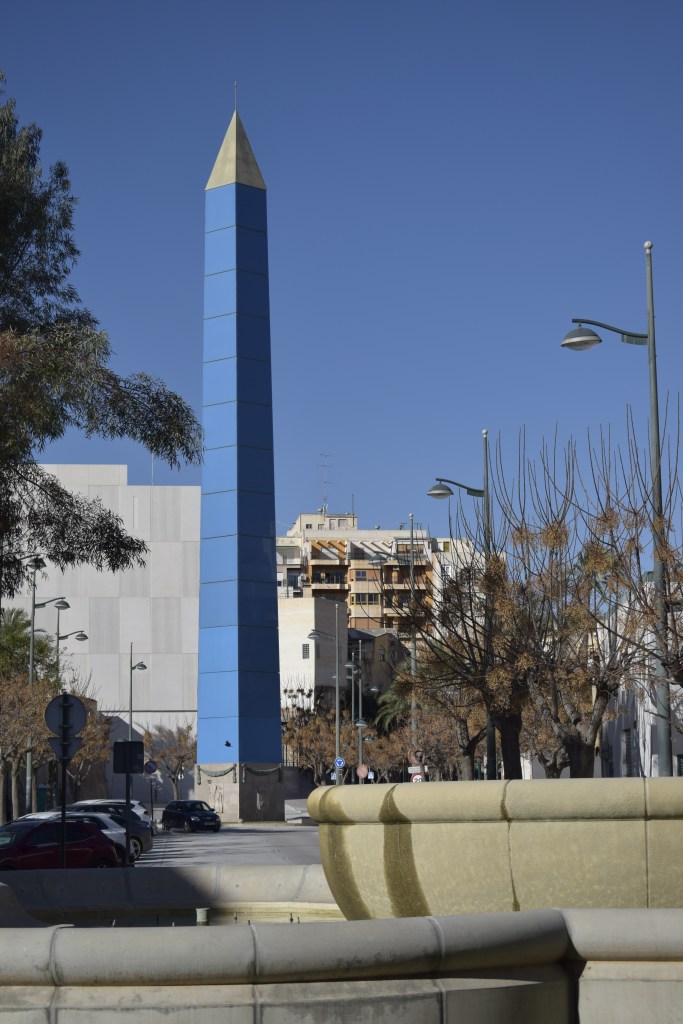
The willow trees, pines, date palms and vivid blooms in the campsite make this an oasis in a rather nondescript town, whose centre point seems to be a big blue plastic pencil.
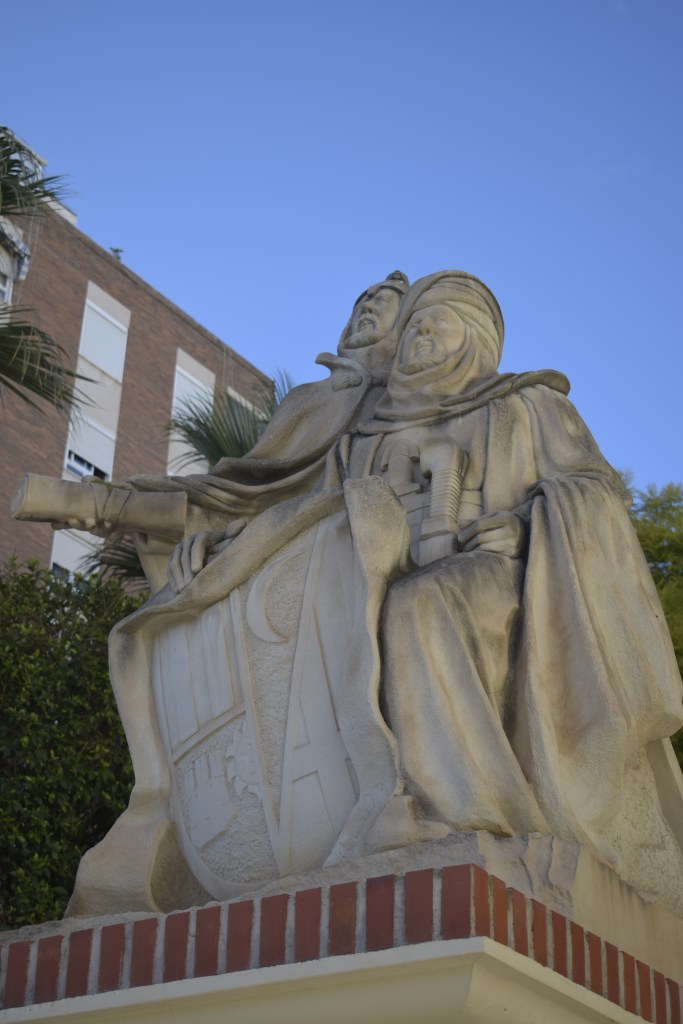
Though there’s an interesting statue honouring the town’s Muslim past and it currently has an interesting mix of Moroccan, Algerian, Spanish and Turkish residents.
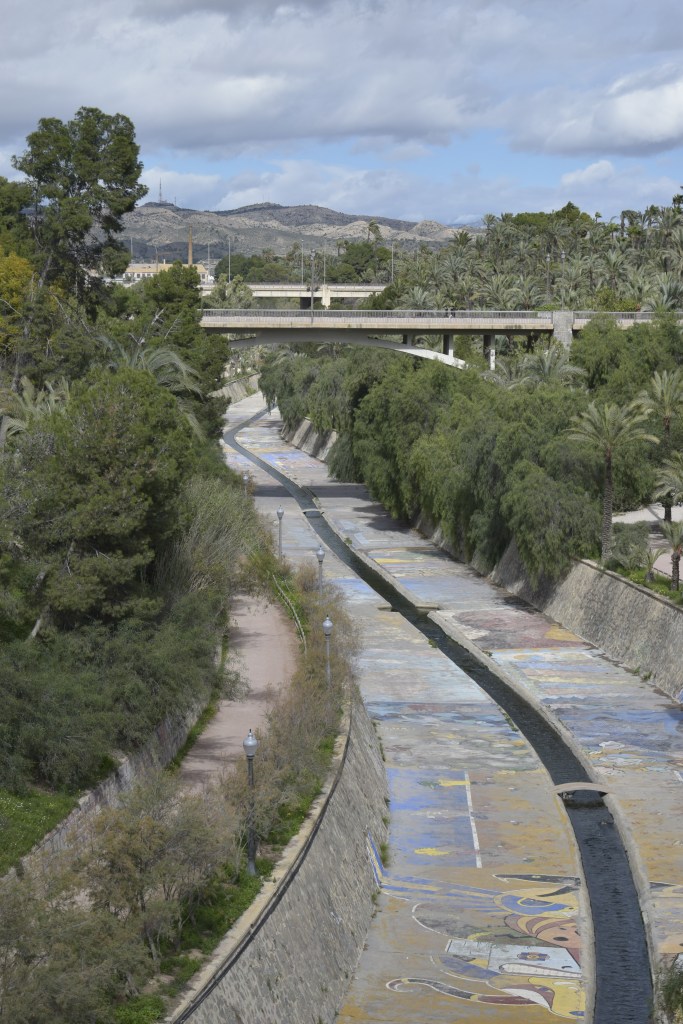
The bus goes to Elche City, so the next day we’re off to explore. I have The Sane Travel Blog to thank for its excellent What to see in Elche in a day. We start with the river walk that runs through the centre of the city, the river now a mere stream channelled through wide tree lined terraces for the townspeople to jog, stroll, cycle.
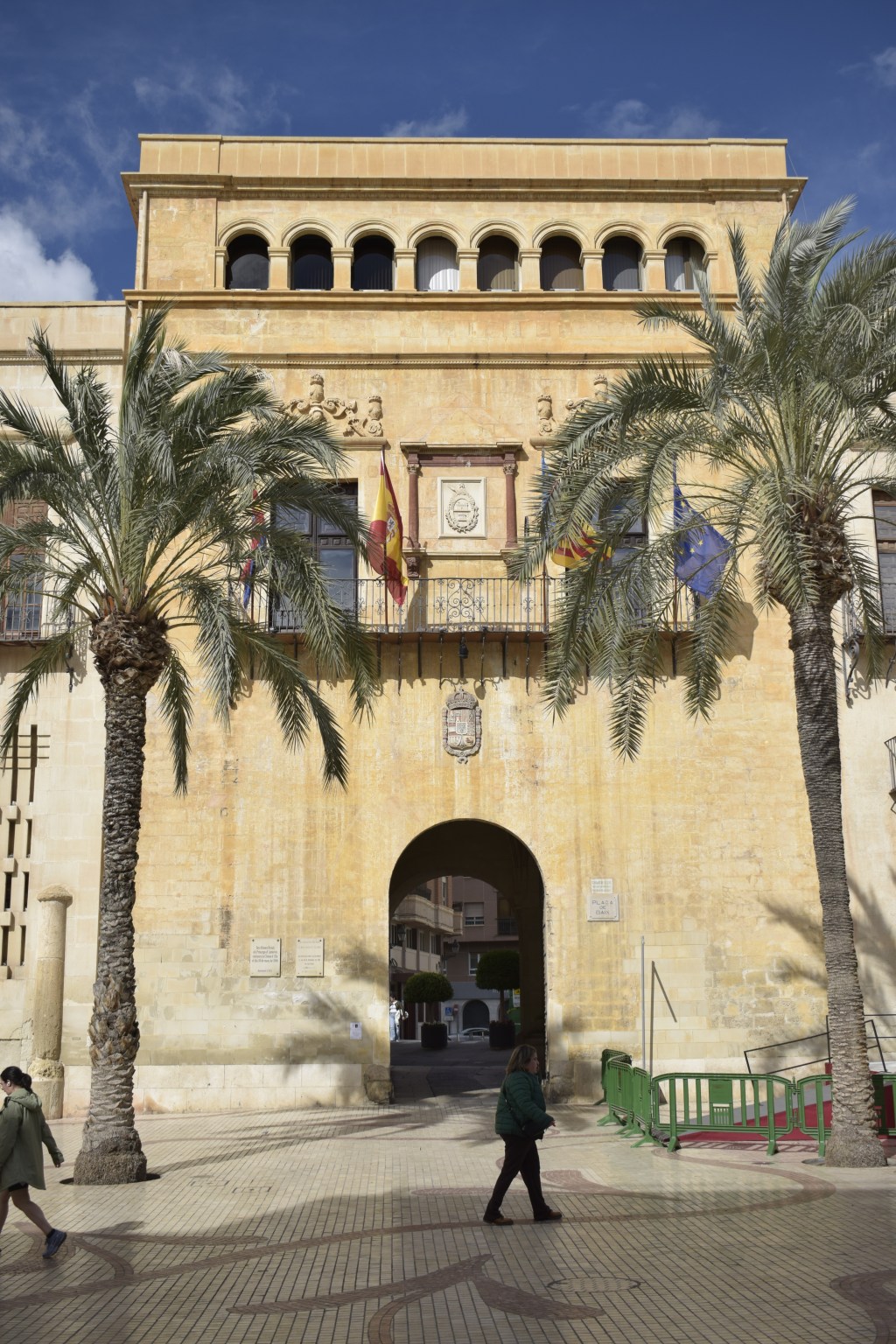
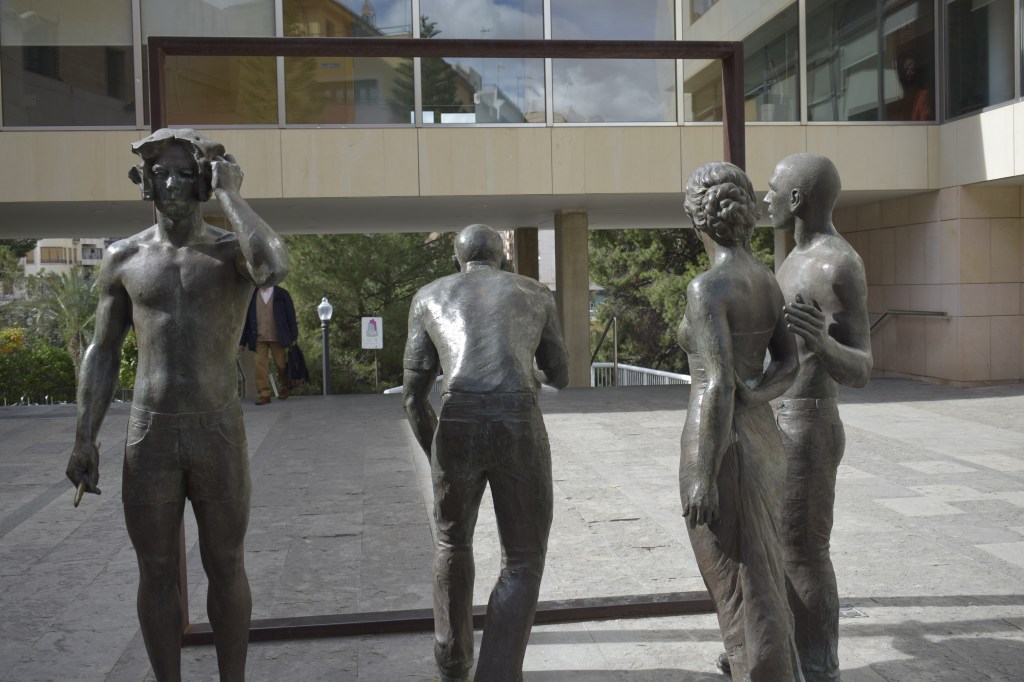
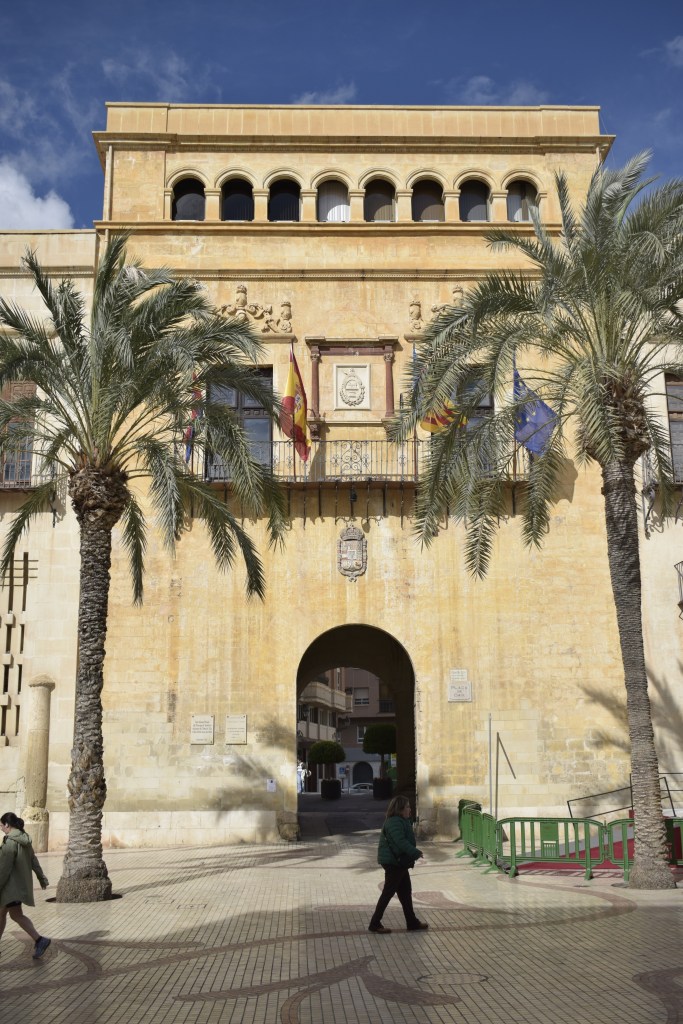
The ochre tinted City Hall has more than a hint of Morocco about it, flanked by palm trees, a mosaicked plaza in front of it. There’s an interesting sculpture by Joan Castejón, Sobre la crítica (On Criticism) of life-size bronze artist and spectators before an empty frame, symbolising the connection between artist, the canvas, and audience.
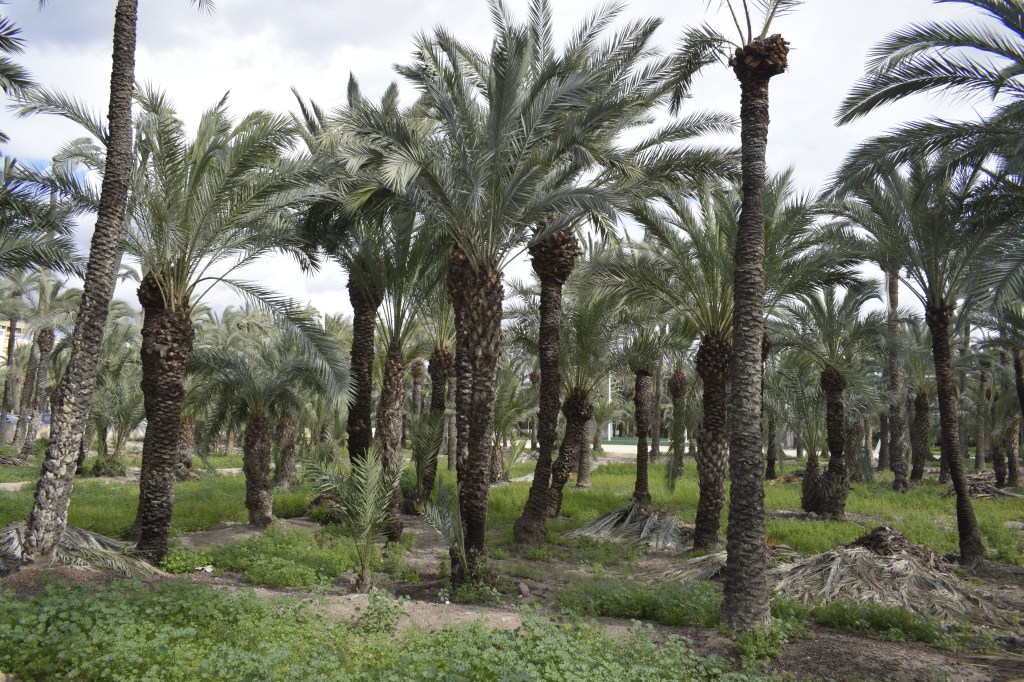
We wander through the UNESCO world heritage palm grove, Europe’s largest collection of palms, with thousands of trees dating back to prehistoric times. Thanks to the Muslim period’s intricate irrigation network, palm orchards flourished here.
The Huerto del Cura Garden is a delight, with dates hanging from palm trees; fan tail palms waving their fingers; cactus trees; prickly pin cushioned cacti; lily leafed ponds; both white and iridescent blue peacocks; orange and lemon trees; and birds of paradise flowers.
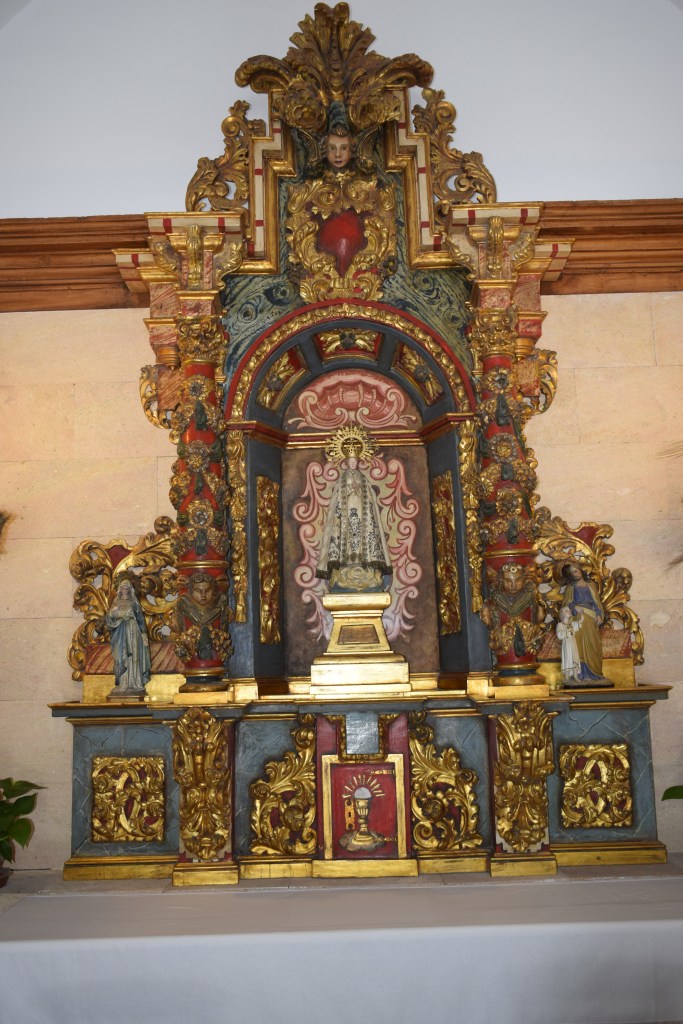
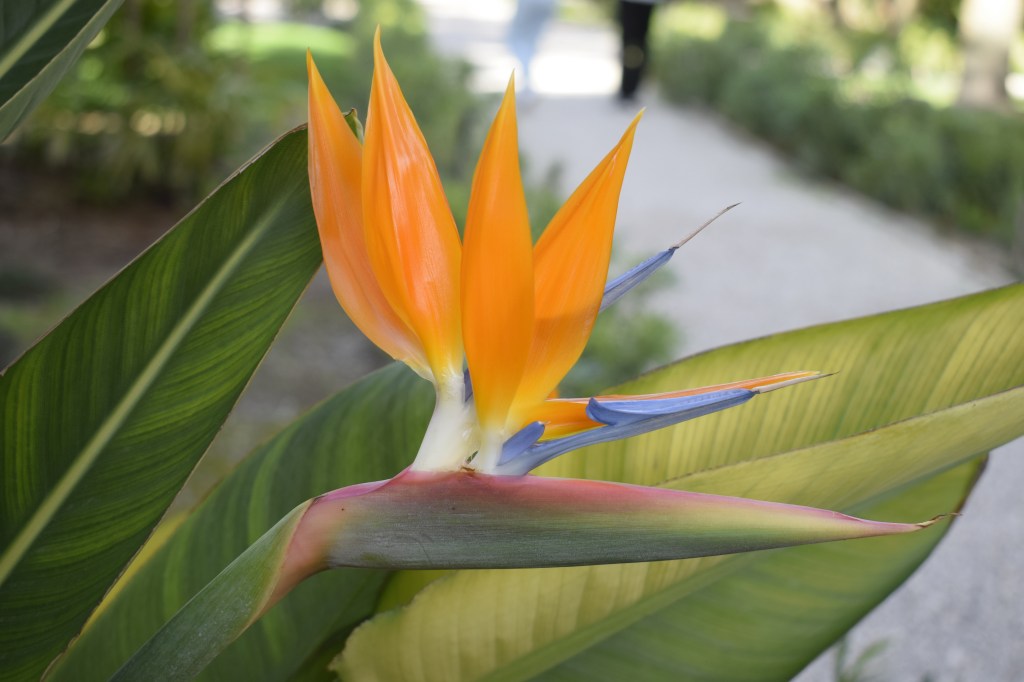
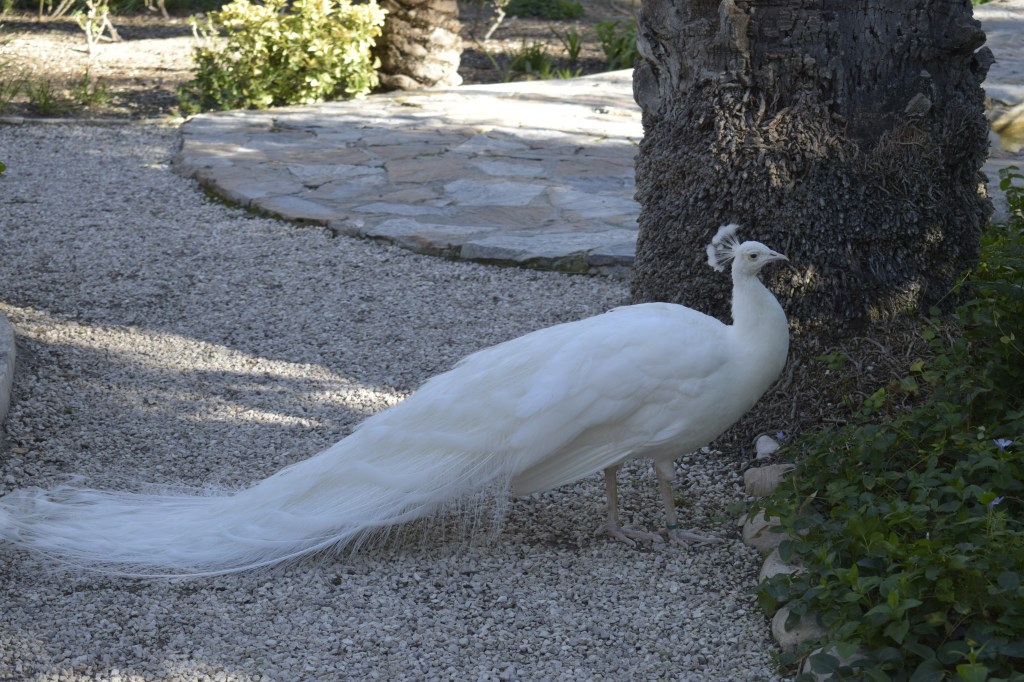
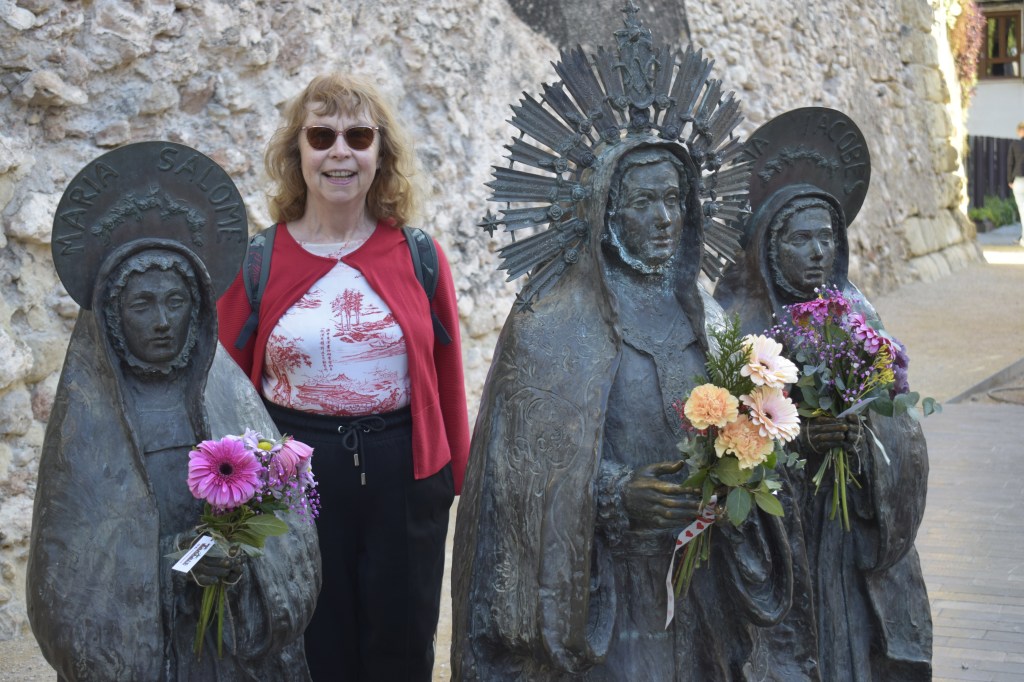
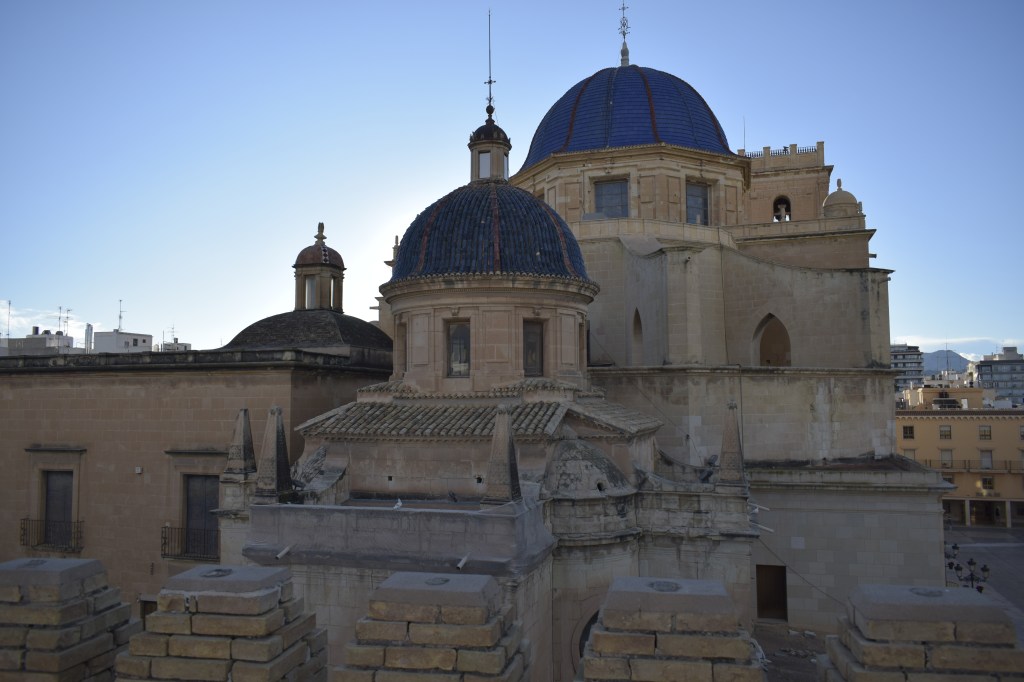
We search out The Three Marias bronze– I just have to pose with them – outside the Santa Maria Basilica’s Baroque stuccoed exterior.
Then we mooch around the Calahorra Tower, once a 12th Century Islamic watchtower, then a manor house, exploring its cave-like bodega; its Egyptian and Masonic frescoes; and its 19th Century paintings.
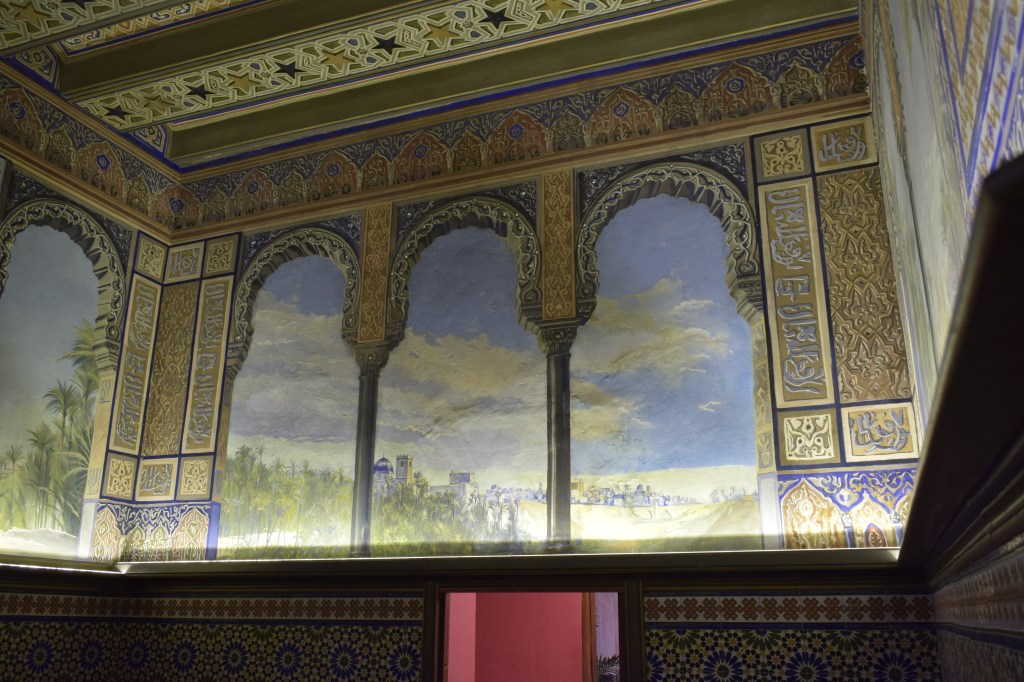
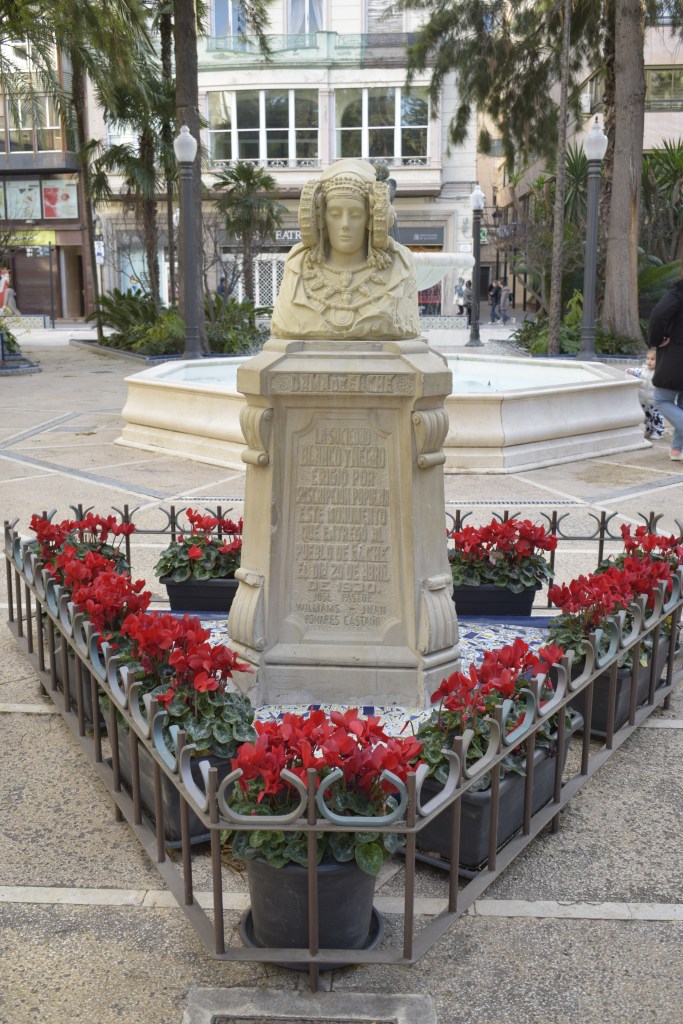
Next, we track down the Lady of Elche reproduction, as the 4th Century BC statue discovered in Elche, now housed in Madrid, is considered a masterpiece of Iberian art.

We’re all set to move on the next day, until, while waiting for the bus back to Crevillent, everyone’s phones start to ring, warning of severe wind, with instructions to stay home. Maria, the owner of the hotel and campsite (and by this time Seán wants to know if there’s any woman in Spain not called Maria) manages to find us the last mobile home available because living through a dangerous storm in a tin-can is perhaps a little reckless. “It’s Valentine’s Day,” she explains, “A big celebration here.”
It wouldn’t be us if we didn’t decide to join in the hotel’s big celebration, so we feast royally on Iberico ham croquetas, artichoke with foie gras, and Iberico pork.
Our enforced stay in Crevillent has offered us up surprising treasures, which we would never have found left to our own devices.
 Campervan Therapy
Leave a comment