We drive through orange and olive groves, round hairpin bends, on a rugged mountain road to Moraira in Alicante. The sun shines, the cycling teams are out in full, some from Spain, others from France. Why I think it helps to squeeze myself into the narrowest spot the in van as it tries to navigate stone walled lanes so narrow that at any moment we could be stuck, I don’t know.
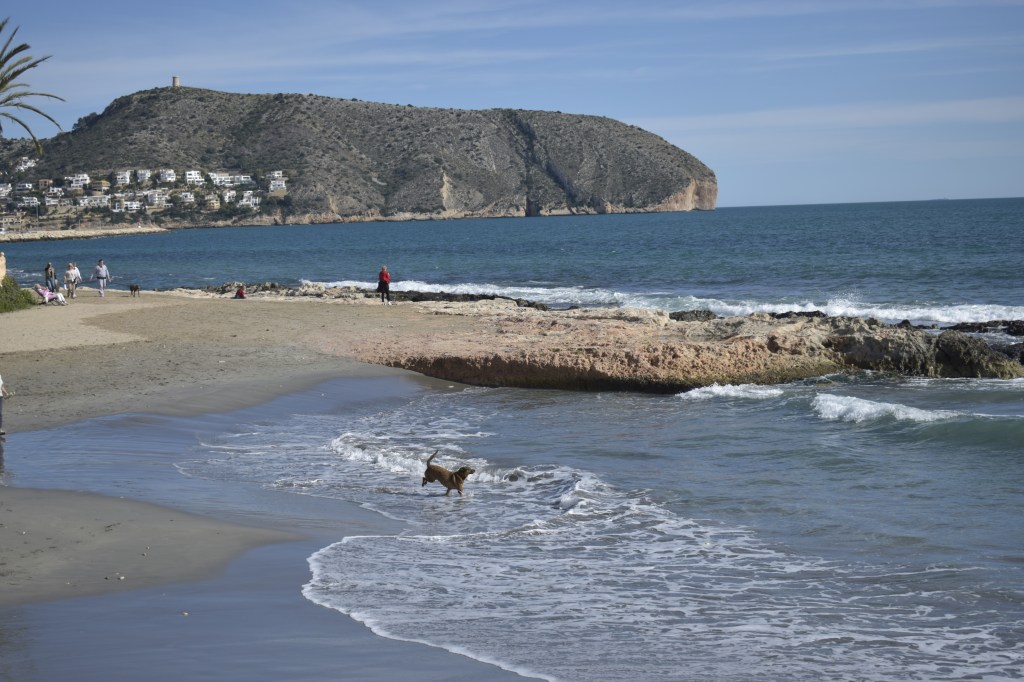
Finally, we reach Camping Moraira, park up under tall stone pines, the postcard blue Med our view.
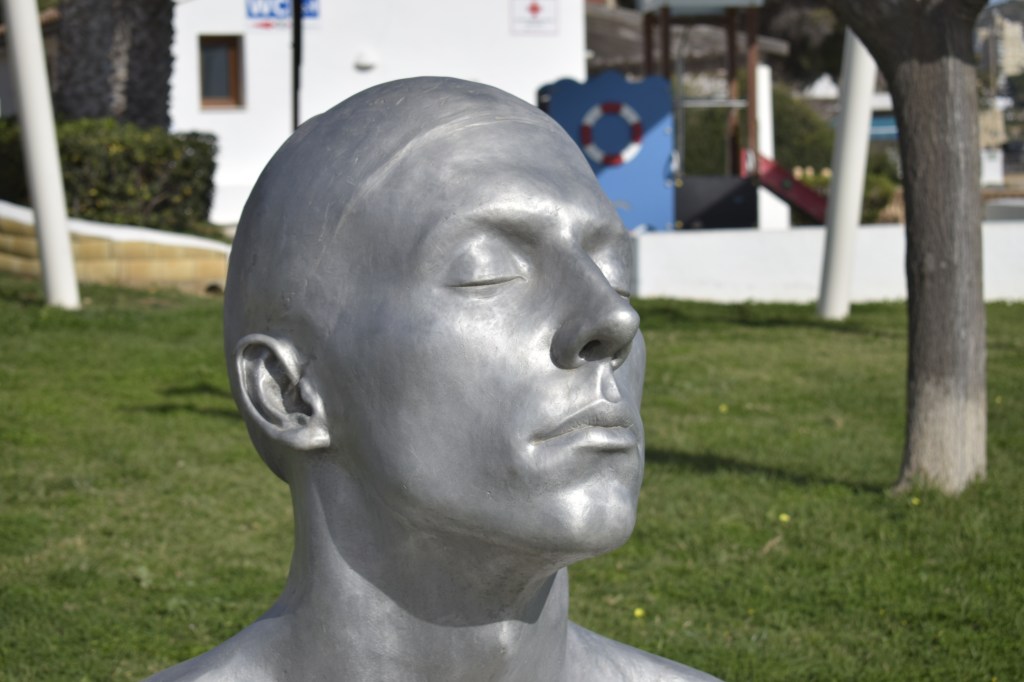
We ramble out and I’m delighted, as usual, with the free, outdoor sculptures. I love the egalitarian aspect of bringing art out of galleries and serving it up to any stray rambler. All Moraira’s current bronzes are by Coerch and Malavia. The Swimmer is first on the promenade, the description telling us of how it reveals the meditative communication of humans with the sea, the importance of savouring the present moment. The closed eyed beautiful head looks contemplative.
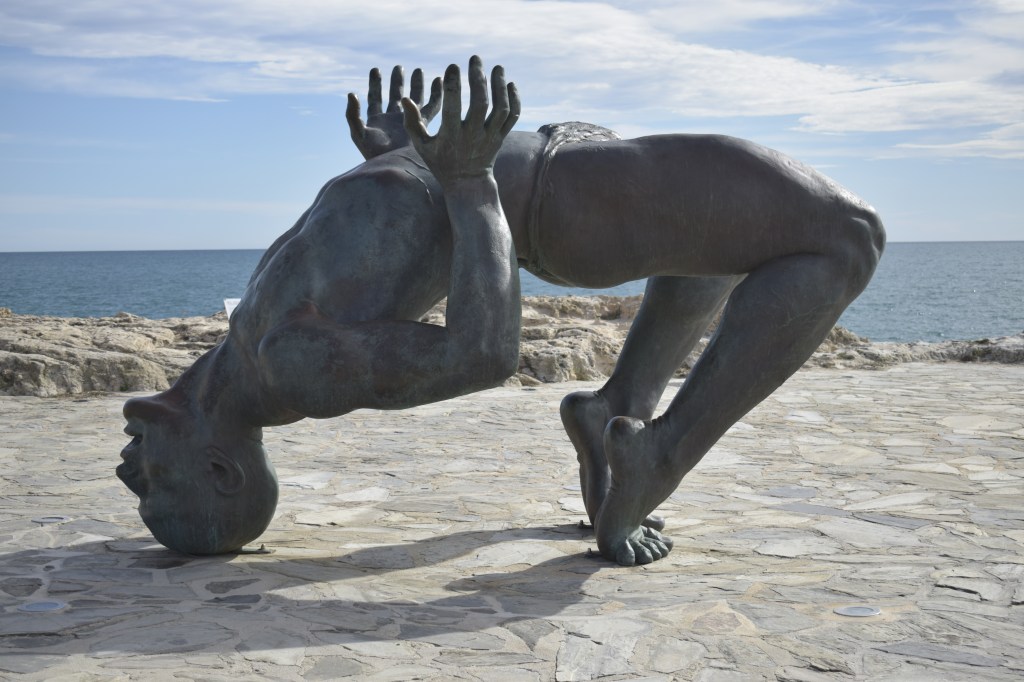
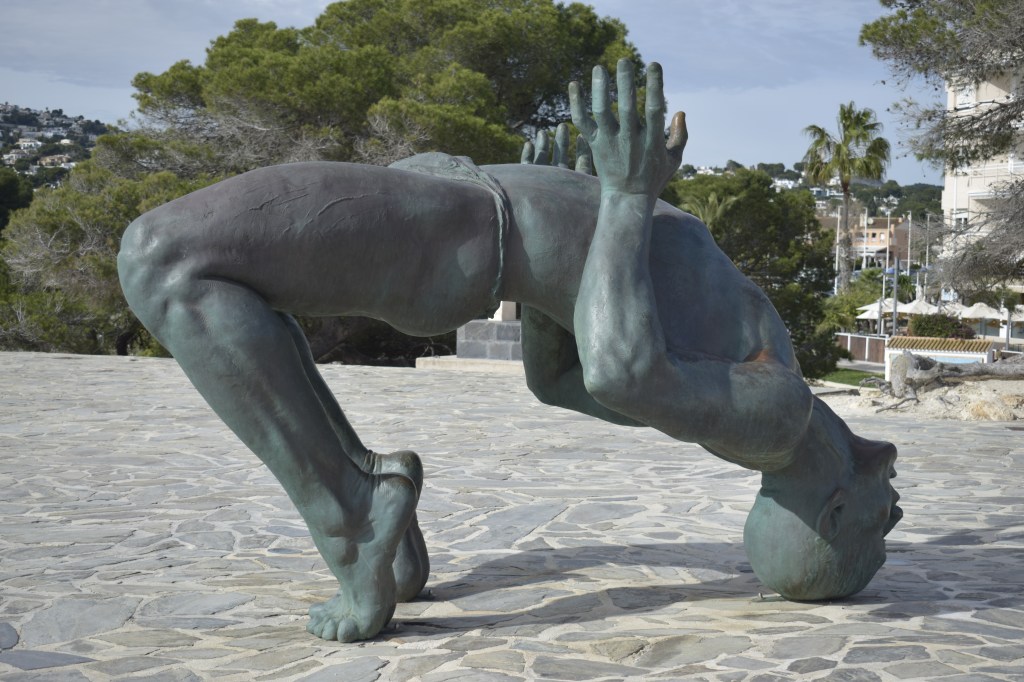
We pass by dunes, which a sign tells us are petrified. It’s amazing how you can see the waves of sand now petrified into stone. The next bronze is eye-catching in that the man is bent backwards into a crab shape. Intriguingly, it’s called The Giant of Salt. The noticeboard tells us this sculpture reveals the ability of the human spirit to be reborn after collective tragedies, such as COVID-19. The sculptors were inspired by Kazuo Ono and Tastusimi Hijikata’s interpretation of the Japanese dance, Butah, after the bombing of Hiroshima. The quotation from Tasumi Hijikata moves me as much as the bronze man bent backwards on himself.
“Again and again we are reborn. We are not born just from our mother’s womb. Rebirth is necessary time and time again always, in every place and in every moment. Again and again.”
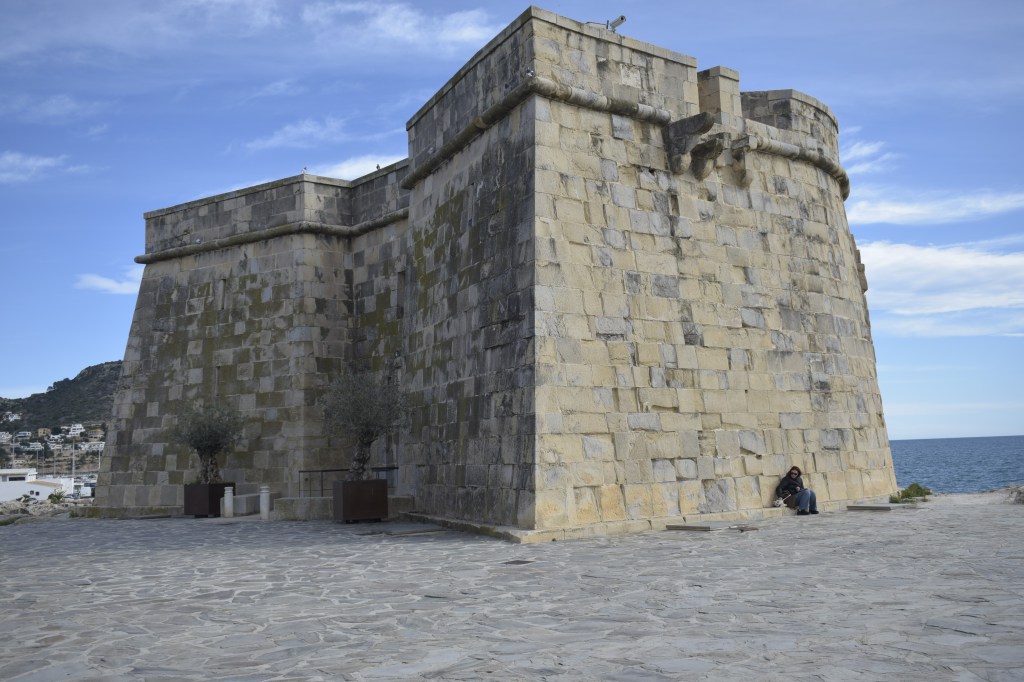
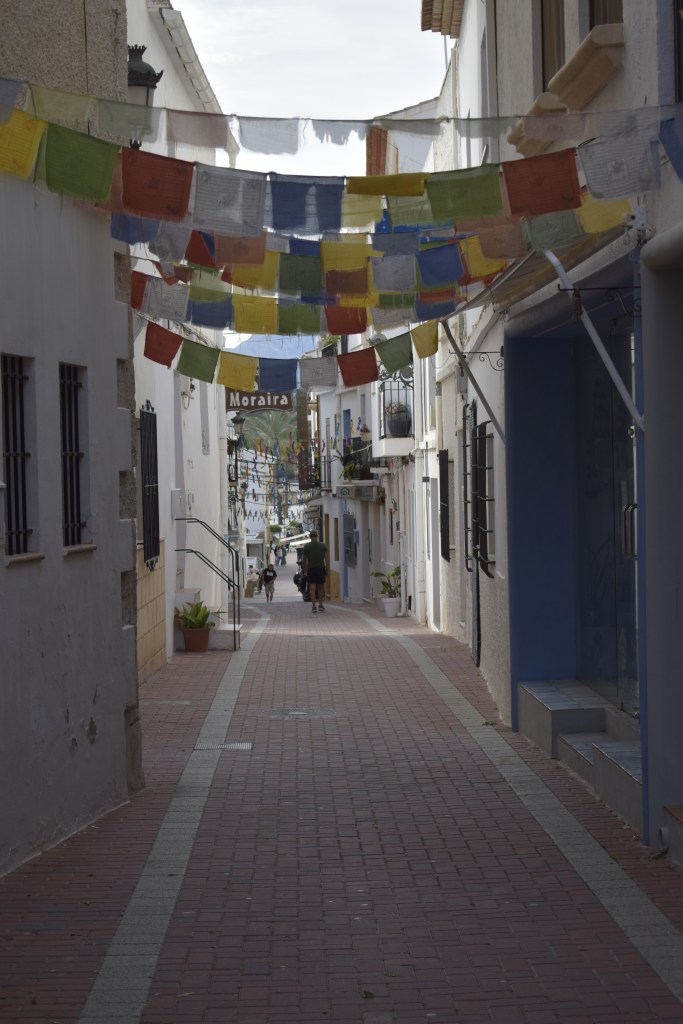
We walk by the ancient fort, which guarded Moraira’s coastline from invasion, and on through the old whitewashed fishing village, now full of busy restaurants, past the port with more speedboats and sailing boats than fishing vessels now.
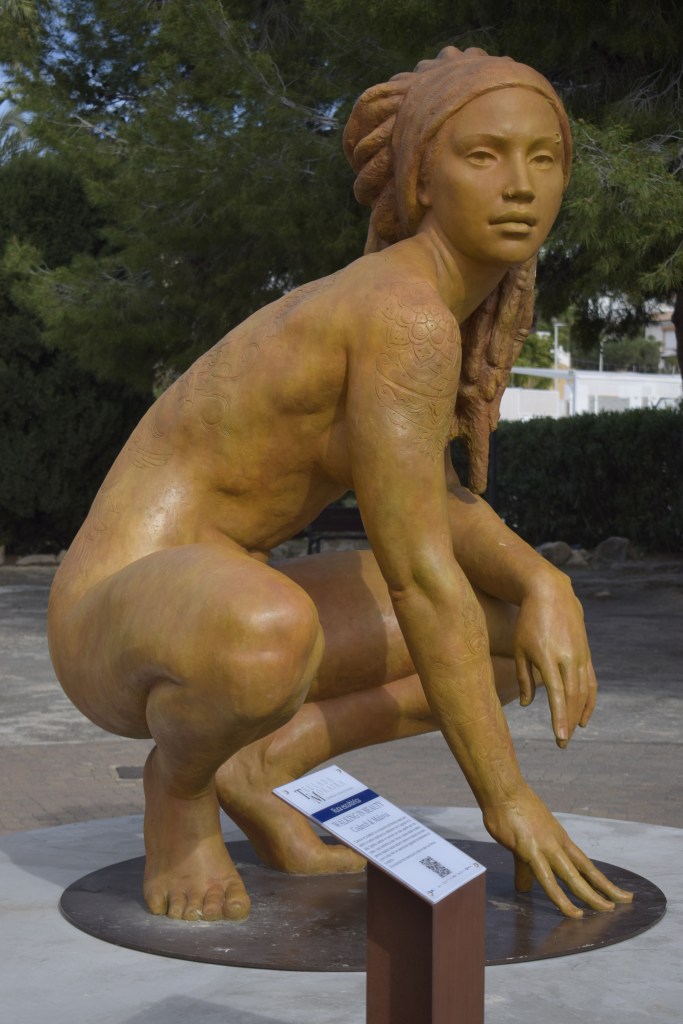
Up over the town we follow the path through rosemary and pine to the final sculpture, the giant bronze woman, all tattoos and dreadlocks, squatting, proud and inviolable, her gaze taking in the world around her, weighing it up. This sculpture is called Walking in Beauty and the giant woman is a beautiful symbol of female strength. The sign tells us that the sculpture is a celebration of the sacredness of life, the beauty of the soul and its connection with the corporeal realities of the world around us.
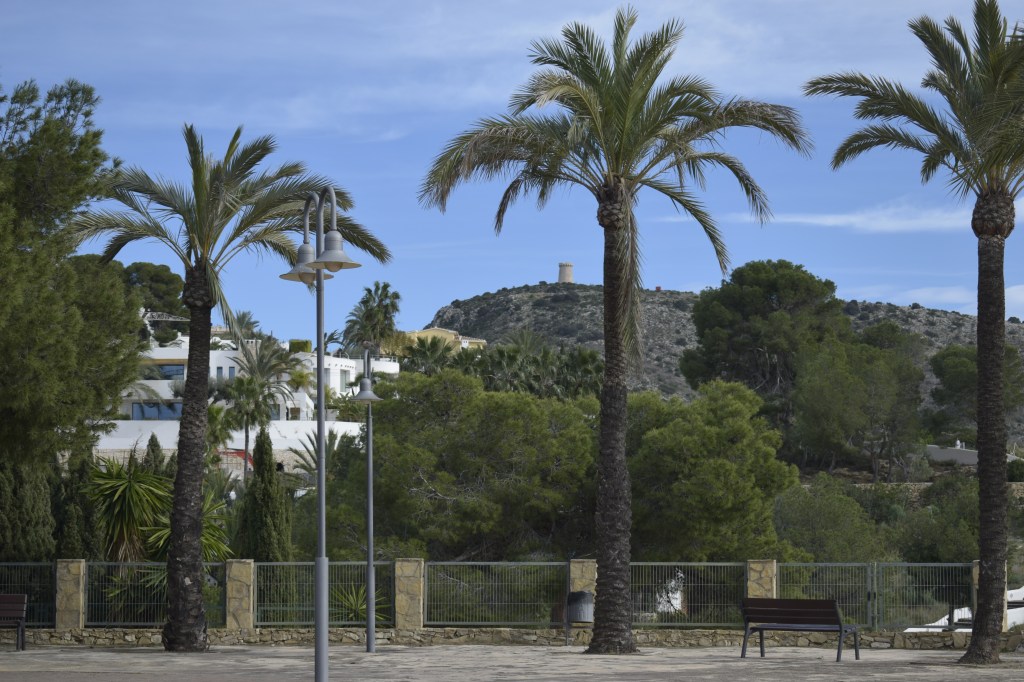
We pass yet another old fishing cove and a bucolic port tucked between two sheer cliffs as we climb up and up, the road almost vertical to the fan-tail ferns and rosemary studded headland, an ancient lookout tower topping the mountain.
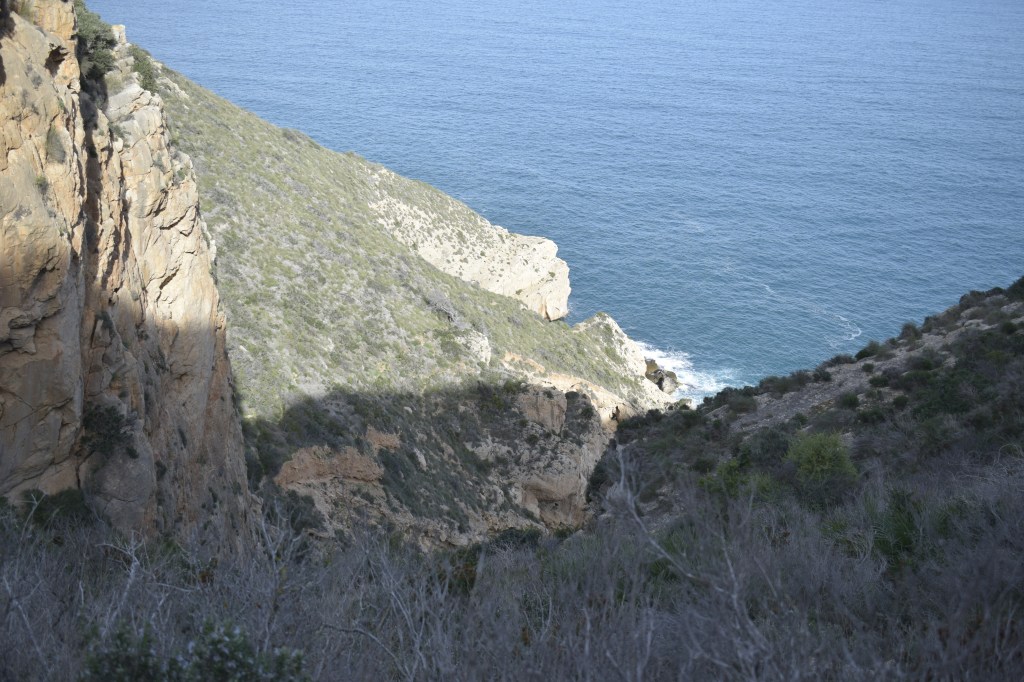
Yet again, my fear of severe drops into the sea far below defeats me as I crab walk, eyes facing inland away from the sheer cliffs, back down the way I’ve come.
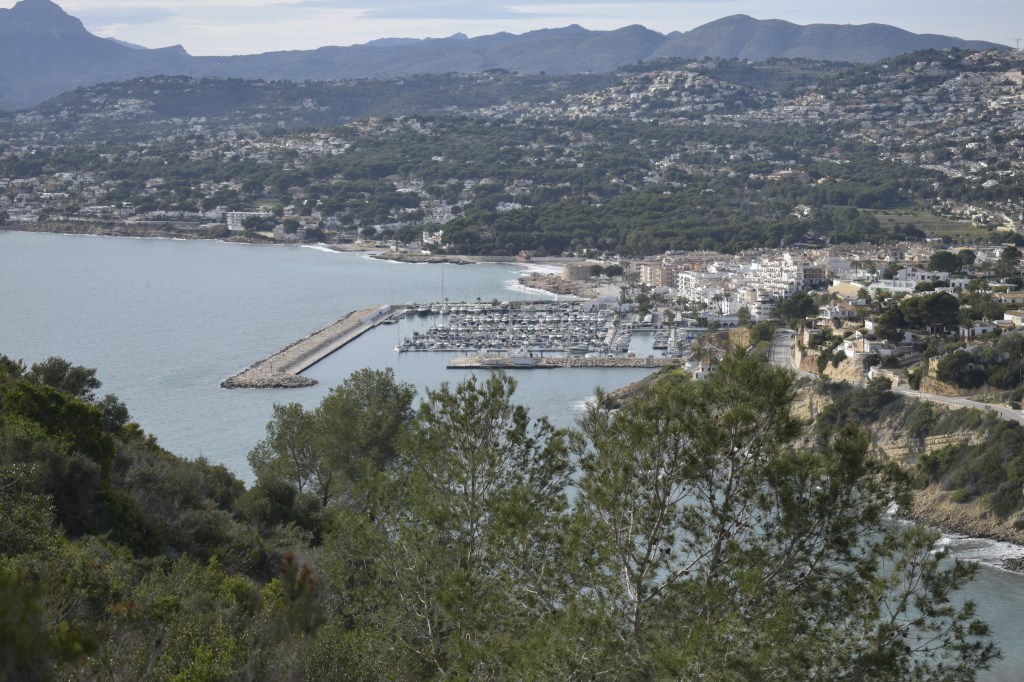
Himself, insouciant as ever, of course strolls over to the death-defying void to take a few snaps. I decide the sooner I get him back down to the coast the better.
 Campervan Therapy
Leave a comment