We’re visiting Seán’s mum in hospital, but due to restricted visiting hours, we’re not allowed in until 6pm. So as the ferry docks at 7am we head for Wexford’s Kilmore Quay. Still dark, a soft rain falls on patchwork fields, hedgerows and twisting lanes. Dawn is a grey marl as we weave by Kilmore Quay’s thatched, whitewashed cottages, a cosy pub, a deli advertising crab and prawn sandwiches, a fishery with outdoor seating for feasting on freshly caught scallops, and a working fishing harbour.
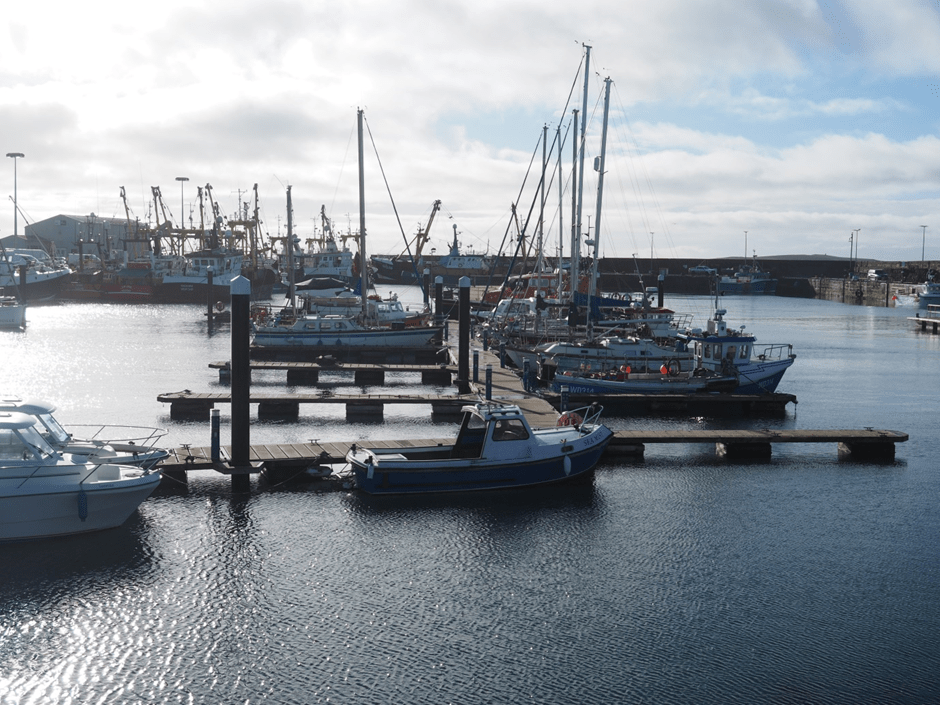
Sun rise and Saltee Islands
As Seán rustles up breakfast in our café-on-wheels, the sky lightens to a pale peach, soft blue and smoky clouds. The Saltee islands rise out of the bay, a principality since Michael Neale declared them independent in the 1950s; once a smuggler’s haven in Medieval times, but now one of Europe’s most important breeding sites for puffins, gannets and grey seals.
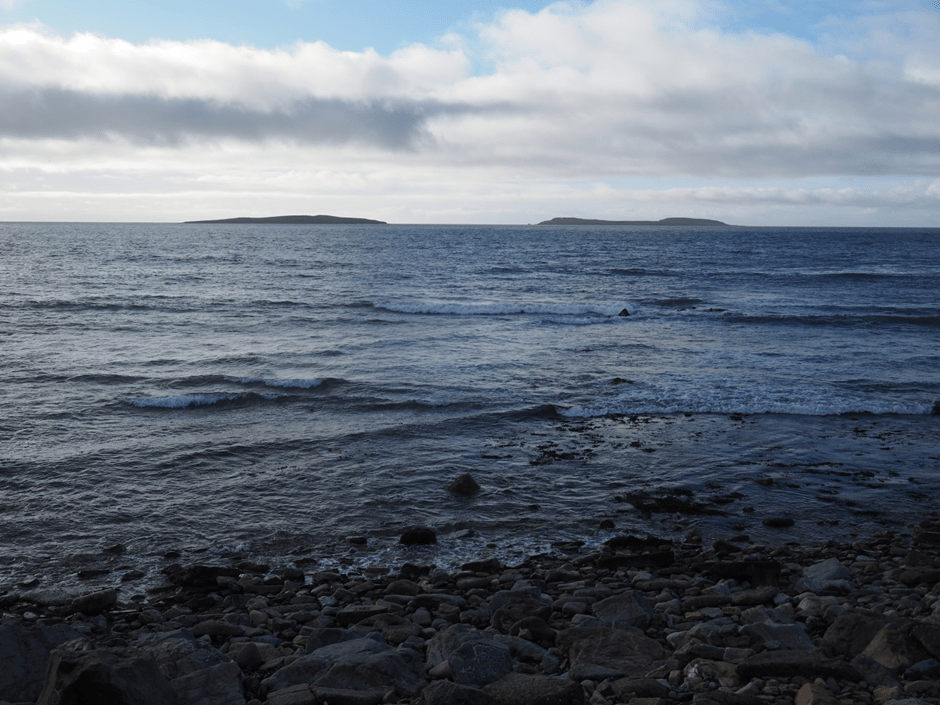
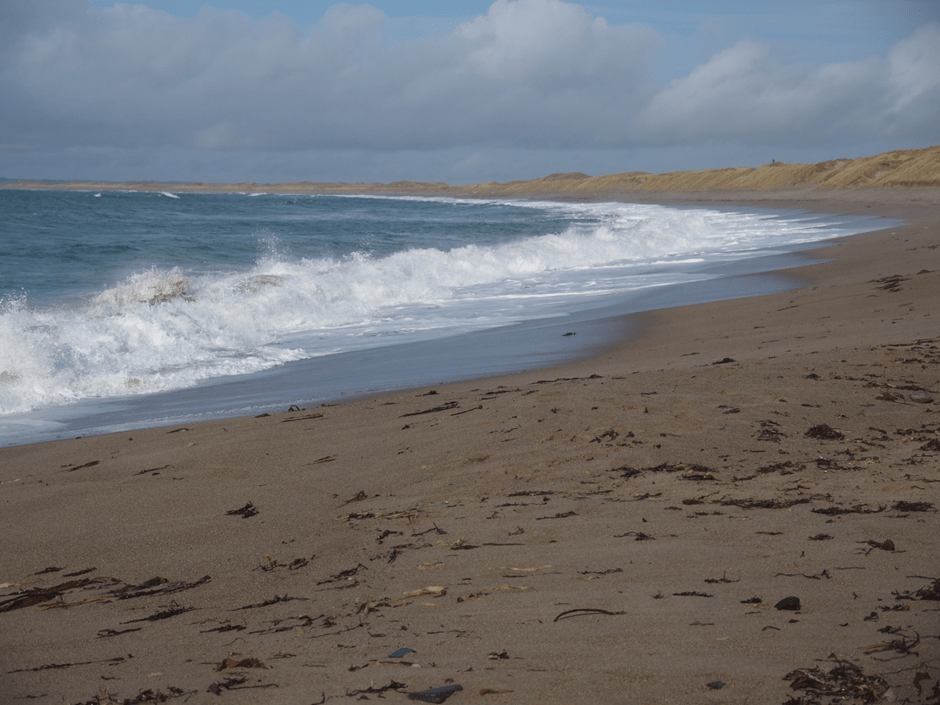
We watch the oyster catchers staging a fly-by, with the white Vs on their wings shining. They come to land to stab leather-jackets from the grass. The starlings take over when they leave. Terns hang above on air currents. The only sign of life on the vast stretch of sand is a dead seal, the waves crashing merciless but graceful against sandbanks, spitting their spray up into our faces, the tide chasing us from the sea-shore.
The Memorial Garden and Forlorn Point
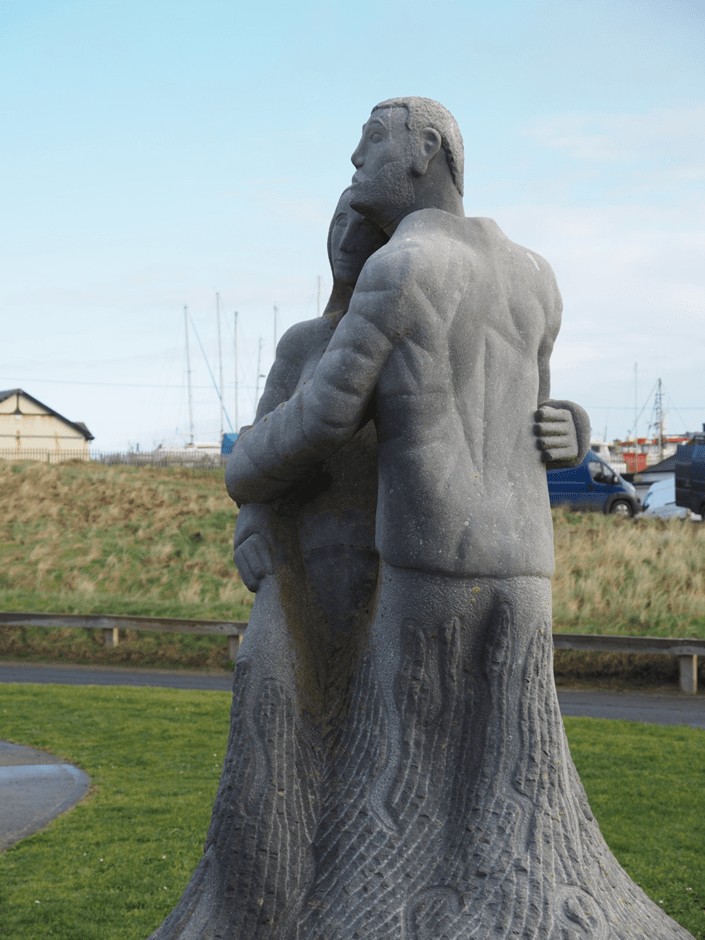
We nose around the memorial to all those lost at sea, with its sculpture of a boat and rusted anchors; pass the Fin whale bone from the poor creature who was beached here; and pass the statue of a man and woman, clasped together, the sea lapping at their knees or it could be mer-people’s tails. It’s haunting, whichever it is. There’s no doubt that the people here are entwined with the sea.
There’s a causeway to Forlorn Point. Seán struts along it, no bother on him, but I have to take the more indirect route across the ancient rocks, shingle and rock-pools due to vertigo-induced-shaky-leg-syndrome.
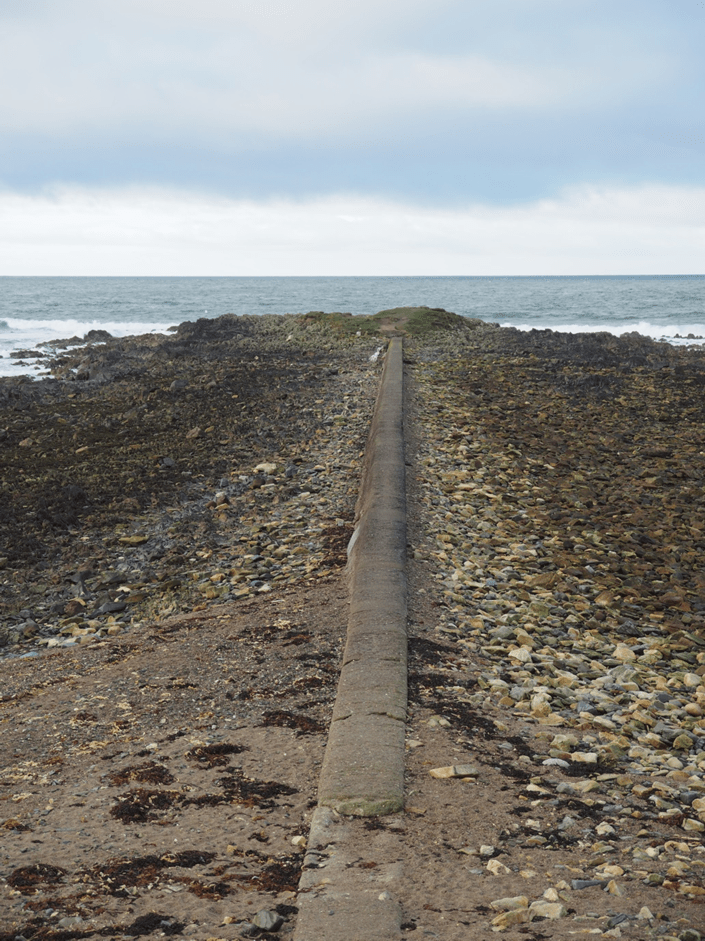
The skeletons of two men from 400 years ago were found on the mud-bank here, presumed to be drowned sailors as Forlorn Point’s name was gained due to the countless ships that ran aground here. As if that’s not haunting enough, Ballyteigue bay is known as the graveyard of thousands of ships.
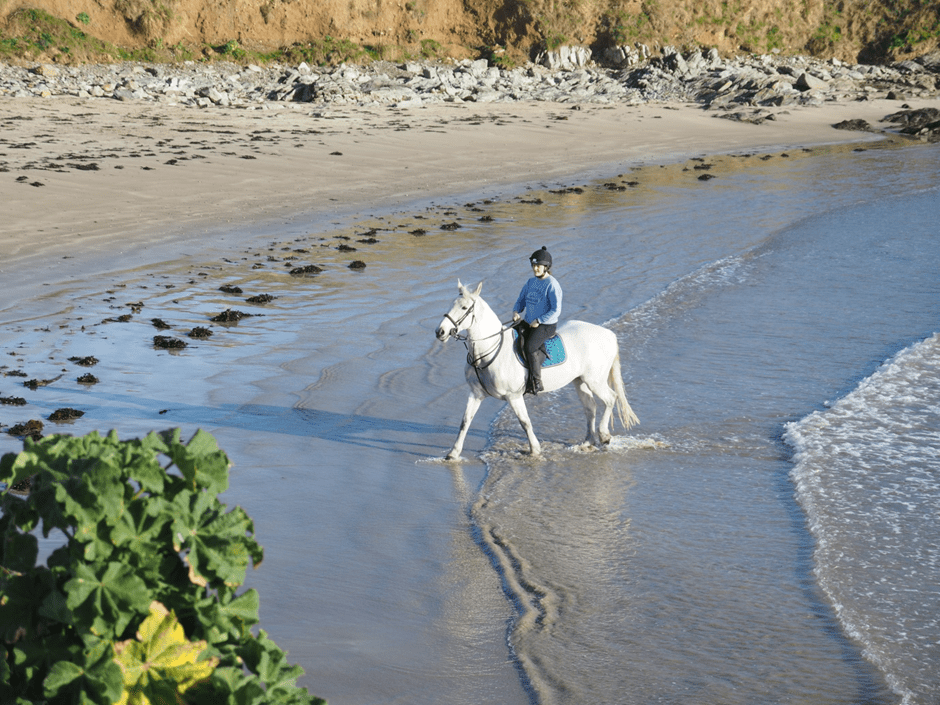
Though two young women hoola-hooping on Forlorn Point is testament to irrepressible youth.
The Norman Castle Farmhouse
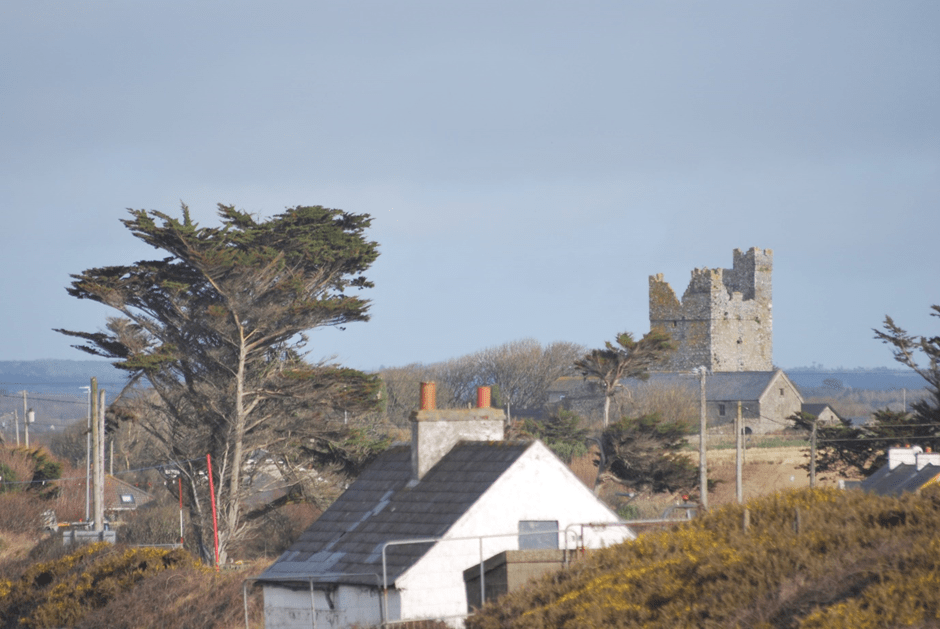
I’m excited when I spot a Medieval farmhouse with a Norman tower attached to it as one strand of my family, way back, lived in one. The towers were built on to the farmhouses to protect against marauders. Dramatic history is seeped into the very stones here.
The Ballyteige Burrow
This walk takes us through kilometres of undulating sand-dunes with their sea-kale and marram grass. Meadow pipits flit and stone-chats sing their pebble-bashing song.
Golden Plovers at Bannow Bay

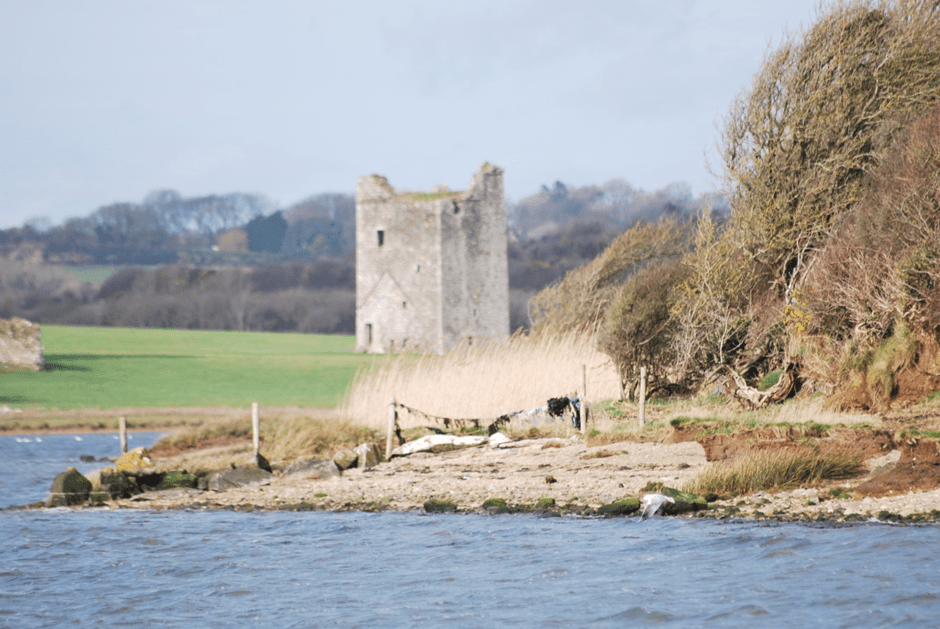
Bannow Bay is perfect for a lunch-with-a-view. Tintern Abbey’s ruins stand across the water but the most spectacular sight is the murmuration of golden plovers. They rise and shine shine as if they are a sudden snow-storm; then they dip and seem like a black polka-dot scarf in the sky.


 Campervan Therapy
Leave a comment