I can’t visit Dorset without a mooch around one of Thomas Hardy’s old haunts, in this case Dorchester, the setting of his tragic novel, The Mayor of Casterbridge.
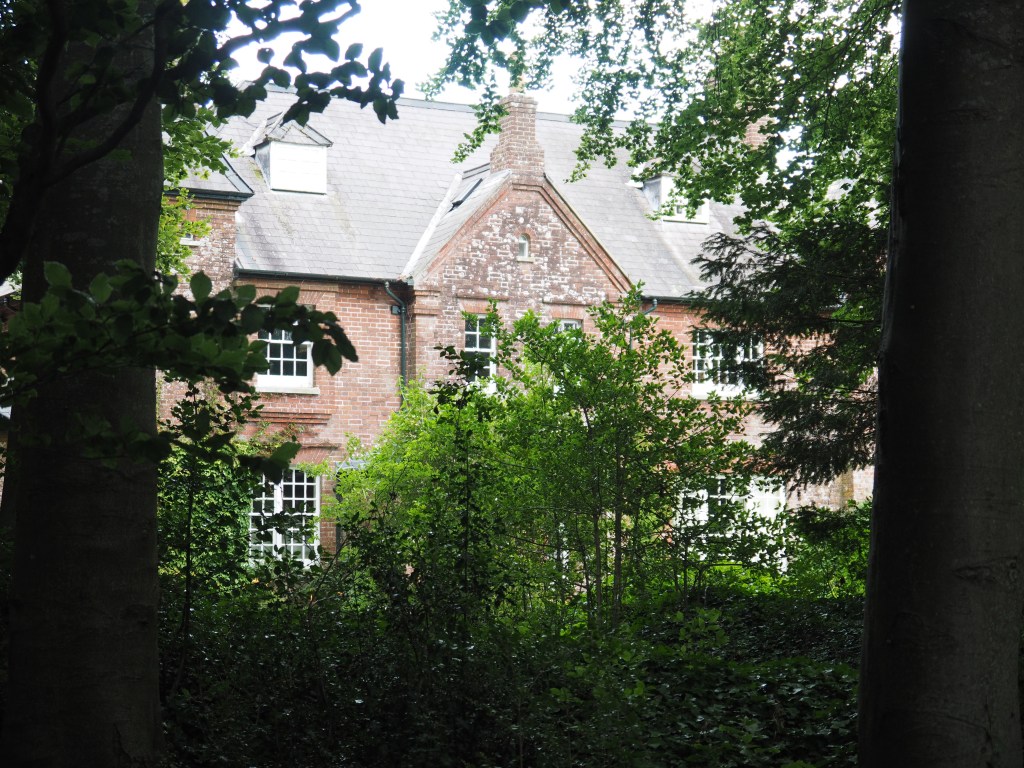
However, this is us, so we turn up on a Friday to visit Max Gate, the house that Hardy, as an architect, designed and where he wrote many of his great works, without checking with National Trust beforehand. It’s closed.

But Max Gate now stands in Dorchester’s suburbs and doesn’t have the romance of Hardy’s cob and thatch cottage, nearby in Higher Bockhampton, that we visited a few years ago. He was born in Higher Bockhampton and the atmospheric forest setting influenced his early novel, The Woodlanders.

We track down his monument in Dorchester, rain pelting us and sending us running for cover in St. Peter’s Church, whose detailed leaflets guide us round Hardy artefacts in the church, telling us of how Hardy also opened a local school.
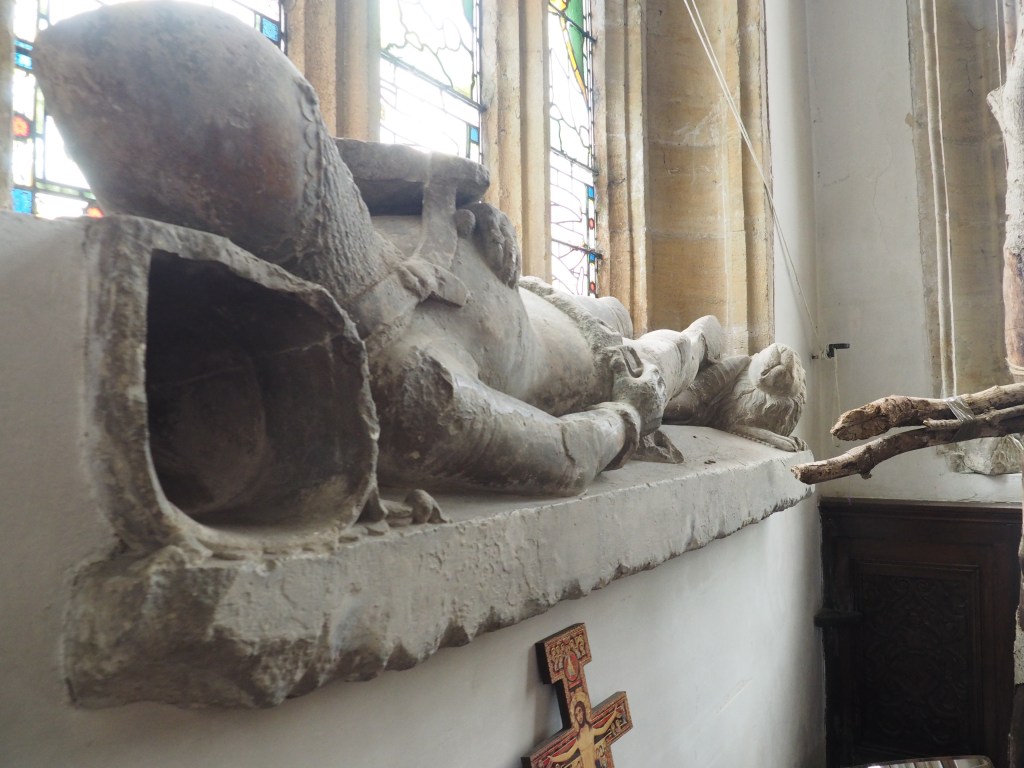
Another leaflet points us to the memorial to Reverend John White who arranged for the first pilgrims to emigrate to Boston, Massachusetts, where they founded the sister town of Dorchester.

But we can’t end our break without a final ramble on the South West Coastal Path, so we drive 30 minutes along the A35 to Seatown, Seán quaking in his boots at the thought of climbing Golden Cap, star of the Jurassic Coast, England’s only natural world heritage site.

We turn towards the sea at Honey-stoned Chideock, a village of thatched cottages and rambling roses. The van squeezes past the verdant gardens and hedgerows along the twisting lane.

Our hearts sink as we see the sign on Seatown’s carpark, £8 for the day. We’ve got no change and there’s no possibility of paying on our parking app.

The warden though is a kind chap, telling us that since it’s towards the end of the day, we needn’t pay. Seatown beach is buzzing. There’s the wooden caravan sauna, the Anchor pub, the stoneground pizza trailer, children playing on the beach.
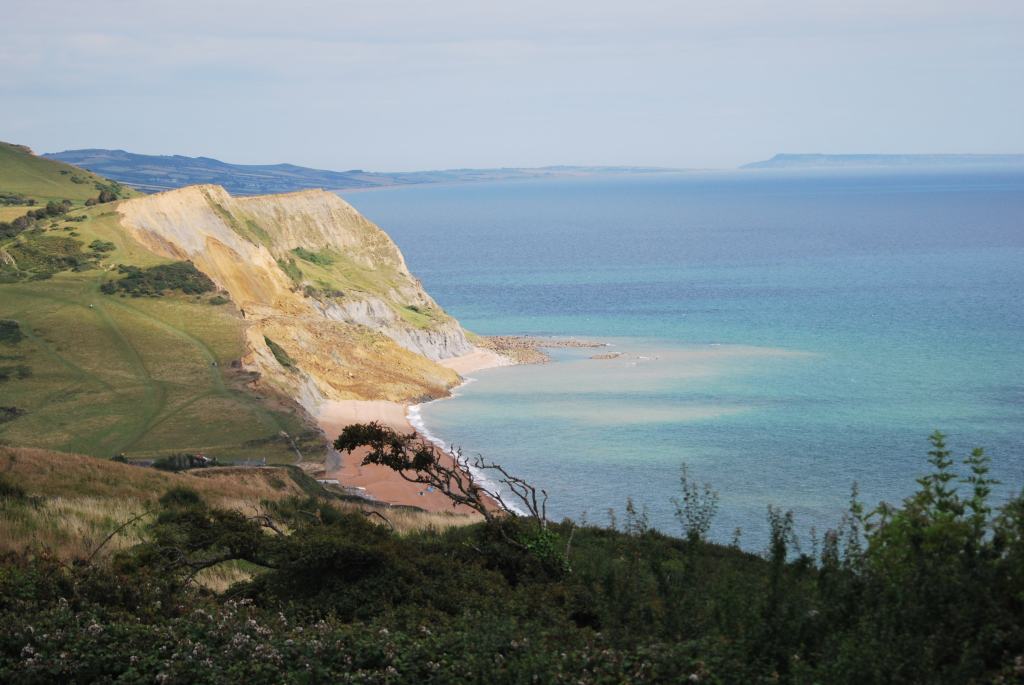
Seán looks longingly at such joyous idling, but handing him his walking boots, I stride off up the coastal path. We walk along the trail through wooded dells, ferns above our elbows, through meadows, by grazing cattle, up numerous steps, to the top of Golden Cap.

It’s no exaggeration to say the cap of this cliff is golden, the sandstone really glows when set against the jade and violet sea.

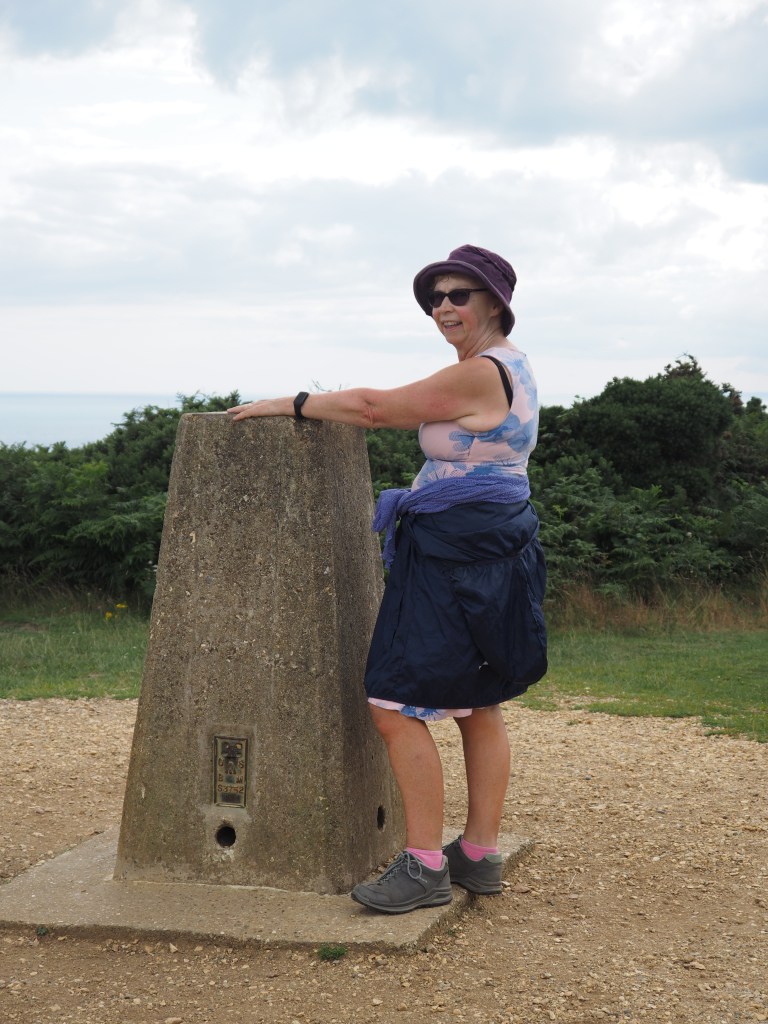
As my technical one loves a triangulation point almost as much as an engine and a fat file of scientific facts, he forgives me the uphill hike as he locates Lyme Regis, Charmouth and guesses at which part of the French coast stands opposite us.
Dorset’s coastal path is infinitely varied and beautiful. More than that, it is truly an outdoor, natural history museum where we’ve travelled back in time to when crocodiles swam in tropical seas. Dorset’s villages are all mellow stone, thatch, and cottage gardens. Its ancient by-ways allow us to walk in the footsteps of the past from castles, to smuggler’s dens, quarries and paleontological digs. We’ve explored so many various and beautiful sites it feels as if we’ve been on a three week break rather than three days.

 Campervan Therapy
Leave a reply to gmabazzini Cancel reply