We’re sad to say goodbye to Covas, so the night before we leave we treat ourselves to a local bust-a-gut meal at Flôr Fontela, 500 metres from Parque Campismo de Covas. The area is rightly known for the quality of its chargrilled steak, along with mountain cheese, succulent olives and the freshest salad. We both decide that Covas goes on our returner list.

The next day, we lunch by the picnic spot beside the clear running River Coura, a tributary of the Minho, which we’re loosely following. We never manage to follow anything without a detour. We say goodbye under the chestnut, willow and oak trees.

Vila Nova de Cerveira sits beside the River Minho. The wide green river is flanked on both the Spanish and Portuguese side with rolling green hills and outcrops of granite.

Two black bulls face each other on top of the cliffs on either side. The town itself clusters around the Medieval fortress, one of many on the river, built to defend Portugal from its neighbour.
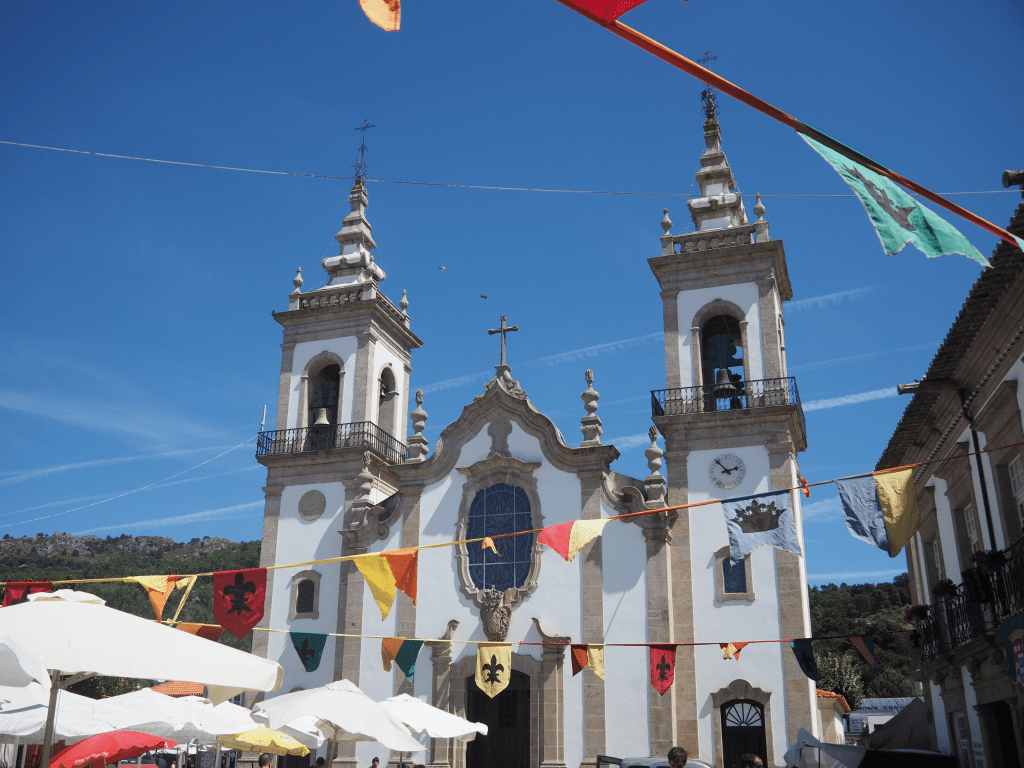
The town is bustling, with a Medieval festival and craft market being set up, but my chauffeur extraordinaire manages to avoid slaloming vans as I finally spy a parking spot on 300 metres from the centre.
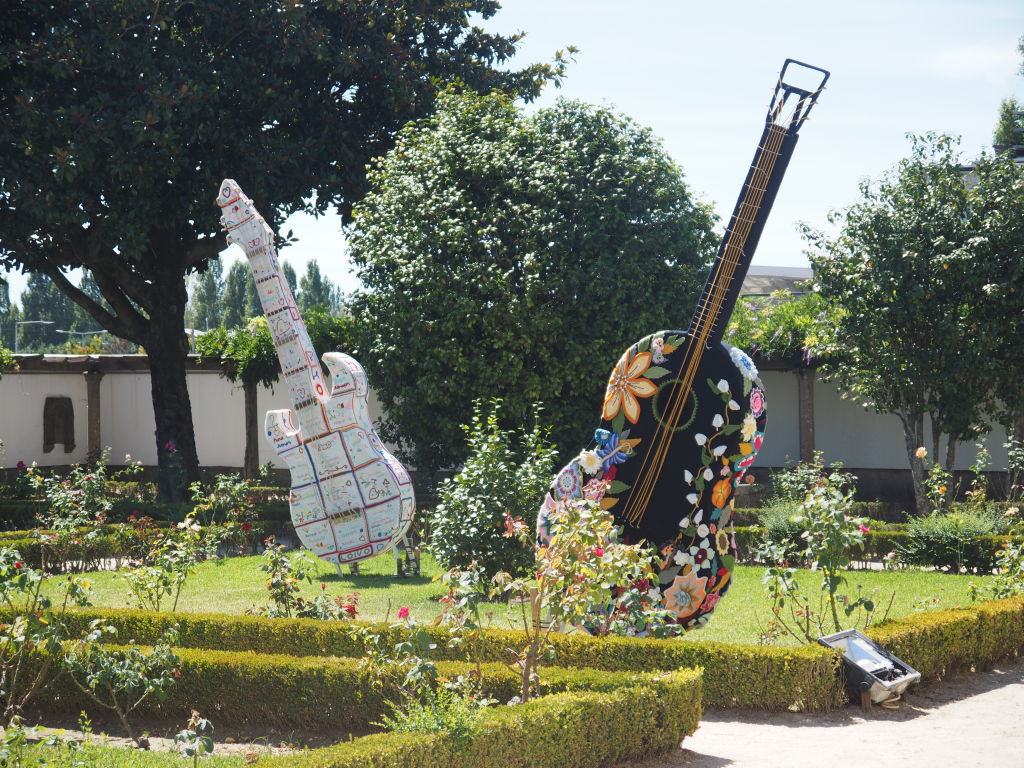
I love outdoor art installations. The granite rock suspended on iron poles above a fountain tells of the relationship between iron ore, granite and water in the town.
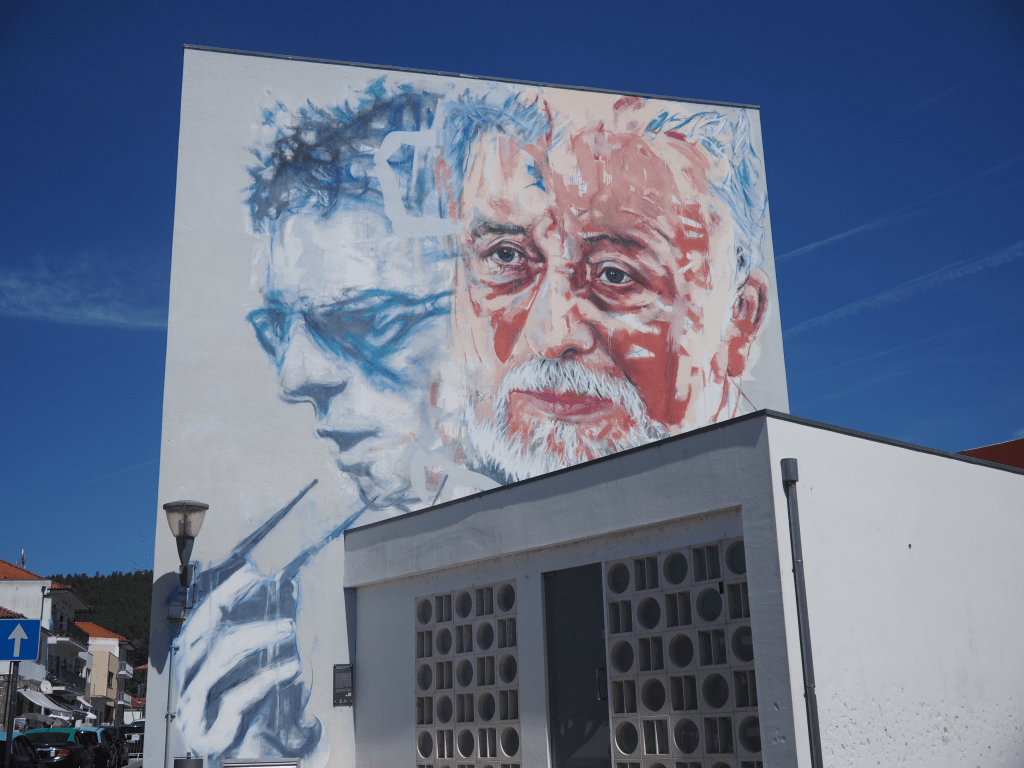
The faces of octogenarian men fill the whole of the theatre’s wall. Strangest of all are the knitted mannequins that tell of the importance of fishing and pig-rearing and slaughtering to the country people surrounding the town.
As we gaze across the river to Spain, we read of how the pilgrims on the Camino de Santiago from Lisbon, crossed in flat-bottomed boats and were exempt from taxes and tolls.
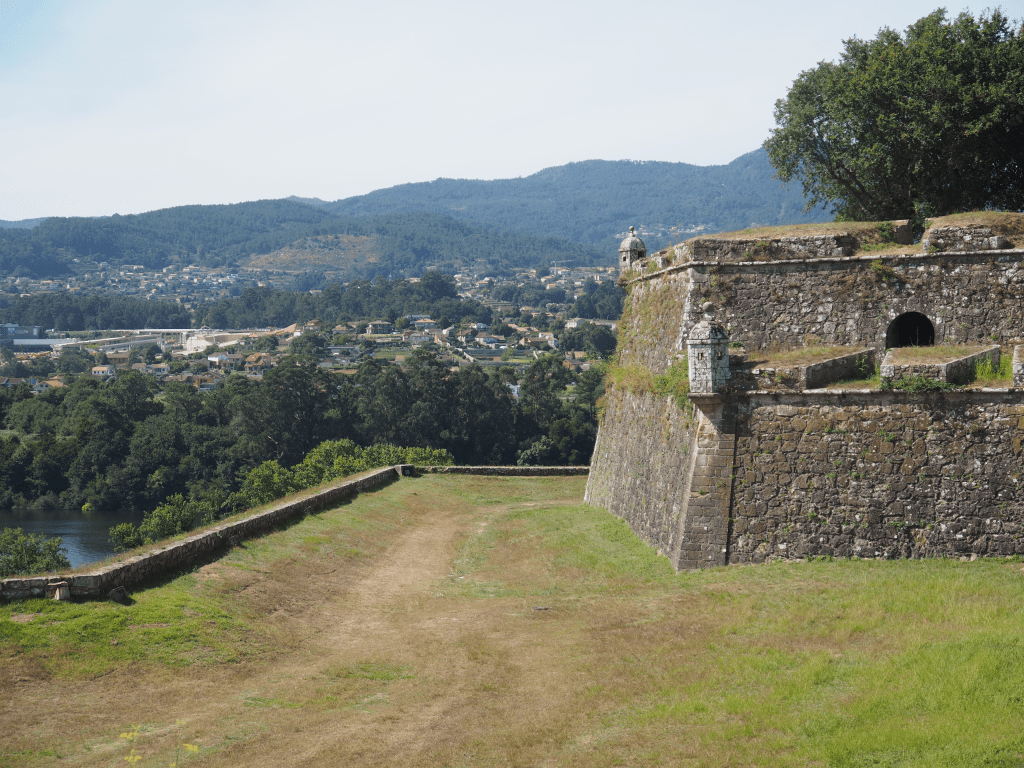
We drive along the N13, which edges the grand river, up to Valenca do Minho, to the fortified town, on a hill looking across to Spain’s Tui, yet another crossing point for pilgrims on its bridge which is now a metal one and full of today’s hikers.

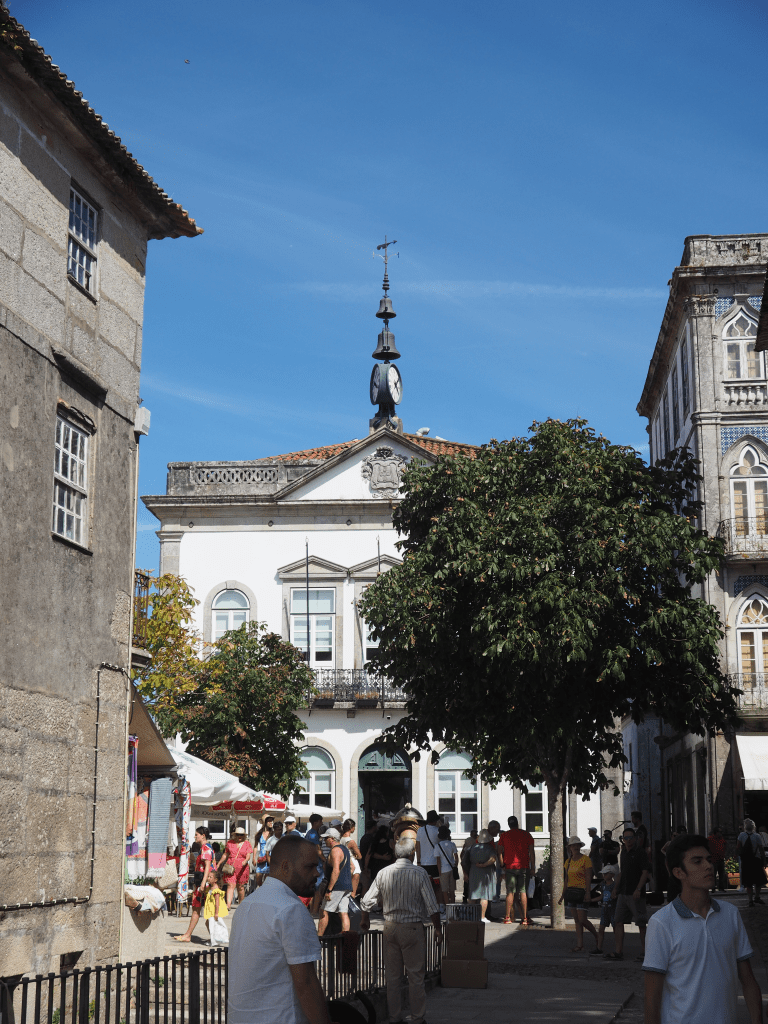
Now I love a rampart almost as much as I love outdoor art installations, so it doesn’t take long for us to lose the crowds in Valenca do Minho who are clustered round the busker in the main square, edged by azulejo- tiled, wrought-iron-balconied houses.

On the quiet ramparts, I can just imagine the dungeons, the soldiers on guard in the cupola topped guard posts. Church domes and belfries rise up into the blue sky.

At every turn there’s russet cliffs, forested slopes, mountains and the wide river below. I can’t resist the fabric shops with their embroidered table cloths and buy a cheerful blue and red embroidered table runner for a princely €6.
Our next stop is a campsite at Lamas de Mouro, northernmost gateway to the wild Peneda-Gerês National Park, the Mouro River yet another tributary of the mellow Minho.

But, being us, a navigation error sends us up vertiginous roads, until I resort to closing my eyes and hanging on to my chauffeur in case I have to yank him free from a plummeting van.


Leave a comment