We take the train from Orio to Zarautz for a must-do hike, from Zarautz, up the mountain, to the old fishing port of Getaria with its own island. But first a detour is required along Zarautz’s sculptures on the promenade.
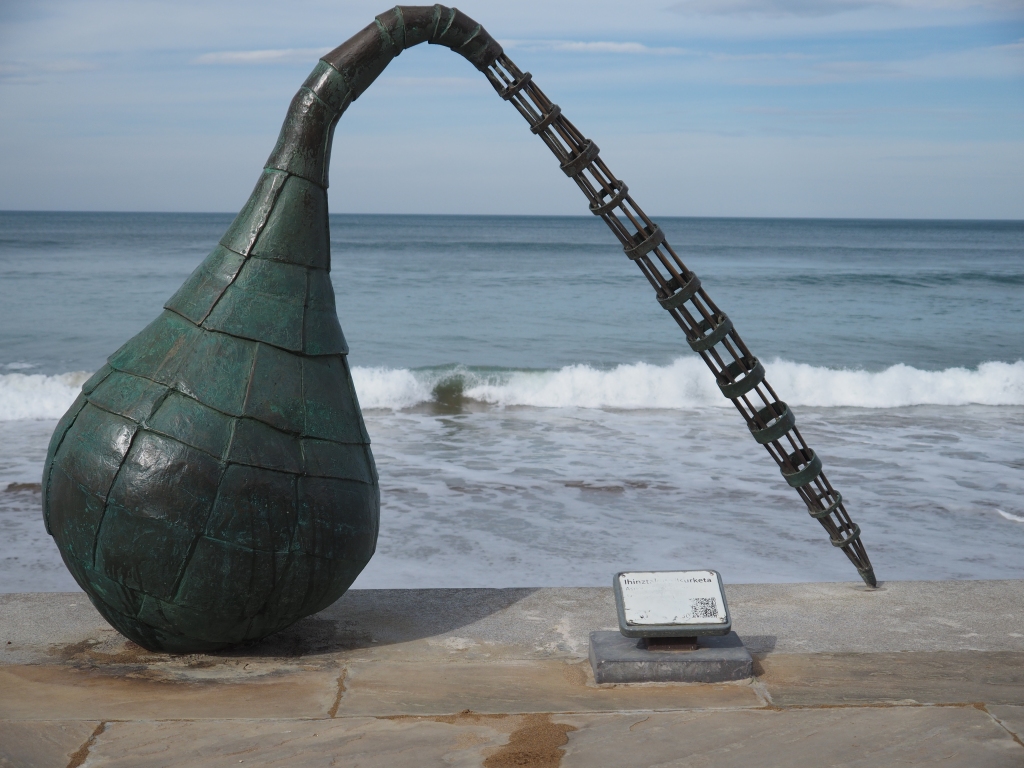
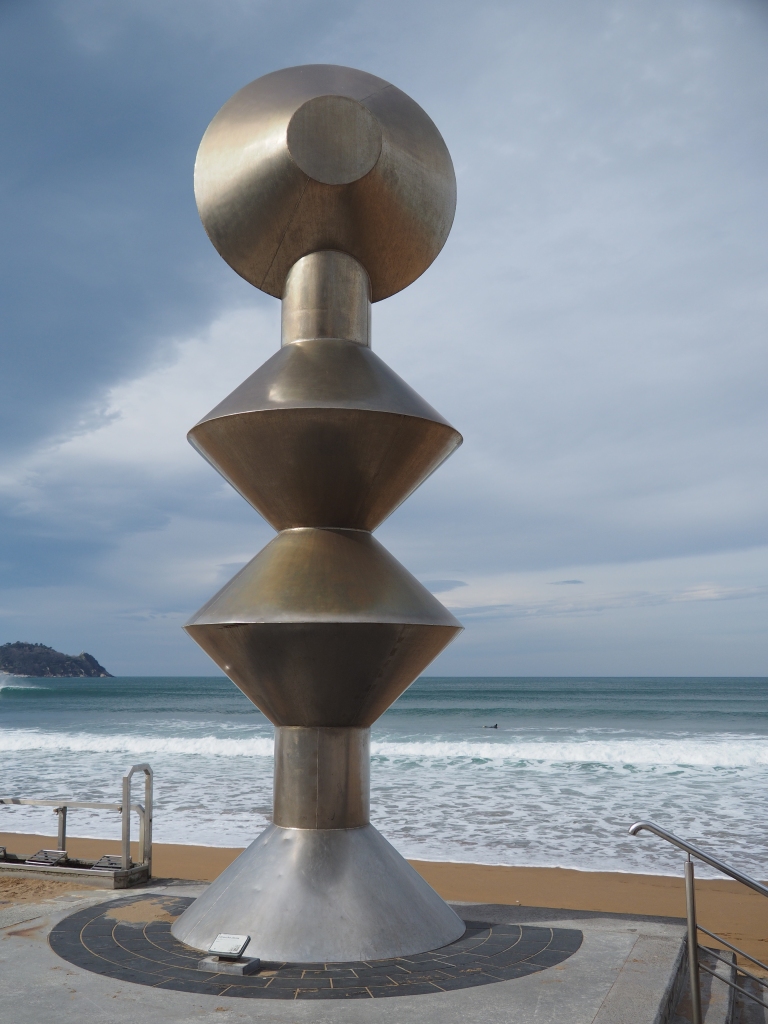
Huge bronze sculptures represent conches, the movement of water, surfers capturing the perfect wave, but the giant abstract woman in a sunhat dominates.
The old town is one of half-timbered houses, huddled together, leaning against the old convent Santa Maria de Reale as if seeking the comfort of a mother.

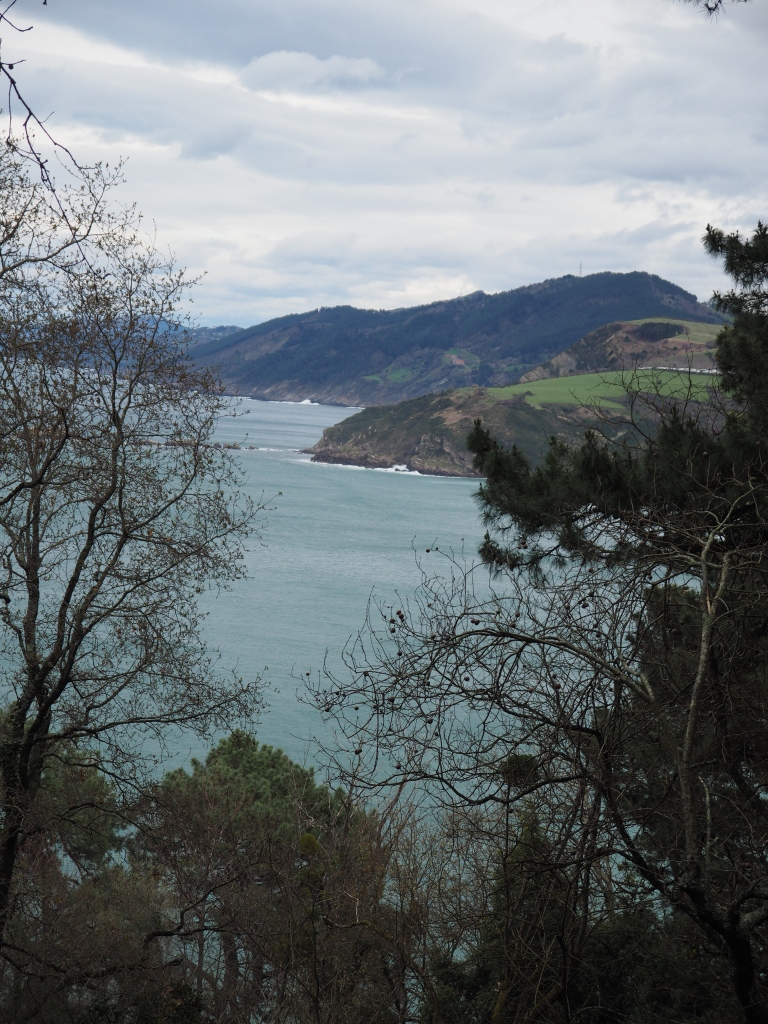
We turn up on the walking trail to Getaria and climb up a muddy pathway through holm oak and pine. Cheerful yellow primroses, comfrey and celandine edge the path. A bit of sliding and gripping stray bushes on the way up is required but we emerge to views of jagged inlets and the Atlantic’s white surf beating against the cliffs and arcs of sand.
The 18th Century Chapel to Santa Barbara sits at the top of the path, a site of pilgrimage for local fishermen due to their belief in her ability to summon storms.
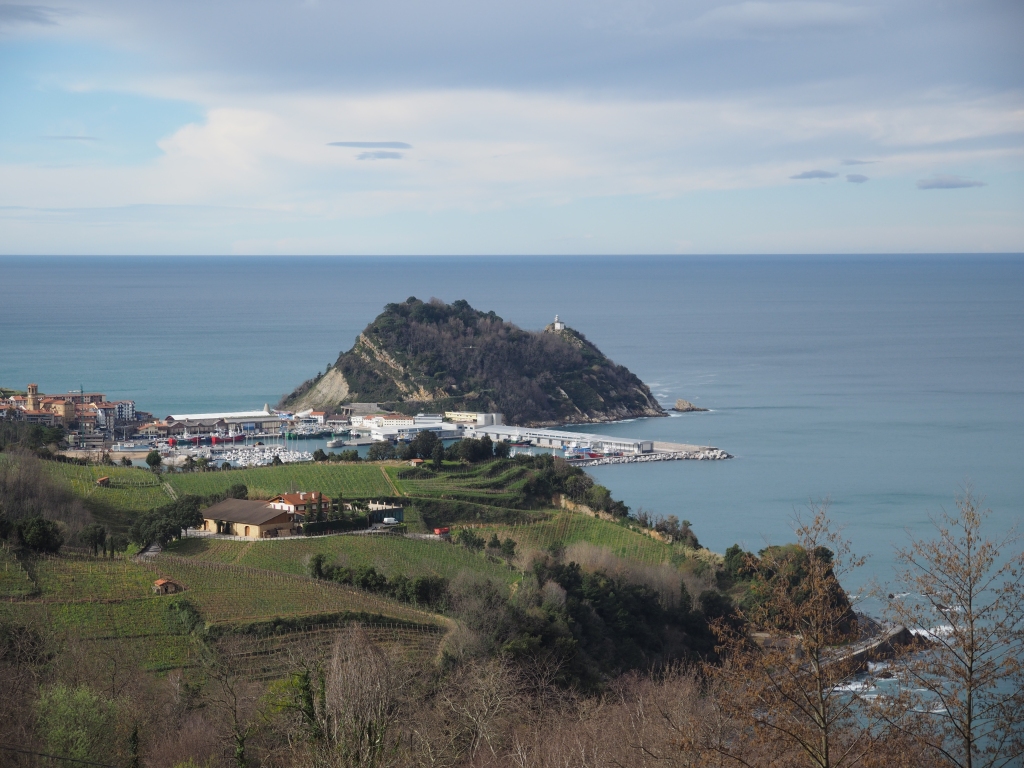
Winding down the mountain by fields full of wildflowers, longhaired sheep, goats and the ubiquitous donkeys – finally, there it is, Getaria, nestled at the bottom of the valley, its islet attached to it by the man-made port and harbour.
Primary coloured fishing boats are jaunty but remind us that this is still a working fishing community.

But here’s where art meets practical skills, the port has giant frescos detailing the history of this fishing community, with landscapes of the harbour and larger-than-life images of women mending nets, gutting fish.

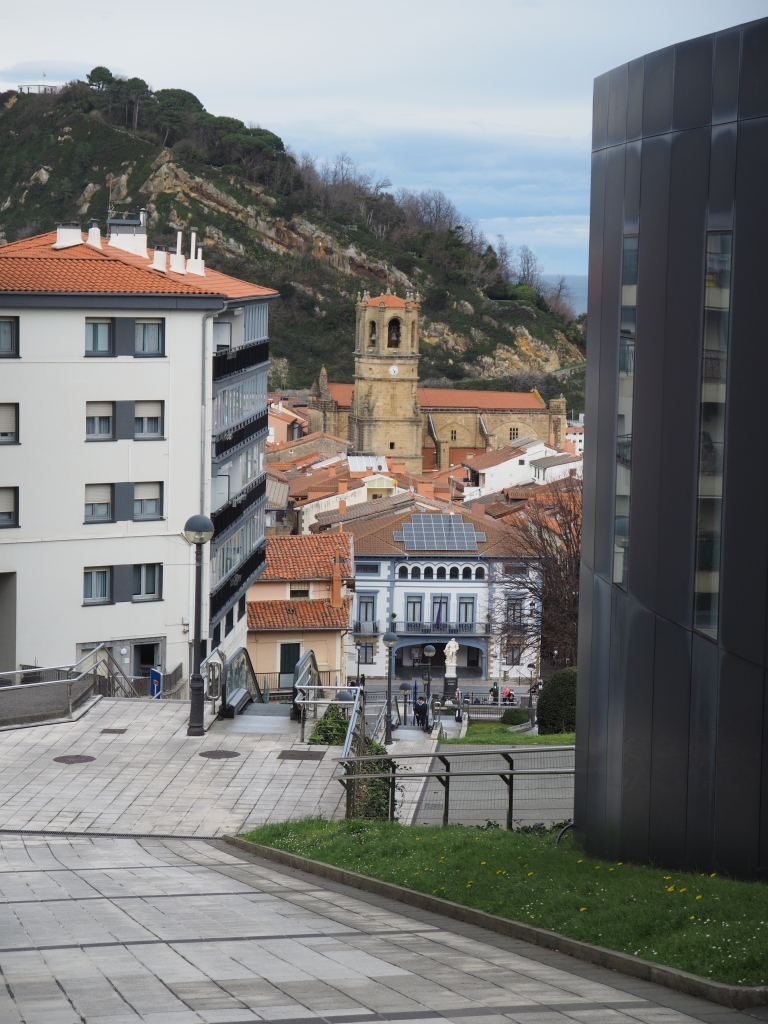
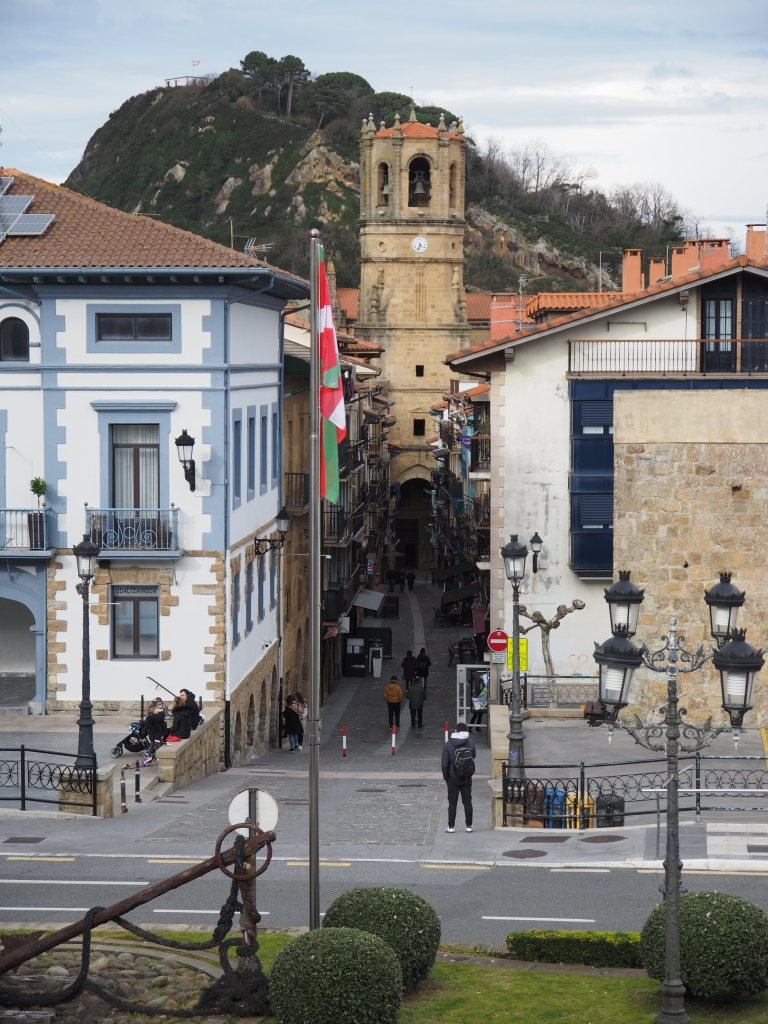
Architecturally Getaria is a little incongruous, which adds to its interest value. The town centre is typical of Basque fishing towns: narrow cobbled alleyways, half-timbered, tall houses with dark wood or wrought iron balconies, all roads leading to the huge steeple of the church; the fishing harbour behind and the rugged islet sticking up like broken bone.

But the mountainside down to the centre tells a different story: escalators, marble stairways and the sleek, modernist black metal lacework façade to the Balenciaga Museum, the museum dedicated to the work of the iconic fashion designer.
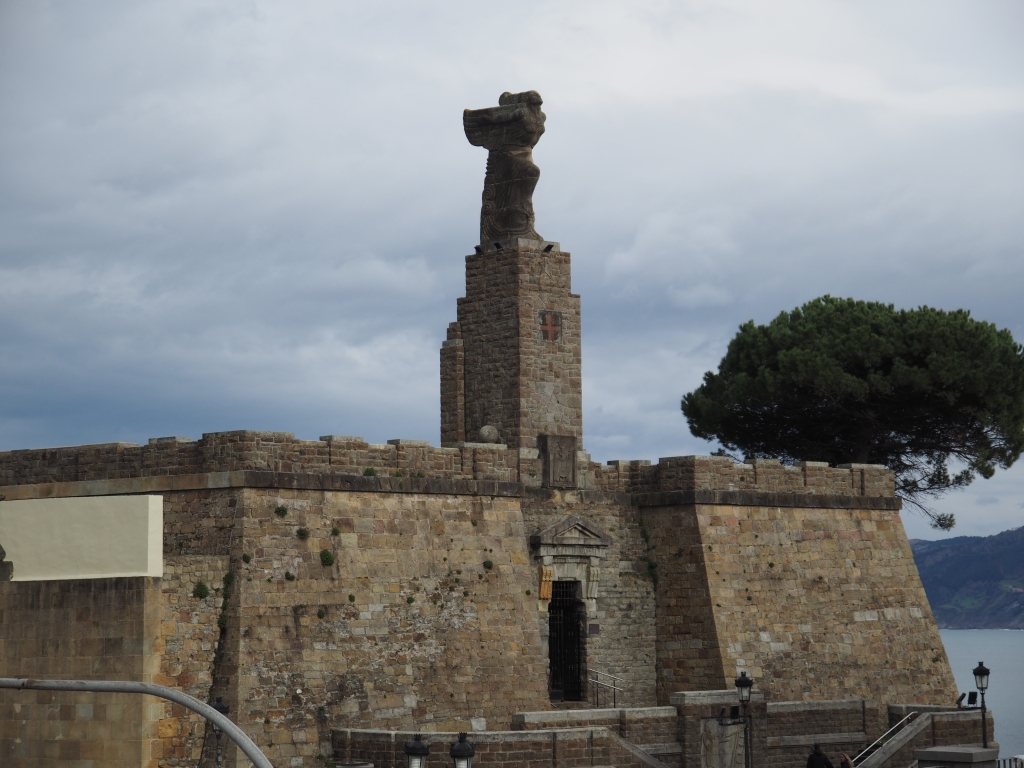
A fort-like structure above the beach is topped by an enormous carving of a woman from a ship’s prow, to commemorate Juan Sebastián Elkano’s birthplace, the captain who, along with Magellan, circumnavigated the world for the first time. The ten strong teenage rowing teams who are battling with the waves below us are testament to how the ocean still runs through the veins of the people of Getaria.
Strangely enough, the church is the only one I’ve ever explored which is slanted uphill inside. There’s a sense that the earth is tilting as you walk towards the two-tiered altar. It’s a strangely disorientating experience.

As we’re waiting for the bus to the train station in Zarautz, the square fills with men, women and children, everyone from babies to octogenarians, come not for a religious or folkloric celebration but to listen to speeches to mark International Women’s Day – a reminder that the Basque coast has a fascinating past but also a vibrant present.

 Campervan Therapy
Leave a reply to gmabazzini Cancel reply