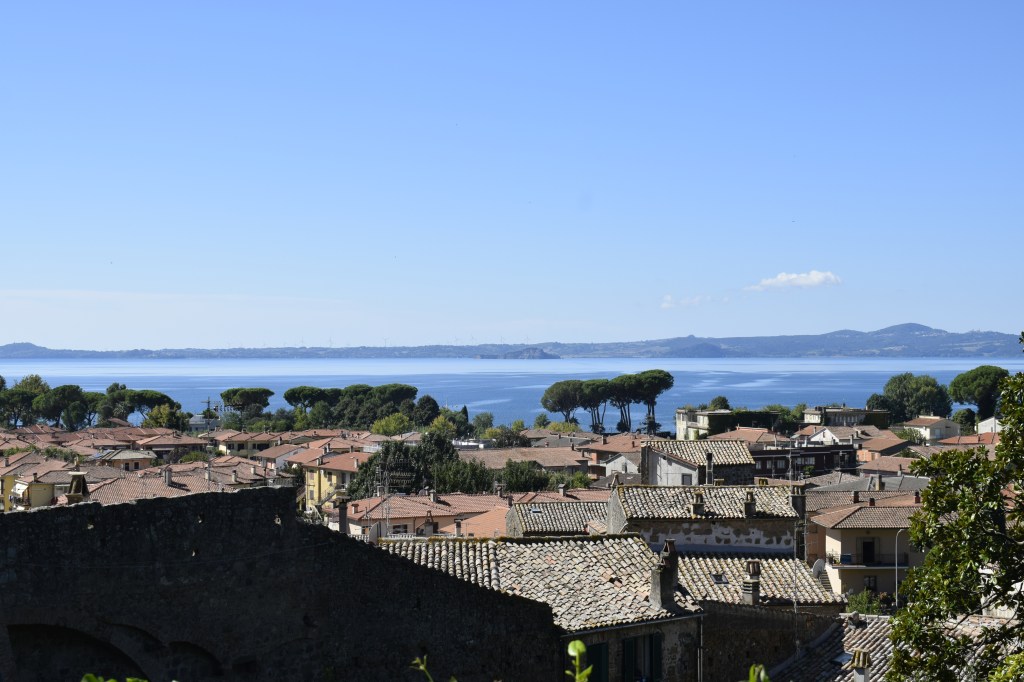
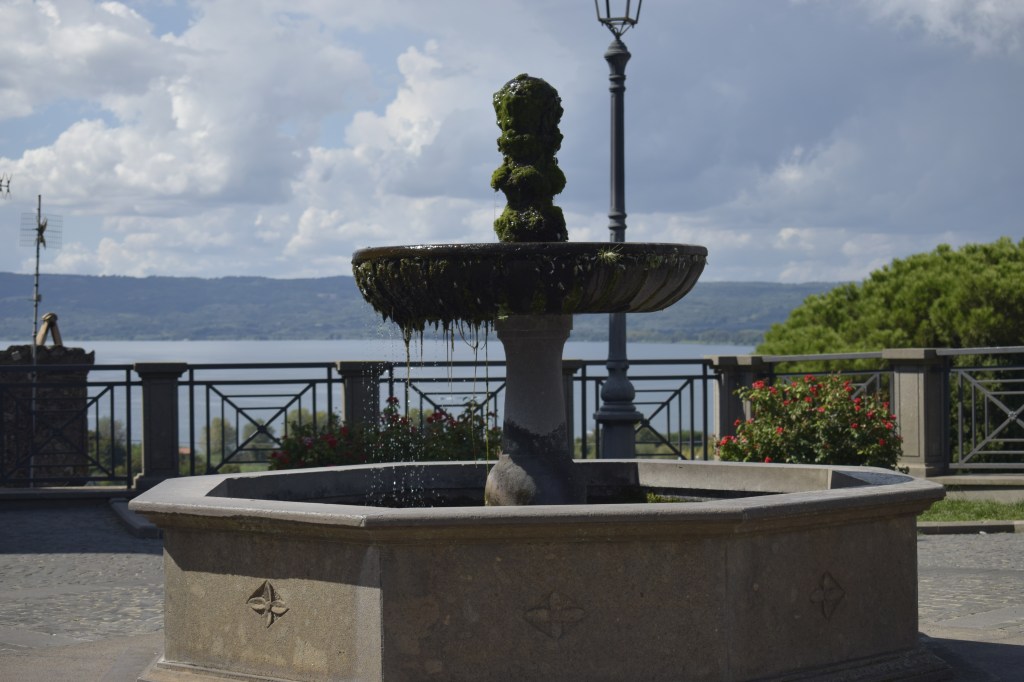
We head for Camping Pineta in Lazio’s Bolsena, a Medieval town on the lake of the same name. The rim from the old volcanic crater that houses the lake is visible. It is the largest volcanic crater lake in Europe. Mist rises off the waters in the mornings, and the sun silvers them during the day.
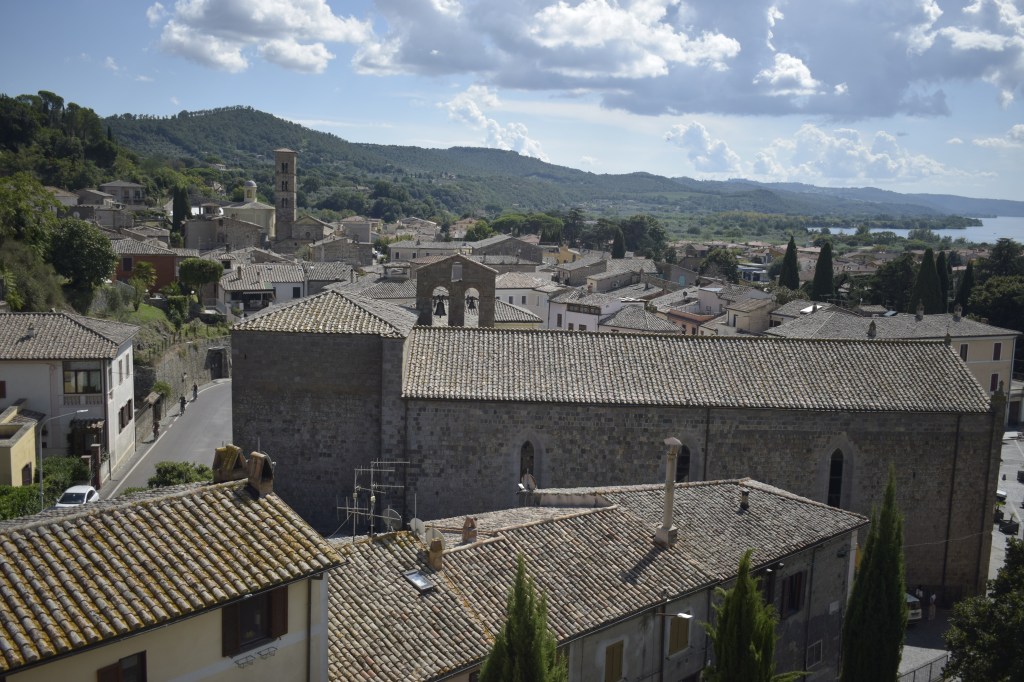
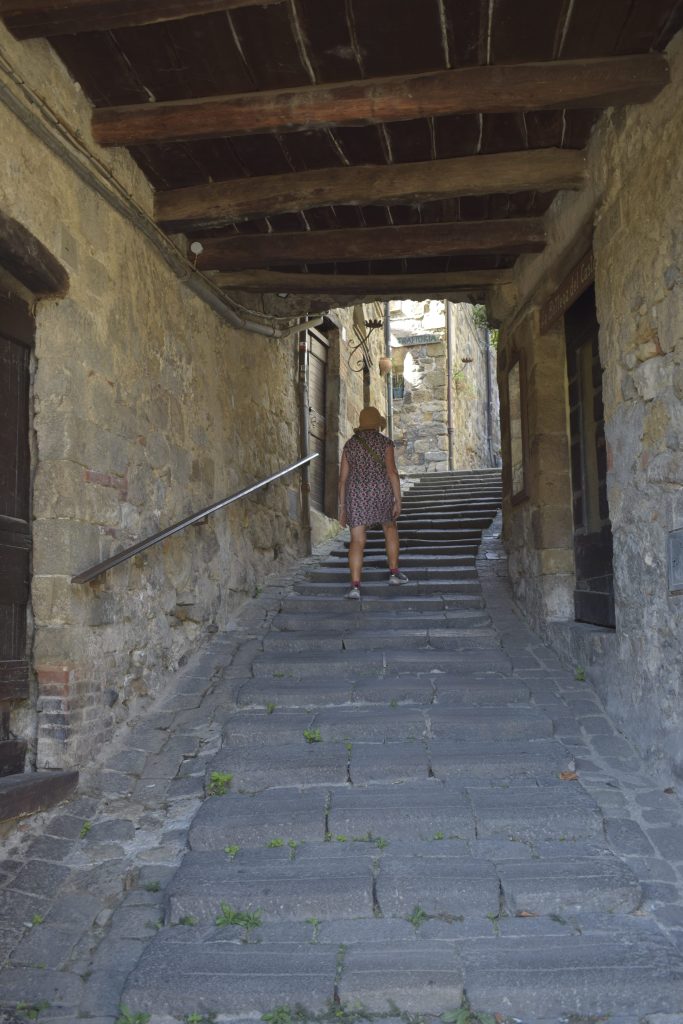
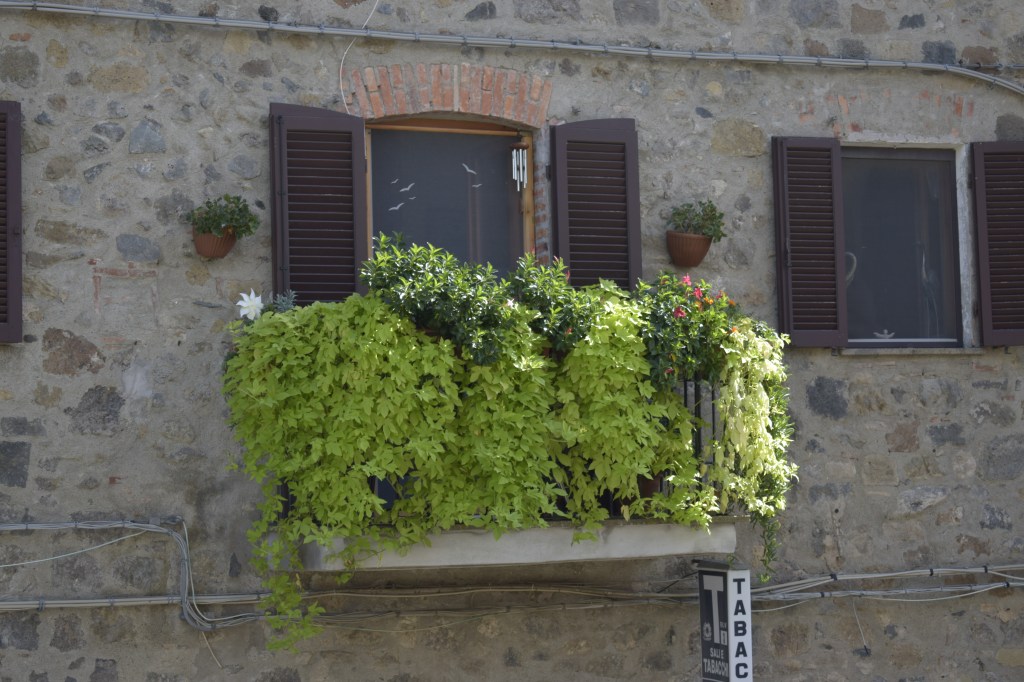
The town is built of tufa and volcanic basalt stones. The Rocca Monaldeschi della Cervara fortress towers over the town. We climb up to it and to the Etruscan ruins of the town.
There we have one of my favourites, ramparts, with atmospheric views of a lone fisherman in a small boat on the lake and pantile roofs clinging to the sides of the fortress as if for protection. A beautiful young couple have just got married and for a minute I think I’m on the set of an Italian film.
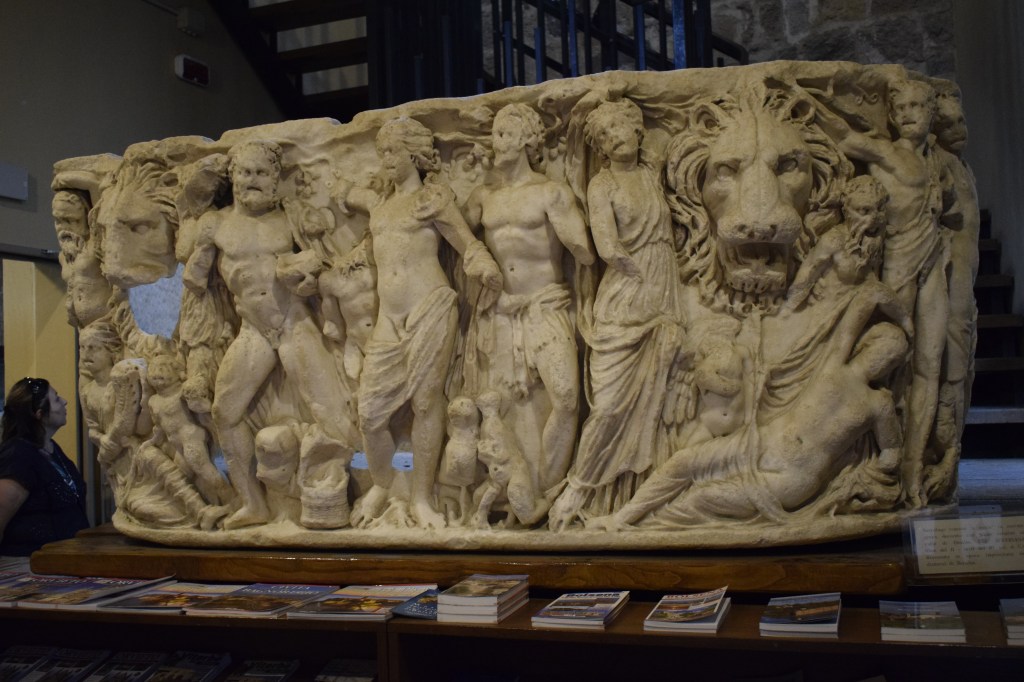
Inside the fortress a massive Greek sarcophagus is decorated with scenes of Bacchus worship. Partying on down with the vino was obviously seen as the best way to send the dead on their way to the afterlife.
We spend some time mooching around two of Bolsena’s palazzos and what’s more, we have them all to ourselves.
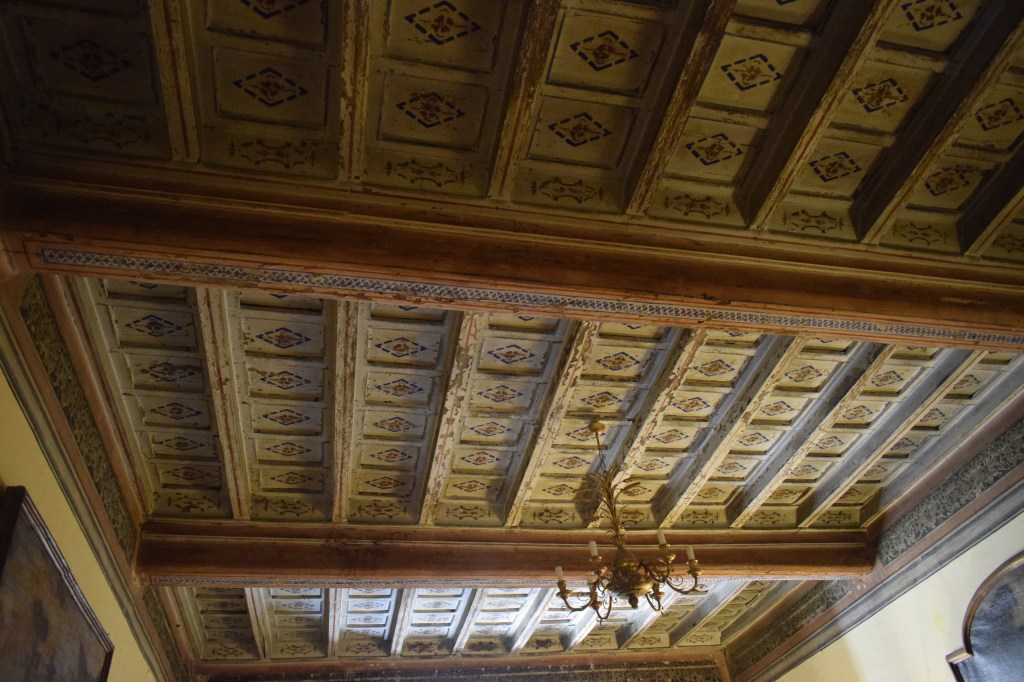
There’s something so evocative about an empty palazzo, there’s a sense of the past following on your heels as you gaze at the frescoes, tapestries and paintings. The Palace of the Counts Cozza Caposavi also has a wine tasting room in the basement.
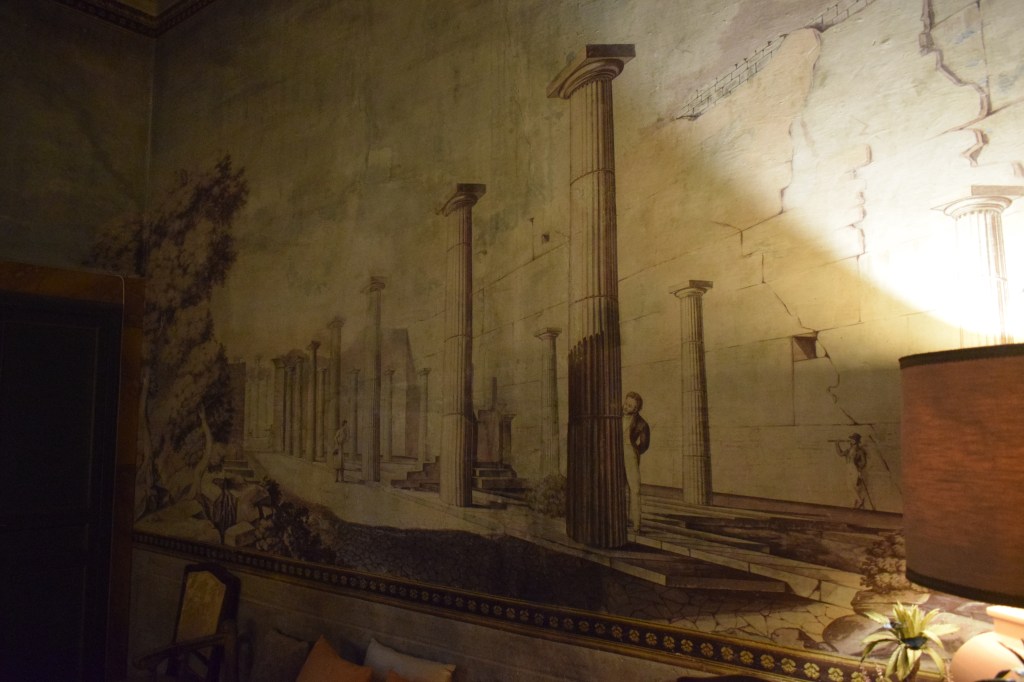
There’s always a funny story to be discovered in these ancient places and this one gives us the American artist Cy Twombley, who offered one of his sketches to the counts as payment for staying in the palazzo. The count refused it as he thought it was so uninspiring. It later sold for millions upon millions at auction.
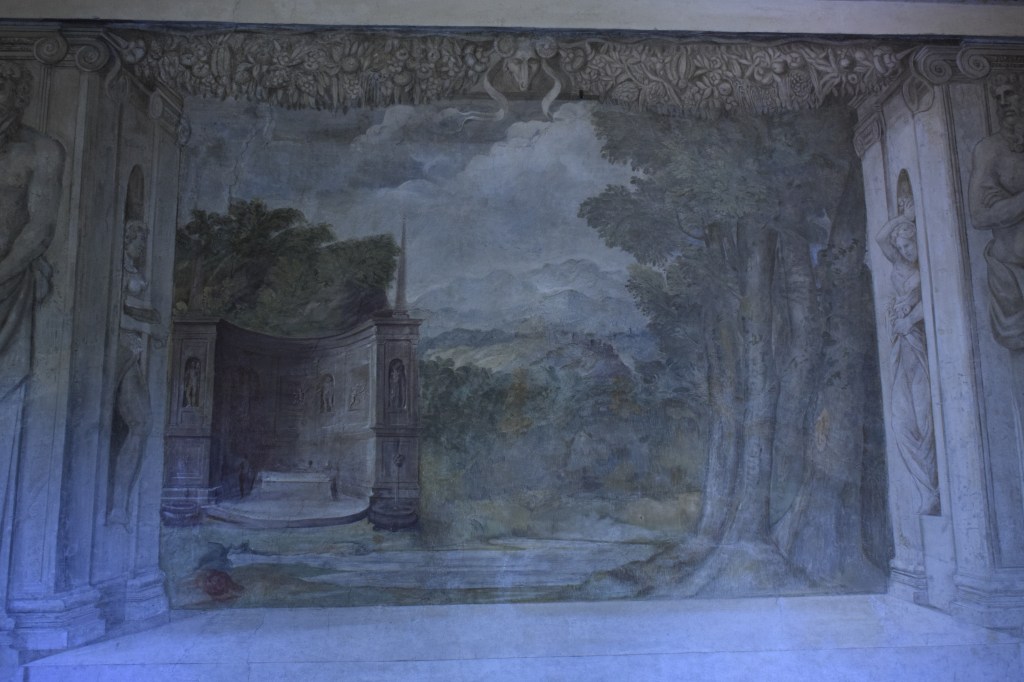
I was so stunned by the frescoes in Palazzo del Drago that, unusually for me, I was silent, especially impressed by the trompe l’oeil effects which made me believe I was gazing from the palace window at a pastoral scene of the lake. I love the story that Rodolfo del Drago brought back two leopards and an elephant when he went on safari in 1927 and they just lived in his garden.
But there’s a more disturbing history housed in these palazzos as well. In 1944 there was a bloody battle fought between the British and German occupying forces and the palazzo was bombed by the RAF as it was occupied by the Germans. You can still see the damage from the German soldiers’ camping gas cookers on the wall in the salon.
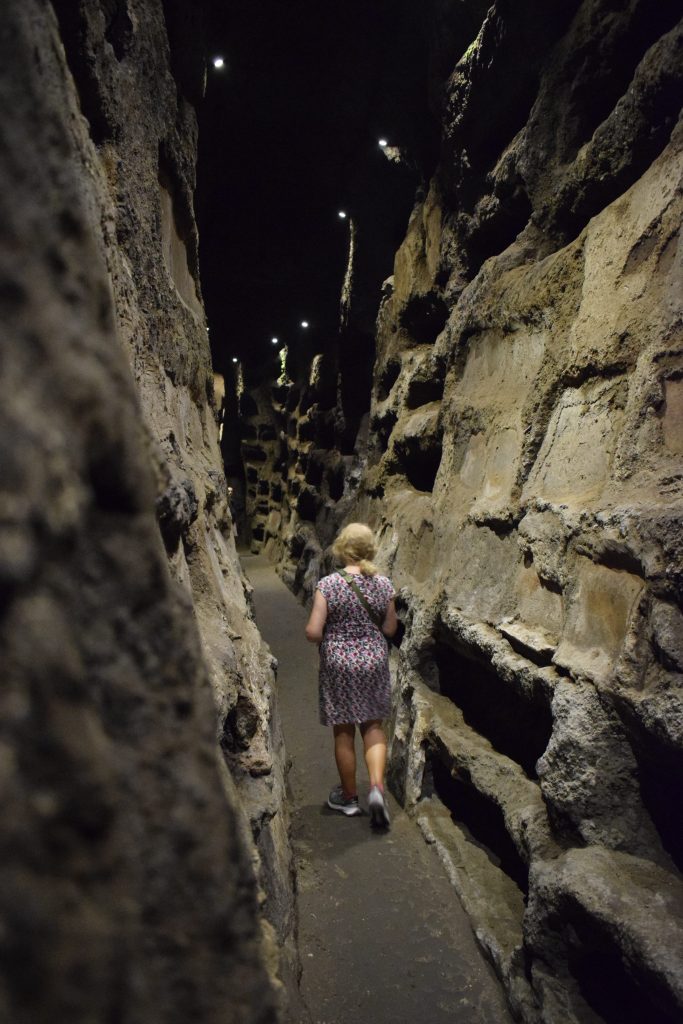
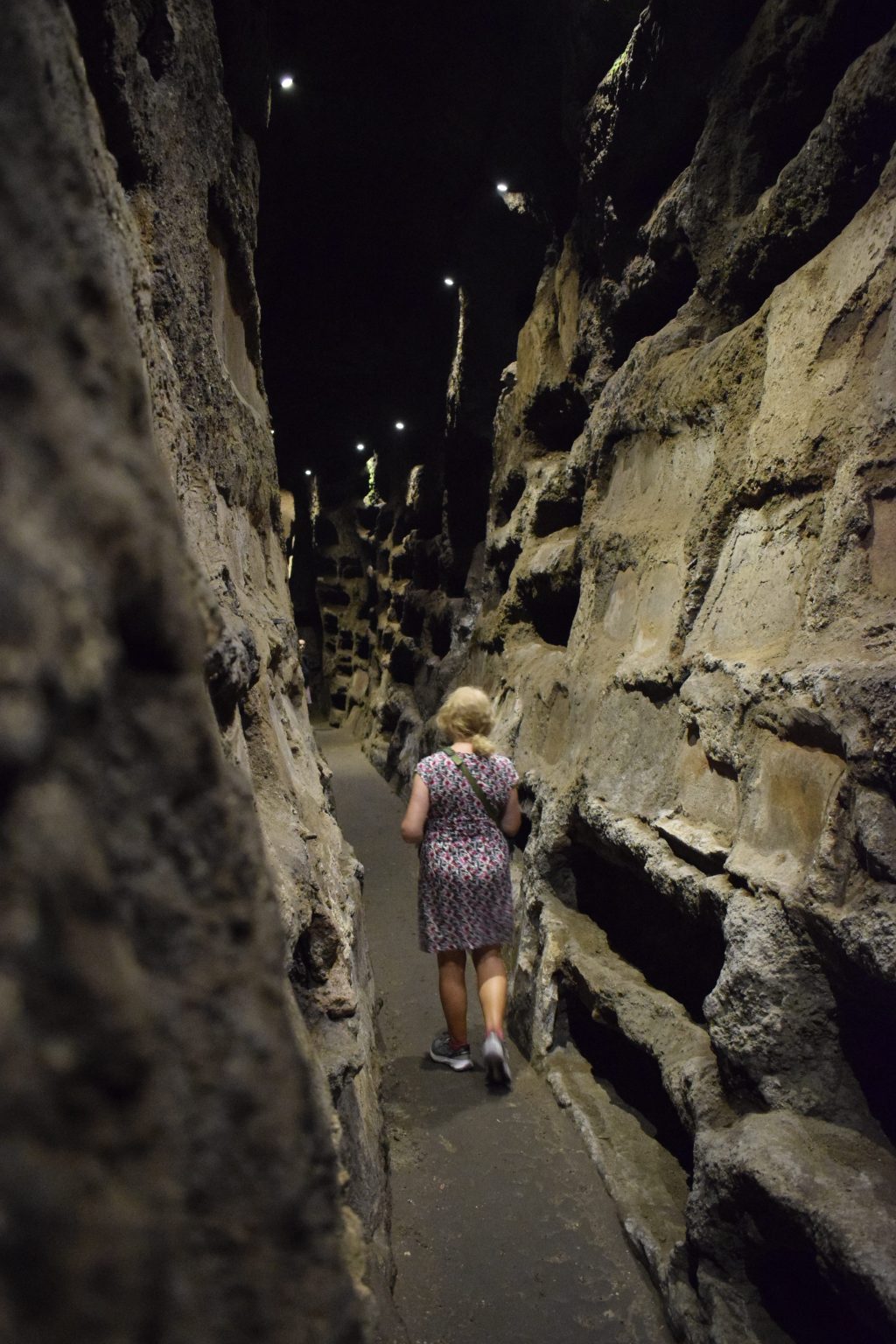
The strangest visit we make is to the Basilica di Santa Cristina. There’s a grotto to the martyr, complete with a stone said to contain her miraculous footprints, but underneath it are the eerie catacombs, high walled tunnels with gaps for bodies stacked to the cave-like ceiling.
Nowhere reminds you more of the fragility of life when wandering through catacombs so I high-tail it out of there, suddenly fearful that I may be locked in and have to spend the night with centuries of ghosts.


Leave a Reply